On This Page
Description
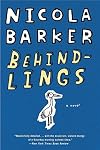
Spurting with kinetic energy, nasty wit, and kindness to animals, Wesley ought to be a star. Or so it seems to the "Behindlings" -- followers who nip at his heels, turn up everywhere he goes, and lie in wait for him around every corner. They skulk through the dreary streets of their tiny English town, gathering their own scabby intentions, irritating habits, and weird manners, burying all differences in the common pursuit of their true prize, their Wesley. In Behindlings, the inimitable and show more ungovernable Nicola Barker takes her most compelling character to date, gives him his head and her novel, and sees him run off with her readers. show lessTags
Recommendations









Member Reviews
God this was difficult. I'm in two minds about it. On the one hand there are some outbursts of exceptionally fine writing, like this from chapter ten:
“Dewi chewed solemnly on a heavily-salted tomato sandwich as he peered through his living room window, his dust-iced skin zebraed by the sharp stripes of winter light which gushed, unapologetically – like hordes of white-frocked debutantes flashing their foaming silk petticoats in eager curtsies – between the regimented slats of his hand-built shutters.”
On the other hand her tricolons can descend into lists of extraneous words that obscure the text like a sort of soft sleet.
It's a unique piece of work; the only novel that's sent me to google to see if there really is a Wimpy's on show more Canvey (there isn't). Everything's more or less off kilter and there's a hallucinatory quality to the world in which the characters are strange visions.
And that's a problem because the characters aren't in any sense real; I just didn't care whether they lived or not. Another problem is the lack of plot. You probably thing I'm very old-fashioned, expecting novels to have characterisation and a plot, but I really think they tend to have them because that's what makes them enjoyable. This barely has a narrative.
This brings me to wonder what the point of this novel is. If anything, it appears to be about the hopeless search for meaning, both for the characters in life and for us (the reader) in the book. I don't think I'm wrong in thinking that the whole novel is a perverse piss-take by Barker. Here's an example from chapter forty-seven:
“It was impossible to see far in the soft sleet, the half-light. Perhaps God was masquerading – Ted thought, scowling – for fun or out of sheer viciousness, as some kind of cack-handed amateur artist; roped in to paint the scenery for a bad school drama; working for nothing and – by the shoddy calibre of his output – without enthusiasm; wholly intent upon making the whole dmn world int a heavy-handed caricature; a sketch; a border; a wing; a back-drop.”
Barker being God. I enjoy intellectual games in a novel, and this would have made a superb short story. Personally I found five hundred pages of having the piss taken out of me a bit much. On the other hand it's exercised my brain. show less
“Dewi chewed solemnly on a heavily-salted tomato sandwich as he peered through his living room window, his dust-iced skin zebraed by the sharp stripes of winter light which gushed, unapologetically – like hordes of white-frocked debutantes flashing their foaming silk petticoats in eager curtsies – between the regimented slats of his hand-built shutters.”
On the other hand her tricolons can descend into lists of extraneous words that obscure the text like a sort of soft sleet.
It's a unique piece of work; the only novel that's sent me to google to see if there really is a Wimpy's on show more Canvey (there isn't). Everything's more or less off kilter and there's a hallucinatory quality to the world in which the characters are strange visions.
And that's a problem because the characters aren't in any sense real; I just didn't care whether they lived or not. Another problem is the lack of plot. You probably thing I'm very old-fashioned, expecting novels to have characterisation and a plot, but I really think they tend to have them because that's what makes them enjoyable. This barely has a narrative.
This brings me to wonder what the point of this novel is. If anything, it appears to be about the hopeless search for meaning, both for the characters in life and for us (the reader) in the book. I don't think I'm wrong in thinking that the whole novel is a perverse piss-take by Barker. Here's an example from chapter forty-seven:
“It was impossible to see far in the soft sleet, the half-light. Perhaps God was masquerading – Ted thought, scowling – for fun or out of sheer viciousness, as some kind of cack-handed amateur artist; roped in to paint the scenery for a bad school drama; working for nothing and – by the shoddy calibre of his output – without enthusiasm; wholly intent upon making the whole dmn world int a heavy-handed caricature; a sketch; a border; a wing; a back-drop.”
Barker being God. I enjoy intellectual games in a novel, and this would have made a superb short story. Personally I found five hundred pages of having the piss taken out of me a bit much. On the other hand it's exercised my brain. show less
Behindlings
The second book in the Thames Gateway trilogy. Set on Canvey Island in Essex. If Essex is the butt of many jokes and looked down on by all of England, then Canvey holds that position for the rest of Essex.
It is an island that hovers at the "just above sea level" mark. There is now a massive Flood Wall that rings the island, adding to that separate-ness which is at the heart of everything in Canvey and Essex in general.
Basically it's a dump, it's at the top of all the bad lists and at the bottom of all the good lists. It's UKIP Heartland (racism, xenophobia, and more)
If they had a motto it would be "Fuck You" and underneath that someone would have graffitied: "and the horse you rode into town on".
There's a story from Roman show more history about their arrival in England. They sailed up the River Thames and when they saw a settlement they pulled and introduced themselves along the lines of:
"We are the famous Romans, we bring wine, peace and stability to all you good people in return for abject slavery."
The two groups faced each other, then one of the locals looked at one of the Romans and said, "Who are you looking at cunt? I'll come and smash your fucking face in, cunt".
The Roman leader then tried to mediate and was told to "Shut the fuck up and piss off you cunt".
The Romans, having never experienced anything quite like that, got back in their boats and continued up the Thames to London where their introduction was greeted by thunderous applause. Roman history records the people of Essex as disagreeable and unfriendly.
Here's a Poem by John Davison called Cantankerous Canvey.
In Canvey Island we like hard rock
And we all know our genders,
We hate them Mods from Basildon,
And we’re not keen on Southenders.
We don’t do ambiguity,
We seek out parties every night,
If you’re a chav from Chelmsford town, we’d beat you in a fight.
The fancy folk of Wivenhoe
They hardly know their neighbours,
But Canvey’s far more communal -
We do each uvva favours.
They know their sea defences
And the rhythm of the tides.
They’re handy at the carnival, they’re operating rides.
We don’t support designer drugs
We’ll confiscate syringes
Wear high heels on our dance floors -
A minimum free inches.
Crêches and casinos
Will stay open through the night.
And you can say goodbye to road tax if your van is painted white.
If you ride a bike on pavements
Or cause a small collision,
We’ll sentence you to fourteen nights
Of pub door supervision.
We hope to sign a trade deal
With the tiny Isle of Arran,
So if you’re fond of shepherd’s pie, please contact Wayne or Sharon.
Give us twenty years or so
And Canvey will be heaven,
We won’t miss high speed railways
Or the flippin’ Em eleven.
In our new republic
We’ll have no time for schemers,
They’ll be a tax on foreign motors, excepting “Mercs” and “Beamers”.
All that is to give you some idea of where the story is set, Canvey is so ripe , or umarriedly pregnant with potential storylines.
And so to the book. I did and didn't like it. It was set on Canvey but it does nothing for Canvey. Unlike Lord Of The Rings, no-one will be running Behindlings Tours.
It's well written and has its moments but I felt it could have been better. It was a bit of a pastiche not only on Canvey but also on the characters, they came across a bit light when some of them had good stories or good parts in the main story but they were just not developed.
Also, I think some of it was gratuitous only because of where it was set. No-one in Oxford vomits nonchalantly in their bedroom.
The story could have been set anywhere and it would have worked, as a story it stands in its own right but I feel setting it in Canvey has cheapened it and everyone in it.
I guarantee no-one in Canvey will ever read it.
A disappointment after the first book but I still have one to go. show less
The second book in the Thames Gateway trilogy. Set on Canvey Island in Essex. If Essex is the butt of many jokes and looked down on by all of England, then Canvey holds that position for the rest of Essex.
It is an island that hovers at the "just above sea level" mark. There is now a massive Flood Wall that rings the island, adding to that separate-ness which is at the heart of everything in Canvey and Essex in general.
Basically it's a dump, it's at the top of all the bad lists and at the bottom of all the good lists. It's UKIP Heartland (racism, xenophobia, and more)
If they had a motto it would be "Fuck You" and underneath that someone would have graffitied: "and the horse you rode into town on".
There's a story from Roman show more history about their arrival in England. They sailed up the River Thames and when they saw a settlement they pulled and introduced themselves along the lines of:
"We are the famous Romans, we bring wine, peace and stability to all you good people in return for abject slavery."
The two groups faced each other, then one of the locals looked at one of the Romans and said, "Who are you looking at cunt? I'll come and smash your fucking face in, cunt".
The Roman leader then tried to mediate and was told to "Shut the fuck up and piss off you cunt".
The Romans, having never experienced anything quite like that, got back in their boats and continued up the Thames to London where their introduction was greeted by thunderous applause. Roman history records the people of Essex as disagreeable and unfriendly.
Here's a Poem by John Davison called Cantankerous Canvey.
In Canvey Island we like hard rock
And we all know our genders,
We hate them Mods from Basildon,
And we’re not keen on Southenders.
We don’t do ambiguity,
We seek out parties every night,
If you’re a chav from Chelmsford town, we’d beat you in a fight.
The fancy folk of Wivenhoe
They hardly know their neighbours,
But Canvey’s far more communal -
We do each uvva favours.
They know their sea defences
And the rhythm of the tides.
They’re handy at the carnival, they’re operating rides.
We don’t support designer drugs
We’ll confiscate syringes
Wear high heels on our dance floors -
A minimum free inches.
Crêches and casinos
Will stay open through the night.
And you can say goodbye to road tax if your van is painted white.
If you ride a bike on pavements
Or cause a small collision,
We’ll sentence you to fourteen nights
Of pub door supervision.
We hope to sign a trade deal
With the tiny Isle of Arran,
So if you’re fond of shepherd’s pie, please contact Wayne or Sharon.
Give us twenty years or so
And Canvey will be heaven,
We won’t miss high speed railways
Or the flippin’ Em eleven.
In our new republic
We’ll have no time for schemers,
They’ll be a tax on foreign motors, excepting “Mercs” and “Beamers”.
All that is to give you some idea of where the story is set, Canvey is so ripe , or umarriedly pregnant with potential storylines.
And so to the book. I did and didn't like it. It was set on Canvey but it does nothing for Canvey. Unlike Lord Of The Rings, no-one will be running Behindlings Tours.
It's well written and has its moments but I felt it could have been better. It was a bit of a pastiche not only on Canvey but also on the characters, they came across a bit light when some of them had good stories or good parts in the main story but they were just not developed.
Also, I think some of it was gratuitous only because of where it was set. No-one in Oxford vomits nonchalantly in their bedroom.
The story could have been set anywhere and it would have worked, as a story it stands in its own right but I feel setting it in Canvey has cheapened it and everyone in it.
I guarantee no-one in Canvey will ever read it.
A disappointment after the first book but I still have one to go. show less
I read an odd little book called Behindlings by Nicola Barker. I’d ordered this one at the same time as Clear, which I found pretty compelling. The girlfriend had had a go at Behindlings before me, and she said that she just couldn’t get on with it.
I, on the other hand, am a big big fan. The story is, without doubt, fucked up. The main character is some kind of genius nomad who inexplicably has people who quite literally follow him 24/7. He sets puzzles for them, but never speaks to them. The story finds him as one group tries to solve an epic puzzle which involves many aspects of his past, drawing in people who thought he’d left them long behind.
Barker is a wordsmith of the highest quality, endlessly inventive and witty. She has show more a deft turn of phrase, and can throw you off the trail of what to expect from a paragraph. She writes in very much a stream-of-consciousness style, with numerous asides and parentheses, putting every thought of each character down on the page, even if it sacrifices grammatical correctness. The story is all.
It’s an acquired taste, no doubt, but worth persevering with. If I went back and re-read this, no doubt I’d find a hell of a lot more foreshadowing and clues in the early chapters, even though this isn’t a whodunnit. It’s not really anything genre-wise, just a story of this man and his groupies, for want of a better word. And it’s brilliant. show less
I, on the other hand, am a big big fan. The story is, without doubt, fucked up. The main character is some kind of genius nomad who inexplicably has people who quite literally follow him 24/7. He sets puzzles for them, but never speaks to them. The story finds him as one group tries to solve an epic puzzle which involves many aspects of his past, drawing in people who thought he’d left them long behind.
Barker is a wordsmith of the highest quality, endlessly inventive and witty. She has show more a deft turn of phrase, and can throw you off the trail of what to expect from a paragraph. She writes in very much a stream-of-consciousness style, with numerous asides and parentheses, putting every thought of each character down on the page, even if it sacrifices grammatical correctness. The story is all.
It’s an acquired taste, no doubt, but worth persevering with. If I went back and re-read this, no doubt I’d find a hell of a lot more foreshadowing and clues in the early chapters, even though this isn’t a whodunnit. It’s not really anything genre-wise, just a story of this man and his groupies, for want of a better word. And it’s brilliant. show less
This was one of the more confusing books I've read in the last few years, but ultimately, also one of the most satisfying; I spent the first half banging my head against the wall because there was just so much stuff going on, and the second half shouting around my fist because it was falling together in completely crazy, unexpected ways. Very enjoyable! Most definitely a great read to ring in 2008! I'd certainly look for more of Barker's books after this.
Stopping for now. Maybe I'll take a run at it later.
Ratings
Members
- Recently Added By
Author Information

23+ Works 2,965 Members
Nicola Barker is a Senior Lecturer at Kent Law School, University of Kent, UK.
Some Editions
Series

Common Knowledge
- Canonical title
- Behindlings
- Original title
- Behindlings
- Original publication date
- 2002
Classifications
Statistics
- Members
- 217
- Popularity
- 149,865
- Reviews
- 6
- Rating
- (3.54)
- Languages
- Dutch, English, French
- Media
- Paper, Ebook
- ISBNs
- 8
- ASINs
- 3