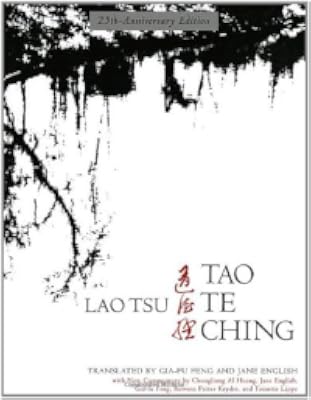
Tao Te Ching, 25th-Anniversary Edition (English and Mandarin Chinese Edition)
by Lao Tsu
On This Page
Description
Red Pine's translation of the most revered of Chinese texts corrects errors in previous interpretations, truly breathes new poetic life into the English version, and includes selected commentaries-judged by Chinese scholars to be essential to understanding the wisdom of Taoism. Pine incorporates the commentaries of emperors and prime ministers, Taoist monks and nuns, Buddhist priests, poets, scholars, and the country's most famous philosophers of the past 2,000 years. This marks the first show more time that non-Chinese speakers have been given access to such a range of wisdom explaining the deeper meaning of China's famous ancient classic. With its clarity and scholarly range, this version of the Taoteching works both as a readable text and a valuable resource of Taoist interpretation. Lao-tzu, founder of Taoism, is supposed to have written the Taoteching around 600 BC in the Chungnan Mountain region, where Red Pine (Bill Porter) interviewed contemporary hermits as described in his book Road to Heaven: Encounters with Chinese Hermits. Bill Porter is also the translator of The Zen Works of Stonehouse, of Sung Po-jen's Guide to Capturing a Plum Blossom, and of The Collected Songs of Cold Mountain. show lessTags
Recommendations


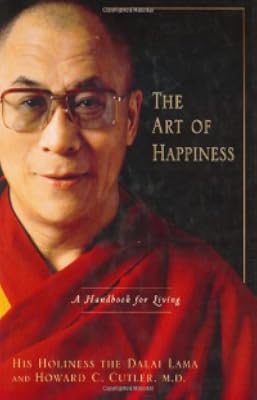
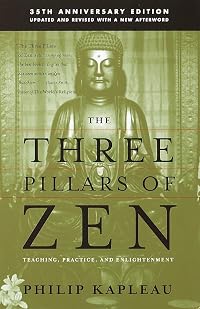

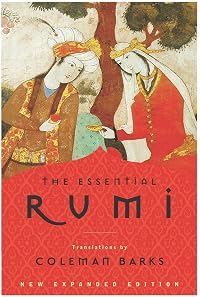
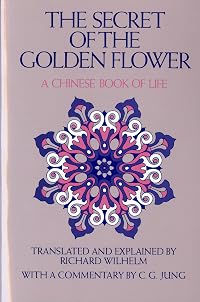



Member Reviews
“Do you have the patience to wait until your mud settles and the water is clear?”
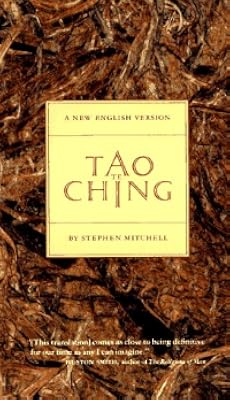
Well I learned two things upon completing this translation. One being that the Stephen Mitchell translation I had praised earlier takes a lot of liberties with the work. So much so that Taoists who have read it loathe it, and I think I can understand why given he made it more palatable to the modern reader, and certain elements are bound to be lost with such a decision. Which, of course, is always controversial with translation, especially of texts that are considered foundational. Also because after reading this translation, it seems to me there was no need to do that as its message resonates with the modern reader regardless. Which is also a good show more lesson for me, regarding my initial praise of Mitchell's translation, as it reminds me just how little one may know and how clueless one may be when one doesn't know. I still think the Mitchell translation gives some of Tao Te Ching’s essence, but shouldn't be the only English translation of the text one should read. I preferred this one with its commentary, which gives more insight to the modern reader, although separate from the work itself.
The second thing I learned is how this book's teachings, especially that of non-action, like lots of other teachings, have been appropriated and misused by the business world—there’s not a nook capitalism won't slip through and drain what it finds there for all it can get—and the military for uses that run contrary to the book’s message. show less
Well I learned two things upon completing this translation. One being that the Stephen Mitchell translation I had praised earlier takes a lot of liberties with the work. So much so that Taoists who have read it loathe it, and I think I can understand why given he made it more palatable to the modern reader, and certain elements are bound to be lost with such a decision. Which, of course, is always controversial with translation, especially of texts that are considered foundational. Also because after reading this translation, it seems to me there was no need to do that as its message resonates with the modern reader regardless. Which is also a good show more lesson for me, regarding my initial praise of Mitchell's translation, as it reminds me just how little one may know and how clueless one may be when one doesn't know. I still think the Mitchell translation gives some of Tao Te Ching’s essence, but shouldn't be the only English translation of the text one should read. I preferred this one with its commentary, which gives more insight to the modern reader, although separate from the work itself.
The second thing I learned is how this book's teachings, especially that of non-action, like lots of other teachings, have been appropriated and misused by the business world—there’s not a nook capitalism won't slip through and drain what it finds there for all it can get—and the military for uses that run contrary to the book’s message. show less
Classic, beautifully translated (and beautiful accompanying photographs). This is comforting in its timelessness, and shakes me out of being stuck in my head. A text I return to over and over.
Going to take a bit more reading to make sense of it all, but there are some great sections. Amongst others, I like "Prudence", "Immateriality", "Know your weakness", "Not knowing" and "Stay Flexible".
Mmmm, it seems it might be nice to read a different translation - the one by Stephen Mitchell feels more eloquent and natural.
Mmmm, it seems it might be nice to read a different translation - the one by Stephen Mitchell feels more eloquent and natural.
One of the classics. This translation by Jane English is one of my favorites. Plus, the pictures are wonderful. Great memories of winter camping are conjured up, for some reason.
beautiful writing for anyone, not just those interested in oriental philosophy
Not for me.
I like this translation.
Members
- Recently Added By
Lists

Tom's Bookstore
346 works; 2 members
Author Information

302+ Works 24,440 Members
Lao Tzu, a Chinese philosopher, is considered to be the founder of Taoism. His birth and death dates are uncertain. According to legend, Lao Tzu was keeper of the archives at the imperial court. When he was eighty years old he set out for the western border of China, saddened and disillusioned that men were unwilling to follow the path to natural show more goodness. At the border, he was asked by a border guard to record his teachings before he left. These teachings were compiled into the Tao Te Ching (The Way and Its Power). (Bowker Author Biography) show less
Classifications
- Genres
- Religion & Spirituality, Nonfiction, Philosophy
- DDC/MDS
- 299.51482 — Religion Other religions Shintoism/Taoism/Other Mythologies Of Asian Origin Religions of Chinese Origin Taoism Scriptures
- LCC
- BL1900 .L3 .E5 — Philosophy, Psychology and Religion Religions. Mythology. Rationalism Religions. Mythology. Rationalism History and principles of religions Asian. Oriental By region or country China Taoism
- BISAC
Statistics
- Members
- 1,123
- Popularity
- 22,545
- Reviews
- 12
- Rating
- (4.22)
- Languages
- English, German
- Media
- Paper
- ISBNs
- 4
- ASINs
- 7