On This Page
Description
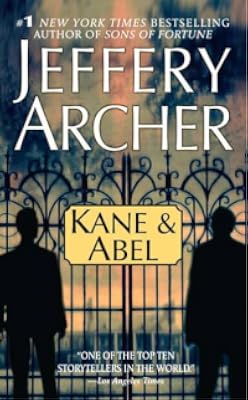
The mega-bestselling novel that made Jeffrey Archer a star, Kane and Abel, "a sprawling blockbuster!"—Publishers WeeklyTWO STRANGERS BORN WORLDS APART. ONE DESTINY THAT WOULD DEFINE THEM BOTH...
William Lowell Kane and Abel Rosnovski, one the son of a Boston millionaire, the other a penniless Polish immigrant—born on the same day near the turn of the century on opposite sides of the world—are brought together by fate and the quest of a dream.
Two men—ambitious, powerful, show more ruthless—are locked in a relentless struggle to build an empire, fueled by their all-consuming hatred. Over sixty years and three generations, through war, marriage, fortune, and disaster, Kane and Abel battle for the success and triumph that only one man can have.
"Archer is a master entertainer."—Time
. show less
Tags
Recommendations


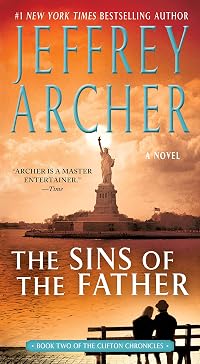




Member Reviews
Looking at an old book with modern lenses isn't easy. I have read this classic at least 4-5 times but more than fifteen years ago. This reread (which will probably be a final reread) took me down nostalgia lane.
In many ways, I have grown as a reader so I could see all the flaws of the book standing out glaringly - the umpteen coincidences, the "Bollywood potboiler" kind of drama, the lack of attention to the daughters,... These elements haven't stood the test of time. At the same time, nothing can deny the magnitude of the historical, social and political coverage of the book. Nor can one ignore how wonderfully the story is built up in parallel between the two main characters, each of them getting the spotlight for an almost equal time. show more That ending is also perfect. I would have been disappointed if it had gone the more clichéd way.
Kane and Abel are both grey characters in many ways. Regardless of their disparate start in life, they have so much in common, especially in their determination, drive and demands. I don't love the characters but I love their intricate character sketching. Only Jeffrey Archer can make you root for such complicated characters.
If I view this book through my 2022 perspective, I might rate it a 4. But considering the era it was written in, and keeping in mind the almost perfect blend of fact and fiction, I will go with 4.5. The fact that I could complete this 550 pager within two days shows how much I have loved this classic. It's still going to be one of my favourite Archer works, despite the myriad flaws. show less
In many ways, I have grown as a reader so I could see all the flaws of the book standing out glaringly - the umpteen coincidences, the "Bollywood potboiler" kind of drama, the lack of attention to the daughters,... These elements haven't stood the test of time. At the same time, nothing can deny the magnitude of the historical, social and political coverage of the book. Nor can one ignore how wonderfully the story is built up in parallel between the two main characters, each of them getting the spotlight for an almost equal time. show more That ending is also perfect. I would have been disappointed if it had gone the more clichéd way.
Kane and Abel are both grey characters in many ways. Regardless of their disparate start in life, they have so much in common, especially in their determination, drive and demands. I don't love the characters but I love their intricate character sketching. Only Jeffrey Archer can make you root for such complicated characters.
If I view this book through my 2022 perspective, I might rate it a 4. But considering the era it was written in, and keeping in mind the almost perfect blend of fact and fiction, I will go with 4.5. The fact that I could complete this 550 pager within two days shows how much I have loved this classic. It's still going to be one of my favourite Archer works, despite the myriad flaws. show less
Story Overview
Two men—William Lowell Kane and Abel Rosnovski—are born on the same day in 1906. However, their births could not be more different. Abel is a penniless orphan who is adopted by a poor Polish woodcutter's family after his mother is found dying by the road. Kane is born into a life of privilege—the only son of a powerful Boston banking millionaire.
The book chronicles the parallel lives of the two men. Abel endures hardship, tragedy and oppression but manages to immigrate to America and build a successful hotel chain. Kane takes full advantage of his birthright and receives the finest education money can buy and becomes the leader of one of America's oldest and most powerful banks—yet suffers a series of tragedies of show more his own that make him wary of trusting people.
Although their lives run parallel as they establish their careers, there are moments when their lives intersect. Eventually, they confront each other in a business situation that ends up affecting both their lives forever and leading to a game of one-upsmanship that affects not only their individual businesses but the U.S. financial community. As the conflict unfolds between them for the bulk of their adult lives, both are stunned to find that the biggest price ends up being paid by those they love the most.
My Thoughts
I'm going to say this upfront: I didn't like this book. I forced myself to finish reading it—hoping it might get better. It didn't. Once I was 200 pages in, I felt I needed to just go ahead and slog on through.
I had high hopes going in because I'd seen a few bloggers raving about Jeffrey Archer and his books—especially Kane & Abel. But whatever they might have seen in this book eluded me because it left me cold.
My first problem is with the writing style. I found the writing to be very choppy. The entire book is written in a kind of rat-a-tat-tat style that I found off-putting. The majority of the narration and dialogue simply exists to move the story along; there isn't a lot of introspection, character development or extraneous description. I kept thinking: "This book seems so masculine. So abrupt and cold." I don't know if this is typical of Jeffrey Archer, but I don't plan on finding out. Characters are introduced and then dispatched with cold abandon. Perhaps this is meant to mirror the characters themselves—both of whom are somewhat unlikable and ruthless—but I feel it doesn't allow the reader to get a toehold into the story.
My next problem was with the amazing coincidences that keep bringing these two together. I guess I should have expected that from the very beginning when Archer chose to have them born on the same day. However, it began to annoy the heck out of me when they kept having run-ins that were really unbelievable. I mean, in all of the insanity of World War II, the fact that Abel (who mostly stays behind battle lines managing the food prep) ventures into "combat" exactly one time and manages to heroically save one person and it ends up being Kane was just too much for me.
Another coincidence that drove me up the wall was when these men—who end up being the bitterest enemies bent on mutual destruction for almost the entire book—both have one person they love more than anyone in the world—their children. I'll give you one guess who ends up falling in love. Yes....their children. Doesn't that just beat all? I mean it isn't like they live in a small town or anything where the choices are limited. No, they "find" each other in the podunk town of New York City. Oh, did I spoil the book for you? Well, you should have seen it coming a mile off—I know I did and I'm terrible at that kind of stuff.
But perhaps the biggest reason I didn't like the book was that I didn't like Kane or Abel. I just didn't give a darn what happened to either one of them. Both are obsessed with money and power and have few "real" human relationships. So once you factor in unlikable characters, add in a writing style that didn't grab me, and multiply by plot turns that seem unbelievably contrived, I ended up giving this book two stars (and that is being generous).
My Final Recommendation
I don't recommend this book at all. I didn't enjoy it in the least. So, I guess I've defying Otto Preminger, who has a blurb on the back of my book that reads: "I defy anyone not to enjoy this book, which is one of the best novels I have ever read." Well, Mr. Preminger: I didn't enjoy it. What are you going to do about it?
But I have to tell you, I seem to be alone in my assessment of this book from what I can tell. There are tons of 5 star reviews on Amazon, and the book jacket itself is just loaded with glowing praise. So, even though it wasn't my type of book, it might still have merit for you. show less
Two men—William Lowell Kane and Abel Rosnovski—are born on the same day in 1906. However, their births could not be more different. Abel is a penniless orphan who is adopted by a poor Polish woodcutter's family after his mother is found dying by the road. Kane is born into a life of privilege—the only son of a powerful Boston banking millionaire.
The book chronicles the parallel lives of the two men. Abel endures hardship, tragedy and oppression but manages to immigrate to America and build a successful hotel chain. Kane takes full advantage of his birthright and receives the finest education money can buy and becomes the leader of one of America's oldest and most powerful banks—yet suffers a series of tragedies of show more his own that make him wary of trusting people.
Although their lives run parallel as they establish their careers, there are moments when their lives intersect. Eventually, they confront each other in a business situation that ends up affecting both their lives forever and leading to a game of one-upsmanship that affects not only their individual businesses but the U.S. financial community. As the conflict unfolds between them for the bulk of their adult lives, both are stunned to find that the biggest price ends up being paid by those they love the most.
My Thoughts
I'm going to say this upfront: I didn't like this book. I forced myself to finish reading it—hoping it might get better. It didn't. Once I was 200 pages in, I felt I needed to just go ahead and slog on through.
I had high hopes going in because I'd seen a few bloggers raving about Jeffrey Archer and his books—especially Kane & Abel. But whatever they might have seen in this book eluded me because it left me cold.
My first problem is with the writing style. I found the writing to be very choppy. The entire book is written in a kind of rat-a-tat-tat style that I found off-putting. The majority of the narration and dialogue simply exists to move the story along; there isn't a lot of introspection, character development or extraneous description. I kept thinking: "This book seems so masculine. So abrupt and cold." I don't know if this is typical of Jeffrey Archer, but I don't plan on finding out. Characters are introduced and then dispatched with cold abandon. Perhaps this is meant to mirror the characters themselves—both of whom are somewhat unlikable and ruthless—but I feel it doesn't allow the reader to get a toehold into the story.
My next problem was with the amazing coincidences that keep bringing these two together. I guess I should have expected that from the very beginning when Archer chose to have them born on the same day. However, it began to annoy the heck out of me when they kept having run-ins that were really unbelievable. I mean, in all of the insanity of World War II, the fact that Abel (who mostly stays behind battle lines managing the food prep) ventures into "combat" exactly one time and manages to heroically save one person and it ends up being Kane was just too much for me.
Another coincidence that drove me up the wall was when these men—who end up being the bitterest enemies bent on mutual destruction for almost the entire book—both have one person they love more than anyone in the world—their children. I'll give you one guess who ends up falling in love. Yes....their children. Doesn't that just beat all? I mean it isn't like they live in a small town or anything where the choices are limited. No, they "find" each other in the podunk town of New York City. Oh, did I spoil the book for you? Well, you should have seen it coming a mile off—I know I did and I'm terrible at that kind of stuff.
But perhaps the biggest reason I didn't like the book was that I didn't like Kane or Abel. I just didn't give a darn what happened to either one of them. Both are obsessed with money and power and have few "real" human relationships. So once you factor in unlikable characters, add in a writing style that didn't grab me, and multiply by plot turns that seem unbelievably contrived, I ended up giving this book two stars (and that is being generous).
My Final Recommendation
I don't recommend this book at all. I didn't enjoy it in the least. So, I guess I've defying Otto Preminger, who has a blurb on the back of my book that reads: "I defy anyone not to enjoy this book, which is one of the best novels I have ever read." Well, Mr. Preminger: I didn't enjoy it. What are you going to do about it?
But I have to tell you, I seem to be alone in my assessment of this book from what I can tell. There are tons of 5 star reviews on Amazon, and the book jacket itself is just loaded with glowing praise. So, even though it wasn't my type of book, it might still have merit for you. show less
This is the type of epic story that I don’t think really gets written anymore. At the beginning, we meet both William Kane and Abel Rosnovski on the days of their birth. On the surface, they could not be more opposite. Kane is born into the best of Boston high society, the only son of a wealthy banking family. Abel is found by the side of a river by a peasant family in a Poland that’s on the edge of war.
The rest of the book follows both of these men through their entire lives as they strive for greatness. Their paths are very different, but they intertwine in unusual ways. You get to know both of them intimately, and can see where they are strongest and where they are blind. You may root for one, and then turn around and root for show more the other.
Archer takes you by the hand and pulls you through their story without ever bogging you down in the details. It is a long book, but it doesn’t feel that way. There is a reason why he is still selling books after 40+ years. show less
The rest of the book follows both of these men through their entire lives as they strive for greatness. Their paths are very different, but they intertwine in unusual ways. You get to know both of them intimately, and can see where they are strongest and where they are blind. You may root for one, and then turn around and root for show more the other.
Archer takes you by the hand and pulls you through their story without ever bogging you down in the details. It is a long book, but it doesn’t feel that way. There is a reason why he is still selling books after 40+ years. show less
A rather light, breezy read, nicely divided between scion of privilege and a recent immigrant as they make their way through the world and how hatred of each other forms their actions and reactions. I was enjoying it most of the time, until it slightly off the rails during a Romeo & Juliet-esque chapter or two and then never really recovered. The more I think about it, the less satisfied I am with the book. You'll know the ultimate ending about halfway through the book, but for some reason the character involved never figures it out (though there is no reason why he shouldn't have. I guess it can be argued by how obsessed he was by revenge that he was blinded to the bleeding obvious).
Reading up on the author, it does seem a little show more striking that one of the minor characters seems to share a certain moral laxity with him. show less
Reading up on the author, it does seem a little show more striking that one of the minor characters seems to share a certain moral laxity with him. show less
William Kane is born into wealth in the U.S. in the early 1900's. Abel Rosnovski is born on the same day in Poland, though under very different circumstances, anything but wealthy. Their paths later cross repeatedly, their relationship developing into a competition to outwit and destroy each other.
This was an abridged story (3 CDs), which made for a quick read on a short commute. Nice enough for a short time in the car, but nothing very deep or remarkable in this one. There really wasn't much of a climax and the plot felt very predictable. I doubt that this will stick with me for very long.
This was an abridged story (3 CDs), which made for a quick read on a short commute. Nice enough for a short time in the car, but nothing very deep or remarkable in this one. There really wasn't much of a climax and the plot felt very predictable. I doubt that this will stick with me for very long.
101-Πολύ μακροσκελές και προβλέψιμο. Περιγράφει μια απίστευτα μακροχρόνια μνησικακία μεταξύ δύο ισχυρών ανδρών. Μια μνησικακία που δεν έχει καμία πραγματικά λογική βάση. Σίγουρα, κανένας νοήμων άνθρωπος δεν θα κρατούσε τέτοια μνησικακία για τόσο μεγάλο χρονικό διάστημα. Είναι καλογραμμένο και υπάρχει πολύ καλή αφήγηση και εικόνες -- αλλά το θέμα με τη μνησικακία ήταν πραγματικά απογοητευτικό.
Η αρχή ήταν show more καλή. Νοιαζόμουν πολύ για τον Άμπελ. Μέχρι που πήγε στις ΗΠΑ και ξαφνικά έγινε βαρετός, ρηχός και κακόβουλος.
Η πλοκή είναι απίθανη σε σημείο που να γίνεται γελοία. show less
Η αρχή ήταν show more καλή. Νοιαζόμουν πολύ για τον Άμπελ. Μέχρι που πήγε στις ΗΠΑ και ξαφνικά έγινε βαρετός, ρηχός και κακόβουλος.
Η πλοκή είναι απίθανη σε σημείο που να γίνεται γελοία. show less
My first book by Jeffrey Archer, and I enjoyed it a lot. Unfortunately, I've read that the 2nd book of the series isn't as good, but I may read it one day. It's not exactly a continuation, and it summarizes a lot of the first book anyway.
Overall, the book was kind of sad, and got sadder as it continued. Two boys who are very different, one a banker's son in the US, the other one from a very poor family in Poland who is taken in by a count, but has very bad luck when the Russians take over and kill most of the people from the palace, including the boy's sister; the rest are imprisoned in such bad conditions that they mostly die, including the count.
The boy finally makes it to the US, and is eventually mortally offended by the banker, show more who he believes to be a spoiled, privileged son of a banker who caused the death of his mentor by calling in his loan during lean times, and broke up his own mother's marriage leading to her death. His hatred leads him to acts of hatred against his enemy, and it all escalates until both of them have their lives and families spoiled. And all over nothing, really. They should have been friends, and would have been had they gotten together when they had a chance.
I wanted to like the poor one from Poland who raised himself so high from so low, but he really wasn't a very honorable man in a lot of ways, although largely due to ignorance of our ways, I think. The rich banker's son seemed to be more honorable in most ways, and tried to avoid the other's hatred for as long as he could.
It was all very tragic, but a fine story with a good glimpse into life before and after WWII.
And by the way, the audiobook version was excellent, I thought. Very well done. show less
Overall, the book was kind of sad, and got sadder as it continued. Two boys who are very different, one a banker's son in the US, the other one from a very poor family in Poland who is taken in by a count, but has very bad luck when the Russians take over and kill most of the people from the palace, including the boy's sister; the rest are imprisoned in such bad conditions that they mostly die, including the count.
The boy finally makes it to the US, and is eventually mortally offended by the banker, show more who he believes to be a spoiled, privileged son of a banker who caused the death of his mentor by calling in his loan during lean times, and broke up his own mother's marriage leading to her death. His hatred leads him to acts of hatred against his enemy, and it all escalates until both of them have their lives and families spoiled. And all over nothing, really. They should have been friends, and would have been had they gotten together when they had a chance.
I wanted to like the poor one from Poland who raised himself so high from so low, but he really wasn't a very honorable man in a lot of ways, although largely due to ignorance of our ways, I think. The rich banker's son seemed to be more honorable in most ways, and tried to avoid the other's hatred for as long as he could.
It was all very tragic, but a fine story with a good glimpse into life before and after WWII.
And by the way, the audiobook version was excellent, I thought. Very well done. show less
Members
- Recently Added By
Lists

BBC Big Read
191 works; 46 members

Favourite Books
1,820 works; 316 members

Mind Expanding Books by hackerkid
581 works; 8 members

Genesis in literature
47 works; 7 members

BBC World Book Club
267 works; 5 members

World Book Club (BBC World Service)
212 works; 1 member
Author Information

272+ Works 52,391 Members
Jeffrey Archer was born on April 15, 1940, in London, England. After graduating from Brasenose College, Oxford, he founded his own company named Arrow Enterprises and promptly amassed a fortune. In 1969, he was elected to the House of Commons. A conservative Member of Parliament, he was, at the age of 29, the youngest member at that time. While in show more Parliament, he invested in a corporation and lost his fortune because of embezzlement. Devastated and facing financial ruin, he recounted his experiences in his book, Not a Penny More, Not a Penny Less. The success of this book launched his writing career. His other works include Kane and Abel, Honor among Thieves, Shall We Tell the President?, A Quiver Full of Arrows, The Prodigal Daughter, and The Sins of the Father. He is also the author of The Clifton Chronicles series. He writes plays including Beyond Reasonable Doubt and The Accused. He was sentenced to four years imprisonment because of perjury and conspiracy to pervert the course of justice, and was released in July 2003. He published three volumes of his Prison Diary: Hell, Purgatory, and Heaven. In 2014, his title Be Careful What You Wish For made The New York Times Bestseller List. In 2015 his title Mightier than the Sword made the same bestsller list. (Bowker Author Biography) show less
Awards and Honors
Distinctions
Notable Lists
Series

Belongs to Publisher Series
Work Relationships
Is contained in
Contains
Has as a student's study guide
Common Knowledge
- Canonical title*
- Kane en Abel
- Original title
- Kane and Abel
- Original publication date
- 1979
- People/Characters
- William Lowell Kane; Abel Rosnovski
- Important places
- Poland; Boston, Massachusetts, USA; New York, New York, USA; London, England, UK; Chicago, Illinois, USA; Remagen, Rhine Province, Germany
- Important events
- Battle of Remagen
- Related movies
- Kane & Abel (1985 | IMDb)
- Epigraph
- Two men have made this book possible, and they both wish to remain anonymous. One because he is working on his own autobiography, and the other because he is still a public figure in the United States.
- Dedication
- To Michael and Jane
- First words
- April 18, 1906
Slonim, Poland
She only stopped screaming when she died. - Last words
- (Click to show. Warning: May contain spoilers.)The beneficiary was his grandson, William Abel Kane.
- Blurbers
- Howatch, Susan; Erdman, Paul
- Original language
- English
- Disambiguation notice
- ISBN 1851522603 is for Kane and Abel; The Prodigal Daughter; and Not a Penny More, Not a Penny Less.
*Some information comes from Common Knowledge in other languages. Click "Edit" for more information.
Classifications
- Genres
- Fiction and Literature, General Fiction, Historical Fiction
- DDC/MDS
- 823.914 — Literature & rhetoric English & Old English literatures English fiction 1900- 1901-1999 1945-1999
- LCC
- PZ4 .A6725 — Language and Literature Fiction and juvenile belles lettres Fiction and juvenile belles lettres Fiction in English
- BISAC
Statistics
- Members
- 3,913
- Popularity
- 4,044
- Reviews
- 73
- Rating
- (3.94)
- Languages
- 18 — Bulgarian, Czech, Danish, Dutch, English, Finnish, French, German, Hungarian, Italian, Japanese, Marathi, Norwegian (Bokmål), Polish, Portuguese, Russian, Spanish, Swedish
- Media
- Paper, Audiobook, Ebook
- ISBNs
- 140
- ASINs
- 36