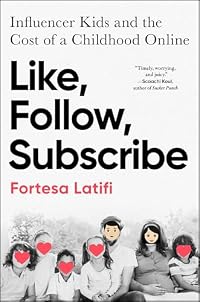
Like, Follow, Subscribe: Influencer Kids and the Cost of a Childhood Online
by Fortesa Latifi
On This Page
Tags
Recommendations
















Member Reviews
Rating:
3.5 Stars
In a nutshell:
What is the cost - and what (if any) are the benefits - of sharing one’s children online?
Best for:
Those interested in the impact of sharing the lives of children on social media.
Quote that made me think:
“There is no child advocate, only the parents.”
Why I chose it:
I for some reason am finding social media quite interesting these days. Possibly because I’m not using it nearly as much as I used to
Review:
I am not a parent, I never will be a parent, and I am way too old for any of my childhood to have been chronicled online. So in theory, this book wouldn’t be of interest to me. But I live in society, and I see how the generations younger than me make use of social media. In some ways, it’s amazing show more - spreading the call out for activist mobilization, sharing funny videos to entertain folks in tough times. But it also can clearly be a force that harms people. And one of those ways may be in how children are featured by their families (usually mothers) in social media.
Author Latifi is a mother herself, and pitched this book while pregnant, finishing it less than a year post-partum. So she has the perspective not just of a journalist but of a mother. She’s very clear that some of the very social media posts that folks might find questionable because they feature children and babies were helpful for her in some of her most challenging times. And that’s the main dichotomy this book explores - Does the value (some of) these posts provides - in terms of building community, helping mothers not feel alone, sharing stories that might help others - outweigh the harm that can be caused to the children featured in them, especially when children don’t have the capacity to consent.
Latifi explores the history of family vlogging, starting with ‘mommy blogging’ - stories women would share via blog posts that might or might not feature photos of their children. There was a level of community and support that could help mothers who might not have their own community, or who might be experiencing specific things that other mothers online were experiencing. Over time, as social media evolved to feature photos and videos (short- and long-form), ‘mommy vlogers’ and ‘family vlogers’ became staples. By default these would feature children, some as young as freshly born, and some nearly old enough to have their own social media profiles.
We’ve seen what happens when this goes wrong - the Rube Franke case showed that some parents put their children through hell. And there is an underlying connection to things like religious evangelicalism and the ‘tradwife’ movement. But there are also children who seem to enjoy this life. And, as Latifi points out, social media work is one that can offer the type of flexibility (and monetary reward) that few jobs allow working parents. Where she and I differ I think is in her conclusion that while she never would put her kids in that situations, questioning it seem almost misogynistic? I suppose because it is a way of work that is primarily filled by women. But just because it is a choice a woman can make doesn’t make it feminist.
After reading this book, I do appreciate the benefit some of these social media accounts provide to others, essentially recreating a bit of a parasocial ‘village’ support mothers. But I don’t think there is enough done to protect the children whose lives are broadcast online. Latifi explores attempts to have some accountability, but laws are sparse and complicated. And while parents do make a lot of other choices for their children that are essentially irreversible, the internet is public, and it is forever, and to me that makes the choices even more critical.
Would I recommend it to its target audience:
I don’t fully agree with the author’s conclusions, but I think the discussion was important. show less
3.5 Stars
In a nutshell:
What is the cost - and what (if any) are the benefits - of sharing one’s children online?
Best for:
Those interested in the impact of sharing the lives of children on social media.
Quote that made me think:
“There is no child advocate, only the parents.”
Why I chose it:
I for some reason am finding social media quite interesting these days. Possibly because I’m not using it nearly as much as I used to
Review:
I am not a parent, I never will be a parent, and I am way too old for any of my childhood to have been chronicled online. So in theory, this book wouldn’t be of interest to me. But I live in society, and I see how the generations younger than me make use of social media. In some ways, it’s amazing show more - spreading the call out for activist mobilization, sharing funny videos to entertain folks in tough times. But it also can clearly be a force that harms people. And one of those ways may be in how children are featured by their families (usually mothers) in social media.
Author Latifi is a mother herself, and pitched this book while pregnant, finishing it less than a year post-partum. So she has the perspective not just of a journalist but of a mother. She’s very clear that some of the very social media posts that folks might find questionable because they feature children and babies were helpful for her in some of her most challenging times. And that’s the main dichotomy this book explores - Does the value (some of) these posts provides - in terms of building community, helping mothers not feel alone, sharing stories that might help others - outweigh the harm that can be caused to the children featured in them, especially when children don’t have the capacity to consent.
Latifi explores the history of family vlogging, starting with ‘mommy blogging’ - stories women would share via blog posts that might or might not feature photos of their children. There was a level of community and support that could help mothers who might not have their own community, or who might be experiencing specific things that other mothers online were experiencing. Over time, as social media evolved to feature photos and videos (short- and long-form), ‘mommy vlogers’ and ‘family vlogers’ became staples. By default these would feature children, some as young as freshly born, and some nearly old enough to have their own social media profiles.
We’ve seen what happens when this goes wrong - the Rube Franke case showed that some parents put their children through hell. And there is an underlying connection to things like religious evangelicalism and the ‘tradwife’ movement. But there are also children who seem to enjoy this life. And, as Latifi points out, social media work is one that can offer the type of flexibility (and monetary reward) that few jobs allow working parents. Where she and I differ I think is in her conclusion that while she never would put her kids in that situations, questioning it seem almost misogynistic? I suppose because it is a way of work that is primarily filled by women. But just because it is a choice a woman can make doesn’t make it feminist.
After reading this book, I do appreciate the benefit some of these social media accounts provide to others, essentially recreating a bit of a parasocial ‘village’ support mothers. But I don’t think there is enough done to protect the children whose lives are broadcast online. Latifi explores attempts to have some accountability, but laws are sparse and complicated. And while parents do make a lot of other choices for their children that are essentially irreversible, the internet is public, and it is forever, and to me that makes the choices even more critical.
Would I recommend it to its target audience:
I don’t fully agree with the author’s conclusions, but I think the discussion was important. show less
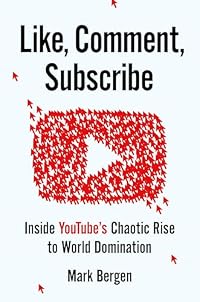
Like, Follow, Subscribe focuses on mom vloggers who become full-time social media influencers exposing the lives of their families for monetizable content. Meant to be an exploration of the issues surrounding these influencers including things like privacy violations, financial abuse, trauma, pressure, family, abuse, neglect, etc..., the author attempts to dive into the popularity of these sites to explain why this is this case. While I don't think this was quite successful as I don't feel like the author went deep enough, there were still some things that make you think and question and wonder about why these sites are so popular.
This book is about how these moms film and monetise their content, but in reality, a lot of it is built on show more lies. It is also about the immense amount of money they make which seems to justify the reasoning behind why they do it in the first place. I did enjoy the way the author discussed the evolution of blogging to the way families are portrayed today on TikTok and Youtube as I remember some of the early blogs from when I started blogging myself. However, I was never a follower of the mom blogs, I just remember some of the advertisements for workshops in Toronto in the early days about them and how you could start your own blog and make money. I also liked how the author shared a number of different types of vlogs, from the more exploitative ones to the ones who don't share any information about their kids online at all.
While I didn't mind the writing style of this book, I did feel it was very shallow, like she was afraid to offend any of the mom vloggers she interviewed. And anytime she got personal in her book, especially with regards to her daughter, she was very hesitant as if she was afraid to give her full opinion about how she felt so a lot of it felt wishy washy. Either go personal or stay objective. Straddling the line isn't good writing. For example, the chapter with regards to legislation the author spent a great deal of time examining the laws passed by several states, but relied on other people to give their opinion with how effective it would be, and those people who gave their opinion were not even law experts. Why not actually interview kids who tried to sue their parents, tried to stop their parents, or got the law involved? There was little of this in the book to take the book to a deeper level. However, the author did talk to Kevin Franke to get his views on what happened. WTF? And there wasn't anyone else she could have spoken to?
To be fair, I think I was looking for more from this book. I was looking for a more researched book rather than something that was more about other people's research and other people's conclusions. And I know I may get some flack for this, but the author actually got on my nerves some of the time, whining about how difficult it is to be a mom. Yes, I get it, but she has a part-time nanny, for crying out loud. And a full support system. I would have loved a part-time nanny. And this is the part that kept me away from all of the mom blogs over the years, the falseness of it all. I just wish these mom vloggers would admit to what they do behind the scenes in order to make their videos.
Verdict
Like, Follow, Subscribe is one of those books where the content definitely needs to be discussed and more conversations need to be had with regards to child exploitation. The issue is complex and there are many factors involved with regards to this issue. How do we ensure children are kept safe from parents who wish to exploit their children for money especially when the working conditions are in their own homes? How do we ensure kids are safe from online predators? How do we put a system in place to monitor abuse? I would have liked more research into the responsibility of tech companies into this issue as I do feel they play a role in this issue, something the author dismisses. This book was definitely thought-provoking, but while it highlighted a lot of issues, it definitely didn't go deep enough into them nor was there enough research done in the right areas. If you are looking for a lighter read on this topic, this book may be for you, but if you are looking for a deeper explanation I would recommend research articles, not this book. show less
This book is about how these moms film and monetise their content, but in reality, a lot of it is built on show more lies. It is also about the immense amount of money they make which seems to justify the reasoning behind why they do it in the first place. I did enjoy the way the author discussed the evolution of blogging to the way families are portrayed today on TikTok and Youtube as I remember some of the early blogs from when I started blogging myself. However, I was never a follower of the mom blogs, I just remember some of the advertisements for workshops in Toronto in the early days about them and how you could start your own blog and make money. I also liked how the author shared a number of different types of vlogs, from the more exploitative ones to the ones who don't share any information about their kids online at all.
While I didn't mind the writing style of this book, I did feel it was very shallow, like she was afraid to offend any of the mom vloggers she interviewed. And anytime she got personal in her book, especially with regards to her daughter, she was very hesitant as if she was afraid to give her full opinion about how she felt so a lot of it felt wishy washy. Either go personal or stay objective. Straddling the line isn't good writing. For example, the chapter with regards to legislation the author spent a great deal of time examining the laws passed by several states, but relied on other people to give their opinion with how effective it would be, and those people who gave their opinion were not even law experts. Why not actually interview kids who tried to sue their parents, tried to stop their parents, or got the law involved? There was little of this in the book to take the book to a deeper level. However, the author did talk to Kevin Franke to get his views on what happened. WTF? And there wasn't anyone else she could have spoken to?
To be fair, I think I was looking for more from this book. I was looking for a more researched book rather than something that was more about other people's research and other people's conclusions. And I know I may get some flack for this, but the author actually got on my nerves some of the time, whining about how difficult it is to be a mom. Yes, I get it, but she has a part-time nanny, for crying out loud. And a full support system. I would have loved a part-time nanny. And this is the part that kept me away from all of the mom blogs over the years, the falseness of it all. I just wish these mom vloggers would admit to what they do behind the scenes in order to make their videos.
Verdict
Like, Follow, Subscribe is one of those books where the content definitely needs to be discussed and more conversations need to be had with regards to child exploitation. The issue is complex and there are many factors involved with regards to this issue. How do we ensure children are kept safe from parents who wish to exploit their children for money especially when the working conditions are in their own homes? How do we ensure kids are safe from online predators? How do we put a system in place to monitor abuse? I would have liked more research into the responsibility of tech companies into this issue as I do feel they play a role in this issue, something the author dismisses. This book was definitely thought-provoking, but while it highlighted a lot of issues, it definitely didn't go deep enough into them nor was there enough research done in the right areas. If you are looking for a lighter read on this topic, this book may be for you, but if you are looking for a deeper explanation I would recommend research articles, not this book. show less
Members
- Recently Added By
Lists

The Economist Books of 2026 So Far (June 2026)
25 works; 1 member
Author Information
5 Works 43 Members
Statistics
- Members
- 21
- Popularity
- 1,226,906
- Reviews
- 2
- Rating
- (3.00)
- Languages
- English
- Media
- Paper, Ebook
- ISBNs
- 1
- ASINs
- 1