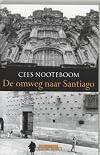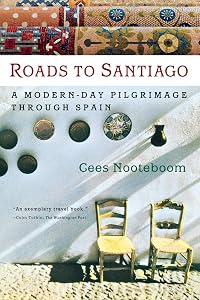
Roads to Santiago
by Cees Nooteboom
On This Page
Description
Roads to Santiago is Cees Nooteboom's passionate and beautifully written chronicle of Spain - its architecture, art, history, landscapes, villages, and people. Traveling from side road to side road, he discovers a profound and mysterious country not found in standard tourist guides. Nooteboom is continually seduced by an unknown name on a signpost, by what might be seen on the next hill or beyond a distant mountain. His destination may be Santiago de Compostela, but he lingers in Aragon, show more passes through Granada, dines in Chinchon, and strolls the empty halls of the Prado. His prose, too, takes side roads, lovely digressions, sometimes literary, sometimes political, by turns ironic, erudite, melancholy. show lessTags
Recommendations



























Member Reviews
Prepared to be swept away by Nooteboom's luxurious descriptions of Spain. Everything seen through his lens is treated with lavish prose. I could see the styles of Roman and Gothic architecture as if I were standing in front of each structure. Renaissance and Baroque art come to life with vivid reality. I now want to visit the Cathedral of Santiago de Compostela with its pillars marked with fingerprints. While Nooteboom subtitles his book "a modern-day pilgrimage" we look in on the 8th century in a time of Beatus, King Silo, and the Carolingian Empire. Nooteboom draws parallels between Antigone of Sophocles and the Spanish state after Euzkadi ta Askatsuna targeted violence. We dance between historical and modern Spain with personal show more anecdotes thrown in for good measure. Aside from the beautiful writing, Nooteboom included stunning black and white photographs. Too bad they are not in color. show less
I thought I would like this book more. Spain is somewhat on the periphery of my interests. What I know about Spain is mostly about Roman Spain: Hannibal, Caesar, Spanish emperors Trajan and Hadrian. Nooteboom focuses mainly on medieval Spain and the Spanish Civil War. While ostensibly about pilgrimage to Santiago, this is basically a travel book that ends up in Santiago after somewhat random forays through the rest of Spain. Nooteboom visits and describes many churches and monasteries, describing architecture and paintings in great detail. His descriptions are cascading, almost run on sentences, often verging on stream of consciousness, with occasional references to various art history books he hauled with him. I find written show more descriptions of paintings and monuments tedious. The many photos in the books are poor quality black and white, often somewhat out of focus. They are spectral and atmospheric, but otherwise useless. There are occasional digressions, on Antigone, the death of Borges, etc., which are sometimes more interesting than the travel narrative. Late in the book, I realized why I didn't like it much. Most good to great travel books include encounters with people, anecdotes about local culture, etc. This one not so much. The people Nooteboom encounters are entirely incidental to the buildings and paintings. He could have probably saved the trip and written this tedious tome in his study in Amsterdam. show less
"A Espanha é brutal, anárquica, egocêntrica, cruel; a Espanha é capaz de cavar a própria sepultura por razões absurdas, é caótica, sonha,é completamente irracional. Conquistou o mundo e não soube o que fazer com ele, está arraigada a seu passado medieval, árabe, judeu e cristão, e continua ali, com suas cidades teimosas, engastada nessas paisagens infinitas, vazias, como um continente ligado à Europa sem ser a Europa. Quem percorreu apenas os circuitos obrigatórios não conhece a Espanha. Quem não não tentou se perder na complexidade labiríntica de sua história ignora o país por onde anda."
Caminhos para Santiago não é tanto sobre a peregrinação para Santiago como sobre os desvios que o autor toma para discutir a show more cultura e a história do país pelo qual é há muito tempo apaixonado. show less
Caminhos para Santiago não é tanto sobre a peregrinação para Santiago como sobre os desvios que o autor toma para discutir a show more cultura e a história do país pelo qual é há muito tempo apaixonado. show less
While talking to a friend in Los Angeles the other day, the Camino came up and I told him about a wonderful book I had read years ago, before coming to live in Spain. After we talked I thought, since it had been years since I read it, maybe now was a good time to read it again, since I liked it so much the first time.
This was the only book that had Santiago in the title, so I figured this was the book I was thinking of. But no. It is not. I suppose I read this years ago too, and maybe I liked it, since I still had it on my shelf. Starting in again I thought it was very good. What a lovely introduction about traveling to certain, special places:
"It is impossible to prove and yet I believe it: there are some places in the world where one show more is mysteriously magnified on arrival or departure by the emotions of all those who have arrived and departed before. Anyone possessed of a soul so light feels a gentle tug in the air around the Schreierstoren, the Sorrowers' Tower in Amsterdam, which has to do with the accumulated sadness of those left behind. It is a sadness we do not experience today: our journeys no longer take years to complete, we know exactly where it is we are going, and our chances of coming back are so much greater."
It goes on for a while in the same vein and it's lovely. But after a while Nooteboom and I turned up on different sides of the road. He is obsessed with and enamored of Spain. I dislike it about as much as he loves it. The ignorance and brutality that he appreciates turns me off. He isn't going to Santiago, although I suppose he gets there in the end. He is wandering all over Spain, although he gives Barcelona and Catalonia only the time it takes to drive across and leave, while he returns to Madrid countless times (which may account for why he knows so little about Catalonia, only mentioning Salvador Dali in relation to the melting of time). When he went on and on.... and on about the painter Zurbaran, I totally lost interest. Cervantes was interesting but after that, it was adios.
And the worst thing is that I can't find that book I really liked. I thought it was also by a Dutchman, but maybe not? He starts the Camino in France but can't do the whole walk in one go. So he returns two more times. Anyone know what book that is? And why it isn't still on my shelf? show less
This was the only book that had Santiago in the title, so I figured this was the book I was thinking of. But no. It is not. I suppose I read this years ago too, and maybe I liked it, since I still had it on my shelf. Starting in again I thought it was very good. What a lovely introduction about traveling to certain, special places:
"It is impossible to prove and yet I believe it: there are some places in the world where one show more is mysteriously magnified on arrival or departure by the emotions of all those who have arrived and departed before. Anyone possessed of a soul so light feels a gentle tug in the air around the Schreierstoren, the Sorrowers' Tower in Amsterdam, which has to do with the accumulated sadness of those left behind. It is a sadness we do not experience today: our journeys no longer take years to complete, we know exactly where it is we are going, and our chances of coming back are so much greater."
It goes on for a while in the same vein and it's lovely. But after a while Nooteboom and I turned up on different sides of the road. He is obsessed with and enamored of Spain. I dislike it about as much as he loves it. The ignorance and brutality that he appreciates turns me off. He isn't going to Santiago, although I suppose he gets there in the end. He is wandering all over Spain, although he gives Barcelona and Catalonia only the time it takes to drive across and leave, while he returns to Madrid countless times (which may account for why he knows so little about Catalonia, only mentioning Salvador Dali in relation to the melting of time). When he went on and on.... and on about the painter Zurbaran, I totally lost interest. Cervantes was interesting but after that, it was adios.
And the worst thing is that I can't find that book I really liked. I thought it was also by a Dutchman, but maybe not? He starts the Camino in France but can't do the whole walk in one go. So he returns two more times. Anyone know what book that is? And why it isn't still on my shelf? show less
I learnt quite a bit from this book, which explained previously puzzling elements of Spanish culture and history in terms that I could comprehend easily. I liked the descriptions of Spanish landscape very much. After a promising start there was a tendency towards pretentiousness and a certain arrogance from the author which I found off-putting. The sexist writing style also grated.
Cees Nooteboom's book Roads to Santiago describes his winding travels through Spain towards his final destination, Santiago de Compostela in Northern Spain, the place where the remains of St James the Great are supposedly buried. Santiago de Compostela attracted pilgrims as far back as the middle ages. Also called the Way of St James the route has existed for over a thousand years. It was one of the most important Christian pilgrimages during medieval times. St James the Great was one of the twelve Apostles of Jesus and perhaps his cousin as his mother was probably the sister of the virgin Mary.
Cees pilgrimage however was not of religious nature, what moved him was his love for Spain in particular for its landscape, in which he finds a show more reflection of his own personal character.
Cees explores medieval Spain in the present country, searching for old churches and monasteries along his travels, and exploring the many contrasts between the two societies. Sometimes Cees flashes back to a more recent history of Spain to offer the reader modern connections with the events of the medieval times. Connections that reveal a logic and a symbolism already present in a land where Christianity and Islam sustained a long battle for supremacy more than a thousand years ago.
Cees often reflects on the similarities of the past and present Spain making the reader wonder to what extent the world has changed in regards to what really moves human beings.
Roads to Santiago as a travel book presents the approach of understanding the culture of the places that the traveler visits; something rarely seen these days when tourists rush through a countries’ iconic places and popular attractions. On the other hand Cees avoids those common places and delves deep into the geographical and time dimensions of Spain to reveal its secrets.
Roads to Santiago engages the reader, who will be left with a desire to know more. For that purpose Cees has provided plenty of references for anyone to continue his research adventure. The readers will be probably tempted to gather some old books, a couple of maps and travel to Spain to see for themselves the country which Cees fell in love with. show less
Cees pilgrimage however was not of religious nature, what moved him was his love for Spain in particular for its landscape, in which he finds a show more reflection of his own personal character.
Cees explores medieval Spain in the present country, searching for old churches and monasteries along his travels, and exploring the many contrasts between the two societies. Sometimes Cees flashes back to a more recent history of Spain to offer the reader modern connections with the events of the medieval times. Connections that reveal a logic and a symbolism already present in a land where Christianity and Islam sustained a long battle for supremacy more than a thousand years ago.
Cees often reflects on the similarities of the past and present Spain making the reader wonder to what extent the world has changed in regards to what really moves human beings.
Roads to Santiago as a travel book presents the approach of understanding the culture of the places that the traveler visits; something rarely seen these days when tourists rush through a countries’ iconic places and popular attractions. On the other hand Cees avoids those common places and delves deep into the geographical and time dimensions of Spain to reveal its secrets.
Roads to Santiago engages the reader, who will be left with a desire to know more. For that purpose Cees has provided plenty of references for anyone to continue his research adventure. The readers will be probably tempted to gather some old books, a couple of maps and travel to Spain to see for themselves the country which Cees fell in love with. show less
My first acquaintance with Cees Nooteboom is via this bookk. I already was curious about his work and then I got this book as a present. That was one-and-a-half year ago, just before my first trip to Spain. Now my third trip is planned and I finally read this book.
Unfortunately I don't know a lot about the history of Spain and that makes this book sometimes complicated, as I have to fill in some gaps. The same applies to the many architectural descriptions of small churches. A topic I'm not too interested in.
But that does not mean I didn't like this book! I loved the writing style of Nooteboom. But I also found out that you need time for it (which wasn't a problem at all). Tthe book is divided into about 25 separate stories, that can be show more read in one sitting and are not really connected, so I read the book over a couple of months. And I had the version of the book with pictures, so there is plenty to watch.
I can imagine that I will read this book again as I've been more in Spain and I when I have deepened my hirstorical knowledge. I definitely want to read more by Nooteboom. Although he makes a lot of detours it is very interesting. And I'm also curious for his novels.
http://boekenwijs.blogspot.com/2012/02/de-omweg-naar-santiago.html show less
Unfortunately I don't know a lot about the history of Spain and that makes this book sometimes complicated, as I have to fill in some gaps. The same applies to the many architectural descriptions of small churches. A topic I'm not too interested in.
But that does not mean I didn't like this book! I loved the writing style of Nooteboom. But I also found out that you need time for it (which wasn't a problem at all). Tthe book is divided into about 25 separate stories, that can be show more read in one sitting and are not really connected, so I read the book over a couple of months. And I had the version of the book with pictures, so there is plenty to watch.
I can imagine that I will read this book again as I've been more in Spain and I when I have deepened my hirstorical knowledge. I definitely want to read more by Nooteboom. Although he makes a lot of detours it is very interesting. And I'm also curious for his novels.
http://boekenwijs.blogspot.com/2012/02/de-omweg-naar-santiago.html show less
Members
- Recently Added By
Lists

501 Must-Read Books
529 works; 72 members

Books Read in 2021
5,361 works; 113 members
Author Information

194+ Works 7,643 Members
Some Editions
Awards and Honors
Awards
Notable Lists
Series
Belongs to Publisher Series
L'eclèctica (182)
Common Knowledge
- Canonical title
- Roads to Santiago
- Original title
- De omweg naar Santiago
- Original publication date
- 1992
- Important places
- Spain; Santiago de Compostela, Galicia, Spain
- Dedication*
- Voor jou Simone
Voor Simone - First words*
- Het is niet te bewijzen en toch geloof ik het: op sommige plaatsen in de wereld wordt je aankomst of vertrek op geheimzinnige wijze vermeerderd door de emoties van al diegenen die daar eerder zijn vertrokken of aangekomen.
- Last words*
- (Click to show. Warning: May contain spoilers.)Zijn Spaanse reis is voorbij.
- Original language
- Dutch
*Some information comes from Common Knowledge in other languages. Click "Edit" for more information.
Classifications
- Genres
- Travel, Nonfiction, General Nonfiction, Biography & Memoir
- DDC/MDS
- 910 — History & geography Geography & travel modified standard subdivisions of Geography and travel
- LCC
- PT5881.24 .O55 .O513 — Language and Literature German, Dutch and Scandinavian literatures Dutch literature Individual authors or works 1961-2000
- BISAC
Statistics
- Members
- 662
- Popularity
- 43,663
- Reviews
- 21
- Rating
- (3.55)
- Languages
- 11 — Catalan, Danish, Dutch, English, French, German, Italian, Norwegian (Bokmål), Portuguese, Spanish, Swedish
- Media
- Paper, Ebook
- ISBNs
- 35
- ASINs
- 5