
On This Page
Description
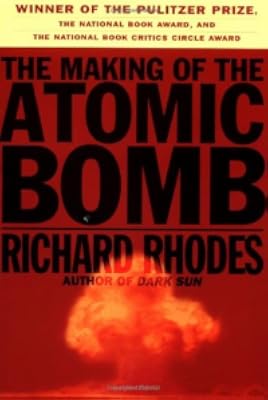
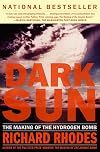
The definitive history of nuclear weapons and the Manhattan Project. From the turn-of-the-century discovery of nuclear energy to the dropping of the first bombs on Japan, Richard Rhodes's Pulitzer Prize–winning book details the science, the people, and the sociopolitical realities that led to the development of the atomic bomb.This sweeping account begins in the 19th century, with the discovery of nuclear fission, and continues to World War Two and the Americans' race to beat Hitler's show more Nazis. That competition launched the Manhattan Project and the nearly overnight construction of a vast military-industrial complex that culminated in the fateful dropping of the first bombs on Hiroshima and Nagasaki.
Reading like a character-driven suspense novel, the book introduces the players in this saga of physics, politics, and human psychology—from FDR and Einstein to the visionary scientists who pioneered quantum theory and the application of thermonuclear fission, including Planck, Szilard, Bohr, Oppenheimer, Fermi, Teller, Meitner, von Neumann, and Lawrence.
From nuclear power's earliest foreshadowing in the work of H.G. Wells to the bright glare of Trinity at Alamogordo and the arms race of the Cold War, this dread invention forever changed the course of human history, and The Making of The Atomic Bomb provides a panoramic backdrop for that story.
Richard Rhodes's ability to craft compelling biographical portraits is matched only by his rigorous scholarship. Told in rich human, political, and scientific detail that any reader can follow, The Making of the Atomic Bomb is a thought-provoking and masterful work. show less
Tags
Recommendations











Member Recommendations
by anonymous user

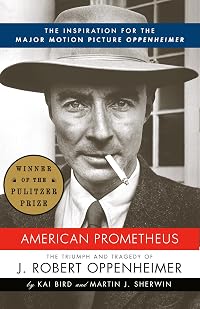
gneimer An interesting biography of two men who helped shape the atomic era. Rhodes pulls quite a bit of information from this book. A study in contrast between Lawrence and Oppenheimer.
Member Reviews
"Now I am become Death, the destroyer of worlds."
Robert Oppenheimer, director of the Los Alamos lab, chief designer of the atomic bomb, and a polymath with mystic and leftist inclinations, had the perfect quote for the first artificial dawn of an atomic explosion. There are many ways in which we die: disease, age, accident, violence. And many ways in which we might all die; suddenly in the wake of some cosmological catastrophe or slowly starving on a dying planet. With the atom bomb, it was now possible for a single individual, at the top of a chain of technological and political commitments, to kill almost everyone in the space of an afternoon. The bombs were only used in anger twice, punctuation to end the global slaughter of the show more Second World War. Since then, history has existed under the shadow of a potential mushroom cloud. This book is the story of how we got there.
Rhodes takes almost the first half of the book to establish the basic science and personalities of the atomic bomb. The first half of the 20th century was a golden age for physics which will likely never be equaled, as imaginative theorists and skilled experimenters probed the basic building blocks of the universe. Rutherford and Bohr nailed down, for the first time in evidence rather than speculation, the basic building blocks of matter. Atoms had most of their mass in a small nucleus, and owed their chemical properties to the quantum behavior of electron shells. The neutron was added to the list of fundamental particles. New elements were created by neutron bombardment, and by the late 1930s it was widely known that uranium would fission on bombardment, splitting into two lighter elements, and releasing a large deal of energy. There positive glee of work in this field, at this time, comes through in Rhodes' able biographical sketches of the scientists involved, particularly Bohr, Fermi, and Szilard.
Szilard was the first to think of the potential of a fission chain reaction. If some substance, on absorbing a neutron split and released two or more neutrons, could produce a great deal of energy in millionths of a second. It would be a bomb of stupendous power, a city-smasher. Politically perceptive, Szilard had been helping Jewish physicists flee the Nazis for years. He had hoped for an H.G. Wells inspired international coalition to peacefully control this new power, but in 1939 if the bomb was too be invented, best by the Americans or British rather than Hitler.
The next section, building the bomb, is less fun. Bohr predicted that you would need to turn all of America into a factory to build a bomb, and that is what the Manhattan project did, mobilizing thousands of scientists, $2 billion, and massive plants to do the hard work of separating fissile U-235 and Plutonium from natural uranium. Bureaucratic confusion and balky precision engineering made the task anything but easy. The other powers pursued the bomb. The British sent over their best to help with the Manhattan project. Germany's team, lead by Heisenberg, never had the necessary priority in the Reich, and were stalled by clever British-Norwegian sabotage directed at a heavy water production facility required for the Nazi reactor design. Japan never had access to the raw material to move beyond theory.
The last section is grimmer yet. The design of the bomb was an exercise in precision, in delicately engineered explosive lenses to make the implosion to critical mass happen smoothly in nanoseconds. Tibbetts' B-29 bomber group trained to a razor's edge to accomplish the mission of deploying the 'gadget'. Roosevelt, on approving the Manhattan project, had instinctively reserved the bomb to himself as President. In 1945, Vice President Truman had not been read into the project until he succeeded to the presidency. The bomb was used on Hiroshima because it could be, because the Japanese still resisted, and because something had to be shown for the effort invested. It was a crime, a mass-murder in an instant. Rhodes does not flinch from the horror of Hiroshima.
Personally, I think we need to distinguish between the bomb's use at the end of the Second World War, where it seems a matter of degree compared to area bombing rather than kind, and its use now, where that would signal breaking the nuclear taboo. This does not absolve the scientists who built the bomb of their responsibility. Nature's secrets were all around, and once fission had been theorized it was probably only a matter of time before someone figured out how to make it work, but these people made a choice to build Death a supersonic jet bomber to replicate his tired old horse.
The Making of the Atomic Bomb is a penetrating look at the most consequential scientific and political moment of the 20th century. I'd give it six stars, if I could. It is also my 1000th review on Goodreads! show less
Robert Oppenheimer, director of the Los Alamos lab, chief designer of the atomic bomb, and a polymath with mystic and leftist inclinations, had the perfect quote for the first artificial dawn of an atomic explosion. There are many ways in which we die: disease, age, accident, violence. And many ways in which we might all die; suddenly in the wake of some cosmological catastrophe or slowly starving on a dying planet. With the atom bomb, it was now possible for a single individual, at the top of a chain of technological and political commitments, to kill almost everyone in the space of an afternoon. The bombs were only used in anger twice, punctuation to end the global slaughter of the show more Second World War. Since then, history has existed under the shadow of a potential mushroom cloud. This book is the story of how we got there.
Rhodes takes almost the first half of the book to establish the basic science and personalities of the atomic bomb. The first half of the 20th century was a golden age for physics which will likely never be equaled, as imaginative theorists and skilled experimenters probed the basic building blocks of the universe. Rutherford and Bohr nailed down, for the first time in evidence rather than speculation, the basic building blocks of matter. Atoms had most of their mass in a small nucleus, and owed their chemical properties to the quantum behavior of electron shells. The neutron was added to the list of fundamental particles. New elements were created by neutron bombardment, and by the late 1930s it was widely known that uranium would fission on bombardment, splitting into two lighter elements, and releasing a large deal of energy. There positive glee of work in this field, at this time, comes through in Rhodes' able biographical sketches of the scientists involved, particularly Bohr, Fermi, and Szilard.
Szilard was the first to think of the potential of a fission chain reaction. If some substance, on absorbing a neutron split and released two or more neutrons, could produce a great deal of energy in millionths of a second. It would be a bomb of stupendous power, a city-smasher. Politically perceptive, Szilard had been helping Jewish physicists flee the Nazis for years. He had hoped for an H.G. Wells inspired international coalition to peacefully control this new power, but in 1939 if the bomb was too be invented, best by the Americans or British rather than Hitler.
The next section, building the bomb, is less fun. Bohr predicted that you would need to turn all of America into a factory to build a bomb, and that is what the Manhattan project did, mobilizing thousands of scientists, $2 billion, and massive plants to do the hard work of separating fissile U-235 and Plutonium from natural uranium. Bureaucratic confusion and balky precision engineering made the task anything but easy. The other powers pursued the bomb. The British sent over their best to help with the Manhattan project. Germany's team, lead by Heisenberg, never had the necessary priority in the Reich, and were stalled by clever British-Norwegian sabotage directed at a heavy water production facility required for the Nazi reactor design. Japan never had access to the raw material to move beyond theory.
The last section is grimmer yet. The design of the bomb was an exercise in precision, in delicately engineered explosive lenses to make the implosion to critical mass happen smoothly in nanoseconds. Tibbetts' B-29 bomber group trained to a razor's edge to accomplish the mission of deploying the 'gadget'. Roosevelt, on approving the Manhattan project, had instinctively reserved the bomb to himself as President. In 1945, Vice President Truman had not been read into the project until he succeeded to the presidency. The bomb was used on Hiroshima because it could be, because the Japanese still resisted, and because something had to be shown for the effort invested. It was a crime, a mass-murder in an instant. Rhodes does not flinch from the horror of Hiroshima.
Personally, I think we need to distinguish between the bomb's use at the end of the Second World War, where it seems a matter of degree compared to area bombing rather than kind, and its use now, where that would signal breaking the nuclear taboo. This does not absolve the scientists who built the bomb of their responsibility. Nature's secrets were all around, and once fission had been theorized it was probably only a matter of time before someone figured out how to make it work, but these people made a choice to build Death a supersonic jet bomber to replicate his tired old horse.
The Making of the Atomic Bomb is a penetrating look at the most consequential scientific and political moment of the 20th century. I'd give it six stars, if I could. It is also my 1000th review on Goodreads! show less
https://www.goodreads.com/review/show/5653048601
When I finished reading through the final chapter’s last pages, I wondered: what’s the most important book ever written? I did a quick Google and found that all the suggested lists used the word “influential” instead, not what I wanted. I put quotes around the query and was not too pleased to find a bunch of christian websites using SEO to convince Google to serve an answer: the Bible.
I’m not going to suggest that The Making of the Atomic Bomb is the most important book ever written. I think it’s up on the list, in the top quarter, at least. It is probably one of the most important books I’ve read. Many Americans know a vague sketch of the Manhattan Project; I expect very show more few could trace its history back to Leo Szilard reading Ernest Rutherford calling the idea of liberating atomic energy “moonshine.”
The book is a tome, and there’s no way around it. Some readers will think the history too far-flung, too detailed, and too long. I scratched my head through passages of the book and had to read and reread a few of them. Yet, this is a literary work of high quality. The whole book is a gentle but consistently rising crescendo.
The final two chapters - Trinity and Tongues of Fire - are astounding. It may be the best non-fiction writing I have had the pleasure and discomfort of reading. In Trinity, Rhodes walks us on a nearly second-by-second countdown to the terrible culmination of centuries of scientific work. Tongues of Flame elevates numerous accounts of survivors from Hiroshima and Nagasaki, deploying language to try and communicate the incommunicable.
There are so many roads one could go down following this. I found Colonel Stimson compelling. I’ve known the tale of his removal of Kyoto from the list of targets for a long, long time - but I always understood the reasoning as little more than his honeymooning there (a tale the movie OPPENHEIMER recounts). This book paints a much more nuanced view of Stimson as someone horrified by the bomb (and horrified by the firebombings of Dresden and Tokyo) and as a statesman straddling generations and losing purchase in an evolving world.
It took me a long time to get through this book, but I’m glad I did. Astounding. show less
When I finished reading through the final chapter’s last pages, I wondered: what’s the most important book ever written? I did a quick Google and found that all the suggested lists used the word “influential” instead, not what I wanted. I put quotes around the query and was not too pleased to find a bunch of christian websites using SEO to convince Google to serve an answer: the Bible.
I’m not going to suggest that The Making of the Atomic Bomb is the most important book ever written. I think it’s up on the list, in the top quarter, at least. It is probably one of the most important books I’ve read. Many Americans know a vague sketch of the Manhattan Project; I expect very show more few could trace its history back to Leo Szilard reading Ernest Rutherford calling the idea of liberating atomic energy “moonshine.”
The book is a tome, and there’s no way around it. Some readers will think the history too far-flung, too detailed, and too long. I scratched my head through passages of the book and had to read and reread a few of them. Yet, this is a literary work of high quality. The whole book is a gentle but consistently rising crescendo.
The final two chapters - Trinity and Tongues of Fire - are astounding. It may be the best non-fiction writing I have had the pleasure and discomfort of reading. In Trinity, Rhodes walks us on a nearly second-by-second countdown to the terrible culmination of centuries of scientific work. Tongues of Flame elevates numerous accounts of survivors from Hiroshima and Nagasaki, deploying language to try and communicate the incommunicable.
There are so many roads one could go down following this. I found Colonel Stimson compelling. I’ve known the tale of his removal of Kyoto from the list of targets for a long, long time - but I always understood the reasoning as little more than his honeymooning there (a tale the movie OPPENHEIMER recounts). This book paints a much more nuanced view of Stimson as someone horrified by the bomb (and horrified by the firebombings of Dresden and Tokyo) and as a statesman straddling generations and losing purchase in an evolving world.
It took me a long time to get through this book, but I’m glad I did. Astounding. show less
This is a powerful, deeply affecting book. Its 800 pages are dense, and require much of the reader. But the return is a comprehensive account of the development of the atomic bomb: the nuclear physics of the first decades of 20th century that made the effort possible; the historical context that led to its construction; the scientific collaboration at Los Alamos and how the feat was accomplished. In a forceful closing, Rhodes offers an astute evaluation of the results, implications and challenges the bomb brought to the world.
Many books fail to stand the test of time; here the three decades since its publication have only affirmed its centrality in telling the story of the atomic bomb. Rhodes had access to some of the key figures in the show more making of the bomb who were then still alive, which supplemented his exceptional talent for writing history and the history of science. And to the reader’s good fortune, Rhodes happens to be an impeccable prose stylist. The book justly received the Pulitzer Prize, National Book Award and National Book Critics Circle Award.
As a reader of the history of science, I was firmly in the grip of Rhodes’ delivery of the familiar but still electrifying story of nuclear physics from the early discovery of xrays and radioactivity (Röntgen, Becquerel, Curie) at the end of the 19th century through its culmination in Otto Hahn and Lise Meitner’s discovery of nuclear fission. While told in meticulous detail, this long section reads like a scientific thriller.
Any serious account of the making of the atomic bomb must contend with the responses of the scientists to the consequences of their work. Three figures central to the intellectual underpinnings of the Manhattan Project cast a giant moral shadow over this story. Leo Szilard is well known for his letter co-written with Einstein to FDR informing him of the feasibility of a bomb, and warning of the possibility of a German nuclear effort. He was also the man who developed the idea that connected nuclear fission to a bomb: the nuclear chain reaction. And yet as the bomb neared completion, Szilard exhausted himself in trying to encourage the United States not to use it. Robert Oppenheimer, brilliant director of the Manhattan Project, is seen after his greatest success to labor under the impossible burden of having brought such destructive power into the world. Finally, Neils Bohr, among the greatest and most influential of scientists, is shown as the conscience of his peers. Bohr used his authority to present to the Allied leaders his concept of the complementarity represented by the bomb. In this he meant that the destructiveness of the weapon contained an inherent opposite – that the power of the bomb necessitated fundamental changes in political arrangements, and in fact required us to put an end to war. The alternative was an arms race leading to the unthinkable.
Rhodes ultimately puts the atomic bomb into its most important human context: with Bohr’s notion of its complementarity, comes the imperative to face the fundamental changes wrought by nuclear technology. He argues that the modern nation-state has appropriated the power of science and fashioned out of it a death machine. He sees citizens “slowly come to understand that in a nuclear world their national leaders cannot, no matter how much tribute and control they exact, protect even their citizens’ bare lives, the minimum demand the commons have made in exchange for the political authority that is ultimately theirs alone to award.” Our minimal protection is the mere hope of the restraint of others similarly armed. Seventy years after Hiroshima, thirty years after the publication of this book, are we any closer to addressing the imperatives thrust upon us?
In 1946, Einstein famously warned “The splitting of the atom changed everything save man’s mode of thinking, thus we drift towards unparalleled catastrophe.” Einstein was right about so many things. Let us hope that this too will not prove to be one of them. show less
Many books fail to stand the test of time; here the three decades since its publication have only affirmed its centrality in telling the story of the atomic bomb. Rhodes had access to some of the key figures in the show more making of the bomb who were then still alive, which supplemented his exceptional talent for writing history and the history of science. And to the reader’s good fortune, Rhodes happens to be an impeccable prose stylist. The book justly received the Pulitzer Prize, National Book Award and National Book Critics Circle Award.
As a reader of the history of science, I was firmly in the grip of Rhodes’ delivery of the familiar but still electrifying story of nuclear physics from the early discovery of xrays and radioactivity (Röntgen, Becquerel, Curie) at the end of the 19th century through its culmination in Otto Hahn and Lise Meitner’s discovery of nuclear fission. While told in meticulous detail, this long section reads like a scientific thriller.
Any serious account of the making of the atomic bomb must contend with the responses of the scientists to the consequences of their work. Three figures central to the intellectual underpinnings of the Manhattan Project cast a giant moral shadow over this story. Leo Szilard is well known for his letter co-written with Einstein to FDR informing him of the feasibility of a bomb, and warning of the possibility of a German nuclear effort. He was also the man who developed the idea that connected nuclear fission to a bomb: the nuclear chain reaction. And yet as the bomb neared completion, Szilard exhausted himself in trying to encourage the United States not to use it. Robert Oppenheimer, brilliant director of the Manhattan Project, is seen after his greatest success to labor under the impossible burden of having brought such destructive power into the world. Finally, Neils Bohr, among the greatest and most influential of scientists, is shown as the conscience of his peers. Bohr used his authority to present to the Allied leaders his concept of the complementarity represented by the bomb. In this he meant that the destructiveness of the weapon contained an inherent opposite – that the power of the bomb necessitated fundamental changes in political arrangements, and in fact required us to put an end to war. The alternative was an arms race leading to the unthinkable.
Rhodes ultimately puts the atomic bomb into its most important human context: with Bohr’s notion of its complementarity, comes the imperative to face the fundamental changes wrought by nuclear technology. He argues that the modern nation-state has appropriated the power of science and fashioned out of it a death machine. He sees citizens “slowly come to understand that in a nuclear world their national leaders cannot, no matter how much tribute and control they exact, protect even their citizens’ bare lives, the minimum demand the commons have made in exchange for the political authority that is ultimately theirs alone to award.” Our minimal protection is the mere hope of the restraint of others similarly armed. Seventy years after Hiroshima, thirty years after the publication of this book, are we any closer to addressing the imperatives thrust upon us?
In 1946, Einstein famously warned “The splitting of the atom changed everything save man’s mode of thinking, thus we drift towards unparalleled catastrophe.” Einstein was right about so many things. Let us hope that this too will not prove to be one of them. show less
It's one of the most intellectually satisfying books I've read in a long time. If you are to read only one history book or only one science book in your life - pick this one. You'll kill two birds with one stone and you won't be disappointed.
It's hard to summarize this book. In fact, it feels like a few distinct, but carefully interwoven, books. One documents the birth and development of nuclear physics, presenting scientific milestones and their contributors. Another depicts war as the people-powered death machine perfected with the atomic bomb's invention. A different one shows people who grapple with the possible consequences of their work in wartime distorted morality. I also enjoyed the one about a difficult merge of acamedia and show more army that created from scratch one of the biggest industries in the US, which purpose was hidden from the public and most of its employees. It's still far from a comprehensive list of subjects, themes, and stories included in this book. While not all might be equally captivating, I'm sure that everyone can find something intriguing and thought-provoking for themselves.
It's a slow read. Not only because of its size (38+ hours in the audiobook format) but also density. The amount of research behind this book is staggering, especially if you account for the pre-digital era it was done in. There is a lot to process here so it might be hard to consume in big chunks. Also, the subject matter is rather profound and requires some contemplation. I appreciate the author creating space for this, by refraining from imposing his judgment or narrative, allowing eyewitnesses to speak, and letting the readers make up their own opinion and meaning.
The sheer number of facts and meticulous approach to detail can be overwhelming. There are moments that feel like someone describing a wall-sized 8k image pixel by pixel. It's impressive but not really engaging. However, this means that you'll get quite a high-resolution version of the events you care about. I thoroughly enjoyed getting to know physicists, who I knew only from the units, laws, and equations named after them, as real people with their ambitions, demons, families, and frenemies. Their influences, childhood stories, traumas, and descriptions of their unique styles of making and describing science were mesmerizing for me... but I guess they might be tiresome for others.
Kudos also to the audio production of the audiobook. Holter Graham is an amazing narrator who keeps listeners engaged for hours, trying to sound as accurate as possible for the legion of people he quotes in this piece.
If you are not discouraged by the 38 hours or nearly 1000 pages long book about science and war, I highly recommend you give this one a chance. I wish I had read it at school, it presents an epic story that was shortened to a single paragraph in my history books that completely doesn't do justice to the meaning and value of these events. It's peculiar to read it during the war in Ukraine and the looming threat of using nuclear power again. Maybe if more people were interested in the history of an atomic bomb, we would be less likely to repeat it... show less
It's hard to summarize this book. In fact, it feels like a few distinct, but carefully interwoven, books. One documents the birth and development of nuclear physics, presenting scientific milestones and their contributors. Another depicts war as the people-powered death machine perfected with the atomic bomb's invention. A different one shows people who grapple with the possible consequences of their work in wartime distorted morality. I also enjoyed the one about a difficult merge of acamedia and show more army that created from scratch one of the biggest industries in the US, which purpose was hidden from the public and most of its employees. It's still far from a comprehensive list of subjects, themes, and stories included in this book. While not all might be equally captivating, I'm sure that everyone can find something intriguing and thought-provoking for themselves.
It's a slow read. Not only because of its size (38+ hours in the audiobook format) but also density. The amount of research behind this book is staggering, especially if you account for the pre-digital era it was done in. There is a lot to process here so it might be hard to consume in big chunks. Also, the subject matter is rather profound and requires some contemplation. I appreciate the author creating space for this, by refraining from imposing his judgment or narrative, allowing eyewitnesses to speak, and letting the readers make up their own opinion and meaning.
The sheer number of facts and meticulous approach to detail can be overwhelming. There are moments that feel like someone describing a wall-sized 8k image pixel by pixel. It's impressive but not really engaging. However, this means that you'll get quite a high-resolution version of the events you care about. I thoroughly enjoyed getting to know physicists, who I knew only from the units, laws, and equations named after them, as real people with their ambitions, demons, families, and frenemies. Their influences, childhood stories, traumas, and descriptions of their unique styles of making and describing science were mesmerizing for me... but I guess they might be tiresome for others.
Kudos also to the audio production of the audiobook. Holter Graham is an amazing narrator who keeps listeners engaged for hours, trying to sound as accurate as possible for the legion of people he quotes in this piece.
If you are not discouraged by the 38 hours or nearly 1000 pages long book about science and war, I highly recommend you give this one a chance. I wish I had read it at school, it presents an epic story that was shortened to a single paragraph in my history books that completely doesn't do justice to the meaning and value of these events. It's peculiar to read it during the war in Ukraine and the looming threat of using nuclear power again. Maybe if more people were interested in the history of an atomic bomb, we would be less likely to repeat it... show less
One of the best non-fiction books I've ever read, and certainly one of the two most important to me personally. It isn't just that it lays out the physics, chemistry, and history involved in an exhaustively detailed story that is clear and comprehensive. It is that it allows the reader to wrestle with the same ideas the scientists involved are forced to reckon with. What is the morality of finishing this project? Is it relative to the rest of the war, or is it its own thing?
I really can't recommend this book highly enough.
I really can't recommend this book highly enough.
It is hard to see how there could be a more definitive account of the Manhattan project than this one. The pages overflow with all kinds of trivia and there are so many characters that float in and out of its pages that it reads like a real life "War and Peace". I found it very difficult to keep track of them all but the narrative moved along smoothly enough despite this. For the majority of the book, my main reaction was one of astonishment at the level of scientific and engineering ingenuity displayed by the many scientists who worked in the rapidly maturing field of nuclear physics. The tone turned ominous slowly as the Los Alamos physicists worked towards the bomb in earnest and the book does a phenomenal job of transporting us to show more that time and place. I was white knuckled with tension as the seconds winded down towards T-0 of the trinity test. Things then got decidedly uglier as the bomb moved from the relatively scientific setting it had lived in thus far to the messy, violent war theater of the Asia Pacific. The very short concluding section is about the after-effects of the Hiroshima bombing told in the words of the survivors themselves. This section physically nauseated me and gave me a splitting headache.
Even though the book does a good job of paralleling the development of the bomb with the events of WWII, a political account this most definitely is not. The book restricts itself to factual statements regarding the US administration's decision to bomb Hiroshima. I was looking forward to understanding why the second bomb had to be dropped given the lethal efficiency of the first was there for all to see - was it motivated at least in part to test the new implosion based bomb design? Unfortunately, the book glosses over this point. The book also tows the official line for justifying the bombs. Of course it saved American lives but other countries (including India!!!) had more casualties than either UK or USA and with the added threat of Soviet Union about to declare war on Japan, it is quite possible that Japan could have been coerced into an unconditional surrender without a land based invasion. Perhaps, to paraphrase Willard, debating whether the bombs were necessary is as pointless as handing speeding tickets at Indy 500. Both sides committed so many atrocities and had become so numb to the loss of human life that the bombs, when they arrived on the scene, stood out not for the staggering number of deaths they would cause but for the incredible efficiency with which they would do so.
In all, an encyclopaedic account that will leave me spending many many hours on Wikipedia in the months to come. show less
Even though the book does a good job of paralleling the development of the bomb with the events of WWII, a political account this most definitely is not. The book restricts itself to factual statements regarding the US administration's decision to bomb Hiroshima. I was looking forward to understanding why the second bomb had to be dropped given the lethal efficiency of the first was there for all to see - was it motivated at least in part to test the new implosion based bomb design? Unfortunately, the book glosses over this point. The book also tows the official line for justifying the bombs. Of course it saved American lives but other countries (including India!!!) had more casualties than either UK or USA and with the added threat of Soviet Union about to declare war on Japan, it is quite possible that Japan could have been coerced into an unconditional surrender without a land based invasion. Perhaps, to paraphrase Willard, debating whether the bombs were necessary is as pointless as handing speeding tickets at Indy 500. Both sides committed so many atrocities and had become so numb to the loss of human life that the bombs, when they arrived on the scene, stood out not for the staggering number of deaths they would cause but for the incredible efficiency with which they would do so.
In all, an encyclopaedic account that will leave me spending many many hours on Wikipedia in the months to come. show less
This book has stared out at me from my shelf for over two decades. I finally accepted the challenge: It is a marvel of research and writing. It reads at points like a great mystery novel as world class physicists struggle not only to impact the young field of nuclear physics but to understand the significance of what others have found both in theoretical and real world terms. It is great science, great history, great storytelling. It captures the pity of an open scientific community pulled in both WW I & II into plying their trade for their respective nation states.
Before reading this, I had no real appreciation for the magnitude of the U.S.'s industrial buildout during the war years--its unbelievable scale--once the project was fully show more underway. It seems clear that only an industrial juggernaut could have carried out the building of the bomb while fighting a two front world war.
The book is also, of course, very disturbing because there is no mistaking the ultimate goal. Rhodes captures the satisfaction the Los Alamos scientists have in their contribution to ending the war with their 'gadget' at the same time they struggled with their misgivings about what they have unleashed. Their pride in years of work runs headlong into Rhode's wrenching descriptions of Hiroshima in the aftermath of the bombing.
Rhodes focuses frequently on Neils Bohr and his greatness as a theoretical physicist, a humanitarian, and as a sort of seer in his ability to see what the bomb might mean for the world and, in the hands of individual nation states, what it most probably would come to mean. Rhodes, having lived with this material and the issues for so long, does not back off at the book's conclusion from making the reader face the 'Nation of the the Dead' created by 20th century war and the famine and pestilence that follows in war's wake and our seeming inability to grapple with this in any other than the old nation-state bound ways. show less
Before reading this, I had no real appreciation for the magnitude of the U.S.'s industrial buildout during the war years--its unbelievable scale--once the project was fully show more underway. It seems clear that only an industrial juggernaut could have carried out the building of the bomb while fighting a two front world war.
The book is also, of course, very disturbing because there is no mistaking the ultimate goal. Rhodes captures the satisfaction the Los Alamos scientists have in their contribution to ending the war with their 'gadget' at the same time they struggled with their misgivings about what they have unleashed. Their pride in years of work runs headlong into Rhode's wrenching descriptions of Hiroshima in the aftermath of the bombing.
Rhodes focuses frequently on Neils Bohr and his greatness as a theoretical physicist, a humanitarian, and as a sort of seer in his ability to see what the bomb might mean for the world and, in the hands of individual nation states, what it most probably would come to mean. Rhodes, having lived with this material and the issues for so long, does not back off at the book's conclusion from making the reader face the 'Nation of the the Dead' created by 20th century war and the famine and pestilence that follows in war's wake and our seeming inability to grapple with this in any other than the old nation-state bound ways. show less
Members
- Recently Added By
Lists

Best Science Books for Non-Scientists
113 works; 56 members

Non-Fiction Worth Reading
1,015 works; 261 members

Top Five Books of 2022
736 works; 272 members

25 Greatest Science Books of All Time
33 works; 6 members

Modern Library 100 Best Nonfiction Books
100 works; 8 members

The Hive Recommends
62 works; 2 members

KIB Non-Fiction Book Cloud
41 works; 1 member

The Great Courses: Quantum Mechanics
29 works; 1 member

r/AskHistorians' Recommended Books
1,068 works; 17 members

Book Titles Mentioned In Newberry Medal And Honor Books
884 works; 3 members

Books We Love to Reread
688 works; 296 members

Wishlist
99 works; 1 member
Recommendations by TGC (Quantum Mechanics)
29 works; 1 member

In Our Time books
4,934 works; 2 members
Author Information

28+ Works 10,127 Members
Richard Rhodes, the award-winning author of twenty-two books, lives and works mi the California coast above Half Moon Bay.
Some Editions
Awards and Honors
Awards
Distinctions
Series

Belongs to Publisher Series
Work Relationships
Has as a student's study guide
Common Knowledge
- Canonical title
- The Making of the Atomic Bomb
- Original title
- The Making of the Atomic Bomb
- Original publication date
- 1986
- People/Characters
- Niels Bohr; Luis W. Alvarez; Herbert Anderson; Francis W. Aston; Kenneth Bainbridge; Winston Churchill (show all 26); Arthur H. Compton; James B. Conant; Albert Einstein; Enrico Fermi; Laura Fermi (Laura Capon Fermi); Richard Feynman; Otto Frisch; Leslie R. Groves; Otto Hahn; Werner Heisenberg; Ernest Lawrence (Ernest O. Lawrence); David E. Lilienthal; Frederick Lindemann, 1st Viscount Cherwell; George C. Marshall; Lise Meitner; John von Neumann; Robert Oppenheimer; Henry L. Stimson; Leo Szilard; Edward Teller
- Important places
- Chicago, Illinois, USA; Los Alamos, New Mexico, USA; Alamogordo, New Mexico, USA; Hiroshima, Japan
- Important events
- Atomic Bombings of Hiroshima and Nagasaki (1945); Manhattan Project; World War II (1939 | 1945)
- Dedication
- In memory John Cushman 1926-1984
- First words
- In London, where Southampton Row passes Russel Square, across from the British Museum in Bloomsbury, Leo Szilard waited irritably one gray Depression morning for the stoplight to change.
- Quotations
- Early in 1945 Oak Ridge began shipping bomb-grade U235 to Los Alamos. Between shipments Groves took no chance with a substance far more valuable gram for gram than diamonds. Although the Army had condemned all the land and ej... (show all)ected the original inhabitants from the Clinton reservation area, at the dead end of a dusty reservation back road cattle grazed on a pasture beside a white farmhouse. A concrete silo towered over the road which was sheltered by a steep bluff. From the air the scene resembled any number of small Tennessee holdings, but the silo was a machine-gun emplacement, the farm was manned by security guards, and built into the side of the bluff a concrete bunker shielded a bank-sized vault completely encircled with guarded walkways. In this pastoral fortress Groves stored his accumulating grams of U235. Armed couriers transported it as uranium tetrafluoride in special luggage by car to Knoxville, where they boarded the overnight express to Chicago. They passed on the luggage the next morning to their Chicago counterparts, who held a reserved space on the Santa Fe Chief. Twenty-six hours later, in midafternoon, the Chicago couriers debarked at Lamy, the stranded desert way station that served Santa Fe. Los Alamos security men met the train and completed the transfer to the Hill, where chemists waited eagerly to reduce the rare cargo to metal.
- Last words
- (Click to show. Warning: May contain spoilers.)The different country that still opens before us is Bohr's open world.
- Blurbers
- Alvarez, Luis W.; Wigner, Eugene P.; Segre, Emilio; Seaborg, Glenn T.; Rabi, I. I.; Sagan, Carl (show all 8); Asimov, Isaac; Kidder, Tracy
Classifications
Statistics
- Members
- 4,070
- Popularity
- 3,796
- Reviews
- 60
- Rating
- (4.45)
- Languages
- 7 — English, German, Hungarian, Italian, Japanese, Polish, Swedish
- Media
- Paper, Audiobook, Ebook
- ISBNs
- 23
- ASINs
- 27