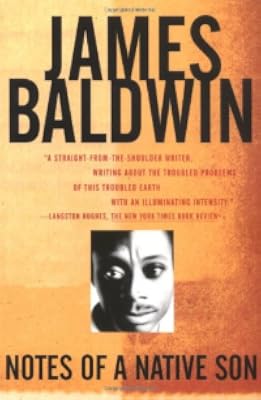
Notes of a Native Son
by James Baldwin
On This Page
Description
The author shares his views of black thought and the conditions of black life in America during the 1940's and early 1950's.Tags
Recommendations












Member Reviews
I wouldn’t be surprised if a concordance of this book would turn up “rage” as the most-used word. This collection of essays is incandescent with pride and bitterness expressed in meticulously crafted prose. The highlight is the title essay, but the most explicit statement of a way forward comes in the final essay, “Stranger in the Village”: “The black man insists, by whatever means he finds at his disposal, that the white man cease to regard him as an exotic rarity and recognize him as a human being.” That was published seventy years ago. I’d like to think we’ve made some progress since, but maybe there is no such thing as lasting progress. All the more reason to keep this eloquent book in reach.
Baldwin delves deeply show more into his being and shares what he finds unsparingly with the reader. If these essays have a flaw, it is in his assumption that in his diagnosis, he is speaking of “the” Negro and “the” white man. Perhaps he would defend himself by quoting from the final essay that nothing is more American than “to paint moral issues in glaring black and white.” show less
Baldwin delves deeply show more into his being and shares what he finds unsparingly with the reader. If these essays have a flaw, it is in his assumption that in his diagnosis, he is speaking of “the” Negro and “the” white man. Perhaps he would defend himself by quoting from the final essay that nothing is more American than “to paint moral issues in glaring black and white.” show less
I have to start off by saying Notes of a Native Son was way too short. I felt that Baldwin could have kept writing and writing. His essays held such clarity and truth they could have been written last year, last month, or even last week. Ranging from an analytical commentary of Harriet Beecher Stowe's Uncle Tom's Cabin to remembering the time he was jailed in Paris for allegedly stealing a bedsheet, Baldwin expresses his place in society with the utmost frankness. The most tender of moments came when writing about his father, a man with which he had a complicated relationship.
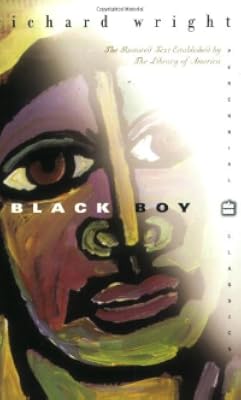
When James Baldwin published this collection of essays in 1955, the civil rights movement in this country was just beginning to gain traction. The year before, the Armed Services had integrated all of its branches, but discrimination against Blacks was common and accepted practice across the U.S. In its first section, Baldwin critically addresses the role of protest novels and movies featuring Black characters, arguing that they too often reduced complex characters to caricatures, while failing to delve into political solutions. Included in his overview are such books as Uncle Tom’s Cabin and Richard Wright’s Native Son.
In its second part, he writes about life in 1940s Harlem, focusing heavily on his own family. He details the show more effects of social injustice on Black lives, not just in the poverty it engenders, but its psychological toll as well. The final section features essays written while Baldwin was living in Paris. Removed from the familiarity of home, he grapples with his identity as a Black American and the difficulties he faces in a country strange to him. In one account, he finds himself jailed in Paris, and another tells of time spent in a Swiss village where he is the first Black person its citizens have ever seen in person.
This collection marked Baldwin’s first foray into non-fiction work. An intimate portrait on the complexity of Black lives, upon publication it won him critical acclaim. Seventy years on, these essays still provide a gut punch. It is sad to think that, despite the progress made to temper discrimination in America, this candid exploration of race relations finds itself the target of book bans to this day. show less
In its second part, he writes about life in 1940s Harlem, focusing heavily on his own family. He details the show more effects of social injustice on Black lives, not just in the poverty it engenders, but its psychological toll as well. The final section features essays written while Baldwin was living in Paris. Removed from the familiarity of home, he grapples with his identity as a Black American and the difficulties he faces in a country strange to him. In one account, he finds himself jailed in Paris, and another tells of time spent in a Swiss village where he is the first Black person its citizens have ever seen in person.
This collection marked Baldwin’s first foray into non-fiction work. An intimate portrait on the complexity of Black lives, upon publication it won him critical acclaim. Seventy years on, these essays still provide a gut punch. It is sad to think that, despite the progress made to temper discrimination in America, this candid exploration of race relations finds itself the target of book bans to this day. show less
This collection of essays covers a lot of ground. Baldwin writes critiques and analyses of creative works of the day that include African Americans. He writes about his family, especially his strained relationship with his father. He writes about being a Black man in Europe during the 1940s, which I found to be a stark contrast to Henry Miller's Tropic of Cancer. I much prefer Baldwin's commentary to Miller's book.
Baldwin's writing is so intense that I wish I'd read this in print rather than listened to the audiobook. I will most likely re-listen to parts of this book just to let the ideas sink in more deeply. I also bought another Baldwin book to read in print. He is a master.
Baldwin's writing is so intense that I wish I'd read this in print rather than listened to the audiobook. I will most likely re-listen to parts of this book just to let the ideas sink in more deeply. I also bought another Baldwin book to read in print. He is a master.
What makes these essays on race relationships and identity (written in the 1950s!) so powerful is that they give such an insight in what’s happening in the US today. As a white European reader, they truly made me understand the BLM movement at a much deeper level. All this, while they tell the most personal stories in the most beautiful language. James Baldwin is not just one of the greatest storytellers of our literary history, he is also one of the brightest thinkers and best essay writers.
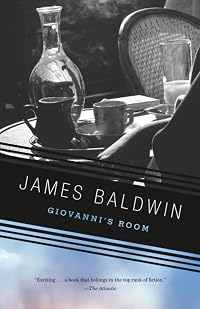
This early collection may be a little uneven, but there's absolutely no doubt what a great writer Baldwin could be when he was on top form. The combination of Dickens-and-Old-Testament influences on his prose style with his rhetorical training in the pulpit can make his writing seem rather overblown when he's dealing with trivial subject-matter — his devastating review of Carmen Jones has all the proportionality of a tactical nuclear strike on a wasps' nest, for instance — but when he's got something important to say, he is able to say it with all the confidence and authority of a George Orwell. And we believe him. The best pieces in this collection — in particular the title piece, about his father, and the piece about a brush show more with the law in Paris — are exceptionally good essays. And they are very interesting for the light they cast on Go tell it on the mountain and Giovanni's Room, respectively. show less
I've never read Baldwin before, so this was an interesting introduction. I found his essays initially frustrating. His language was so academic and obtuse, he often obscured his own meaning to me. Baldwin also uses odd and off-putting terms, referring to "The Negro" and "Us" (grouping him, the reader, and everyone else into this category). But Baldwin's expressions of how he felt about being black, american, and literary is fascinating. He communicated his alienation, his initial naivety, his feeling of not belonging to any group, his desire to reconcile these different aspects so well, I suddenly understood it as clearly as I ever would. I especially liked his notes on "Native Son", in which he talked about how books like "Native Son" show more and "Uncle Tom's Cabin" severely undermined African Americans (and undermined the important need for everyone to confront how history has shaped perceptions) .
Baldwin exposed me to many ideas that were new to me, and, I felt, educated me so clearly on his perspective in ways that evoked surprising, visceral sympathy. I was surprised and pleased with what he made me learn and what he made me felt. show less
Baldwin exposed me to many ideas that were new to me, and, I felt, educated me so clearly on his perspective in ways that evoked surprising, visceral sympathy. I was surprised and pleased with what he made me learn and what he made me felt. show less
Members
- Recently Added By
Published Reviews
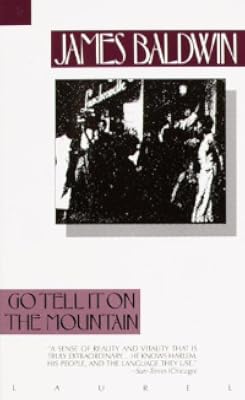
James Baldwin writes down to nobody, and he is trying very hard to write up to himself. As an essayist he is thought-provoking, tantalizing, irritating, abusing and amusing. And he uses words as the sea uses waves, to flow and beat, advance and retreat, rise and take a bow in disappearing. ... Few American writers handle words more effectively in the essay form than James Baldwin. To my way of show more thinking, he is much better at provoking thought in the essay than he is arousing emotion in fiction. I much prefer "Notes of a Native Son" to his novel, "Go Tell It on the Mountain," where the surface excellence and poetry of his writing did not seem to me to suit the earthiness of his subject matter. In his essays, words and material suit each other. The thought becomes poetry, and the poetry illuminates the thought. show less
added by Lemeritus
The collected "pieces" of the author of Go Tell It on the Mountain form a compelling unit as he applies the high drama of poetry and sociology to a penetrating analysis of the Negro experience on the American and European scene. ... The expression of so many insights enriches rather than clarifies, and behind every page stalks a man, an everyman, seeking his identity...and ours. Exceptional show more writing. show less
added by Lemeritus
Lists

Best Essay Collections
61 works; 24 members

100 Biographies and Memoirs to Read in a (Single) Lifetime
98 works; 12 members

Modern Library 100 Best Nonfiction Books
100 works; 8 members

Nifty Fifties
129 works; 14 members

1964 College Preparatory Reading List
202 works; 8 members

Books Read in 2022
5,226 works; 115 members

Books Read in 2017
4,249 works; 130 members

Mustich's 1000 Books to Read Before You Die: A Life Changing List
1,001 works; 20 members

Books Read in 2014
2,344 works; 86 members
Author Information

120+ Works 41,816 Members
James Baldwin was born on August 2, 1924, in New York. Baldwin's father was a pastor who subjected his children to poverty, abuse, and religious fanaticism. As a result, many of Baldwin's recurring themes, such as alienation and rejection, are attributable to his upbringing. Living the life of a starving artist, Baldwin went through numerous jobs, show more including dishwasher, office boy, factory worker, and waiter. In 1948, he moved to France, where much work originated. Baldwin published Go Tell It on the Mountain in 1953. A largely autobiographical work, it tells of the religious awakening of a fourteen-year-old. In addition to his childhood experiences, his experiences as a black man and a homosexual provided inspiration for such works as Giovanni's Room, Nobody Knows My Name, and Another Country. Baldwin holds a distinguished place in American history as one of the foremost writers of both black and gay literature. He was an active participant in the Civil Rights movement. Baldwin succumbed to cancer on December 1, 1987. (Bowker Author Biography) show less
Some Editions
Awards and Honors
Series
Belongs to Publisher Series
Work Relationships
Is contained in
Contains
Has the (non-series) sequel
Is abridged in
Common Knowledge
- Canonical title*
- Een geboren Amerikaan
- Original publication date
- 1955
- Important events
- African-American Civil Rights Movement
- Dedication
- FOR
PAULA MARIA
AND
GEBRIL - First words
- In Uncle Tom's Cabin, that cornerstone of American social protest fiction, St. Clare, the kindly master, remarks to his coldly disapproving Yankee cousin, Miss Ophelia, that, so far as he is able to tell, the blacks ha... (show all)ve been turned over to the devil for the benefit of the whites in this world - however, he adds thoughtfully, it may turn out in the next.
[Introduction] I did not know James Baldwin the essayist before my first year of college.
[Preface to the 1984 Edition] It was Sol Stein, high school buddy, editor, novelist, playwright, who first suggested this book.
[Autobiographical Notes] En avant. - Last words
- (Click to show. Warning: May contain spoilers.)This world is white no longer, and it will never be white again.
(Click to show. Warning: May contain spoilers.)[Introduction] But through it all, with each word--perhaps as evidence of a man certain of his message--he never shouts.
(Click to show. Warning: May contain spoilers.)[Preface to the 1984 Edition] En avant.
(Click to show. Warning: May contain spoilers.)[Autobiographical Notes] I want to be an honest man and a good writer. - Original language
- English
- Canonical DDC/MDS
- 305.896073
- Canonical LCC
- E185.61
*Some information comes from Common Knowledge in other languages. Click "Edit" for more information.
Classifications
- Genres
- Nonfiction, Biography & Memoir, General Nonfiction
- DDC/MDS
- 305.896073 — Society, government, & culture Social sciences, sociology & anthropology Social group - Age, Gender, Ethnicity Ethnic and national groups Other ethnic and national groups Africans and people of African descent; Blacks of African origin standard subdivisions / located in North America African Americans {United States Blacks}
- LCC
- E185.61 — History of the United States United States Elements in the population Afro-Americans Status and development since emancipation
- BISAC
Statistics
- Members
- 2,520
- Popularity
- 7,671
- Reviews
- 34
- Rating
- (4.18)
- Languages
- 7 — Dutch, English, French, German, Polish, Portuguese, Swedish
- Media
- Paper, Audiobook, Ebook
- ISBNs
- 29
- UPCs
- 1
- ASINs
- 30