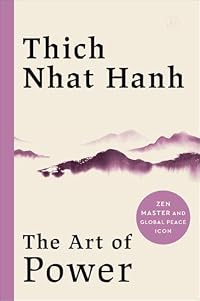
The Art of Power
by Thich Nhat Hanh
On This Page
Description
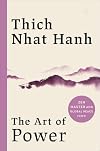
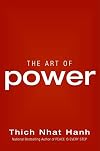
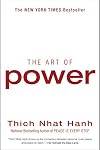
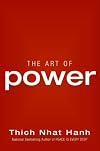
In The Art of Power, world-renowned Buddhist monk Thich Nhat Hanh offers a surprising and radical new understanding of how we attain true power.Power is one of the central issues in our lives. From work to personal relationships, the struggle for power plays a pivotal role and, more often than not, prevents us from attaining freedom and happiness. The bottom-line mentality in our culture seeps unnoticed into every other part of our lives. Thich Nhat Hanh illustrates how our current show more understanding of power leads us on a never-ending search for external markers like job title or salary. This me-first approach to life may have originated in the business world, but the stress, fear, and anxiety it causes are being felt by all of us every day.Turning the conventional understanding on its head, Thich Nhat Hanh teaches us that true power comes from within and that what we seek we already have. With colorful anecdotes, precise language, and concrete practices, this book will have an important and lasting legacy on how we understand our culture and choose to live our lives. show lessTags
Recommendations



Member Reviews
From chapter 3: ““We all know that our bodies have the capacity of self-healing. When we cut our finger, we know that we don’t have to do anything besides clean it; our body will take care of the rest. We panic when we forget that our bodies have the power of self-healing. If we simply allow our bodies to rest, our bodies can heal themselves without a lot of medicine.”
Okay, except what about when the body can’t self-heal? What about chronic illness? What about terminal illness?
The above quote is an example of the oversimplifications that are unfortunately rampant in this book. The presented examples and scenarios lack nuance and feel cartoonish, dealing with problems that have relatively clear solutions. Don’t strive for show more wealth and power because those won’t make you happy—there, I just summed up the entire thing for you.
Definitely not his best work. show less
Okay, except what about when the body can’t self-heal? What about chronic illness? What about terminal illness?
The above quote is an example of the oversimplifications that are unfortunately rampant in this book. The presented examples and scenarios lack nuance and feel cartoonish, dealing with problems that have relatively clear solutions. Don’t strive for show more wealth and power because those won’t make you happy—there, I just summed up the entire thing for you.
Definitely not his best work. show less
Thich Nhat Hanh here details how real power is found in loving kindness and not in wealth or fame or political gain. So mostly a reinforcement of moral common sense, to be honest, but it was a nice reminder on trying to walk and breath and pretty much do everything we do mindfully.
This will be a short review. It would be easy for a cynic to dismiss this book. That would be a mistake, because basically Hanh is right about everything in here.
This will be a short review. It would be easy for a cynic to dismiss this book. That would be a mistake, because basically Hanh is right about everything in here.
Turning our conventional understanding of power on its head, world-renowned Zen master, spiritual leader, and national bestselling author Thich Nhat Hanh reveals how true power comes from within. What we seek, we already have. Whether we want it or not, power remains one of the central issues in all of our lives. Every day, each of us exercises power in many ways, and our every act subtly affects the world we live in. This struggle for control and authority permeates every aspect of our private and public lives, preventing us from attaining true happiness. The me-first mentality in our culture seeps unnoticed into our decisions and choices. Our bottom-line approach to getting ahead may be most visible in the business world, but the show more stress, fear, and anxiety it causes are being felt by people in all walks of life.
With colorful anecdotes, precise language, and concrete practices, Thich Nhat Hanh illustrates how the current understanding of power leads us on a never-ending search for external markers like job title or salary. The Art of Power boldly challenges our assumptions and teaches each of us how to access the true power that is within our grasp. show less
With colorful anecdotes, precise language, and concrete practices, Thich Nhat Hanh illustrates how the current understanding of power leads us on a never-ending search for external markers like job title or salary. The Art of Power boldly challenges our assumptions and teaches each of us how to access the true power that is within our grasp. show less
The title of this book is misleading. The usual understanding of power is the ability to exhibit a large amount of physical or financial influence. What Hanh means by power is the ability to affect the attitudes, thoughts, and opinions of others.
This book is one of the most valuable books I have ever read. I have read 2 other mindfulness books: Wild Chickens and Petty Tyrants, and Zen Mind, Beginner's Mind. This book is the best yet, and stands out from the other 2 in its practicality. I was so impressed with this book, that I plan on reading all of Thich Nhat Hanh's other books. There are very few holy men in this world, but Thich Nhat Hanh is one of them. You will know what I mean by this if you read this book.
My favorite quotes from show more this book:
Imagine the power of our actions if each one contained one hundred percent of our attention. (pg 41)
It is possible to live mindfully every moment of your daily life. This makes you happy and it also makes the people around you happy. (pg 90)
Silence is very important. It allows, it helps life to be. We have to retrain ourselves to enjoy silence. (pg 156)
Civilization is going to end if we continue to drown in the competition for power, fame, sex, and profit. (pg 169)
It's wonderful to stop your thinking and just be. Most of our thinking is an obstacle to being, because when you're absorbed in thinking, you aren't present and fully alive and you can't touch the wonders of life. (pg 179) show less
This book is one of the most valuable books I have ever read. I have read 2 other mindfulness books: Wild Chickens and Petty Tyrants, and Zen Mind, Beginner's Mind. This book is the best yet, and stands out from the other 2 in its practicality. I was so impressed with this book, that I plan on reading all of Thich Nhat Hanh's other books. There are very few holy men in this world, but Thich Nhat Hanh is one of them. You will know what I mean by this if you read this book.
My favorite quotes from show more this book:
Imagine the power of our actions if each one contained one hundred percent of our attention. (pg 41)
It is possible to live mindfully every moment of your daily life. This makes you happy and it also makes the people around you happy. (pg 90)
Silence is very important. It allows, it helps life to be. We have to retrain ourselves to enjoy silence. (pg 156)
Civilization is going to end if we continue to drown in the competition for power, fame, sex, and profit. (pg 169)
It's wonderful to stop your thinking and just be. Most of our thinking is an obstacle to being, because when you're absorbed in thinking, you aren't present and fully alive and you can't touch the wonders of life. (pg 179) show less
Hahn's book reminds us that true power comes from within ourselves and not on the outer environment. To be truly powerful, Hanh contends, is to practice mindfulness and the art of loving kindness. Only then will we be capable of handling power in a positive way.
Members
- Recently Added By
Author Information

497+ Works 42,797 Members
Thich Nhat Hanh was born in central Vietnam on October 11, 1926. He entered Tu Hieu Temple as a novice monk at the age of sixteen. During the Vietnam War, he was part of a movement called "engaged Buddhism", which combines traditional practices with nonviolent civil disobedience. For this, he was exiled by both the Communist and non-Communist show more governments and was nominated by Martin Luther King, Jr. for the Nobel Peace Prize in 1967 for his efforts to reconcile North and South Vietnam. He is a teacher, author, poet, and peace activist. He has written over 100 titles on meditation, mindfulness and Engaged Buddhism, as well as poems, children's stories, and commentaries on ancient Buddhist texts. His books include The Heart of the Buddha's Teaching: An Introduction to Buddhism, Peace Is Every Step, The Miracle of Mindfulness, The Art of Power, True Love and Anger, Vietnam: Lotus in a Sea of Fire, and Living Buddha, Living Christ. He founded a retreat in France called Plum Village. (Bowker Author Biography) show less
Some Editions
Common Knowledge
- Original publication date
- 2007
Classifications
Statistics
- Members
- 564
- Popularity
- 52,195
- Reviews
- 9
- Rating
- (3.86)
- Languages
- 6 — English, French, German, Italian, Portuguese, Spanish
- Media
- Paper, Audiobook, Ebook
- ISBNs
- 18
- ASINs
- 4