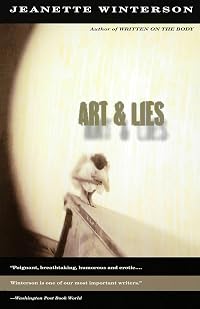
Art & Lies
by Jeanette Winterson
On This Page
Description
Fiction. Literature. One of the most audacious and provocative writers on either side of the Atlantic now gives readers a dazzling, arousing, and wise improvisation on art, Eros, language, and identity. "A series of intense, artful musings that are exhilarating and visionary. . . . Unsettling yet strangely satisfying."—Newsday.Tags
Recommendations

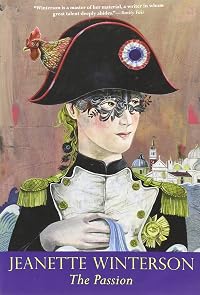
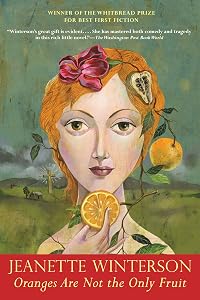
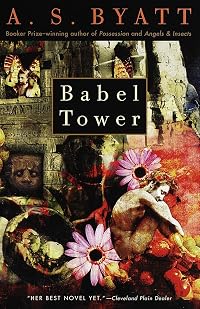
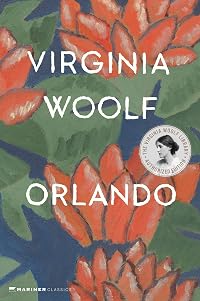
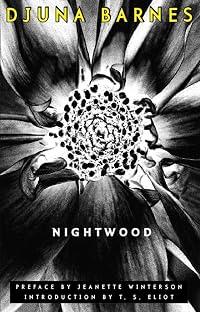
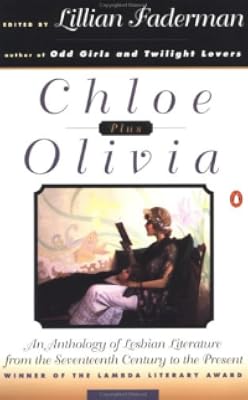
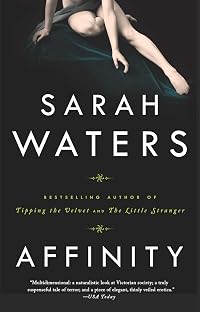
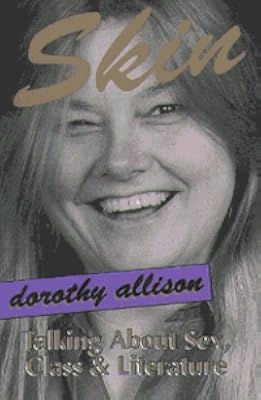
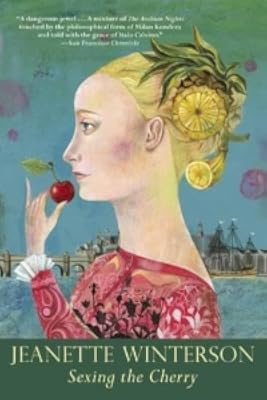
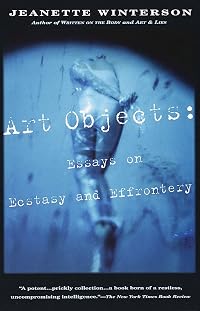

Member Recommendations
Member Reviews
"But not all facts are known and what is known is not necessarily a fact."
Beautiful writing, but complicated and challenging to read. The book presents three intertwining narratives, characters who are named Sappho, Picasso, and Handel, whose relationships to their namesakes is a bit obscure. I think that the book is about the power of words, or of art, to re-write a life formed by trauma. I liked the book, although often I was unsure of what I was reading.
Here is what Winterson has to say about the book on her website:
"Why should literature be easy? Sometimes you can do what you want to do in a simple, direct way that is absolutely right. Sometimes you can’t. Reading is not a passive act. Books are not TV. Art of all kinds is an show more interactive challenge. The person who makes the work and the person who comes to the work both have a job to do. I am never wilfully obscure, but I do ask for some effort. Certainly Art and Lies is my most closed piece of work. Perhaps it is hermeneutic, though no more so than plenty of books by plenty of guys .It was written at a time when I was looking inwards not outwards. It is thickly layered, concentrated and often dark. But it’s a book not a crime. If you don’t like it, don’t read it." show less
Beautiful writing, but complicated and challenging to read. The book presents three intertwining narratives, characters who are named Sappho, Picasso, and Handel, whose relationships to their namesakes is a bit obscure. I think that the book is about the power of words, or of art, to re-write a life formed by trauma. I liked the book, although often I was unsure of what I was reading.
Here is what Winterson has to say about the book on her website:
"Why should literature be easy? Sometimes you can do what you want to do in a simple, direct way that is absolutely right. Sometimes you can’t. Reading is not a passive act. Books are not TV. Art of all kinds is an show more interactive challenge. The person who makes the work and the person who comes to the work both have a job to do. I am never wilfully obscure, but I do ask for some effort. Certainly Art and Lies is my most closed piece of work. Perhaps it is hermeneutic, though no more so than plenty of books by plenty of guys .It was written at a time when I was looking inwards not outwards. It is thickly layered, concentrated and often dark. But it’s a book not a crime. If you don’t like it, don’t read it." show less
winterson's (slightly indirectly stated) purpose in writing this book is "re-virgining the whore", that is, new-life-ing worn-out words-and-phrases. and she does pretty well, beautiful prose her strength and all. nice flow of wordage to sink into, fill you with colours and smells and al. (can't resist the occasional outta-place-teehee, though. "vers. libre lel", gives some human-ness)
what feels over-engineered, then, is the skeleton under that skin, poking out chunkily all over. but she addresses that too, being all "in your daily lives, you make everything as un-natural as possible, surrounding yourself with un-natural things. why get upset over un-natural stories?". and it works, and it's nice. still, though, don't think could read a show more bunch of books like this sequentially, just need a breather sometimes with a float and flutter-flow some more. she uses it here more as a frame for related poems. works, tied together pretty well but can't really "long-feel" from it, just headspeak and moments
bit about book-burrowing boys maybe favourite image in anything ever now, though.
and all together, favourite fan fiction show less
what feels over-engineered, then, is the skeleton under that skin, poking out chunkily all over. but she addresses that too, being all "in your daily lives, you make everything as un-natural as possible, surrounding yourself with un-natural things. why get upset over un-natural stories?". and it works, and it's nice. still, though, don't think could read a show more bunch of books like this sequentially, just need a breather sometimes with a float and flutter-flow some more. she uses it here more as a frame for related poems. works, tied together pretty well but can't really "long-feel" from it, just headspeak and moments
bit about book-burrowing boys maybe favourite image in anything ever now, though.
and all together, favourite fan fiction show less
.........................................: Art and Lies is in my humble opinion the best work of fiction (or is it?) I have ever read. It's dense, profoundly intertextual, and at times absolutely poetic. Please don't be fooled by Publius' obviously misguided review (for example, the comparison between Sophokles and Sappho is flawed from the start, and one might consider reading a bit about the historical reception of Sappho's work before making such bold statements); if Winterson will enter literary history as a footnote to a footnote, it will be one that disrupts the entire textual frame itself.
.........................................: Art and Lies is in my humble opinion the best work of fiction (or is it?) I have ever read. It's dense, profoundly intertextual, and at times absolutely poetic. Please don't be fooled by Publius' obviously misguided review (for example, the comparison between Sophokles and Sappho is flawed from the start, and one might consider reading a bit about the historical reception of Sappho's work before making such bold statements); if Winterson will enter literary history as a footnote to a footnote, it will be one that disrupts the entire textual frame itself.
Another find from the library, which I decided to read despite my last Winterson being a big disappointment. This one is much better - a playful exploration of art and beauty told through three main characters, Handel, Picasso and Sappho.
The first two bear little relation to their famous namesakes, but Sappho speaks for the ancient Greek poet directly. The three strands interleave and eventually connect, and are also linked by the fourth character Doll Sneerpiece, whose book telling of her life as an eighteenth century bawd plays a part in all three.
The first two bear little relation to their famous namesakes, but Sappho speaks for the ancient Greek poet directly. The three strands interleave and eventually connect, and are also linked by the fourth character Doll Sneerpiece, whose book telling of her life as an eighteenth century bawd plays a part in all three.
"Art & Lies" sounded so promising to me, but though I enjoyed reading some of the characters' inner thoughts, and where those thoughts would go, I found the book as a whole not very enjoyable. And it may be that it was not meant to be enjoyable reading. Three characters: Handel (not that Handel), Picasso (not that Picasso) and Sappho (a ghost ? of that Sappho), three stories that intermix in strange ways, an ending that is not an ending... I think I was not in the right frame of mind for this book, maybe some other time.
Oh, I haven't read a real book in ages; I definitely enjoyed this. It's not a novel by any traditional standards: it's an assortment of bits of prose and points of view. Art & Lies is an appropriate title — art, philosophy, life, beauty, humor, obscenity. It all works in the end, and Winterson's writing is refreshing creative and insightful.
Members
- Recently Added By
Author Information

55+ Works 37,099 Members
Jeanette Winterson was born in Manchester, England in 1959 and graduated from St. Catherine's College, Oxford. Her book, Oranges Are Not the Only Fruit, is a semi-autobiographical account of her life as a child preacher (she wrote and gave sermons by the time she was eight years old). The book was the winner of the Whitbread Prize for best first show more fiction and was made into an award-winning TV movie. The Passion won the John Llewelyn Rhys Memorial Prize for best writer under thirty-five, and Sexing the Cherry won the American Academy of Arts and Letters' E. M. Forster Award. (Bowker Author Biography) Jeanette Winterson lives in London & the Cotswolds. (Publisher Provided) show less
Some Editions
Series
Belongs to Publisher Series
rororo (22399)
Common Knowledge
- Canonical title*
- Kunst und Lügen
- Original title
- Art & lies; Art & Lies : a Piece for Three Voices and a Bawd
- Alternate titles*
- Kunst & leugens : compositie voor drie stemmen en een lichtekooi; Kunst en leugens
- Original publication date
- 1994
- Epigraph
- THE NATURE OF A WORK OF ART
IS TO BE NOT A PERT, NOR YET
A COPY OF THE REAL WORLD
(AS WE COMMONLY UNDERSTAND
THAT PHRASE),
BUT A WORLD IN ITSELF,
INDEPENDENT, COMPLETE, AUTONOMOUS;
AND TO POSSESS IT... (show all) FULLY
YOU MUST ENTER THAT WORLD,
CONFORM TO ITS LAWS,
AND IGNORE FOR THE TIME THE BELIEFS,
AIMS, AND PARTICULAR CONDITIONS
WHICH BELONG TO YOU
IN THE OTHER WORLD OF REALITY.
(OXFORD LECTURES ON POETRY:
PROFESSOR BRADLEY: 1901) - Dedication
- for Peggy Reynolds with love
- First words
- From a distance only the light is visible, a speeding gleaming horizontal angel, trumpet out on a hard bend.
- Last words
- (Click to show. Warning: May contain spoilers.)It was not too late.
- Original language*
- Englisch
*Some information comes from Common Knowledge in other languages. Click "Edit" for more information.
Classifications
Statistics
- Members
- 1,498
- Popularity
- 15,445
- Reviews
- 10
- Rating
- (3.72)
- Languages
- 8 — Dutch, English, Finnish, French, German, Italian, Polish, Swedish
- Media
- Paper, Ebook
- ISBNs
- 21
- ASINs
- 6