
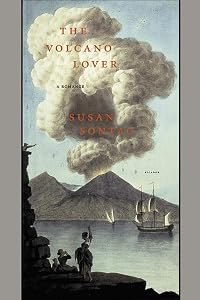
The Volcano Lover
by Susan Sontag 
On This Page
Description
A love story set in Naples in 1772 and based on the romantic entanglements of Lord and Lady Hamilton and Lord Nelson.Tags
Recommendations


















Member Recommendations
margherita71 Una vista completamente diversa allo stesso periodo storico, agli stessi luoghi e alla stessa vicenda

margherita71 L'amante del vulcano, La San Felice e Il cardillo innamorato costituiscono un tris di opere che illustrano con stili, intenzioni e modalitá narrative assai diverse la stessa vicenda.
Member Reviews
O amante do vulcão, terceiro romance de Susan Sontag, incorpora contradições no mínimo instigantes. Trata-se de uma história realista, moderna em sua polifonia de vozes narrativas. Nela se agitam personagens históricos desentranhados da fase heróica do período romântico: o final do século XVIII. Sir William Hamilton, embaixador britânico no Reino das Duas Sicílias, sua segunda mulher, Emma, humilde porém belíssima cortesã inglesa guindada à posição de confidente e conselheira de uma rainha, e o maior herói marítimo da Inglaterra, lord Nelson, são os míticos protagonistas desta narrativa histórico-ficcional. A compulsão de redesenhá-los em escala humana, imperativo tipicamente ensaístico, só fez aumentar a show more voltagem dramática das peripécias em que se vêem envolvidos. Sem dúvida, temos aqui uma história apaixonante sobre pessoas apaixonadas. "É um livro de mestre, um belo espetáculo: vasto, colorido, interessante, e que faz pensar."Roberto Schwarz"Um romance de idéias passional e muitas vezes radical que proporciona todos os antigos prazeres do romance histórico tradicional."New York Times show less
Teenage servant girl goes to work for dodgy sex therapist then becomes model for fashionable painter. First Aristocratic Lover dumps her when she becomes pregnant; Second Lover is kinder, but also dumps her when the chance of a wealthy heiress comes up - he gets rid of her by shipping her off as a gift to his recently-widowed uncle, the ambassador in Naples. The uncle likes her, gives her the Eliza Doolittle treatment and marries her after a decent interval. She becomes a confidant of the Queen (Marie-Antoinette's sister!) and they are all set to live happily ever after, but then there's a Revolution in France, and a Wounded British Admiral arrives in town and has to be nursed back to health...
The real Emma, Lady Hamilton, is a show more character that only the most brazen writer of historical romance would have dared to invent - her whole life reads like a plot-summary in Name that Book. So maybe it's not surprising that Susan Sontag chooses to write about her from a slightly oblique point of view, taking as her central character Sir William Hamilton, whom we now remember only as a famous cuckold, but who in his own time was known as an art collector, archaeologist, and avid student of the moods of Vesuvius. And who seems to have done a pretty good job representing British interests at the notoriously raffish and corrupt Neapolitan court.
Sontag also messes about quite freely with the conventions of historical fiction - she keeps period authenticity to the necessary minimum and is quite happy to step into frame from time to time and explain something from the point of view of the modern New Yorker. Although the narrative mostly sticks very closely to recorded history, at one point we suddenly realise that we've drifted seamlessly into a story from another medium that we know to be fictional. And as well as inserting her own caustic comments on the actions of her characters and the presumed reactions of her readers, Sontag doesn't mind bringing dead people in as auxiliary narrators (the last word in the book, unexpectedly, goes to the poet and revolutionary journalist Eleonora de Fonseca Pimentel).
I won't say that this was better than I expected, because I expected a lot from Sontag anyway, but it is a book that managed to surprise me and keep my interest, despite being based on a set of events I thought I was pretty familiar with to start with. show less
The real Emma, Lady Hamilton, is a show more character that only the most brazen writer of historical romance would have dared to invent - her whole life reads like a plot-summary in Name that Book. So maybe it's not surprising that Susan Sontag chooses to write about her from a slightly oblique point of view, taking as her central character Sir William Hamilton, whom we now remember only as a famous cuckold, but who in his own time was known as an art collector, archaeologist, and avid student of the moods of Vesuvius. And who seems to have done a pretty good job representing British interests at the notoriously raffish and corrupt Neapolitan court.
Sontag also messes about quite freely with the conventions of historical fiction - she keeps period authenticity to the necessary minimum and is quite happy to step into frame from time to time and explain something from the point of view of the modern New Yorker. Although the narrative mostly sticks very closely to recorded history, at one point we suddenly realise that we've drifted seamlessly into a story from another medium that we know to be fictional. And as well as inserting her own caustic comments on the actions of her characters and the presumed reactions of her readers, Sontag doesn't mind bringing dead people in as auxiliary narrators (the last word in the book, unexpectedly, goes to the poet and revolutionary journalist Eleonora de Fonseca Pimentel).
I won't say that this was better than I expected, because I expected a lot from Sontag anyway, but it is a book that managed to surprise me and keep my interest, despite being based on a set of events I thought I was pretty familiar with to start with. show less
The Cavalier, an art dealer and British ambassador to the Kingdom of the Two Sicilies, is obsessed with three things: collecting beautiful and rare pieces of art, watching Vesuvius breathe and rumble, and having a relationship with his nephew's former lover. I know, it's an odd beginning. When the Cavalier's nephew, Charles, grows tired of his mistress he simply sends her to live with his uncle once the Cavalier became a lonely widower. How do you learn to love a stranger? What do you do when that love matures into devotion and passion falls by the wayside? Beyond being a story about relationships and circumstances, The Volcano Lover is also the love story of art, war, and devotion to a life well lived with passion.
There is a show more cleverness to Sontag's writing. Most of the story is told in the third person with touches of first person narrative sprinkled in. Is that Sontag offering personal tidbits about herself? Who is this off-camera speaker? In the very last section of Volcano Lover the Cavalier, his wife, his mother-in-law, and the Queen all offer first person perspectives on their lives with one another. Both the Cavalier and his mother-in-law are careful to never reveal the Cavalier's wife real name (modeled after Emma Hamilton). No one mentions the hero's name (Lord Nelson in real life), either. show less
There is a show more cleverness to Sontag's writing. Most of the story is told in the third person with touches of first person narrative sprinkled in. Is that Sontag offering personal tidbits about herself? Who is this off-camera speaker? In the very last section of Volcano Lover the Cavalier, his wife, his mother-in-law, and the Queen all offer first person perspectives on their lives with one another. Both the Cavalier and his mother-in-law are careful to never reveal the Cavalier's wife real name (modeled after Emma Hamilton). No one mentions the hero's name (Lord Nelson in real life), either. show less
For the most part I find Susan Sontag difficult and intimidating but her The Volcano Lover makes itself comfortably available. Her bringing together the leading characters, Lord Hamilton and his second wife Emma, The King and Queen, Lord Nelson, residing in the Kingdom of the Two Sicilies roughly between the American Revolution and ending with Napoleonic Wars is historical speculation on the highest order. She ends the novel with all the main characters now dead or dieing giving a recap and allowing them to portray themselves into the best of light and allows how the late twentieth century, by proxy, views the happenings of that earlier time.
Quotes: (pages 28-29) “Hard to imagine that one could feel proprietary about this legendary show more menace, double-humped, some five thousand feet tall and eight miles from the city, exposed to the view of everyone, indeed the signature feature of the local landscape. No object could be less ownable. Few natural wonders were more famous. Foreign painters were flocking to Naples: the volcano had many admirers. He set about, by the quality of his attentions, to make it his. He thought about it more than anyone else. My dear mountain. A mountain for a beloved? A monster? With the vases or the paintings or the coins or the statues, he could count on certain conventional recognitions. This passion was about what always surprised, alarmed, what exceeded all expectations; and what never evoked the response that the Cavaliere [Lord Hamilton] wanted. But then, in the obsessed collector, the appreciations of other people always seem off-key, withholding, never appreciative enough.”
(page 187) “But what could be more apt for this great collector of valuable objects then to have also been collecting the very principal of destruction, a volcano. Collectors have a divided consciousness. No one is more naturally allied with the forces in a society that preserve and conserve. But every collector is also an accomplice of the ideal of destruction. For the very excessiveness of the collecting passion makes a collector a self-despiser. Every collector-passion contains within it the fantasy of its own self-abolition. Worn down by the disparity between the collector's need to idealize and all that is base, purely materialistic, in the soul of a lover of beautiful objects and trophies of the glorious past, he may long to be purged by a consuming fire.”
(page 212) “The King was cursing and whining and crossing himself. The Queen, in fierce reaction against her fling with enlightened views, had lately become almost as superstitious as her husband, and was writing out prayers on small pieces of paper, which she stuffed in her stays or swallowed. To all about her, she declared that only an army of Neapolitans would flee from an enemy they outnumbered six to one, that she'd always known that these shiftless Neapolitans never had a chance to hold Rome. Anti royalist slogans appear each morning on the walls: the French are coming and, anticipating their protection, the kind of protection they had given the patriots of Rome, the Jacobin sympathizers were making themselves visible.” show less
Quotes: (pages 28-29) “Hard to imagine that one could feel proprietary about this legendary show more menace, double-humped, some five thousand feet tall and eight miles from the city, exposed to the view of everyone, indeed the signature feature of the local landscape. No object could be less ownable. Few natural wonders were more famous. Foreign painters were flocking to Naples: the volcano had many admirers. He set about, by the quality of his attentions, to make it his. He thought about it more than anyone else. My dear mountain. A mountain for a beloved? A monster? With the vases or the paintings or the coins or the statues, he could count on certain conventional recognitions. This passion was about what always surprised, alarmed, what exceeded all expectations; and what never evoked the response that the Cavaliere [Lord Hamilton] wanted. But then, in the obsessed collector, the appreciations of other people always seem off-key, withholding, never appreciative enough.”
(page 187) “But what could be more apt for this great collector of valuable objects then to have also been collecting the very principal of destruction, a volcano. Collectors have a divided consciousness. No one is more naturally allied with the forces in a society that preserve and conserve. But every collector is also an accomplice of the ideal of destruction. For the very excessiveness of the collecting passion makes a collector a self-despiser. Every collector-passion contains within it the fantasy of its own self-abolition. Worn down by the disparity between the collector's need to idealize and all that is base, purely materialistic, in the soul of a lover of beautiful objects and trophies of the glorious past, he may long to be purged by a consuming fire.”
(page 212) “The King was cursing and whining and crossing himself. The Queen, in fierce reaction against her fling with enlightened views, had lately become almost as superstitious as her husband, and was writing out prayers on small pieces of paper, which she stuffed in her stays or swallowed. To all about her, she declared that only an army of Neapolitans would flee from an enemy they outnumbered six to one, that she'd always known that these shiftless Neapolitans never had a chance to hold Rome. Anti royalist slogans appear each morning on the walls: the French are coming and, anticipating their protection, the kind of protection they had given the patriots of Rome, the Jacobin sympathizers were making themselves visible.” show less
"A joy it will be one day, perhaps, to remember even this." — Virgil Aeneid
As in certain mocking passages of Nabokov, writing so bad that one thinks our author must be doing it on purpose (Our final anagnorisis notwithstanding (and not withstanding (and not with standing))). Often maudlin, though evidently smarter than this. Certain passages, in moments of clarity, reading like Sontag's critical essais, but one senses the critique of "subversive women" complicit in massacre would perhaps be stronger without the trappings of the novel. What does it say about Sontag that we are already reading her stainless critical essays against the text. Our cirrhotic alcoholic heroine is Illness as Metaphor as character, our conciliatory Cavelieri show more is Against Interpretation as art-collection. That these avenues appear so inviting suggests, perhaps, something more clever-mocking is going on here (Sontag's jest at the historical-novel (gross) and the historical-novel-reader (even more repugnant) (such as in Siri Husveldt's Shaking Woman taking up-arms against the medical-memoir-reader.).). . .
We already know the adverb is evil, but I am being swayed, by work such as this, to Murnane's critique of the adjective ("which is an adverb in disguise"). It's good to read kind-of-horrible writing such as this for use as a foreboding:
It was bigger than Rome, it was the wealthiest as well as the most populous city on the Italian peninsula and, after Paris, the secondary largest city on the European continent, it was the capital of natural disaster, and it has the most indecorous, plebeian monarch, the best ices, the merriest loafers, the most vapid torpor, and, among the younger aristocrats, the largest number of future Jacobins. Its incomparable bay was home to freakish fish as well as the usual bounty. It had streets paved with blocks of lava, and, some miles away, the gruesomely intact remains, recently rediscovered of two dead cities. Its opera house, the biggest in Italy, provided a continual ravishments of castrati, another local product of international renown. Its handsome, highly sexed aristocracy gathered in one another's mansions at nightly card parties, misleadingly called conversazioni, which often did not break up until dawn.
Serious or Not? show less
Excellent historical fiction; and an entertaining examination of the period of the royalist revolt of the Kingdom of Naples against republican France. The three principals in this novel are drawn out slowly as characters for whom we can sympathize. The final chapter allows each to speak for her/himself, as though each is beyond the story.
Susan Sontag saves her commendation for the learned and brave Eleanora Pimentel Fonseca, who edited the principal newspaper of the short-lived Parthenopian Republic in Naples. She compares her with the three main characters, Sir William Hamilton, Lady Emma Hamilton and Admiral Lord Nelson who sought glory or well-being and who did not care to consider the injustices that their pursuit of wealth and show more refinement inflicted on so many. show less
Susan Sontag saves her commendation for the learned and brave Eleanora Pimentel Fonseca, who edited the principal newspaper of the short-lived Parthenopian Republic in Naples. She compares her with the three main characters, Sir William Hamilton, Lady Emma Hamilton and Admiral Lord Nelson who sought glory or well-being and who did not care to consider the injustices that their pursuit of wealth and show more refinement inflicted on so many. show less
A book that shows the seams - looks and feels constructed. In a historical novel that's not a bad thing, or so seems to be Sontag's theory. With the characters addressing the readers from "the beyond" at the end, it has a feel of the Spoon River Anthology... Some powerful stuff - this is sticking with me in a way I hadn't expected...
Members
- Recently Added By
Lists

Five star books
1,755 works; 108 members

Books Read in 2019
4,052 works; 110 members
Talk Discussions
Past Discussions
Novel about a melancholic couple in Name that Book (June 2012)
Author Information

111+ Works 21,331 Members
Susan Sontag was born in New York City on January 16, 1933. She received a B.A. from the University of Chicago and did graduate work in philosophy, literature and theology at Harvard University and Saint Anne's College, Oxford University. She was the author of 17 books including four novels, a collection of short stories, several plays, and eight show more works of nonfiction. Her novels are The Benefactor, Death Kit, The Volcano Lover, and In America, which won the 2000 National Book Award for fiction. On Photography received the 1978 National Book Critics Circle Award. Her stories and essays have appeared in numerous magazines including The New Yorker, The New York Review of Books, The Times Literary Supplement, and Art in America. She also wrote and directed four feature films and stage plays in the United States and Europe. She died from leukemia on December 28, 2004 at the age of 71. (Bowker Author Biography) show less
Susan Sontag has a Legacy Library. Legacy libraries are the personal libraries of famous readers, entered by LibraryThing members from the Legacy Libraries group.
Awards and Honors
Distinctions
Notable Lists
Series
Belongs to Publisher Series
Work Relationships
Contains
Is abridged in
Common Knowledge
- Canonical title
- The Volcano Lover
- Original title
- The Volcano Lover
- Original publication date
- 1992
- People/Characters
- Sir William Hamilton; Emma, Lady Hamilton; Horatio Nelson, 1st Viscount Nelson
- Important places
- Naples, Campania, Italy; London, England, UK
- Epigraph
- DORABELLA (aside): Nel petto un Vesuvio d'avere mi par.
Cosi fan tutte, Act II - Dedication
- For David
beloved son, comrade - First words
- It is the entrance to a flea market.
- Last words
- (Click to show. Warning: May contain spoilers.)Damn them all.
- Canonical DDC/MDS
- 813.54
- Canonical LCC
- PS3569.O6547
- Disambiguation notice*
- Esta obra está duplicada
*Some information comes from Common Knowledge in other languages. Click "Edit" for more information.
Classifications
- Genres
- Fiction and Literature, General Fiction, Historical Fiction, Romance
- DDC/MDS
- 813.54 — Literature & rhetoric American literature in English American fiction in English 1900-1999 1945-1999
- LCC
- PS3569 .O6547 — Language and Literature American literature American literature Individual authors 1961-
- BISAC
Statistics
- Members
- 1,720
- Popularity
- 12,834
- Reviews
- 27
- Rating
- (3.50)
- Languages
- 20 — Czech, Danish, Dutch, English, Finnish, French, German, Greek, Hungarian, Italian, Japanese, Lithuanian, Norwegian (Bokmål), Norwegian, Polish, Portuguese, Russian, Spanish, Swedish, Turkish
- Media
- Paper, Audiobook, Ebook
- ISBNs
- 59
- ASINs
- 18