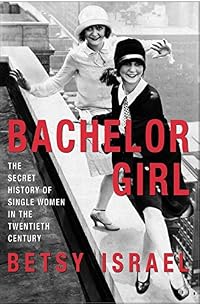
Bachelor Girl: The Secret History of Single Women in the Twentieth Century
by Betsy Israel
On This Page
Description
In this lively and colorful book of popular history, journalist Betsy Israel shines a light on the old stereotypes that have stigmatized single women for years and celebrates their resourceful sense of spirit, enterprise, and unlimited success in a world where it is no longer unusual or unlikely to be unwed.Drawing extensively on primary sources, including private journals, newspaper stories, magazine articles, advertisements, films, and other materials from popular media, Israel paints show more remarkably vivid portraits of single women -- and the way they were perceived -- throughout the decades. From the nineteenth-century spinsters, of New England to the Bowery girls of New York City, from the 1920s flappers to the 1940s working women of the war years and the career girls of the 1950s and 1960s, single women have fought to find and feel comfortable in that room of their own. One need only look at Bridget Jones and the Sex and the City gang to see that single women still maintain an uneasy relationship with the rest of society -- and yet they radiate an aura of glamour and mystery in popular culture.As witty as it is well researched, as thoughtful as it is lively, Bachelor Girl is a must-read for women everywhere. show lessTags
Recommendations













Member Recommendations


Member Reviews
Excellent. I want more. Israel asks the questions, does the research... but is in this book limited to white urban (NYC) girls. I want more about men, about women from other parts of the country (world?). And newer, this is from 2002 and needs updating. Preferably from Israel as she is a wonderful writer.
And the research is offered out to us not in academese notes, but in plain text so we can do a lot more reading ourselves. I highly recommend the bibliography if nothing else. Index also included.
The only 'imperfection' is that she (apparently, I guess...) lost the part of her note that addressed the Murphy Brown character not just as a successful single woman, but as a by-choice single mom excoriated by the politicians for that choice. show more That 'conversation' in popular media came at the right time in my life to make a big impact on how I thought about feminism. What made an impact on your thoughts and/or choices?
(And of course the reversal of Roe vs. Wade isn't included here.)
So, anyway, to the meat of my review. I thought I knew a lot but boy was I missing important details. Apparently White Slavery was not an urban myth but a real problem, not to mention other forms of prostitution and pressured choices like "treats."
Apparently at about the same time suffrage movements were gaining momentum, obstacles were being raised against female emancipation. "Contraception and abortion had been outlawed and between 1889 and 1906, state legislatures passed more than on hundred restrictive divorce laws."
"The jitterbug... has been called 'a dance of anxiety and bitterness.'"
In re' the Great Depression "Amidst a collapse so hulking and vast there was little energy left to think about the single woman. But there would always be something to say." Exactly; as Israel goes on to point out, typists etc. were seen as stealing jobs from men... but men wouldn't take those jobs. Sheesh.
Well, sorry for the disorganized comments. It's a much better, more interesting book than I'm making it out to be. And I do happen to own this hardcover so if you live in the US just send me a PM and I can ship it to you free. show less
And the research is offered out to us not in academese notes, but in plain text so we can do a lot more reading ourselves. I highly recommend the bibliography if nothing else. Index also included.
The only 'imperfection' is that she (apparently, I guess...) lost the part of her note that addressed the Murphy Brown character not just as a successful single woman, but as a by-choice single mom excoriated by the politicians for that choice. show more That 'conversation' in popular media came at the right time in my life to make a big impact on how I thought about feminism. What made an impact on your thoughts and/or choices?
(And of course the reversal of Roe vs. Wade isn't included here.)
So, anyway, to the meat of my review. I thought I knew a lot but boy was I missing important details. Apparently White Slavery was not an urban myth but a real problem, not to mention other forms of prostitution and pressured choices like "treats."
Apparently at about the same time suffrage movements were gaining momentum, obstacles were being raised against female emancipation. "Contraception and abortion had been outlawed and between 1889 and 1906, state legislatures passed more than on hundred restrictive divorce laws."
"The jitterbug... has been called 'a dance of anxiety and bitterness.'"
In re' the Great Depression "Amidst a collapse so hulking and vast there was little energy left to think about the single woman. But there would always be something to say." Exactly; as Israel goes on to point out, typists etc. were seen as stealing jobs from men... but men wouldn't take those jobs. Sheesh.
Well, sorry for the disorganized comments. It's a much better, more interesting book than I'm making it out to be. And I do happen to own this hardcover so if you live in the US just send me a PM and I can ship it to you free. show less
This is a 4.5 star-book. Sadly, Goodreads doesn't allow for half stars so I have to make do with an imperfect rating. Oh well.
Bachelor Girl is a riveting read. Its scope is both an asset and a fault - covering the representation of the single girl in all sorts of media and comparing it to the single girl's actual life, struggles and joys, and the author does so from the nineteenth century to basically Bridget Jones. It's interesting as an overview because it gives you so many starting points from which to research more should you wish to do so, but it's also disappointing in that it can only do so much by being so general.
That being said, her account is enormously interesting even though her conclusions, however horrible, are not show more terribly surprising. Betsy Israel writes with an honesty that's very refreshing for a history book and I greatly enjoyed every section.
Do read her introduction, she explains what she covered and what she didn't (this book is about the single white girl/woman, and while she branches out sometimes and features working class women, it's almost mostly about straight white middle-class single life in New York City). Another reviewer commented that she takes pains to really go into detail up till 1960 and then seems to lose interest, as if single women today weren't still considered a little different, if not downright peculiar.
Despite these limitations, this book is a must-read if you have an interest in history in general and woman history in particular. I'll be looking for more books on the subject that deal with the areas Israel didn't quite touch. show less
Bachelor Girl is a riveting read. Its scope is both an asset and a fault - covering the representation of the single girl in all sorts of media and comparing it to the single girl's actual life, struggles and joys, and the author does so from the nineteenth century to basically Bridget Jones. It's interesting as an overview because it gives you so many starting points from which to research more should you wish to do so, but it's also disappointing in that it can only do so much by being so general.
That being said, her account is enormously interesting even though her conclusions, however horrible, are not show more terribly surprising. Betsy Israel writes with an honesty that's very refreshing for a history book and I greatly enjoyed every section.
Do read her introduction, she explains what she covered and what she didn't (this book is about the single white girl/woman, and while she branches out sometimes and features working class women, it's almost mostly about straight white middle-class single life in New York City). Another reviewer commented that she takes pains to really go into detail up till 1960 and then seems to lose interest, as if single women today weren't still considered a little different, if not downright peculiar.
Despite these limitations, this book is a must-read if you have an interest in history in general and woman history in particular. I'll be looking for more books on the subject that deal with the areas Israel didn't quite touch. show less
I enjoyed this cultural and historical look at a type of life style I've never personally had. I don't think my college years count. On the first day of orientation I met my future husband. By our senior year we were living together. One month after graduation we were married. We're still married. I had fully expected to be a single girl for a while but it just didn't work out that way.
I really enjoyed her analysis of the cultural icons of the various decades. Her screenwriting background shows in her delightful analysis of a variety of films from the silent era all the way up through the recent television sitcoms. I think her final chapter is the weakest, but it's hard to analyize something while living in the middle of it.
I stayed up show more until one in the morning to finish the book which is a testiment to how well written it is. show less
I really enjoyed her analysis of the cultural icons of the various decades. Her screenwriting background shows in her delightful analysis of a variety of films from the silent era all the way up through the recent television sitcoms. I think her final chapter is the weakest, but it's hard to analyize something while living in the middle of it.
I stayed up show more until one in the morning to finish the book which is a testiment to how well written it is. show less
Single life and child-free don’t always go hand-in-hand, but the response to the two of them from society is awfully similar – both groups often feel like they are being looked down upon by the rest of society because the women who choose to be (or who circumstances have made) single and child-free aren’t “doing their duty to mankind” and are “missing out on the best things in life.”
Blah and bother to both of those sentiments.
Up until almost 3 years ago, I had never been in a relationship for more than 3 months. Before I met the bf, I had been on one other date in about 10 years. I was good with that, and happy being single. I enjoy my independence and didn’t feel like my life was any less important or less fulfilling show more because I wasn’t in a relationship. Now that I am in one, I am still happy. I love the bf more than anything, but my happiness isn’t dependant on the fact that I am in a relationship. And I still do not feel like my single life was any less fulfilling.
I am in my 30′s, and I am child-free. I plan on staying that way. But I do have to say this – oh my goodness, I am so sick of people telling me, “you’ll change your mind in a few years.” Or, “you don’t know what you’re missing out on!” Or when they get that look in their eyes that say they feel sorry for me or that they don’t believe me. Even the bf has told me that he thinks I’m just in denial… And a lot of these responses are exactly the same I would get when I would tell people that I was happy being single.
Le sigh.
So when this book spoke about how society has reacted (and still reacts in some cases) to single women, I got that. I’ve been there. And it was so frustrating to read about how people have reacted to single women throughout the ages, as well as the opposition these single women would face trying to make their own way in the world. It was so frustrating, that I actually was tempted to put this book down and walk away from it a number of times.
I wish I could say that was the only thing that frustrated me about this book.
One of the other large frustrations was where Israel drew her information from. The back of the book mentions that she’s gotten her knowledge from “private journals, newspapers, and other materials from popular media.” Really, the majority of it is from popular media… and we all know how accurately popular media depicts real life. Erm. I was hoping for more than recaps of movies or novels.
Israel made the content accessible, easy to read and easy to comprehend… but she didn’t make it exciting. In all honesty, aside from being frustrating, it was also a little dry. I wish there had been a bit more personality included in the narration. Even with the periods where the author is talking about a real person, including interviews or excerpts from journals (or whatever), it feels flat. I found that rather disappointing as I had really been looking forward to reading this book.
The Bottom Line
While I read it at a time when it was somewhat relevant to other things that were going on, it still wasn’t quite as interesting as I had hoped it was going to be. Slightly disappointing. show less
Blah and bother to both of those sentiments.
Up until almost 3 years ago, I had never been in a relationship for more than 3 months. Before I met the bf, I had been on one other date in about 10 years. I was good with that, and happy being single. I enjoy my independence and didn’t feel like my life was any less important or less fulfilling show more because I wasn’t in a relationship. Now that I am in one, I am still happy. I love the bf more than anything, but my happiness isn’t dependant on the fact that I am in a relationship. And I still do not feel like my single life was any less fulfilling.
I am in my 30′s, and I am child-free. I plan on staying that way. But I do have to say this – oh my goodness, I am so sick of people telling me, “you’ll change your mind in a few years.” Or, “you don’t know what you’re missing out on!” Or when they get that look in their eyes that say they feel sorry for me or that they don’t believe me. Even the bf has told me that he thinks I’m just in denial… And a lot of these responses are exactly the same I would get when I would tell people that I was happy being single.
Le sigh.
So when this book spoke about how society has reacted (and still reacts in some cases) to single women, I got that. I’ve been there. And it was so frustrating to read about how people have reacted to single women throughout the ages, as well as the opposition these single women would face trying to make their own way in the world. It was so frustrating, that I actually was tempted to put this book down and walk away from it a number of times.
I wish I could say that was the only thing that frustrated me about this book.
One of the other large frustrations was where Israel drew her information from. The back of the book mentions that she’s gotten her knowledge from “private journals, newspapers, and other materials from popular media.” Really, the majority of it is from popular media… and we all know how accurately popular media depicts real life. Erm. I was hoping for more than recaps of movies or novels.
Israel made the content accessible, easy to read and easy to comprehend… but she didn’t make it exciting. In all honesty, aside from being frustrating, it was also a little dry. I wish there had been a bit more personality included in the narration. Even with the periods where the author is talking about a real person, including interviews or excerpts from journals (or whatever), it feels flat. I found that rather disappointing as I had really been looking forward to reading this book.
The Bottom Line
While I read it at a time when it was somewhat relevant to other things that were going on, it still wasn’t quite as interesting as I had hoped it was going to be. Slightly disappointing. show less
Bachelor Girl is a cultural history of women living single over the past century. Israel begins with the traditional spinster of the late 1800's and continues to the Bridget Jones's of the 1990's, covering flappers, working women of WWII, "neurotic" and "perverted" singles of the 1940's and '50's, and the "swinging singles" of the 1960's.
While a very interesting and at times surprising read, Israel continually takes a Debbie Downer tone. Rather than truly celebrating single women throughout the 20th century, Israel's attitude is one of worried depression--again and again emphasizing how much of an OUTSIDER a single woman was 100, 75, 50 years ago...and still is today. Israel herself is married and laughably shares the story of how she show more too was once single...until she met her husband at the ripe old age of 27.
I really liked the historical tidbits and use of primary sources in Bachelor Girl. It reminded me of one of my favorite women's cultural history experts--Lynn Peril. However, the sad sack tone of the book irked me. It was like Israel was trying to "celebrate" singleness while pointing out how single women were and still are considered freaks by society (not by Israel herself, of course!) Lynn Peril and other cultural historians are able to take a grain of salt, "whew, glad those days are past!" attitude towards history and less palatable social norms--why can't Israel? show less
While a very interesting and at times surprising read, Israel continually takes a Debbie Downer tone. Rather than truly celebrating single women throughout the 20th century, Israel's attitude is one of worried depression--again and again emphasizing how much of an OUTSIDER a single woman was 100, 75, 50 years ago...and still is today. Israel herself is married and laughably shares the story of how she show more too was once single...until she met her husband at the ripe old age of 27.
I really liked the historical tidbits and use of primary sources in Bachelor Girl. It reminded me of one of my favorite women's cultural history experts--Lynn Peril. However, the sad sack tone of the book irked me. It was like Israel was trying to "celebrate" singleness while pointing out how single women were and still are considered freaks by society (not by Israel herself, of course!) Lynn Peril and other cultural historians are able to take a grain of salt, "whew, glad those days are past!" attitude towards history and less palatable social norms--why can't Israel? show less
As Marie Claire said, A must-read for feminists with a sense of humour!!
I especially liked this book by Betsy Israel for its simple way of presenting ideas on Feminism and the entire movement right from the late 1800's to the 1963 Betty Friedan movement and till even as late as 1999. It captures readers attention and certainly made me more attentive unlike while i was reading The Feminine Mystique. It has some catchy stories, some bitchy and really disgusting facts about the bowery girls and spinsters and the Career Girls, but, thats what makes this book interesting. It is devoid of all the head-spinning statistics, instead the writer narrates the tales, stories, reports, journalistic pieces in magazines, and the likes in a very show more believable manner! I like Israel's writing skills.
This one is a great read and i believe much much better and enjoyable than all the other significant books on feminism and feminist issues and movements. show less
I especially liked this book by Betsy Israel for its simple way of presenting ideas on Feminism and the entire movement right from the late 1800's to the 1963 Betty Friedan movement and till even as late as 1999. It captures readers attention and certainly made me more attentive unlike while i was reading The Feminine Mystique. It has some catchy stories, some bitchy and really disgusting facts about the bowery girls and spinsters and the Career Girls, but, thats what makes this book interesting. It is devoid of all the head-spinning statistics, instead the writer narrates the tales, stories, reports, journalistic pieces in magazines, and the likes in a very show more believable manner! I like Israel's writing skills.
This one is a great read and i believe much much better and enjoyable than all the other significant books on feminism and feminist issues and movements. show less
This is a breezy, easy to read social history of single women. While definitely written from a feminist angle, it's interesting to see how hard the idea that all women should be married with children dies.
Members
- Recently Added By
Author Information
5 Works 537 Members
Some Editions
Common Knowledge
- Original title
- Bachelor Girl: The Secret History of Single Women in the Twentieth Century
- Original publication date
- 2002
- First words
- We all grow up with images of single life.
- Last words
- (Click to show. Warning: May contain spoilers.)She is not.
- Blurbers
- Seidelman, Susan; Brown, Helen Gurley; Clements, Marcelle; Smith, Liz
Classifications
- Genres
- Nonfiction, Sexuality and Gender Studies, History, Sociology, General Nonfiction
- DDC/MDS
- 305.48 — Society, Government, and Culture Social sciences, sociology & anthropology Social group - Age, Gender, Ethnicity Women Specific groups of women
- LCC
- HQ800.2 .I85 — Social sciences The family. Marriage, Women and Sexuality The Family. Marriage. Women The family. Marriage. Home Single people
- BISAC
Statistics
- Members
- 508
- Popularity
- 58,875
- Reviews
- 11
- Rating
- (3.62)
- Languages
- English
- Media
- Paper, Ebook
- ISBNs
- 7
- UPCs
- 1
- ASINs
- 3