
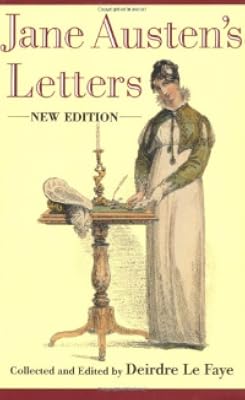
Jane Austen's Letters
by Jane Austen
On This Page
Description
Jane Austen's letters afford a unique insight into the daily life of the novelist: intimate and gossipy, observant and informative, they bring alive her family and friends, her surroundings and contemporary events with a freshness unparalleled in biography. Above all we recognize theunmistakable voice of the author of Pride and Prejudice, witty and amusing as she describes the social life of town and country, thoughtful and constructive when writing about the business of literary show more composition.R. W. Chapman's ground-breaking edition of the collected Letters first appeared in 1932, and a second edition followed twenty years later. A third edition, edited by Deidre Le Faye in 1997, added new material, re-ordered the letters into their correct chronological sequence, and provided discreetand full annotation to each letter, including its provenance, and information on the watermarks, postmarks, and other physical details of the manuscripts. This fourth edition incorporates the findings of new scholarship to enrich our understanding of Austen and give us the fullest and most revealingview yet of her life and family. There is a new preface, the biographical and topographical indexes have been amended and updated, a new subject index has been created, and the contents of the notes added to the general index. show lessTags
Recommendations









Member Reviews
This wonderful volume includes all of Jane Austen's letters that are currently extant and is chock full of delicious goodies. There are tremendous insights into the woman that has become a cultural touchstone. We find Jane trading gossip with her sister Cassandra about the latest fashions, what clothes she bought in town, who she saw at the play, or the latest news about who was married or gave birth. There are letters about small and large family dramas and tragedies. There are letters traded with her publishers about her novels. There are also later letters in which she provides advice to her nieces on their own attempts at writing. While full of small details that are fascinating to scholars and hardcore Janeites, there are flashes show more of the wit that are in full evidence in her novels that appeal to more casual fans of her works. The third edition has an in-depth introduction, extensive notes, a comprehensive bibliography, and three separate indexes which ought to make it a useful volume for any scholar. And for a more casual reader who is simply fascinated by Jane Austen, the collection provides a brief insight into the woman behind the iconic heroines of her books. show less
I read the letters straight through but very slowly, two a day every weekday, and after the first big chunk when I didn't know who anybody was or care much about them, I found Austen's world and concerns opening up in really compelling ways. To the point where I was, amusingly, so sad when she died ... Anyway, this seems a well-edited and useful edition, and I ended up loving reading it like a big messy story.
A joy to read. It's like having afternoon tea with Elizabeth and Jane Bennet, or Marianne and Elinor Dashwood. All the tidbits of daily living, in such a neighbourhood as theirs, circa late 18th, early 19th Century. Nothing could satisfy more!
Suited to either reading straight through, or dipping in and out of as the fancy takes you, Jane Austen's Letters is nicely arranged and presented and meticulously annotated. Austen's letters are frequently witty and always entertaining, with just enough of a hint of mischief to them to make me regret even more that her sister, Cassandra, burned so many of her letters after her death. As hefty a volume as this is, it really should be so much larger.
It's amazing that any of her letters survive! As an earlier reviewer said, you can pick it up on and off or read it straight through. There are copious notes regarding the place each letter was written, who the people are that are mentioned, and much more. I would have loved to read the letters Cassandra sent to Jane, but c'est la vie they aren't included if they survive.
Very interesting window into her world.
Det är förvisso vanligen högst oartigt att läsa andras brev, men när författaren varit död i nästan 200 år får nog sådana hänsyn sedan länge vara överspelade. Därmed inte sagt att detta är något som rekommenderas: det är få brevskrivare som kan hålla intresset uppe efter så lång tid. Jane Austen är tyvärr inte en av dem.
Jo, det finns förvisso några satiriska observationer av den sort man väntar sig, och det finns en del intressanta kommentarer rörande hennes författarskap, och kanske ett par andra skojiga saker också, men den större delen av breven, ställda till systern Cassandra, sysselsätter sig främst med timliga saker; vem som varit på samma tillställning, vem som gift sig med vem, och vilken show more sorts kläde som skall köpas eller skickas eller färgas eller sys. Måhända är detta intressant för den som forskar i mindre bemedlade bättre damers liv i det tidiga artonhundratalets England, eller lokalhistoriker på jakt efter en anknytning till Austen – svenska sådana bestås en beundrande kommentar om landet som gett världen Gustav Vasa, Kristina, Karl XII och Carl von Linné –, men för den mindre specialiserade läsaren ger det väldigt lite.
Tyvärr hjälper inte denna, av Deidre Le Faye redigerade utgåva, mycket: den är i hög grad ämnad en krets av akademiker, varför det finns detaljerade kommentarer om brevens proveniens, och kommentarer som förklarar allusioner och liknande, men aldrig meddelar varför breven skickats. När de gäller de till Cassandra skall systrarna stått i brevledes kommunikation så fort de var ifrån varandra någon längre tid, men eftersom det inte ges mer än adresser får man själv pussla ihop hos vem och varför de är på en viss plats. Breven till vänner och syskonbarn är i allmänhet något lättare att förstå, och det är också vanligen de som bjuder på några glimtar i hur Austen såg på författande, föranlett av dessas försök på samma bana (inget av detta publicerades mig veterligen), och inte ens då är det särskilt mycket.
Nej, detta var nog ett av de tillfällen då man utan att tveka kan rekommendera den hugade läsaren att välja en volym bestående endast av ett urval – kanske till och med av citat ur breven i stället för dessa i sin helhet. show less
Jo, det finns förvisso några satiriska observationer av den sort man väntar sig, och det finns en del intressanta kommentarer rörande hennes författarskap, och kanske ett par andra skojiga saker också, men den större delen av breven, ställda till systern Cassandra, sysselsätter sig främst med timliga saker; vem som varit på samma tillställning, vem som gift sig med vem, och vilken show more sorts kläde som skall köpas eller skickas eller färgas eller sys. Måhända är detta intressant för den som forskar i mindre bemedlade bättre damers liv i det tidiga artonhundratalets England, eller lokalhistoriker på jakt efter en anknytning till Austen – svenska sådana bestås en beundrande kommentar om landet som gett världen Gustav Vasa, Kristina, Karl XII och Carl von Linné –, men för den mindre specialiserade läsaren ger det väldigt lite.
Tyvärr hjälper inte denna, av Deidre Le Faye redigerade utgåva, mycket: den är i hög grad ämnad en krets av akademiker, varför det finns detaljerade kommentarer om brevens proveniens, och kommentarer som förklarar allusioner och liknande, men aldrig meddelar varför breven skickats. När de gäller de till Cassandra skall systrarna stått i brevledes kommunikation så fort de var ifrån varandra någon längre tid, men eftersom det inte ges mer än adresser får man själv pussla ihop hos vem och varför de är på en viss plats. Breven till vänner och syskonbarn är i allmänhet något lättare att förstå, och det är också vanligen de som bjuder på några glimtar i hur Austen såg på författande, föranlett av dessas försök på samma bana (inget av detta publicerades mig veterligen), och inte ens då är det särskilt mycket.
Nej, detta var nog ett av de tillfällen då man utan att tveka kan rekommendera den hugade läsaren att välja en volym bestående endast av ett urval – kanske till och med av citat ur breven i stället för dessa i sin helhet. show less
Mar 27, 2011Swedish
Members
- Recently Added By
Published Reviews
ThingScore 100
...One can only deplore Cassandra’s high-handed actions after Austen’s death; these included burning great quantities of her sister’s letters and censoring others by snipping pieces out of them. The vast majority of these letters were written to Cassandra herself. Though Austen wrote from time to time to other members of the large Austen clan – her three brothers and their wives, show more various favourite nieces and nephews – Cassandra was the person around whom her life revolved, and she wrote regularly to her whenever they were separated. (Spinsters both, the two Austen sisters lived together all their adult lives – first at Steventon and Bath with their parents, then after their father’s death in 1805, with their mother and a female friend at Chawton in Hampshire.) ... Still, only 161 Austen letters are known to exist today, and many only in Cassandra-mangled form.
Deirdre Le Faye, editor of the excellent new revised Oxford edition of the letters, defends Cassandra somewhat backhandedly, suggesting that her weeding-out and censorship ‘shows itself more in the complete destruction of letters rather than in the excision of individual sentences; the “portions cut out” usually only amount to a very few words, and from the context it would seem that the subject concerned was physical ailment.’ Le Faye speculates that Cassandra, not wishing to cause embarrassment or ill-feeling, destroyed letters in which Austen wrote too freely or satirically about other family members. ...
Reading Austen’s letters to Cassandra, one cannot help but sense the primitive adhesiveness – and underlying eros – of the sister-sister bond. The first surviving letter dates from 1796, when Austen was 20 and Cassandra 23. From the start the tone is rhetorical, literary (not like a phone call at all), and one of whimsical yet fierce attachment. Austen wants more than anything to make her older sister laugh. As in her novels, she uses first lines flirtatiously, like comic bait, to catch Cassandra in webs of mock-heroic invention. ...
Once Cassandra is ensnared, Austen holds her fast with in-jokes and sisterly games of style, complete with loveable misspellings. For all the family gossip they impart, Austen’s letters remain intensely scripted: full of parodic references to shared reading and the cherished (or maligned) books of female adolescence. show less
Deirdre Le Faye, editor of the excellent new revised Oxford edition of the letters, defends Cassandra somewhat backhandedly, suggesting that her weeding-out and censorship ‘shows itself more in the complete destruction of letters rather than in the excision of individual sentences; the “portions cut out” usually only amount to a very few words, and from the context it would seem that the subject concerned was physical ailment.’ Le Faye speculates that Cassandra, not wishing to cause embarrassment or ill-feeling, destroyed letters in which Austen wrote too freely or satirically about other family members. ...
Reading Austen’s letters to Cassandra, one cannot help but sense the primitive adhesiveness – and underlying eros – of the sister-sister bond. The first surviving letter dates from 1796, when Austen was 20 and Cassandra 23. From the start the tone is rhetorical, literary (not like a phone call at all), and one of whimsical yet fierce attachment. Austen wants more than anything to make her older sister laugh. As in her novels, she uses first lines flirtatiously, like comic bait, to catch Cassandra in webs of mock-heroic invention. ...
Once Cassandra is ensnared, Austen holds her fast with in-jokes and sisterly games of style, complete with loveable misspellings. For all the family gossip they impart, Austen’s letters remain intensely scripted: full of parodic references to shared reading and the cherished (or maligned) books of female adolescence. show less
added by -albina-
Lists

Diarios
4 works; 1 member

About Jane Austen...
13 works; 4 members

Folio Society
831 works; 53 members

Literary Works Read in College
316 works; 15 members
Author Information

701+ Works 316,655 Members
Jane Austen's life is striking for the contrast between the great works she wrote in secret and the outward appearance of being quite dull and ordinary. Austen was born in the small English town of Steventon in Hampshire, and educated at home by her clergyman father. She was deeply devoted to her family. For a short time, the Austens lived in the show more resort city of Bath, but when her father died, they returned to Steventon, where Austen lived until her death at the age of 41. Austen was drawn to literature early, she began writing novels that satirized both the writers and the manners of the 1790's. Her sharp sense of humor and keen eye for the ridiculous in human behavior gave her works lasting appeal. She is at her best in such books as Pride and Prejudice (1813), Mansfield Park (1814), and Emma (1816), in which she examines and often ridicules the behavior of small groups of middle-class characters. Austen relies heavily on conversations among her characters to reveal their personalities, and at times her novels read almost like plays. Several of them have, in fact, been made into films. She is considered to be one of the most beloved British authors. (Bowker Author Biography) show less
All Editions
Some Editions
Work Relationships
Is contained in
Common Knowledge
- Canonical title
- Jane Austen's Letters
- Original title
- The Letters of Jane Austen
- Original publication date
- 1932 (First Edition) (First Edition); 1952 (Second Edition) (Second Edition); 1995 (Third Edition) (Third Edition); 1884 (Brabourne) (Brabourne); LC 94-3650 (Third Edition) (Third Edition)
- People/Characters
- Jane Austen; Cassandra Austen; Fanny Knight
- Important places
- London, England, UK
- First words
- In the first place I hope you will live twenty-three years longer.
- Last words
- (Click to show. Warning: May contain spoilers.)God bless you my dearest Fanny. Believe me most affect'ly Yours Cass Elizth Austen
- Blurbers
- Tomalin, Claire
- Original language
- English
- Disambiguation notice
- collected and edited by Deirdre Le Faye
Classifications
Statistics
- Members
- 1,003
- Popularity
- 25,944
- Reviews
- 7
- Rating
- (4.23)
- Languages
- English, Italian, Spanish
- Media
- Paper, Ebook
- ISBNs
- 14
- ASINs
- 15