
Deirdre Le Faye (1933–2020)
Author of Jane Austen: The World of Her Novels
About the Author
Image credit: the Guardian
Works by Deirdre Le Faye
Jane Austen's 'Outlandish Cousin': The Life and Letters of Eliza de Feuillide (2002) 31 copies, 3 reviews
Associated Works
Pride and Prejudice [Norton Critical Edition, 3rd ed.] (2001) — Contributor — 1,023 copies, 13 reviews
The History of England: By a Partial, Prejudiced and Ignorant Historian (1791) — Contributor, some editions — 721 copies, 13 reviews
Jane Austen, Her Life and Letters: A Family Record (1870) — Editor, some editions — 335 copies, 3 reviews
Tagged
Common Knowledge
- Other names
- SMITH, Deirdre Gillian Gina (birth name)
LE FAYE, Deirdre - Birthdate
- 1933-10-26
- Date of death
- 2020-08-16
- Gender
- female
- Occupations
- scholar of the works of Jane Austen
- Organizations
- British Museum
Camden History Society - Nationality
- UK
- Birthplace
- Bournemouth, England, UK
- Places of residence
- Portishead, North Somerset, England, UK
Farmborough, England, UK
Reading, Berkshire, England, UK
London, England, UK - Map Location
- UK
Members
Reviews
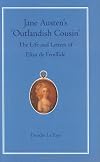
In October 1791 one of Jane Austen's cousins, Philadelphia Walter wrote of another cousin: 'Poor Eliza must be left at last friendless and alone. The gay dissipated life she has long and so plentiful a share of has not ensur'd her friends among the worthy; on the contrary many who otherwise have regarded her have blamed her conduct and will now resign her acquaintance. I have always felt concerned and pitied her thoughtlessness. I have frequnetly looked forward to the approaching awful show more period, and regretted her manner of life ... I have just wrote to assure her she may command my services.' Poor Eliza - the Comtesse de Feuillide - had just lost her mother, her husband had been executed in the French Revolution and she was then alone with her adored, disabled son Hastings.
In Jane Austen's Outlandish Cousin Deirdre Le Faye uses Eliza's surviving letters to Philadelphia Walter to write 'a short biography ... almost in the form of one of the epistolary novels that were so popular, that gives Eliza her own place in late eighteenth-century society as well as showing how her adventurous life engaged with that of Jane Austen's family in the quiet country parsonage'. One can almost hear Austen listening and taking some of Eliza's comments for later use in her juvenilia, burlesques and perhaps Manfield Park's Mary Crawford. Eliza was a lazy correspondent and defended herself: 'Do not however suppose that I dislike receiving letters, for nothing gives me more pleasure, and if my friends would be contented to write without requiring answers I should like to hear from them seven times a week.' On temptation: 'I certainly do feel a very strange propensity towards revisiting that retired, quiet spot usually called Brighton and perhaps in this case as in many others the only effecutal means of getting rid of the temptation, will be to give way to it.'
Flirtatious, funny and charming as these letters are they also incredibly moving. Le Faye also includes letters from Eliza's father in India. Mr Hancock was ill and unsuccessful but all he could think of was his wife and daughter back in England when their letters took a year to arrive. Mrs Hancock's later painful death is movingly told through Eliza's letters. These are interludes of sadness in a minor but sparkling life of 'Tea drinking, Concert & Ball' and one in which, despite her cousin's predictions, she was never friendless or alone. show less
In Jane Austen's Outlandish Cousin Deirdre Le Faye uses Eliza's surviving letters to Philadelphia Walter to write 'a short biography ... almost in the form of one of the epistolary novels that were so popular, that gives Eliza her own place in late eighteenth-century society as well as showing how her adventurous life engaged with that of Jane Austen's family in the quiet country parsonage'. One can almost hear Austen listening and taking some of Eliza's comments for later use in her juvenilia, burlesques and perhaps Manfield Park's Mary Crawford. Eliza was a lazy correspondent and defended herself: 'Do not however suppose that I dislike receiving letters, for nothing gives me more pleasure, and if my friends would be contented to write without requiring answers I should like to hear from them seven times a week.' On temptation: 'I certainly do feel a very strange propensity towards revisiting that retired, quiet spot usually called Brighton and perhaps in this case as in many others the only effecutal means of getting rid of the temptation, will be to give way to it.'
Flirtatious, funny and charming as these letters are they also incredibly moving. Le Faye also includes letters from Eliza's father in India. Mr Hancock was ill and unsuccessful but all he could think of was his wife and daughter back in England when their letters took a year to arrive. Mrs Hancock's later painful death is movingly told through Eliza's letters. These are interludes of sadness in a minor but sparkling life of 'Tea drinking, Concert & Ball' and one in which, despite her cousin's predictions, she was never friendless or alone. show less
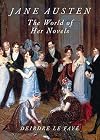
After staunchly refusing to read Austen's novels for years, on the insistence that all of her stories are about 'white frocks and weddings', I can no longer deny her genius. 'Sense and Sensibility', 'Emma' and of course 'Pride and Prejudice' are now permanently installed on my bookshelves, and I know I will read them again and again.
As a newcomer to the Regency, although the early nineteenth century is only a hop and a skip away from my favourite era of the French Revolution, Deirdre Le show more Faye's comprehensive overview of Jane Austen's England, from the perspective of her life and works, is invaluable. I was already aware of the general history of the time, and some of the social etiquette mentioned in Austen's novels, but Le Faye links fact and fiction seamlessly, discussing education from the perspective of Darcy, Bingley, the Bertrams and Knightleys, and the domestic roles of women like Emma Woodhouse and Mrs Dashwood. It's also interesting to note how sparing Austen was with descriptive details of characters and settings - the reader is only 'shown' around houses of future relevance to the heroine, as with Lizzie Bennet and Pemberley, and not places with which they are familiar.
The first part of Le Faye's guide to Austen's world is an introduction to the author and her world - Regency England, Europe and the colonies, travel, transport, social ranks, naval, education, military and clerical life, fashion, domestic and social life. Le Faye writes clearly and simply, providing examples from Jane's life and novels. The second part builds on this foundation with in-depth studies of the novels, providing plot summaries, character descriptions and geographical background, which I found most interesting, comparing the Devonshire, Dorsetshire, Derbyshire, Hampshire, Northamptonshire, Surrey, etc. of Jane's time with present day locations. Meryton in 'Pride and Prejudice', for example, is based on Hertford, and Highbury in 'Emma' is reported to be Leatherhead, Surrey. Le Faye also adds copies of contemporary portraits which could be the characters in Jane's books, and photographs of houses upon which the fictional estates of Donwell, Mansfield and Pemberley might have been based upon. The individual sections do give away the story, however, so if there exists anyone else like me who hasn't read every novel, beware of spoilers!
I found this book really useful and fascinating, and a worthy addition to my growing Austen collection! show less
As a newcomer to the Regency, although the early nineteenth century is only a hop and a skip away from my favourite era of the French Revolution, Deirdre Le show more Faye's comprehensive overview of Jane Austen's England, from the perspective of her life and works, is invaluable. I was already aware of the general history of the time, and some of the social etiquette mentioned in Austen's novels, but Le Faye links fact and fiction seamlessly, discussing education from the perspective of Darcy, Bingley, the Bertrams and Knightleys, and the domestic roles of women like Emma Woodhouse and Mrs Dashwood. It's also interesting to note how sparing Austen was with descriptive details of characters and settings - the reader is only 'shown' around houses of future relevance to the heroine, as with Lizzie Bennet and Pemberley, and not places with which they are familiar.
The first part of Le Faye's guide to Austen's world is an introduction to the author and her world - Regency England, Europe and the colonies, travel, transport, social ranks, naval, education, military and clerical life, fashion, domestic and social life. Le Faye writes clearly and simply, providing examples from Jane's life and novels. The second part builds on this foundation with in-depth studies of the novels, providing plot summaries, character descriptions and geographical background, which I found most interesting, comparing the Devonshire, Dorsetshire, Derbyshire, Hampshire, Northamptonshire, Surrey, etc. of Jane's time with present day locations. Meryton in 'Pride and Prejudice', for example, is based on Hertford, and Highbury in 'Emma' is reported to be Leatherhead, Surrey. Le Faye also adds copies of contemporary portraits which could be the characters in Jane's books, and photographs of houses upon which the fictional estates of Donwell, Mansfield and Pemberley might have been based upon. The individual sections do give away the story, however, so if there exists anyone else like me who hasn't read every novel, beware of spoilers!
I found this book really useful and fascinating, and a worthy addition to my growing Austen collection! show less

An interesting look at food culture in Georgian/Regency England, accompanied by dozens of contemporary recipes each with a modern "translation" to allow you to cook your own if you so please. I have to admit that I'm highly unlikely to ever try any of them myself—even in modernised form, many of them seem really fussy and time-consuming, and the flavour profiles preferred by the average member of the Georgian gentry seem quite different from my own. (The inclusion of photographs of the show more various dishes might have helped to whet the appetite more.) However, still fascinating to dip into, and full of interesting little nuggets of information—such as the fact that Austen's contemporaries were as likely to use the still-rare potato in sweet as they were in savoury dishes. show less
Does the world need to know that Jane Austen's cousin sent a letter to his vicar? The answer is no. There is such a thing as too much information.
You May Also Like


Associated Authors
Statistics
- Works
- 11
- Also by
- 14
- Members
- 1,075
- Popularity
- #23,918
- Rating
- 4.1
- Reviews
- 22
- ISBNs
- 25
- Languages
- 1
- Favorited
- 2