
Maggie Lane (1) (1947–)
Author of Jane Austen's World: The Life and Times of England's Most Popular Author
For other authors named Maggie Lane, see the disambiguation page.
About the Author
Image credit: Maggie Lane
Works by Maggie Lane
Jane Austen's World: The Life and Times of England's Most Popular Author (1996) 291 copies, 6 reviews
Associated Works
Tagged
Common Knowledge
- Birthdate
- 1947
- Gender
- female
- Nationality
- UK
- Places of residence
- Bristol, Gloucestershire, England, UK
- Associated Place (for map)
- England, UK
Members
Reviews
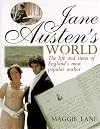
This book is perfect on so many levels! On every page, I learned something and was entertained at the same time. The pacing, structure, depth, and breadth were all spot on. The best part is it will be so easy to return to this book over and over again every time I just want to remember something or take a quick trip down memory lane.
The book is divided into a few major sections: Jane Austen's life & family, her world, the world at large, and her books & legacy. I learned all about meals, show more games, traveling, and her aunt who was almost beheaded! Every page brought something new, and I never once fell asleep! Sometimes, I struggle to stay awake when reading nonfiction, but that didn't happen at all with this book!
This is a great book to dip one's toes into learning about Austen. Even if you're an avid Janeite like myself, there are still things to learn and amuse. I recommend everyone read this because everyone could gain something! show less
The book is divided into a few major sections: Jane Austen's life & family, her world, the world at large, and her books & legacy. I learned all about meals, show more games, traveling, and her aunt who was almost beheaded! Every page brought something new, and I never once fell asleep! Sometimes, I struggle to stay awake when reading nonfiction, but that didn't happen at all with this book!
This is a great book to dip one's toes into learning about Austen. Even if you're an avid Janeite like myself, there are still things to learn and amuse. I recommend everyone read this because everyone could gain something! show less
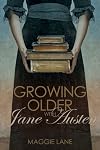
Growing Older with Jane Austen is actually an interesting read, reviewing (as the title might suggest) all of Austen’s novels through the lens of age. The first chapter, “Loss of Youth & Beauty”, indicates that point when age would turn against a woman in Georgian England, that is, when she might be considered as a spinster, a dependent relative, on the shelf insofar as marriage might be concerned and therefore without a bright future. What makes the book particularly interesting is show more all the attention granted to those secondary characters from Austen’s novels who might not otherwise be given much time in the spotlight. There’s a certain stimulation in considering the older Mrs. Ferrars (Edward’s mother in Sense and Sensibility) in the context of chapters like “Parent and Child” and “Four Dowager Despots”. Mrs Clay, the gold-digging companion to Sir Walter Elliot in Persuasion appears in a chapter entitled “Not the Only Widow in Bath”. Lady Susan -- that scandalous female who manipulates the marital prospects of her daughter -- shows up in the chapter “Merry Widows”.
This book isn’t just about the fictional characters. It’s about the cultural behaviors and attitudes in place that Austen’s novels present as ordinary, or as Miss Bingley might phrase it “not out of the common way”. Different chapters touch on how the aging process might impact one’s social status and thus one’s circumstances in terms of residence or income. (For example, the chapter on Bath discusses how the population of Bath shifted over time from being a fashionable city full of attractions to members of the Court to being a less upscale environment, overpopulated with widows suddenly forced to relocate.) There are plenty of references to real places and individuals but less than might actually justify an index given over *solely* to real persons and historical sites.
If you read Jane Austen and Food by this author, and enjoyed it, I can recommend this one as well to you. It's very much in the same vein. show less
This book isn’t just about the fictional characters. It’s about the cultural behaviors and attitudes in place that Austen’s novels present as ordinary, or as Miss Bingley might phrase it “not out of the common way”. Different chapters touch on how the aging process might impact one’s social status and thus one’s circumstances in terms of residence or income. (For example, the chapter on Bath discusses how the population of Bath shifted over time from being a fashionable city full of attractions to members of the Court to being a less upscale environment, overpopulated with widows suddenly forced to relocate.) There are plenty of references to real places and individuals but less than might actually justify an index given over *solely* to real persons and historical sites.
If you read Jane Austen and Food by this author, and enjoyed it, I can recommend this one as well to you. It's very much in the same vein. show less
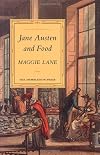
Exactly what it sounds like: a lively exploration of food in Jane Austen's life and fiction.
Except there really is a lot more to it than that. It's true Maggie Lane explains things I always wondered about, like why General Tilney was upset about "the butter being oiled" (whatever that meant) or how Miss Bates baked her apples twice (wouldn't you just bake them until they were done?).
Lane also gives detailed information about things I didn't know enough to wonder about. The meaning of the show more word "morning" in Austen's time, for instance. Silly flippin' me, I figured it meant then what it means now: the span of time from waking until noon. Nope. "Morning" didn't begin until after breakfast was eaten, and it extended until dinner. It was basically another word for "day," as Austen makes clear in a letter to her sister: "We breakfasted before 9 & do not dine till ½ past 6 on the occasion, so I hope we three shall have a long Morning enough."
So women didn't pay their "morning" visits until what we would call early afternoon, because ladies often wouldn't breakfast until nine or ten o'clock, and would spend the next hour or two sewing, reading "horrid" novels, or engaging in light household chores such as consulting with the housekeeper.
And if morning extended until dinner, "afternoon" was the few hours between dinner and tea. An "afternoon" walk, such as the significant one in Emma, actually took place in the early evening; and tea was not an afternoon snack but an evening ritual.
Lane explains all of this deftly and engagingly. She also gives ample details as to what sort of food one might be offered at any given time of the day in a genteel household, and what those offerings symbolize. Mrs. Bennet's invitations to supper speak of her lower-class origins; the French bread and morning chocolate at Northanger Abbey's breakfast table scream of General Tilney's selfish snobbery.
Just don't expect recipes. Lane writes about Regency food; if you want to learn how to actually prepare such food, you'll need a copy of Hannah Glasse's 1747 The Art of Cookery Made Plain and Easy, or Mrs. Rundell's A New System of Domestic Cookery. (I got a copy of Persephone Book's 1816 edition of this latter book. It's gorgeous, but I did have to order it from England. Glasse's book is available from Amazon, and will tell you everything you need to know about how to make a vegetarian Hedgehog for dessert. But I digress.)
Jane Austen and Food is essential reading for anyone researching the Regency. It's also a lot of fun. show less
Except there really is a lot more to it than that. It's true Maggie Lane explains things I always wondered about, like why General Tilney was upset about "the butter being oiled" (whatever that meant) or how Miss Bates baked her apples twice (wouldn't you just bake them until they were done?).
Lane also gives detailed information about things I didn't know enough to wonder about. The meaning of the show more word "morning" in Austen's time, for instance. Silly flippin' me, I figured it meant then what it means now: the span of time from waking until noon. Nope. "Morning" didn't begin until after breakfast was eaten, and it extended until dinner. It was basically another word for "day," as Austen makes clear in a letter to her sister: "We breakfasted before 9 & do not dine till ½ past 6 on the occasion, so I hope we three shall have a long Morning enough."
So women didn't pay their "morning" visits until what we would call early afternoon, because ladies often wouldn't breakfast until nine or ten o'clock, and would spend the next hour or two sewing, reading "horrid" novels, or engaging in light household chores such as consulting with the housekeeper.
And if morning extended until dinner, "afternoon" was the few hours between dinner and tea. An "afternoon" walk, such as the significant one in Emma, actually took place in the early evening; and tea was not an afternoon snack but an evening ritual.
Lane explains all of this deftly and engagingly. She also gives ample details as to what sort of food one might be offered at any given time of the day in a genteel household, and what those offerings symbolize. Mrs. Bennet's invitations to supper speak of her lower-class origins; the French bread and morning chocolate at Northanger Abbey's breakfast table scream of General Tilney's selfish snobbery.
Just don't expect recipes. Lane writes about Regency food; if you want to learn how to actually prepare such food, you'll need a copy of Hannah Glasse's 1747 The Art of Cookery Made Plain and Easy, or Mrs. Rundell's A New System of Domestic Cookery. (I got a copy of Persephone Book's 1816 edition of this latter book. It's gorgeous, but I did have to order it from England. Glasse's book is available from Amazon, and will tell you everything you need to know about how to make a vegetarian Hedgehog for dessert. But I digress.)
Jane Austen and Food is essential reading for anyone researching the Regency. It's also a lot of fun. show less

Author, and Jane Austen scholar Maggie Lane’s lushly illustrated and thoroughly delightful volume on Jane Austen’s life, times and works is one of my Austen favorites in my library.
I gravitate to this lovely volume on my shelf when I need a quick Austen escape. Its large coffee table format allows for lush color photographs and period illustrations on each page, and author Maggie Lane was cleverly arranged the keynotes into five chapters, representing important aspects of Austen’s show more world; Who was Jane Austen? Daily Life in Jane Austen’s England, Society and the Spirit of the Age, The Visual World, and The Immortal Jane Austen. This volume also includes a well written introduction, chronology, helpful index and author’s acknowledgments. Here is an example of the first topic in chapter one…
Chapter One: Who is Jane Austen?
The Woman: We learn about Jane Austen’s birth, family and home environment that nurtured her genius. Her physical appearance, character and personality are described and exemplified by Lane’s thorough research, aptly including insightful quotes from her letters and family reflections.
“Her unusually quick sense of the ridiculous inclined her to play with the trifling commonplaces of everyday life, whether as regarded people or things; but she never played with its serious duties or responsibilities - when she was grave, she was very grave.” Anna Austen Lefroy
Inevitably, comparisons of Austen’s personality lead to the paring of her attitudes and personality with the characteristics of her own heroines. Even though each of her heroines is highly individual, Lane hints at similarities in the characters of Elizabeth Bennet, Emma Woodhouse and Anne Elliot, and though I agree for the most part, I was amused to see how one can find what they need to suit, by reason and ingenuity.
The chapters are broken down further by topics and continue in chapter one as follows; The Writer, Beliefs and Values, The Letters, The Portraits, Family Background, Home at Steventon, The six brothers, Some female relations, Love and friendship, Family visits, Bath and the West Country, and Return to Hampshire.
Even though Maggie Lane is qualified to write a scholarly treatise, she knows her audience, and her light style is approachable and engaging. She includes enough biographical and historical detail to introduce us to the subject, and not weigh it down with heavy language and minutia. The photographs and illustration have been thoughtfully selected, significant to the topic, and important historically. Her scholarship is exemplary.
This is my favorite Austen book to give as a gift as an introduction to Jane Austen, and as eye candy to the indoctrinated. It has never failed to please, and I hope that we shall see many additional editions for future readers. show less
I gravitate to this lovely volume on my shelf when I need a quick Austen escape. Its large coffee table format allows for lush color photographs and period illustrations on each page, and author Maggie Lane was cleverly arranged the keynotes into five chapters, representing important aspects of Austen’s show more world; Who was Jane Austen? Daily Life in Jane Austen’s England, Society and the Spirit of the Age, The Visual World, and The Immortal Jane Austen. This volume also includes a well written introduction, chronology, helpful index and author’s acknowledgments. Here is an example of the first topic in chapter one…
Chapter One: Who is Jane Austen?
The Woman: We learn about Jane Austen’s birth, family and home environment that nurtured her genius. Her physical appearance, character and personality are described and exemplified by Lane’s thorough research, aptly including insightful quotes from her letters and family reflections.
“Her unusually quick sense of the ridiculous inclined her to play with the trifling commonplaces of everyday life, whether as regarded people or things; but she never played with its serious duties or responsibilities - when she was grave, she was very grave.” Anna Austen Lefroy
Inevitably, comparisons of Austen’s personality lead to the paring of her attitudes and personality with the characteristics of her own heroines. Even though each of her heroines is highly individual, Lane hints at similarities in the characters of Elizabeth Bennet, Emma Woodhouse and Anne Elliot, and though I agree for the most part, I was amused to see how one can find what they need to suit, by reason and ingenuity.
The chapters are broken down further by topics and continue in chapter one as follows; The Writer, Beliefs and Values, The Letters, The Portraits, Family Background, Home at Steventon, The six brothers, Some female relations, Love and friendship, Family visits, Bath and the West Country, and Return to Hampshire.
Even though Maggie Lane is qualified to write a scholarly treatise, she knows her audience, and her light style is approachable and engaging. She includes enough biographical and historical detail to introduce us to the subject, and not weigh it down with heavy language and minutia. The photographs and illustration have been thoughtfully selected, significant to the topic, and important historically. Her scholarship is exemplary.
This is my favorite Austen book to give as a gift as an introduction to Jane Austen, and as eye candy to the indoctrinated. It has never failed to please, and I hope that we shall see many additional editions for future readers. show less
Lists
You May Also Like


Associated Authors
Statistics
- Works
- 20
- Also by
- 6
- Members
- 720
- Popularity
- #35,253
- Rating
- 4.2
- Reviews
- 12
- ISBNs
- 58
- Languages
- 2
- Favorited
- 1