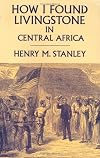
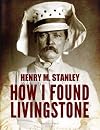
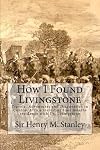
How I Found Livingstone
by Henry M. Stanley
On This Page
Description
Livingstone's 1840s expedition into Africa, the "Dark Continent", caught the public's imagination. In 1864 he returned to Africa and all but disappeared. Public interest ran so high, that in 1869 the publisher of the New York Herald commissioned reporter Henry Stanley to go and find him. This book is Stanley's account of his adventure, and the moment he found Livingstone, in which he uttered the famous words: "Dr. Livingstone, I presume?".
Tags
Recommendations







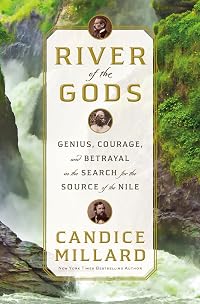
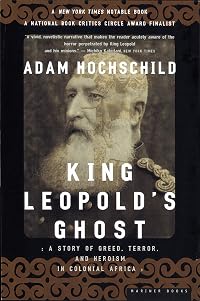




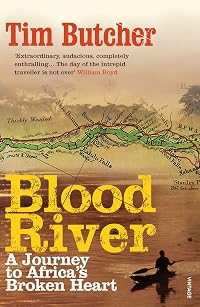
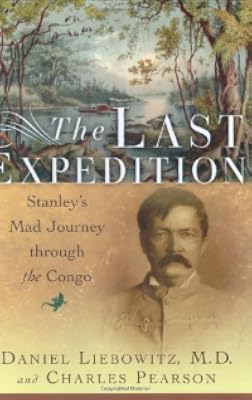












Member Recommendations
Member Reviews
This is Stanley's original account - but bear in mind that he was a professional journalist as well as an explorer. How generously and honestly can we treat his tale? Did he really utter those most famous words - 'Dr Livingstone, I presume?'
Well, the story of how he crossed Africa in search of the Scot is an interesting one, but not that interesting. His writing is simple and informative, but the events are repetitive. This is one for the scholars, I think.
Well, the story of how he crossed Africa in search of the Scot is an interesting one, but not that interesting. His writing is simple and informative, but the events are repetitive. This is one for the scholars, I think.
A painful, but worthy read. Stanley's attitudes are very colonial (prejudiced), but he describes the land, animals, diseases and experiences well. When he met Livingstone, it changed him and his attitudes. He marveled at the quiet reasonable way Dr. Livingstone spoke with the natives, and what a good effect it had. I am glad I read it, I will never read it again.
The Great Dr. Livingstone was assumed dead in the African bush when Sir Henry M. Stanley went in search of him. I expect somewhere in the tall tales of his search there is some truth. Regardless of the accuracy, it was fun.
I am satisfied with this account of the Stanley expedition to find Livingstone.
There are many exciting events scattered throughout the pages.
There are no illustrations on this re-printed hardback version, so a little dry.
The names of the hundreds of places and tribes cannot be kept seperate in the readre's mind. This makes the reading a little dense, so I do not rate it higher than just above average.
The reprint would benefit greatly from having a route map at the start of each chapter.
In fact it could benefit by having the chapters start on the top of a page also, not just in the middle of a page, with the tail end of preceding chapter taking up the top of the page.
Still the story of the expedition is quite a story and worth reading show more through. show less
There are many exciting events scattered throughout the pages.
There are no illustrations on this re-printed hardback version, so a little dry.
The names of the hundreds of places and tribes cannot be kept seperate in the readre's mind. This makes the reading a little dense, so I do not rate it higher than just above average.
The reprint would benefit greatly from having a route map at the start of each chapter.
In fact it could benefit by having the chapters start on the top of a page also, not just in the middle of a page, with the tail end of preceding chapter taking up the top of the page.
Still the story of the expedition is quite a story and worth reading show more through. show less
Tanhanyika
Ratings
Members
- Recently Added By
Lists

CCE 1000 Good Books List
1,033 works; 12 members

Geography and Travel from The Book-Lover
291 works; 1 member
Author Information

69+ Works 1,150 Members
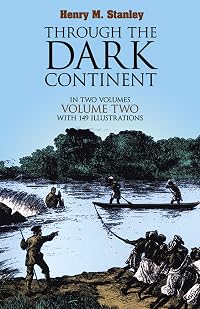
Stanley was a U.S. traveler born in Wales, educated in the poorhouse, and adopted by a New Orleans merchant who gave him his name. He fought in the Confederate army and after the war became a newspaper correspondent. He was commissioned by the New York Herald to go in search of David Livingstone in 1871. Stanley based one of his most popular show more books, Through the Dark Continent (1878), on a series of diaries in which he recorded the progress of his expedition of 1874--77. He presented the day-to-day account of his journeys undertaken to discover the sources of the Nile and Congo rivers, his circumnavigation of Lakes Victoria and Tanganyika, and his dangerous trip down the Congo River to Boma. (Bowker Author Biography) show less
Some Editions
Awards and Honors
Series
Belongs to Publisher Series
Work Relationships
Is abridged in
Common Knowledge
- Canonical title*
- Cómo encontré a Livingstone / En busca del doctor Livingstone
- Original publication date
- 1872
- People/Characters
- David Livingstone; Henry Morton Stanley
- Important events
- Search for David Livingstone
- First words
- On the 16th day of October, in the year of our Lord one thousand eight hundred and sixty-nine, I was in Madrid, fresh from the carnage at Valencia. At 10 A.M. Jacopo, at No. -- Calle de la Cruz, handed me a telegram: it read,... (show all) "Come to paris on important business." The telegram was from Mr. James Gordon Bennett, jun., the young manager of the 'New York Herald'.
- Quotations
- Dr. Livingstone, I presume!
- Last words
- (Click to show. Warning: May contain spoilers.)The Queen desires me to express her thanks for the service you have thus rendered, together with her Majesty's congratulations on your having so successfully carried on the mission which you fearlessly undertook. Her Majesty also desires me to request your acceptance of the memorial which accompanies this letter. I am, Sir, Your most obedient humble servant, GRANVILLE.
- Disambiguation notice
- This is NOT the "Classics Illustrated" version.
*Some information comes from Common Knowledge in other languages. Click "Edit" for more information.
Classifications
Statistics
- Members
- 389
- Popularity
- 80,238
- Reviews
- 5
- Rating
- (3.17)
- Languages
- 10 — Czech, Danish, Dutch, English, French, German, Hungarian, Italian, Spanish, Swedish
- Media
- Paper, Audiobook, Ebook
- ISBNs
- 75
- UPCs
- 1
- ASINs
- 23