On This Page
Description
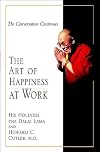
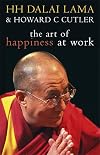
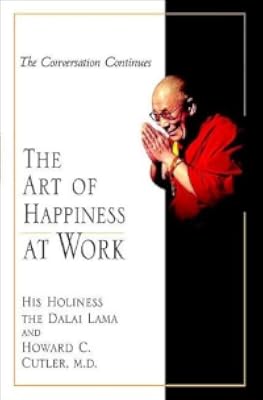
For the first time since The Art of Happiness, His Holiness the Dalai Lama has teamed up with psychiatrist Howard Cutler to continue the discussion about what makes life meaningful. In conversations with the Dalai Lama over the past several years, Howard Cutler has asked the questions we all want answered about how to find happiness in the place we spend most of our time -- work. Beginning with the basic need to find satisfaction in our careers, Dr. Cutler questions His Holiness about the show more nature of work. In psychiatry and according to the Dalai Lama, our motivation for working determines our level of satisfaction. The Art of Happiness at Work explores these three levels of focus: ? Survival: focus on salary, stability, food and clothing ? Career: focus on advancement ? Calling: focus on work as a higher purpose Dr. Cutler probes the Dalai Lama's wisdom by posing these questions: What is the relationship between self-awareness and work? How does lack of freedom at work affect our levels of happiness? How can we deal with boredom or lack of challenge? Job change and unemployment? How much of our misery comes from our identity being tied up with work? Dr. Cutler walks us through the Dalai Lama's reasoning so that we may know how to apply his wisdom to daily life. The Art of Happiness at Work is an invaluable source of strength and peace for anyone who earns a living. show lessTags
Recommendations





































Member Reviews
I really loved The Book of Joy by the Dalai Lama and Bishop Desmond Tutu so I found this which, of course, fits a prompt! I have to say that I was a little bit dubious going in because what exactly is the Dalai Lama's job aside from being the Dalai Lama? So, I wondered how he could relate to "regular" job issues that most people face. Of course, the gift that the Dalai Lama embodies and shares is his total compassion for all, and so, although he may never be in the position of a burger flipper or a data entry typist, he can always see the human aspect within all things. I found this quite amazing as I tend to fall into cynical pretty darn quickly. He pointed out that what brings happiness isn't really the job itself but, of course, the show more person's approach to it and what they expect to get out of it. One example that stood out to me was a cashier who was always so personable and really enjoyed interacting with the customers and how a co-worker talked about how all of their shifts are more fun and better when they work with her. That is really a gift and makes you think about how small little actions from each of us can really go a long way to helping each other and ourselves. The world needs more souls like the Dalai Lama but maybe if I can step back from life and take even just a few moments to remember that each day and work with that mind frame, it could help make my world a little better too. show less
This seemed like the perfect book to pick up and read. I have deep respect for The Dalai Lama and I really needed some advice on how to be happier at work.
I used to really love my job. It was exciting, for the most part, and every day usually held something new and challenging in store. Nowadays, it's not like that. There's a distinct vibe of us vs. them in most cases, IT vs. Accountants. Some of the financial folk chose to think that anyone can program so they'll just take care of what they want and ignore us programmers. The work isn't nearly challenging enough either, although the people are.
Cutler interviews The Dalai Lama about various aspects of work in regards to happiness. For example, they chat about making money, the human show more factor of work, whether your job is just a job, a career or a calling, how to overcome boredom, how to have a right livelihood, etc. I appreciated his insight on all of the above. Unfortunately, while I think it's all good advice, it will be difficult to put into practice.
In one chapter, and throughout others, the importance of being self-aware is emphasized. I think a lot of people have that problem, to be able to look at themselves and their abilities undistorted and with a critical eye. All in all, the way to achieve happiness, at work or otherwise, is to begin inwards, by readjusting your attitude to all things and remembering that it's just work and that doing good and helping others is more important. show less
I used to really love my job. It was exciting, for the most part, and every day usually held something new and challenging in store. Nowadays, it's not like that. There's a distinct vibe of us vs. them in most cases, IT vs. Accountants. Some of the financial folk chose to think that anyone can program so they'll just take care of what they want and ignore us programmers. The work isn't nearly challenging enough either, although the people are.
Cutler interviews The Dalai Lama about various aspects of work in regards to happiness. For example, they chat about making money, the human show more factor of work, whether your job is just a job, a career or a calling, how to overcome boredom, how to have a right livelihood, etc. I appreciated his insight on all of the above. Unfortunately, while I think it's all good advice, it will be difficult to put into practice.
In one chapter, and throughout others, the importance of being self-aware is emphasized. I think a lot of people have that problem, to be able to look at themselves and their abilities undistorted and with a critical eye. All in all, the way to achieve happiness, at work or otherwise, is to begin inwards, by readjusting your attitude to all things and remembering that it's just work and that doing good and helping others is more important. show less
I listened to the audio version of this book and enjoyed it much more than I thought I might. (I love to read; I thought that listening would be tedious.) While I still prefer reading, the reader, Robert O' Keefe did a nice job of "switching voices" for the parts of the book quoting or paraphrasing the Dalai Lama, and the other parts by Howard Cutler and thereby made it fun to listen to the book.
This book is part of a series of joint efforts between the Dalai Lama and Howard Cutler, M.D. in which Howard Cutler, the author, discusses his conversations with the Dalai Lama. Cutler is therefore paraphrasing and quoting the Dalai Lama, but also draws in additional material from recent western scientific studies which support what the Dalai show more Lama says or which the Dalai Lama has expanded views of.
As might be expected, this book discusses how a cultivation of mindfulness can be the most robust and enduring path to happiness at work, though it acknowledges very clearly that sometimes it IS better to switch one's occupation! - The Dalai Lama is pragmatic!
The Buddhist practice of a combination of meditation, introspection, and "internal expansion / compassion" can enhance one's happiness in all circumstances, and Howard Cutler cites additional western studies that concur, though often from a different perspective than the Buddhist view. For example, the concept of Flow by Csikszentmihalyi has similarites, but differences too. The Dalai Lama appears to expand on Flow with a somewhat differing but enhanced view.
I DO believe that if one reads this book and then builds ones own view of work, based on meditating on the ideas presented, coupled with introspection, one can become happier at work. show less
This book is part of a series of joint efforts between the Dalai Lama and Howard Cutler, M.D. in which Howard Cutler, the author, discusses his conversations with the Dalai Lama. Cutler is therefore paraphrasing and quoting the Dalai Lama, but also draws in additional material from recent western scientific studies which support what the Dalai show more Lama says or which the Dalai Lama has expanded views of.
As might be expected, this book discusses how a cultivation of mindfulness can be the most robust and enduring path to happiness at work, though it acknowledges very clearly that sometimes it IS better to switch one's occupation! - The Dalai Lama is pragmatic!
The Buddhist practice of a combination of meditation, introspection, and "internal expansion / compassion" can enhance one's happiness in all circumstances, and Howard Cutler cites additional western studies that concur, though often from a different perspective than the Buddhist view. For example, the concept of Flow by Csikszentmihalyi has similarites, but differences too. The Dalai Lama appears to expand on Flow with a somewhat differing but enhanced view.
I DO believe that if one reads this book and then builds ones own view of work, based on meditating on the ideas presented, coupled with introspection, one can become happier at work. show less
Using common sense and modern psychiatry, this illuminating book applies 2,500 years of Buddhist tradition to the contemporary struggles we face in finding our calling and performing our jobs. It asks of the Dalai Lama questions we all want answered about the nature of work and finding fulfillment, including: How does the relationship between our personal values and those of our employers affect happiness? What are the main sources of dissatisfaction and how can we cope with them? How do we deal with conflicts with coworkers and bosses? How do we deal with jealousy, anger, or hostility at work? How do we deal with boredom or lack of challenge? Unfair criticism? Job change and unemployment?
Once again, Cutler walks us through the Dalai show more Lama’s reasoning so that we know how to apply the wisdom to daily life. This is an invaluable source of strength and peace for anyone who earns a living. show less
Once again, Cutler walks us through the Dalai show more Lama’s reasoning so that we know how to apply the wisdom to daily life. This is an invaluable source of strength and peace for anyone who earns a living. show less
i thiought it helped me a lot and everything was made at a different point of view from then on.
Amazon.com Review:
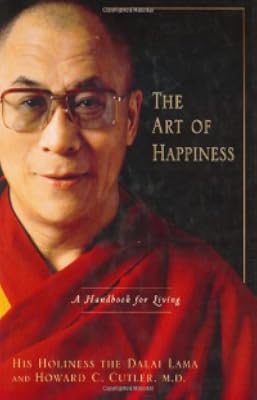
In their 1998 book "The Art of Happiness: A Handbook for Living", His Holiness the Dalai Lama and co-author Howard C. Cutler, M.D., explored how inner development contributes to overall happiness. In their second collaboration, the authors considered how they could best follow their highly successful first book. They chose a subject that affects millions of people around the world and produced. In this very readable, useful book, the authors attempt to discover the following: "Where does work fit in to our overall quest for happiness?" and "To what degree does work satisfaction affect our overall life satisfaction and happiness?"
"The Art of Happiness at Work" is a modern-day Socratic dialogue in which Cutler asks the show more Dalai Lama about the difficulties and rewards we might encounter in the workplace. The authors explore issues such as work and identity, making money, the Buddhist concept of "right livelihood," and transforming dissatisfaction at work. The discussion appears simple, if not obvious, at first, but upon closer scrutiny, the Dalai Lama's profound wisdom and sensitivity emerges. For the Dalai Lama, basic human values such as kindness, tolerance, compassion, honesty, and forgiveness are the source of human happiness. Throughout the book, he illustrates with clear examples how bringing those qualities to bear on work-related challenges can help us tolerate or overcome the most thorny situations. Recognizing that not all problems can be solved, the Dalai Lama provides very sound advice. The authors urge balance and self-awareness and wisely state, "No matter how satisfying our work is, it is a mistake to rely on work as our only source of satisfaction." --Silvana Tropea
From Publishers Weekly:
It should come as no surprise that the Dalai Lama, who is believed by his followers to be the human incarnation of the Buddha of Compassion, would take a compassionate interest in helping Westerners find happiness in the daily grind. Still, this slim follow-up to the 1998 bestseller "The Art of Happiness" will be a revelation to those who aren't yet familiar with the thought of the brilliant Buddhist monk. Attitude and a sense of meaning are the keys to happiness at work, the exiled Tibetan leader tells psychiatrist Cutler in the course of conversations that took place over several years. What will surprise many is the prime importance the Dalai Lama places on reason and analysis, and on the need to acquire "a sense of self that is grounded in reality, an undistorted recognition of one's abilities and characteristics." Cutler presents the findings of various Western researchers, including the concept of "flow," that state of blissful absorption in an activity that allows people to lose track of time and self-identity. The Dalai Lama compares flow to meditative experience, yet downplays it. In order to achieve the kind of happiness that can be sustained even in the hardest times, he says, we must engage in the slow, steady work of training our hearts and minds, rooting out negative habits and cultivating basic human values like kindness and compassion. The Dalai Lama avoids generalization, emphasizing the complexity of individual situations. He won't condemn the manufacture of weapons, for example, because, he says, although they are destructive, "nations do need weapons for security purposes." At a time when Western spiritual seekers are flocking to books telling them that all they really need to be happy and good is to enter into a blissful meditative communion with the now, it is provocative and moving to be urged to think and to know oneself by the man who is arguably the greatest living symbol of the developed spirit in action. And what may be most moving is this: if the Dalai Lama is right, and if people do as he suggests-if they learn to see themselves impartially and to analyze their work in light of how many people it touches-they will begin to see, whether they are picking oranges or writing a novel, that the highest purpose of work and, indeed, of life is the helping of others.
Copyright 2003 Reed Business Information, Inc. show less
In their 1998 book "The Art of Happiness: A Handbook for Living", His Holiness the Dalai Lama and co-author Howard C. Cutler, M.D., explored how inner development contributes to overall happiness. In their second collaboration, the authors considered how they could best follow their highly successful first book. They chose a subject that affects millions of people around the world and produced. In this very readable, useful book, the authors attempt to discover the following: "Where does work fit in to our overall quest for happiness?" and "To what degree does work satisfaction affect our overall life satisfaction and happiness?"
"The Art of Happiness at Work" is a modern-day Socratic dialogue in which Cutler asks the show more Dalai Lama about the difficulties and rewards we might encounter in the workplace. The authors explore issues such as work and identity, making money, the Buddhist concept of "right livelihood," and transforming dissatisfaction at work. The discussion appears simple, if not obvious, at first, but upon closer scrutiny, the Dalai Lama's profound wisdom and sensitivity emerges. For the Dalai Lama, basic human values such as kindness, tolerance, compassion, honesty, and forgiveness are the source of human happiness. Throughout the book, he illustrates with clear examples how bringing those qualities to bear on work-related challenges can help us tolerate or overcome the most thorny situations. Recognizing that not all problems can be solved, the Dalai Lama provides very sound advice. The authors urge balance and self-awareness and wisely state, "No matter how satisfying our work is, it is a mistake to rely on work as our only source of satisfaction." --Silvana Tropea
From Publishers Weekly:
It should come as no surprise that the Dalai Lama, who is believed by his followers to be the human incarnation of the Buddha of Compassion, would take a compassionate interest in helping Westerners find happiness in the daily grind. Still, this slim follow-up to the 1998 bestseller "The Art of Happiness" will be a revelation to those who aren't yet familiar with the thought of the brilliant Buddhist monk. Attitude and a sense of meaning are the keys to happiness at work, the exiled Tibetan leader tells psychiatrist Cutler in the course of conversations that took place over several years. What will surprise many is the prime importance the Dalai Lama places on reason and analysis, and on the need to acquire "a sense of self that is grounded in reality, an undistorted recognition of one's abilities and characteristics." Cutler presents the findings of various Western researchers, including the concept of "flow," that state of blissful absorption in an activity that allows people to lose track of time and self-identity. The Dalai Lama compares flow to meditative experience, yet downplays it. In order to achieve the kind of happiness that can be sustained even in the hardest times, he says, we must engage in the slow, steady work of training our hearts and minds, rooting out negative habits and cultivating basic human values like kindness and compassion. The Dalai Lama avoids generalization, emphasizing the complexity of individual situations. He won't condemn the manufacture of weapons, for example, because, he says, although they are destructive, "nations do need weapons for security purposes." At a time when Western spiritual seekers are flocking to books telling them that all they really need to be happy and good is to enter into a blissful meditative communion with the now, it is provocative and moving to be urged to think and to know oneself by the man who is arguably the greatest living symbol of the developed spirit in action. And what may be most moving is this: if the Dalai Lama is right, and if people do as he suggests-if they learn to see themselves impartially and to analyze their work in light of how many people it touches-they will begin to see, whether they are picking oranges or writing a novel, that the highest purpose of work and, indeed, of life is the helping of others.
Copyright 2003 Reed Business Information, Inc. show less
Members
- Recently Added By
Author Information

1,137+ Works 42,584 Members
The exiled 14th Dalai Lama was born on July 6, 1935 to a peasant family living in a former Tibetan village. He was recognized as the reincarnation of the previous spiritual leader of his nation at the age of two and enthroned on February 22, 1940. In 1959 he and 100,000 followers fled the country following a failed revolt against the Communist show more Chinese forces that had occupied Tibet for almost a decade. Since that time, the Dalai Lama has met with numerous world leaders and U. N. officials in a tireless effort to free his country and preserve the traditional Tibetan way of life. He received the Nobel Peace Prize in 1989 and has been awarded honorary citizenships by many international cities and countries, as well as multiple honorary degrees and human rights awards. In 2007 the Dalai Lama received the United States Congressional Gold Medal. He has written many books and lectures around the world. His book, My Spiritual Journey, made the iBooks bestseller list in 2016. He is the author of the best seller, The Book of Joy: Lasting Happiness in a Changing World, with the Desmond Tutu and Douglas Carlton Abrams. (Bowker Author Biography) show less

6 Works 6,867 Members
Awards and Honors
Awards
Distinctions
Series

Common Knowledge
- Original publication date
- 2003
- People/Characters
- Dalai Lama
Classifications
- Genres
- Religion & Spirituality, Nonfiction, General Nonfiction, Philosophy
- DDC/MDS
- 294.3444 — Religion Other religions Buddhism/Hinduism Buddhism Buddhism - practice Religious experience, life, practice Religious life and practice
- LCC
- BF481 .B76 — Philosophy, Psychology and Religion Psychology Psychology Consciousness. Cognition
- BISAC
Statistics
- Members
- 657
- Popularity
- 43,779
- Reviews
- 10
- Rating
- (3.83)
- Languages
- 10 — Danish, Dutch, English, Estonian, Finnish, German, Italian, Portuguese, Spanish, Swedish
- Media
- Paper, Audiobook, Ebook
- ISBNs
- 31
- ASINs
- 3