On This Page
Description
Eighteen-year-old Agnes, a Mohawk Indian who is descended from a line of shamanic healers, uses her own newly-discovered powers to uncover the story of her ancestor, a seventeenth-century New England English healer who fled charges of witchcraft to make her life with the local Indians.Tags
Recommendations



Member Reviews
Sorceress by Celia Rees is the sequel to Witch Child and the conclusion of Mary Newbury’s story. Mary had been brought to the New World as a servant to a pilgrim family. At the end of the previous book, Mary had been accused of witchcraft and had fled into the North American wilderness. She was found by her Indian friends White Eagle and Jaybird, and went on to marry Jaybird and have children with him. They lived with the Pennacook people peacefully for a number of years but in 1675, King Philip’s War saw the death of her husband and changes for Mary and her offspring.
Mary eventually finds a home with the Iroquois but in fact, she was a magical being and was able to work spells, but her inclination was toward healing. The book is show more told in two distinct timelines, one being Mary’s time in the 1600s while the other being set in today as a descendant of Mary’s traces her ancestor.
I enjoyed this story as the author obviously did a lot of research into the life styles of the Indians in the 1600s. She accurately recounts the history and shows how Europeans had little to no understanding of the natives and how the strict religious practices of the white people had no room for the Indian’s more mystical beliefs. Sorceress was both an excellent story of one woman’s life and a thrilling read about the clash between two cultures. show less
Mary eventually finds a home with the Iroquois but in fact, she was a magical being and was able to work spells, but her inclination was toward healing. The book is show more told in two distinct timelines, one being Mary’s time in the 1600s while the other being set in today as a descendant of Mary’s traces her ancestor.
I enjoyed this story as the author obviously did a lot of research into the life styles of the Indians in the 1600s. She accurately recounts the history and shows how Europeans had little to no understanding of the natives and how the strict religious practices of the white people had no room for the Indian’s more mystical beliefs. Sorceress was both an excellent story of one woman’s life and a thrilling read about the clash between two cultures. show less
A satisfying conclusion to WITCH CHILD.
Sorceress continues the story of Mary Nuttall/Newbury, a young Englishwoman who immigrated to the “New World” in 1659. Forced from her village after her grandmother is executed for practicing witchcraft, Mary’s mother sends her to America in the hopes that she’ll be safe from persecution. Stuck in the isolated settlement of Beulah, surrounded by Puritans so intractable in their beliefs that they proved unwelcome even in Salem, Mary’s existence grows increasingly perilous. Try as hard as she might to fit in, Mary is an outsider – and a young, intelligent, and independent female, at that – and when things start to go sideways, she proves the most convenient of scapegoats.
The story finds show more Mary where Witch Child left off: slowly dying of hypothermia and starvation in the forest surrounding Beulah, after having narrowly escaped the town’s religious authorities. A she-wolf comes to her in the middle of an especially harsh snowstorm, caring for Mary until the morning, when her friend Jaybird and his grandfather White Eagle come to her rescue. Thus begins a rather epic journey, beginning at The Cave of the Ancestors and ending many decades later, in Canada. Mary marries (Jaybird, in a terribly bittersweet romance) and gives birth to and adopts several children, one of whom she buries much too early; becomes a pupil to White Eagle and, in time, a respected healer in her own right; establishes a secret medicine society, still in existence to this day; and travels ever northward, trying in vain to stay ahead of the escalating tensions between indigenous peoples and the French and English settlers.
Unsurprisingly, it’s the colonialists she encounters who prove most threatening to Mary’s well-being: terrified of her skills and offended that she’d rather live with “savages” than her “own kind,” Mary is kidnapped not once, but twice. Whereas the French pirate Le Grand drugs, rapes, and threatens to sell or enslave her, the Mohawk warriors who seize her and her children adopt them into a village decimated by disease. Likewise, the English Captain Peterson attempts to “rescue” her from her Pennacook kin – by force.
For better or worse, the supernatural takes a much more prominent role here than in Witch Child. Whereas Mary’s sorcery remains ambiguous in the first book – is she really a witch, or are the townspeople mistaking her scientific skills and knowledge for black magic? – Sorceress unequivocally outs Mary as a witch. She can assume the guise of nonhuman animals; her mother and grandmother appear to her as a wolf and a hare, respectively; she has premonitions and experiences visions. Most importantly, the events which transpire in Sorceress are relayed by Mary’s spirit to her great- (great-great-great) granddaughter Agnes, a young woman who’s just coming into her own powers. Witch Child, in contrast, purported to be Mary’s diary, the pages of which were smuggled down through the generations stuffed in the batting of a colonial-era quilt: no supernatural explanation required. While I personally prefer the ambiguity, I think it was only really essential to the first part of the tale, inasmuch as it highlighted the Puritans’ prejudices and lack of objectivity.
Intertwined with Mary’s story are those of Agnes and Alison. Agnes, having recently left her home on a New York reservation for college – she wants to be an anthropologist, much to her Aunt M.’s chagrin – makes contact with Alison, Mary’s biographer, after reading Witch Child. Agnes suspects that Mary might be her ancestor, and together, she and Alison try to learn more about what became of Mary and her friends. Caught between two worlds, Agnes doesn’t quite feel like she belongs in either: whereas she longs for more than life on the reservation, at college she must deal with isolation born of casual racism. In some ways, this is reminiscent of Mary’s journey – except that, while Mary may have harbored some sympathy for the white settlers killed in King Philip’s War, by the end of the story there’s no doubt where she belongs.
The early scenes between Alison and Agnes are at times painfully boring; one chapter includes a car ride. Often I found myself wishing that Rees would spin the tale back to Mary. However, Agnes’s journey becomes increasingly compelling as it progresses; at the end, I found myself longing for a footnote or afterward about Agnes and her involvement in “the Mary project.” (The appended documents provide some insight on what became of the more prominent players in WITCH CHILD, including the town of Beulah itself.) Unfortunately, Alison remains a rather underdeveloped character, hard to care about one way or the other.
Through Agnes, Aunt M. raises a number of concerns about the handling (read: theft) of Native remains and artifacts, which are never really addressed once Agnes is given possession of Mary’s box. A missed opportunity, if you ask me.
All in all, Sorceress was a suspenseful – and at times painful – read. A must for those who enjoyed WITCH CHILD.
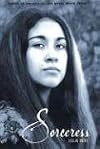
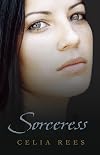
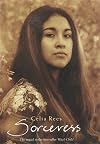
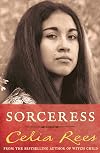
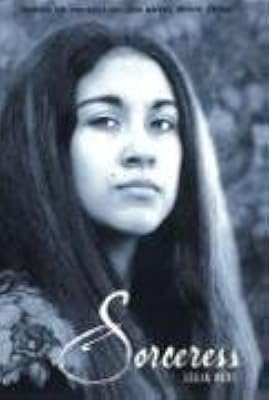
As an aside, I can’t help but notice that the book’s cover was changed for the 2009 paperback edition – in a move that looks suspiciously like whitewashing. (And I’m not the only one who thinks so.)
http://www.easyvegan.info/img/sorceress1-250.jpg
http://www.easyvegan.info/img/sorceress2-250.jpg
Considering Agnes’s physical description in the book, which of the two models seems more appropriate?
“She had high cheekbones and clear features; strong brows and a straight nose above a wide, full mouth and a delicately rounded chin. Her skin was the color of clear wild honey. […] As she inclined her head in greeting, her long hair fell forward, soft and silky, as shiny as a raven’s wing. The eyes, though—the eyes were a surprise. They were as gray as the sky on a snowy winter’s day.” (pp. 28-29)
And:
“Agnes put her hand up, sweeping back her jet-black hair. She wore it long, past her shoulders. She was only eighteen, but already a few silver hairs were threading down from the parting. She would have a white streak there, just as her aunt had, and her grandmother before her. She frowned, thick dark brows drawing down.” (page 5)
http://www.easyvegan.info/2013/02/25/sorceress-by-celia-rees/ show less
Sorceress continues the story of Mary Nuttall/Newbury, a young Englishwoman who immigrated to the “New World” in 1659. Forced from her village after her grandmother is executed for practicing witchcraft, Mary’s mother sends her to America in the hopes that she’ll be safe from persecution. Stuck in the isolated settlement of Beulah, surrounded by Puritans so intractable in their beliefs that they proved unwelcome even in Salem, Mary’s existence grows increasingly perilous. Try as hard as she might to fit in, Mary is an outsider – and a young, intelligent, and independent female, at that – and when things start to go sideways, she proves the most convenient of scapegoats.
The story finds show more Mary where Witch Child left off: slowly dying of hypothermia and starvation in the forest surrounding Beulah, after having narrowly escaped the town’s religious authorities. A she-wolf comes to her in the middle of an especially harsh snowstorm, caring for Mary until the morning, when her friend Jaybird and his grandfather White Eagle come to her rescue. Thus begins a rather epic journey, beginning at The Cave of the Ancestors and ending many decades later, in Canada. Mary marries (Jaybird, in a terribly bittersweet romance) and gives birth to and adopts several children, one of whom she buries much too early; becomes a pupil to White Eagle and, in time, a respected healer in her own right; establishes a secret medicine society, still in existence to this day; and travels ever northward, trying in vain to stay ahead of the escalating tensions between indigenous peoples and the French and English settlers.
Unsurprisingly, it’s the colonialists she encounters who prove most threatening to Mary’s well-being: terrified of her skills and offended that she’d rather live with “savages” than her “own kind,” Mary is kidnapped not once, but twice. Whereas the French pirate Le Grand drugs, rapes, and threatens to sell or enslave her, the Mohawk warriors who seize her and her children adopt them into a village decimated by disease. Likewise, the English Captain Peterson attempts to “rescue” her from her Pennacook kin – by force.
For better or worse, the supernatural takes a much more prominent role here than in Witch Child. Whereas Mary’s sorcery remains ambiguous in the first book – is she really a witch, or are the townspeople mistaking her scientific skills and knowledge for black magic? – Sorceress unequivocally outs Mary as a witch. She can assume the guise of nonhuman animals; her mother and grandmother appear to her as a wolf and a hare, respectively; she has premonitions and experiences visions. Most importantly, the events which transpire in Sorceress are relayed by Mary’s spirit to her great- (great-great-great) granddaughter Agnes, a young woman who’s just coming into her own powers. Witch Child, in contrast, purported to be Mary’s diary, the pages of which were smuggled down through the generations stuffed in the batting of a colonial-era quilt: no supernatural explanation required. While I personally prefer the ambiguity, I think it was only really essential to the first part of the tale, inasmuch as it highlighted the Puritans’ prejudices and lack of objectivity.
Intertwined with Mary’s story are those of Agnes and Alison. Agnes, having recently left her home on a New York reservation for college – she wants to be an anthropologist, much to her Aunt M.’s chagrin – makes contact with Alison, Mary’s biographer, after reading Witch Child. Agnes suspects that Mary might be her ancestor, and together, she and Alison try to learn more about what became of Mary and her friends. Caught between two worlds, Agnes doesn’t quite feel like she belongs in either: whereas she longs for more than life on the reservation, at college she must deal with isolation born of casual racism. In some ways, this is reminiscent of Mary’s journey – except that, while Mary may have harbored some sympathy for the white settlers killed in King Philip’s War, by the end of the story there’s no doubt where she belongs.
The early scenes between Alison and Agnes are at times painfully boring; one chapter includes a car ride. Often I found myself wishing that Rees would spin the tale back to Mary. However, Agnes’s journey becomes increasingly compelling as it progresses; at the end, I found myself longing for a footnote or afterward about Agnes and her involvement in “the Mary project.” (The appended documents provide some insight on what became of the more prominent players in WITCH CHILD, including the town of Beulah itself.) Unfortunately, Alison remains a rather underdeveloped character, hard to care about one way or the other.
Through Agnes, Aunt M. raises a number of concerns about the handling (read: theft) of Native remains and artifacts, which are never really addressed once Agnes is given possession of Mary’s box. A missed opportunity, if you ask me.
All in all, Sorceress was a suspenseful – and at times painful – read. A must for those who enjoyed WITCH CHILD.
As an aside, I can’t help but notice that the book’s cover was changed for the 2009 paperback edition – in a move that looks suspiciously like whitewashing. (And I’m not the only one who thinks so.)
http://www.easyvegan.info/img/sorceress1-250.jpg
http://www.easyvegan.info/img/sorceress2-250.jpg
Considering Agnes’s physical description in the book, which of the two models seems more appropriate?
“She had high cheekbones and clear features; strong brows and a straight nose above a wide, full mouth and a delicately rounded chin. Her skin was the color of clear wild honey. […] As she inclined her head in greeting, her long hair fell forward, soft and silky, as shiny as a raven’s wing. The eyes, though—the eyes were a surprise. They were as gray as the sky on a snowy winter’s day.” (pp. 28-29)
And:
“Agnes put her hand up, sweeping back her jet-black hair. She wore it long, past her shoulders. She was only eighteen, but already a few silver hairs were threading down from the parting. She would have a white streak there, just as her aunt had, and her grandmother before her. She frowned, thick dark brows drawing down.” (page 5)
http://www.easyvegan.info/2013/02/25/sorceress-by-celia-rees/ show less
[This is a review I wrote in 2008]
**Excellent sequel to the bestselling "Witch Child". Mary's story continues... the story of an exiled seventeenth-century witch**
If you've already enjoyed "Witch Child", then you'll love this, the sequel. It's really compelling - I challenge you to put this book down mid-story!
In "Sorceress" the story of Mary Newbury continues. "Witch Child" ended with Mary fleeing Beulah (USA), accused of practising witchcraft in the small settlement there. This story alternatates between Mary's Story and the story of another young girl, Agnes, in the present day. Agnes is a Mohawk at college in Boston, and hears about the appeal of the researcher, Alison Ellman, to find information about Mary from the seventeenth show more century. Alison had already found the 'Mary Papers' and written the first part of Mary's story (which makes up "Witch Child") but now she's reached a dead end and cannot find any more information... until she hears from Agnes.
As Mary's story unravels you can't help but feel empathy. Her life, like any had its highs and lows, but she seems to have had more than her fair share of sadness to contend with. A moving, convincing story, compelling read, and I can highly recommend it for ages 11+. show less
**Excellent sequel to the bestselling "Witch Child". Mary's story continues... the story of an exiled seventeenth-century witch**
If you've already enjoyed "Witch Child", then you'll love this, the sequel. It's really compelling - I challenge you to put this book down mid-story!
In "Sorceress" the story of Mary Newbury continues. "Witch Child" ended with Mary fleeing Beulah (USA), accused of practising witchcraft in the small settlement there. This story alternatates between Mary's Story and the story of another young girl, Agnes, in the present day. Agnes is a Mohawk at college in Boston, and hears about the appeal of the researcher, Alison Ellman, to find information about Mary from the seventeenth show more century. Alison had already found the 'Mary Papers' and written the first part of Mary's story (which makes up "Witch Child") but now she's reached a dead end and cannot find any more information... until she hears from Agnes.
As Mary's story unravels you can't help but feel empathy. Her life, like any had its highs and lows, but she seems to have had more than her fair share of sadness to contend with. A moving, convincing story, compelling read, and I can highly recommend it for ages 11+. show less
Reviewed by Allison Fraclose for TeensReadToo.com
As the latest in a long line of Mohawk women gifted with Medicine Power, college student Agnes Herne knows better than to dismiss the vision. She'd been poised at her computer, debating whether or not to respond to the plea in the afterword of the book she'd just read - the account of Mary Newbury - when the vision hit. Suddenly, she was Mary, running for her life after being accused of witchcraft in seventeenth century America.
Although Agnes knows that her Aunt M., the keeper of the tribe's artifacts, would never allow outsiders access, Agnes tells her story to Alison Ellman, the researcher who has developed a near-obsession with Mary's story. As she is planning a follow-up publication show more to "The Mary Papers," Alison has collected information on nearly every player in the diaries of Mary Newbury...except Mary herself.
Can Agnes find a way to convince her aunt to let them examine the one crucial piece of evidence that may prove of Mary's survival after her harrowing escape from the settlement of Beulah? Or will Agnes find out firsthand how Mary fared through this strange connection she seems to have with the admitted witch?
I enjoyed discovering Mary Newbury's fate through this sequel, and felt that excellent attention had been paid by the author in being true to the socio-historical issues of Mary's time. However, I stepped away from the novel knowing very little of Agnes Herne or her story, and can't help but feel that the true heroine had been ignored somewhat. show less
As the latest in a long line of Mohawk women gifted with Medicine Power, college student Agnes Herne knows better than to dismiss the vision. She'd been poised at her computer, debating whether or not to respond to the plea in the afterword of the book she'd just read - the account of Mary Newbury - when the vision hit. Suddenly, she was Mary, running for her life after being accused of witchcraft in seventeenth century America.
Although Agnes knows that her Aunt M., the keeper of the tribe's artifacts, would never allow outsiders access, Agnes tells her story to Alison Ellman, the researcher who has developed a near-obsession with Mary's story. As she is planning a follow-up publication show more to "The Mary Papers," Alison has collected information on nearly every player in the diaries of Mary Newbury...except Mary herself.
Can Agnes find a way to convince her aunt to let them examine the one crucial piece of evidence that may prove of Mary's survival after her harrowing escape from the settlement of Beulah? Or will Agnes find out firsthand how Mary fared through this strange connection she seems to have with the admitted witch?
I enjoyed discovering Mary Newbury's fate through this sequel, and felt that excellent attention had been paid by the author in being true to the socio-historical issues of Mary's time. However, I stepped away from the novel knowing very little of Agnes Herne or her story, and can't help but feel that the true heroine had been ignored somewhat. show less
Sequel to Witch Child.
Agnes Herne is a Native American attending college in Boston. After reading part of Mary Newbury's diary, Agnes thinks that Mary might be connected with her family. A story passed down through the generations about a white woman who had settled with the Mohawks shares many similarities with Mary's own words in the diary.
Agnes starts to have dreams about Mary that feel more real than her real life. She emails the researcher who found Mary's diary and then visits her aunt on the reservation to find out more about the family stories. Her aunt leads her into a vision quest where she has more visions of Mary's life.
Agnes experiences Mary's life through the visions--from her escape from the Puritans, to a brief but show more happy time with Jaybird and their children. Mary's reputation as a healer grows and the accusations of witchcraft continue to haunt her. She finally finds a home with the Mohawks and ends her life peacefully, a respected healer.
The historical notes at the end of the book leave readers with a feeling of authenticity. Sorceress is a beautifully told story peopled with well-developed characters. Readers get a glimpse of what life was like, for the settlers and the Native Americans, when white settlers first came to America.
A satisfying conclusion to Mary's story. show less
Agnes Herne is a Native American attending college in Boston. After reading part of Mary Newbury's diary, Agnes thinks that Mary might be connected with her family. A story passed down through the generations about a white woman who had settled with the Mohawks shares many similarities with Mary's own words in the diary.
Agnes starts to have dreams about Mary that feel more real than her real life. She emails the researcher who found Mary's diary and then visits her aunt on the reservation to find out more about the family stories. Her aunt leads her into a vision quest where she has more visions of Mary's life.
Agnes experiences Mary's life through the visions--from her escape from the Puritans, to a brief but show more happy time with Jaybird and their children. Mary's reputation as a healer grows and the accusations of witchcraft continue to haunt her. She finally finds a home with the Mohawks and ends her life peacefully, a respected healer.
The historical notes at the end of the book leave readers with a feeling of authenticity. Sorceress is a beautifully told story peopled with well-developed characters. Readers get a glimpse of what life was like, for the settlers and the Native Americans, when white settlers first came to America.
A satisfying conclusion to Mary's story. show less
An intriguing sequel to 'Witch Child'. The modern tale lacked some depth in places, but it was satisfying to get a conclusion to Mary's story.
I wish the author had just told Mary's story rather than adding the modern day persons at the beginning and the end.
Members
- Recently Added By
Author Information

33+ Works 7,341 Members
Awards and Honors
Awards
Series

Common Knowledge
- Canonical title
- Sorceress
- Original title
- Sorceress
- Original publication date
- 2002-09-01
- People/Characters
- Agnes Herne
- Important places
- Boston, Massachusetts, USA
Classifications
- Genres
- Fiction and Literature, Teen, Fantasy, Young Adult
- DDC/MDS
- 823.914 — Literature & rhetoric English & Old English literatures English fiction 1900- 1901-1999 1945-1999
- LCC
- PZ7 .R25465 .S — Language and Literature Fiction and juvenile belles lettres Fiction and juvenile belles lettres Juvenile belles lettres
- BISAC
Statistics
- Members
- 980
- Popularity
- 26,757
- Reviews
- 16
- Rating
- (3.44)
- Languages
- 9 — Czech, English, Finnish, French, German, Hungarian, Italian, Norwegian (Bokmål), Swedish
- Media
- Paper, Audiobook, Ebook
- ISBNs
- 24
- UPCs
- 1
- ASINs
- 2