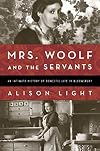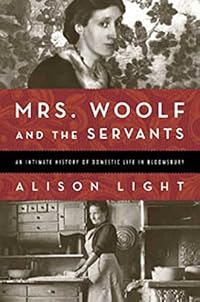
Mrs. Woolf and the Servants: An Intimate History of Domestic Life in Bloomsbury
by Alison Light
On This Page
Description
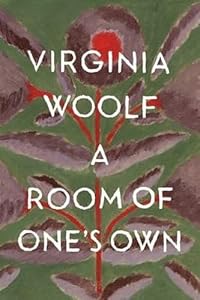
"When Virginia Woolf wrote A Room of One's Own in 1929, she established her reputation as a feminist, a woman who could imagine a more open and liberal reality, and an advocate for the female voice. Indeed the Bloomsbury set has often been identified with liberal, open-minded views; Woolf's circle of artists and writers were considered Bohemians ahead of their time. But they were also of their time. Like thousands of other British households, Virginia Woolf's relied on live-in domestics for show more the most intimate of daily tasks. That room of her own she so valued was cleaned, heated, and supplied with meals by a series of cooks and maids throughout her childhood and adult life. In Mrs. Woolf and the Servants, Alison Light gives depth and dignity to the long-overlooked servants who worked for the Bloomsbury intellectuals."--Jacket. show lessTags
Recommendations




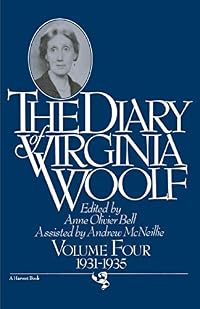
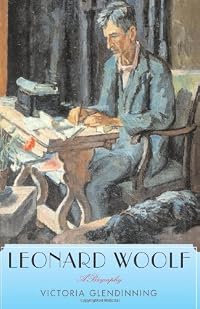
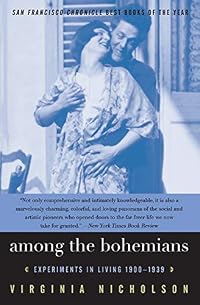

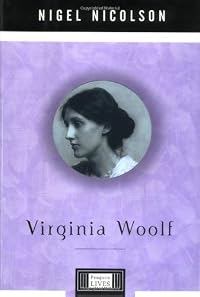

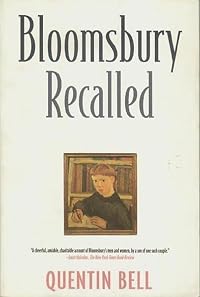
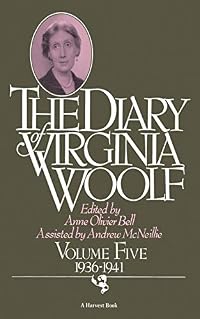
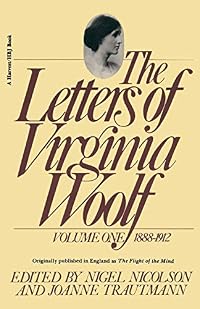
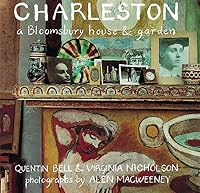






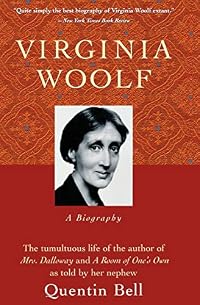

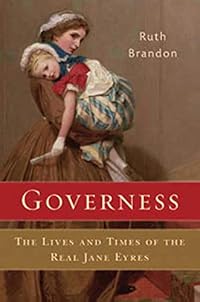
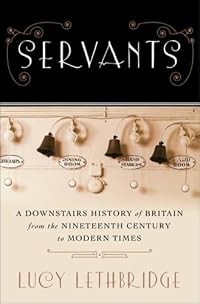





Member Recommendations
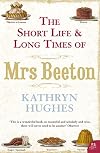
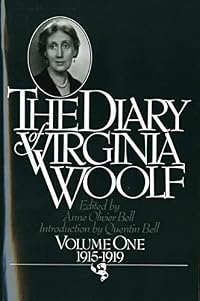
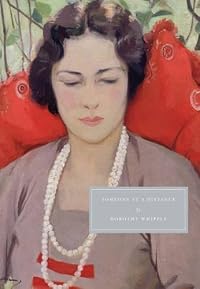
nessreader It's so easy to forget how difficult housework must have been with no labour saving machinery and both of these books vividly recreate how much work went into the maintenance of the victorian bourgouis home. (The Light book covers early to mid 20th century, but Woolf's HIGH expectations of her staff seem to have been formed by Imperial 18xx assumptions) Hardyment's Behind the Scenes, illustrated, is about early household machinery, late 19th to early 20th century, as researched in Nat Trust buildings in the UK, if that interests you.
Member Reviews
it’s hard to resist the conclusion that the history of service is the history of British women.
Subtitled, "An Intimate History of Domestic Life in Bloomsbury," this book is a study of the British servant class in the first part of the 20th century, and specifically those who worked for Virginia Woolf and members of her family. Because service was the largest occupation for British women until at least 1945, readers also get an idea of how most people lived during this time. Because Woolf came of age during this same period, author Alison Light is able to use those who served the Woolf family to show how the servant role evolved over time, and even how their work was affected by world events:
Who emptied the sewage was a serious issue show more among the servants since it affected their earnings and their self-respect. In wartime, however, these caste distinctions were harder to maintain.
And the "servant class" itself was subject to stratification, based on the family being served. Working for famous people had a certain cachet:
They rewarded their employers by becoming snobs, enjoying the borrowed glamour of working for famous people, and in a pathetic tribute to Bloomsbury, mirroring the cliquish world in which they moved, the servants called themselves ‘the click’.
Going into service was often the only option available to young women from less well-off families with limited marriage prospects. The more fortunate ones established strong personal relationships with the family they served; this was the case with some of the Woolf servants. A maid named Sophie served the family for so many years, they ended up providing for her in retirement. In other cases, the relationship was more fractious and Virginia often felt her maid intruding on her daily routine. Later in her life, as various labor-saving devices were introduced, the Woolfs eliminated live-in servants and had someone come only in the morning, affording them a degree of privacy they had never before experienced.
I found Alison Light's approach to this topic interesting, although the scarcity of primary sources about the individual servants caused her to devote considerable pages to Virginia and her writing career, seeming to stray from the intent of the book. But learning about the events in Virginia's life, and her incredible creative gifts, also helped explain her feelings about living with servants. I recommend this book for anyone interested in the Bloomsbury set. show less
Subtitled, "An Intimate History of Domestic Life in Bloomsbury," this book is a study of the British servant class in the first part of the 20th century, and specifically those who worked for Virginia Woolf and members of her family. Because service was the largest occupation for British women until at least 1945, readers also get an idea of how most people lived during this time. Because Woolf came of age during this same period, author Alison Light is able to use those who served the Woolf family to show how the servant role evolved over time, and even how their work was affected by world events:
Who emptied the sewage was a serious issue show more among the servants since it affected their earnings and their self-respect. In wartime, however, these caste distinctions were harder to maintain.
And the "servant class" itself was subject to stratification, based on the family being served. Working for famous people had a certain cachet:
They rewarded their employers by becoming snobs, enjoying the borrowed glamour of working for famous people, and in a pathetic tribute to Bloomsbury, mirroring the cliquish world in which they moved, the servants called themselves ‘the click’.
Going into service was often the only option available to young women from less well-off families with limited marriage prospects. The more fortunate ones established strong personal relationships with the family they served; this was the case with some of the Woolf servants. A maid named Sophie served the family for so many years, they ended up providing for her in retirement. In other cases, the relationship was more fractious and Virginia often felt her maid intruding on her daily routine. Later in her life, as various labor-saving devices were introduced, the Woolfs eliminated live-in servants and had someone come only in the morning, affording them a degree of privacy they had never before experienced.
I found Alison Light's approach to this topic interesting, although the scarcity of primary sources about the individual servants caused her to devote considerable pages to Virginia and her writing career, seeming to stray from the intent of the book. But learning about the events in Virginia's life, and her incredible creative gifts, also helped explain her feelings about living with servants. I recommend this book for anyone interested in the Bloomsbury set. show less
Virginia Woolf, like the rest of England's upper-middle class in the late 19th and early 20th century, relied heavily throughout her life on domestic help, both live-in and, later, daily. Without someone to take care of the backbreaking, endless labor of running a household and keeping its inhabitants cleaned and fed, Woolf would never have had the opportunity to write, room of her own or not. And yet, Woolf was never comfortable with sharing her household with her servants, whom she felt drained her of energy and encroached on her precious privacy. Alison Light explores Virginia Woolf's life through the lens of her interactions with her various domestics--interactions that were often uncomfortable and irritating to her. She constantly show more schemed in her diary and her letters to rid herself of servants, and yet needed them to the point that she was never really free of them.
Light ranges about (sometimes bewilderingly) on a variety of topics--this book is at once a biography of Woolf, a tease about Bloomsbury, an exploration of service in early 20th century England, and a treatise on feminism, with forays into interwar British history and the development of the Labor movement. Light also delves deeply in to the psychology, or her perception of the psychology of her subjects, and I sometimes questioned her conclusions (and her qualifications for making these conclusions).
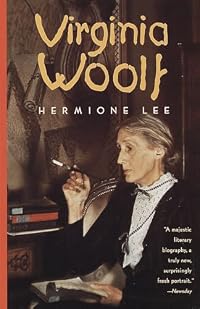
I found this book interesting, but also frustrating. It's my own fault, really. I was expecting a different book than the one I read, and I'm not sure why. "Mrs. Woolf" takes predominance in the title, and so I should have realized that she would take predominance in the narrative, but I was expecting more about the servants and service, and less about Virginia Woolf herself. It did goad me into checking Hermione Lee's [Virginia Woolf] biography out of the library, in part because I felt that Light expected her reader to already have a strong background in Woolf's life and the life in Bloomsbury. (At one point, Light says "In times of extreme violence and threat the intellectual's capacity to doubt and question could be a double-edged sword. 'We do represent the last utterances of the civilised,' her friend Morgan Forster had written to her." Leading this reader, at least, to Wikipedia to confirm that we were, indeed, talking about E.M. Forster.)
In this "Year of Reading Women," there's been interesting discussion about prominent and privileged women "speaking for the group" when their experiences don't represent the experiences of all, particularly of women of color or lower-income women. Something Light mentioned towards the end of the book brought this conversation strongly to mind:
"At least one working woman had been 'irked' by Virginia's class-blindness in [Three Guineas] and had taken her to task for it: 'your book would make some people think that you consider working women, and the daughters of educated men as a race apart. Do you think we enjoy being "hewers of wood and drawers of water", that we do menial tasks from choice and are fitted for nothing else?' In a nine-page letter Agnes Smith, an unemployed weaver from Huddersfield, expressed her indignation. Though she was in deep sympathy with Woolf's pacifism, she argued that Virginia ignored the economic and emotional dependence of women like herself, which she deemed far worse. Family dominated and directed her life just as much, if not more, since wages were so low -- 'a working woman who refuses to work will starve', as she put it succinctly.
. . .
"More letters were exchanged, and photographs of their homes, and some warmth grew between them, though they were never on first-name terms. Virginia asked her to come and visit; Agnes returned the invitation. Agnes's letters are touching and generous, Virginia's haven't survived. Agnes deferred to Virginia's talent and she restrained herself from pointing out her privilege, but she also wanted to educate Virginia. She saw that the Mrs Woolfs of this world couldn't help their ignorance."
I would have liked more of this interaction, but coming across it towards the end was a delight to me.
Much of what Light did discuss about the lives of these girls and women in service was heartbreaking, and a strong reminder to me about how very recent universal education is. "In 1945 the Labour government put the school-leaving age up to fifteen (sixteen was thought too expensive a measure), and there was free milk for all school children; these two things ensured the end of the British skivvy, although the woman who fought for both of them, Ellen Wilkinson, 'red Ellen', the first British woman to become a Minister of Education, took a lethal overdose, depressed by the lack of more radical reforms." This, which we take for granted now, passing just a couple of generations ago. show less
Light ranges about (sometimes bewilderingly) on a variety of topics--this book is at once a biography of Woolf, a tease about Bloomsbury, an exploration of service in early 20th century England, and a treatise on feminism, with forays into interwar British history and the development of the Labor movement. Light also delves deeply in to the psychology, or her perception of the psychology of her subjects, and I sometimes questioned her conclusions (and her qualifications for making these conclusions).
I found this book interesting, but also frustrating. It's my own fault, really. I was expecting a different book than the one I read, and I'm not sure why. "Mrs. Woolf" takes predominance in the title, and so I should have realized that she would take predominance in the narrative, but I was expecting more about the servants and service, and less about Virginia Woolf herself. It did goad me into checking Hermione Lee's [Virginia Woolf] biography out of the library, in part because I felt that Light expected her reader to already have a strong background in Woolf's life and the life in Bloomsbury. (At one point, Light says "In times of extreme violence and threat the intellectual's capacity to doubt and question could be a double-edged sword. 'We do represent the last utterances of the civilised,' her friend Morgan Forster had written to her." Leading this reader, at least, to Wikipedia to confirm that we were, indeed, talking about E.M. Forster.)
In this "Year of Reading Women," there's been interesting discussion about prominent and privileged women "speaking for the group" when their experiences don't represent the experiences of all, particularly of women of color or lower-income women. Something Light mentioned towards the end of the book brought this conversation strongly to mind:
"At least one working woman had been 'irked' by Virginia's class-blindness in [Three Guineas] and had taken her to task for it: 'your book would make some people think that you consider working women, and the daughters of educated men as a race apart. Do you think we enjoy being "hewers of wood and drawers of water", that we do menial tasks from choice and are fitted for nothing else?' In a nine-page letter Agnes Smith, an unemployed weaver from Huddersfield, expressed her indignation. Though she was in deep sympathy with Woolf's pacifism, she argued that Virginia ignored the economic and emotional dependence of women like herself, which she deemed far worse. Family dominated and directed her life just as much, if not more, since wages were so low -- 'a working woman who refuses to work will starve', as she put it succinctly.
. . .
"More letters were exchanged, and photographs of their homes, and some warmth grew between them, though they were never on first-name terms. Virginia asked her to come and visit; Agnes returned the invitation. Agnes's letters are touching and generous, Virginia's haven't survived. Agnes deferred to Virginia's talent and she restrained herself from pointing out her privilege, but she also wanted to educate Virginia. She saw that the Mrs Woolfs of this world couldn't help their ignorance."
I would have liked more of this interaction, but coming across it towards the end was a delight to me.
Much of what Light did discuss about the lives of these girls and women in service was heartbreaking, and a strong reminder to me about how very recent universal education is. "In 1945 the Labour government put the school-leaving age up to fifteen (sixteen was thought too expensive a measure), and there was free milk for all school children; these two things ensured the end of the British skivvy, although the woman who fought for both of them, Ellen Wilkinson, 'red Ellen', the first British woman to become a Minister of Education, took a lethal overdose, depressed by the lack of more radical reforms." This, which we take for granted now, passing just a couple of generations ago. show less
This was an excellent biography of Virginia Woolf and od her servants. The author seems to have researched many aspects of her subjects thoroughly and well.
The interaction between Virginia Woolf and her servants was fascinating , and gives a new perspective of her, making a subject that's been written about many times fresh and vibrant, giving it new life.
My favorite parts, though, were about Woolf's writing, and how her relationship to her own and other Bloomsbury servants affected it. Sometimes there was even a direct correlation between a real-life servant and a servant in one of Woolf's novels or stories. I adore that kind of insight.
Mrs. Woolf and the Servants gets full marks from me. This is biography at its best.
The interaction between Virginia Woolf and her servants was fascinating , and gives a new perspective of her, making a subject that's been written about many times fresh and vibrant, giving it new life.
My favorite parts, though, were about Woolf's writing, and how her relationship to her own and other Bloomsbury servants affected it. Sometimes there was even a direct correlation between a real-life servant and a servant in one of Woolf's novels or stories. I adore that kind of insight.
Mrs. Woolf and the Servants gets full marks from me. This is biography at its best.
A 'must read' for all those who love British fiction from 1850 through to the 1940's, as Light does so much more, for while she describes Woolf's particular personality and circumstances and relationships she places her story within the larger context of the steady collapse of the domestic 'industry' along with much of the caste distinctions that had been a matter-of-fact part of British life, deftly showing how Woolf's own discomfort was slightly ahead of the curve, but part of the tidal wave of change brought on by the industrial revolution. The reason it is a must read is that so many of the novelists of the time do not address 'downstairs' or do so in a way that is disingenuous and condescending (VW included). A few do, or try to, show more but I know I will henceforth be more alert to what choices these novelists made about how to describe (or not describe) the nitty gritty workings of houses, great and small. In any case, Woolf and her Bloomsbury group were in the vanguard in wanting to have no live-in servants at all, as they were a direct contradiction to their developing social values. At the same time, having been brought up as ladies, they did not have any idea how hard it was to clean a house, do laundry, make meals (from scratch!), wash dishes etcetera with no electricity and no appliances to speak of. So doing entirely without was a problem too - a paradox that made for much tension. As employers the Woolfs were more casual, generally, but cheap and unyielding about improvements and with pay. Woolf never really was able to sympathize directly with the people who worked for her; in theory, however, she tried - which is more than one can say of most at the time, but she never could view women of the working class as anything like equals, not even potentially. Especially not any women she actually knew at all well. Her most significant relationship, with Nellie Boxall, who worked mainly as a cook, was always a difficult one, neither of them able to sustain firm boundaries - leading to much inconsistency and dysfunction. Leonard sounds like a total pain, frankly, not an easy employer and no help at all with domestic unhappinesses. To Woolf's credit, in middle age she gamely steps up to the plate and learns to cook and do some of her own cleaning and doesn't complain, the joy of having her house to herself far outweighs the tedium of chores. She does always have help for heavy work, and I don't fault her for that. So do I.
So much that Light reveals is fascinating, some of it pure information. In 1889 there were 54,000 under the age of 16 living in Britain's workhouses - orphans and abandoned. The lucky ones got scooped up to be trained as maids and Light's descriptions of the culture shock (with NO sympathy from new employers) is appalling. You become aware and grateful too, to all the marvelous appliances and machines we have now, from the humble carrot peeler or can-opener to the dish and clothes washer and the vacuum. Thanks to these inventions we can look after ourselves and need not struggle with these relationships.
The ending, with a meditation on the act of writing biography and a follow-up of the later lives of the former Woolf/Bloomsbury servants is very strong and also positive: how poignantly these women describe their childhoods and how far they have come in their lifetimes, in terms of comfort and self respect. ****1/2 show less
So much that Light reveals is fascinating, some of it pure information. In 1889 there were 54,000 under the age of 16 living in Britain's workhouses - orphans and abandoned. The lucky ones got scooped up to be trained as maids and Light's descriptions of the culture shock (with NO sympathy from new employers) is appalling. You become aware and grateful too, to all the marvelous appliances and machines we have now, from the humble carrot peeler or can-opener to the dish and clothes washer and the vacuum. Thanks to these inventions we can look after ourselves and need not struggle with these relationships.
The ending, with a meditation on the act of writing biography and a follow-up of the later lives of the former Woolf/Bloomsbury servants is very strong and also positive: how poignantly these women describe their childhoods and how far they have come in their lifetimes, in terms of comfort and self respect. ****1/2 show less
If I could write books half as good as this, and get paid to do so - well, life would be pretty much perfect. This title languished on my bedside table for months on end, but when I finally started it, I found it hard to put down. This is not just another book about Virginia Woolf; there's plenty of those out there. As the title states, it's a study of the tumultuous, fraught relations Woolf had all her life with the string of servants she (and during her childhood, her parents) employed. I'm fascinated by the history of domestic life, and Alison Light has done a stunning job in bringing the lives of Woolf's various cooks, parlourmaids, tweenies and chars - lives which have truly been hidden from history - to light.
It must be said that show more the resulting portraits are hardly flattering to Woolf. She and her sister Vanessa Bell corresponded extensively throughout their lives and frequently moaned about their servants, referring to them in ways which were always snobbish and often offensive. And yet, as upper-middle-class women raised never to lift a finger, they were unwilling and largely incapable of keeping house themselves. As a result, Virginia felt increasingly trapped by her gentility. How ironic that the woman who argued so vociferously for "a room of one's own" had to employ another woman to keep that room clean! show less
It must be said that show more the resulting portraits are hardly flattering to Woolf. She and her sister Vanessa Bell corresponded extensively throughout their lives and frequently moaned about their servants, referring to them in ways which were always snobbish and often offensive. And yet, as upper-middle-class women raised never to lift a finger, they were unwilling and largely incapable of keeping house themselves. As a result, Virginia felt increasingly trapped by her gentility. How ironic that the woman who argued so vociferously for "a room of one's own" had to employ another woman to keep that room clean! show less
My own grandmother on my mother's side went into service at the age of 13 (this would have been in 1915). Perhaps it was a sign of the changing times that her mother allowed her to come home after a few weeks, because she hated the job. So this book was fascinating to me for several reasons. First, because I love biographies of literary people. Second, because I am fascinated by the intellectual circles of the late 19th and early 20th century, and this book tells you quite a bit about Bloomsbury from the inside. Third, because it's a great social history of a time of change; it begins in the Victorian era when servants were simply a fact of life, runs through the changes wrought by the two world wars, and finishes in the 60s when show more servants were--almost--a thing of the past.
I also learned a lot about Virginia Woolf, and am now looking for a good recent biography of her. I read her in my teens, when for some reason much of my reading was from the 1920s, but I think I need to do some serious revisiting of this era.
This is a well-written book, and although it jumps about a bit chronologically, I was able to keep the characters straight in my head. It is pervaded by the class consciousness that the British never seem able to shake off, and is quite damning about Woolf's snobbishness and blindness to the fact that her own life, much of which, as with any writer, was lived inwardly, was in fact built on the substructure of other people's. It made me think about quite a few things, and may be worth re-reading. show less
I also learned a lot about Virginia Woolf, and am now looking for a good recent biography of her. I read her in my teens, when for some reason much of my reading was from the 1920s, but I think I need to do some serious revisiting of this era.
This is a well-written book, and although it jumps about a bit chronologically, I was able to keep the characters straight in my head. It is pervaded by the class consciousness that the British never seem able to shake off, and is quite damning about Woolf's snobbishness and blindness to the fact that her own life, much of which, as with any writer, was lived inwardly, was in fact built on the substructure of other people's. It made me think about quite a few things, and may be worth re-reading. show less
In her introduction, Alison Light makes plain that an overarching History of Domestic Service would be impossible to achieve, as service was such a pervasive form of work and servants' lives were so little documented. This book focuses on domestic service between the wars, when the status of women, the types of work they could access, and relations between the classes all underwent significant change. In particular, Light has made use of Virginia Woolf's writings about her own domestic servants, and traced their history outside of those writings; this gives them solidity and status, and relieves of them the role of irritants in Woolf's life. Woolf's own efforts to understand her feelings about her servants, and the master-servant show more relationship, are acknowledged and explored; she is not simply the oppressive mistress of the house. The rescue of Sophia Farrell and Nelly Boxall for posterity, the exploration of the reliance of modernist cultural experiementation on conservative ways of life, and the subtle exploration of the nature of service, from both perspectives, makes this a deeply satisfying and provocative book. show less
Members
- Recently Added By
Lists

Best Biographies, Autobiographies and Memoirs
464 works; 156 members

Non-Fiction Worth Reading
1,015 works; 256 members
Author Information

9+ Works 666 Members
Alison Light is the author of the acclaimed Mrs. Woolf and the Servants. She is Honorary Professor in the Department of English at University College, London, and on the hoard of the Raphael Samuel History Centre in London.
Some Editions
Awards and Honors
Common Knowledge
- Original publication date
- 2007
- People/Characters
- Virginia Woolf; Nellie Boxall
- Important places
- Bloomsbury, London, England, UK; London, England, UK
- Epigraph
- And sit we upon the highest throne of the World,
yet sit we upon our own tail.
Michel de Montaigne, 'Of Experience" - Dedication
- for Fran Bennett
- First words
- When I first read Virginia Woolf's diaries, I was shocked b also fascinated by how viciously she wrote about her cook, Nellie Boxall. (Preface)
Down ill-lit corridors the servant scurries, disappearing into darkened chambers, hurrying back t the kitchens or the courtyards, a blure on the edge of vision. (Prologue)
For Virginia Woolf the past was a house. - Last words
- (Click to show. Warning: May contain spoilers.)You know there's a dignity in living, we've got all the material things we want and we've got the family -- 'cause he had the same sort of experience -- poor little boy on the farm -- 'open that gate boy or you get the riding crop across your shoulders', you know -- [she laughs].
(Click to show. Warning: May contain spoilers.)The figure of the servant takes us inside history but also inside our selves. (Postscript) - Disambiguation notice
- "Originally published in Great Britain in 2007 by Penguin Books Ltd. First U.S. edition 2008." T.p. verso
Classifications
Statistics
- Members
- 378
- Popularity
- 82,542
- Reviews
- 16
- Rating
- (3.82)
- Languages
- English
- Media
- Paper, Ebook
- ISBNs
- 5
- ASINs
- 7