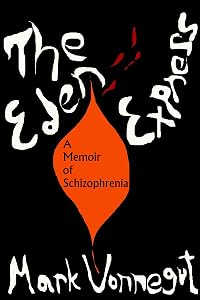
The Eden Express: A Memoir of Insanity
by Mark Vonnegut
On This Page
Description
The Eden Express describes from the inside Mark Vonnegut's experience in the late '60s and early '70s--a recent college grad; in love; living communally on a farm, with a famous and doting father, cherished dog, and prized jalopy--and then the nervous breakdowns in all their slow-motion intimacy, the taste of mortality and opportunity for humor they provided, and the grim despair they afforded as well. That he emerged to write this funny and true book and then moved on to find the meaningful show more life that for a while had seemed beyond reach is what ultimately happens in The Eden Express. But the real story here is that throughout his harrowing experience his sense of humor let him see the humanity of what he was going through, and his gift of language let him describe it in such a moving way that others could begin to imagine both its utter ordinariness as well as the madness we all share.. show less
Tags
Recommendations

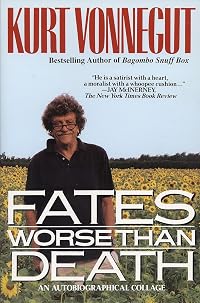

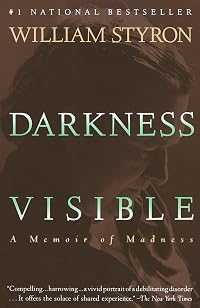






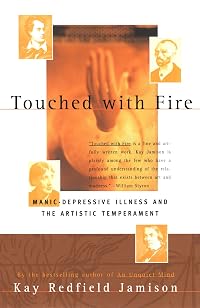







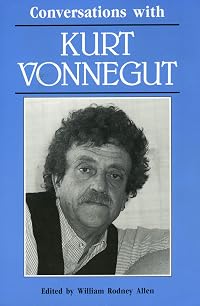

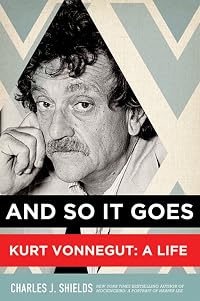










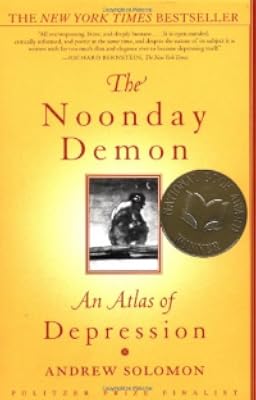









Member Recommendations

krazy4katz Different writing style, but both are interesting explorations of mental illness vs. the celebration of what is unique about each of us. Both books are by authors who are (or were) off the mainstream at one point in their life. The difference is that Kate Millett rejects the "medical model" of mental illness, whereas Mark Vonnegut believes that medication provides the stability necessary for him to be happy.
Member Reviews
Around 1970 soon after finishing college, Mark Vonnegut and assorted college friends left the East for British Columbia to fulfill a dream of living off the land, the classic hippie fantasy. They find a beautiful isolated (12 mile boat ride) farm for sale cheap near Powell River and set up camp, working like demons repairing the house, clearing and planting a garden, getting goats.... All seems to be going brilliantly, when Mark succumbs to a full blown psychotic episode. I vaguely remember hearing about The Eden Express years ago; it would come up sometimes when discussing people who never fully recovered from tripping - people who, I see now, had a vulnerability and might well have with other stresses succumbed to an episode without show more any drugs. His friends tried their best to cope, the ethic of the day obliged them to, but at last he was committed in Vancouver. Back then Mark was diagnosed as schizophrenic, now he has been diagnosed as bipoloar and while neither is desirable, the latter is a preferable diagnosis, as the long-term prognosis is better. Among the many strengths of the memoir, Mark's 'voice' and his uncompromising description of what he can recall of what was going on in his head that year, as he first moved to B.C., and slowly but steadily went downhill under the pressure of 'doing it right', from what is recognizable now as a steady manic high that was sustaining him at first to a dissociative state in which he would be sure those he loved were dead, the world was coming to an end....(culminating in 'blanks' of which he remembers nothing). It is clear that a good deal of the time Mark had a strong awareness of what was happening and some realization that he needed help. He is wonderfully candid and sometimes very funny about his own weaknesses. Another strength and a hugely important one is Mark's articulation of the absolute sincerity of those who made the effort he and his friends did to become self-sufficient, to stop harming others and the earth, to find a new way to live, and that many, like him, who threw themselves entirely into this effort emerged wiser, yes, but also scarred. **** show less
Mark Vonnegut, son of the famous writer and self-described hippie, recounts his experience after college of starting a hippie commune in Vancouver and having a mental breakdown, for which he is eventually hospitalized.
I would never have heard of this book except that it turned up on my library book discussion list. It was published in 1975, just a few years after the events described in the book, which goes from about 1969-72. Mark writes about that time period, hippie culture, and his own experience with mental illness with a unique perspective. When he first starts having episodes of hallucinations and detachment from the world, it's hard to piece out how much is reality, his illness, or the drugs (mostly pot, but mescaline too) - an show more intentional choice that reminded me of Challenger Deep with its dreamlike and muddled quality showing that confused state of mind. I'm glad our book club brought it to my attention, and I'm interested in following up with Mark's more recent memoir, Just Like Someone Without Mental Illness, Only More So. show less
I would never have heard of this book except that it turned up on my library book discussion list. It was published in 1975, just a few years after the events described in the book, which goes from about 1969-72. Mark writes about that time period, hippie culture, and his own experience with mental illness with a unique perspective. When he first starts having episodes of hallucinations and detachment from the world, it's hard to piece out how much is reality, his illness, or the drugs (mostly pot, but mescaline too) - an show more intentional choice that reminded me of Challenger Deep with its dreamlike and muddled quality showing that confused state of mind. I'm glad our book club brought it to my attention, and I'm interested in following up with Mark's more recent memoir, Just Like Someone Without Mental Illness, Only More So. show less
Eden Express is a book that brings you very close to the heart of Mark Vonnegut as he searches for his place in the world of the early 70's when there was so much division between establishment and grassroots, parents and children, the hippies and the straights. This world intersects with an attack of what was then considered schizophrenia, but was later diagnosed as bipolar disorder. His ability to convey these struggles with a sense of humor, grace and total honesty might be familiar to fans of his father, Kurt Vonnegut's writing. He draws you in as a friend in this wonderful memoir. It is also rewarding to see that he emerges from the darkness with his compassion and optimism intact. Highly recommended!
A note to Kindle fans: the show more digital version has a large number of typos. I would guess that the book was scanned using OCR and never proofread. I complained to Amazon and they offered me a refund, but I liked the book so much that I refused. Hopefully they will contact the publisher and the book will be corrected. show less
A note to Kindle fans: the show more digital version has a large number of typos. I would guess that the book was scanned using OCR and never proofread. I complained to Amazon and they offered me a refund, but I liked the book so much that I refused. Hopefully they will contact the publisher and the book will be corrected. show less
I'm glad to see that this is back in print. I'm not sure that the diagnosis of schizophrenia is accurate (I lean more toward bipolar disorder with a hefty dose of illicit substances to muddy the waters), but it's still an excellent memoir.
One of my favorite biographies; an era, a family, a unique life!
The book charted Mark's descent into schizophrenia. He was twice committed by his father. During this time of his breakdowns he was living in a hippie commune he helped found. While it is not the total point of the book, Mark does see some benefit in his internment in returning him to sanity. He even goes through a few paragraphs attacking some negative misconceptions on shock therapy, which he apparently views indifferently.
Just prior to each breakdown in the book, Mark was trying to reach out to people. His girlfriend was gone, his father to successful to be reached...
This really puts a different spin on Kurt Vonnegut, Jr. and makes him one of the many artists where I show more separate my love for the art from any appreciation for the man! show less
The book charted Mark's descent into schizophrenia. He was twice committed by his father. During this time of his breakdowns he was living in a hippie commune he helped found. While it is not the total point of the book, Mark does see some benefit in his internment in returning him to sanity. He even goes through a few paragraphs attacking some negative misconceptions on shock therapy, which he apparently views indifferently.
Just prior to each breakdown in the book, Mark was trying to reach out to people. His girlfriend was gone, his father to successful to be reached...
This really puts a different spin on Kurt Vonnegut, Jr. and makes him one of the many artists where I show more separate my love for the art from any appreciation for the man! show less
Very scary, very visceral description of Vonnegut's struggles w/ schizophrenia. I feel a little guilty about being so entertained by someone else's suffering, but this is why Behind the Music is so successful.
Mark's writing deals much more w/ internal action than his dad's. He spends a lot of time studying his own perceptions of and reactions to the world around him. His writing becomes very ominous in that you can never tell when the walls are going to gradually start melting and the giant laughing purple face will show up again. Very different than Kurt's holistic rejection of suspense.
Mark's writing deals much more w/ internal action than his dad's. He spends a lot of time studying his own perceptions of and reactions to the world around him. His writing becomes very ominous in that you can never tell when the walls are going to gradually start melting and the giant laughing purple face will show up again. Very different than Kurt's holistic rejection of suspense.
A beautiful, terrifying memoir about one man's descent into mania and insanity. As the only son of a father who was a paranoid schizophrenic, who died before I got a chance to know him and understand his condition, Vonnegut's book answered many questions I've had for a long, long time. What the disease does to the diseased, the consequences it has on friends and family, social and cultural implications...Vonnegut approaches all these themes and ideas while maintaining a cohesive narrative that is both entertaining and educational.
Members
- Recently Added By
Lists

LT picks: Blue Books
197 works; 44 members
Author Information

3+ Works 1,189 Members
Awards and Honors
Distinctions
Common Knowledge
- Original publication date
- 1975
- People/Characters
- Mark Vonnegut; Kurt Vonnegut
- Important places
- British Columbia, Canada
- Epigraph
- It is a better thing to travel hopefully than it is to arrive.
-- R. L. Stevenson - Dedication
- To Mark Adin Boles. If not for you I wouldn't have bothered to fight.
To my father. Without you I wouldn't have known how to fight.
To J. Ross MacLean. Without you I never would have stopped fighting. - First words
- June 1969: Swarthmore Graduation.
- Quotations
- Realizing I was crazy didn't make the crazy stuff stop happening.
- Last words
- (Click to show. Warning: May contain spoilers.)There are great insights to be gained from schizophrenia, but remember that they won't do you or anyone else much good unless you recover.
- Blurbers
- Schorer, Mark; Vonnegut, Kurt Jr.
- Original language
- English
Classifications
- Genres
- Biography & Memoir, Nonfiction, General Nonfiction
- DDC/MDS
- 616.89092 — Applied science & technology Medicine & health Diseases, Allergies, Skin Conditions Nervous Disorders: Autism, Anorexia, OCD Mental disorders: bi-polar/schizophrenia
- LCC
- RC514 .V59 — Medicine Internal medicine Internal medicine Neurosciences. Biological psychiatry. Neuropsychiatry Psychiatry Psychopathology Psychoses
- BISAC
Statistics
- Members
- 818
- Popularity
- 33,908
- Reviews
- 13
- Rating
- (3.80)
- Languages
- 6 — Czech, Dutch, English, German, Italian, Swedish
- Media
- Paper, Audiobook, Ebook
- ISBNs
- 22
- ASINs
- 14