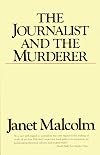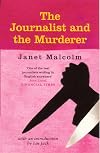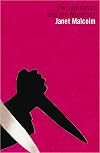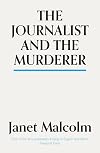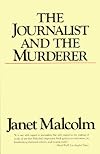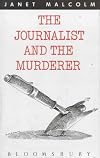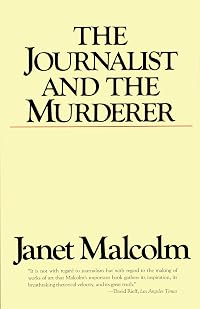
The Journalist and the Murderer
by Janet Malcolm
On This Page
Description
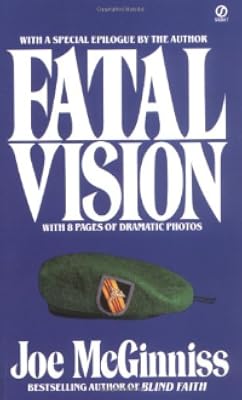
Janet Malcolm delves into the psychopathology of journalism using a strange and unprecedented lawsuit as her larger-than-life example, the lawsuit of Jeffrey MacDonald, a convicted murderer, against Joe McGinniss, the author of Fatal Vision. Examining the always uneasy, sometimes tragic relationship that exists between journalist and subject, Malcolm finds that neither journalist nor subject can avoid the moral impasse that is built into the journalistic situation. This book is a work of show more journalism as well as an essay on journalism, it at once exemplifies and dissects its subject. In her interviews with the leading and subsidiary characters in the MacDonald-McGinniss case, Malcolm is always aware of herself as a player in a game that she cannot lose. The journalist-subject encounter has always troubled journalists, but never before has it been looked at so unflinchingly and so ruefully. Hovering over the narrative is the MacDonald murder case itself. The Journalist and the Murderer derives from and reflects many of the dominant intellectual concerns of our time, and it will have a particular appeal for those who cherish the odd, the off-center, and the unsolved. show lessTags
Recommendations





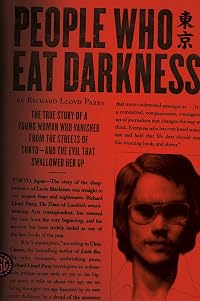
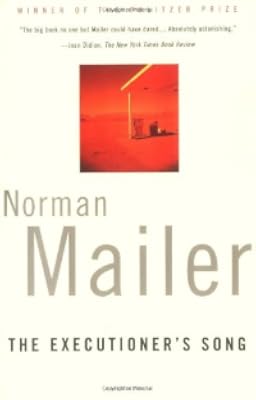
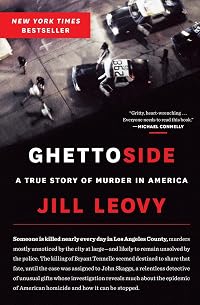
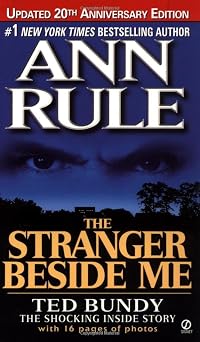





Member Recommendations
Member Reviews
This is the first time I'm reading Janet Malcolm, and I really appreciated her insights into the tricky question of journalists writing about real-life crimes and the relationships they must create with the crimes' perpetrators. We all know that readers love salacious stories of violent crimes; sex, drugs, and rock-and-roll are great bonuses, too. But what does writing about these topics mean for journalists? How far is too far?
This book strikes an engrossing balance between covering what happened between MacDonald and McGinnis and philosophy from Malcolm about the proper roles of all involved. I found it fascinating. Interestingly, I don't come out of the book with a strong position on who was right or wrong, and I think that might be show more Malcolm's goal. I didn't think MacDonald deserved something better than he got, but I also thought McGinnis crossed a line in his behavior toward MacDonald.
I would read more from Malcolm. I'm thinking next up will be Iphigenia in Forest Hills, which appears to be her own true crime expose. How does she balance these concerns? show less
This book strikes an engrossing balance between covering what happened between MacDonald and McGinnis and philosophy from Malcolm about the proper roles of all involved. I found it fascinating. Interestingly, I don't come out of the book with a strong position on who was right or wrong, and I think that might be show more Malcolm's goal. I didn't think MacDonald deserved something better than he got, but I also thought McGinnis crossed a line in his behavior toward MacDonald.
I would read more from Malcolm. I'm thinking next up will be Iphigenia in Forest Hills, which appears to be her own true crime expose. How does she balance these concerns? show less
A dense, learned, and thoroughly illuminating book. At less than two hundred pages, this one is a slow read that deserves your full attention. Malcom begins by disabusing the reader of much of the myths associated with the psychology behind journalism and book writing: it's faux-confessional nature, it's necessary betrayals. This might have been enough, but Malcom's an erudite enough author to take these ideas to all sorts of places, from Freudian psychoanalysis to the differences between literature and real life.
This isn't to say that I agree with everything that Malcom puts forth here: she seems, at one point, to argue that real people are both more ambiguous and more tediously predictable than literary characters, a contradiction I show more can't quite square. And it's likely that readers will probably come to their own conclusions about the murder case discussed in this book before they finish it, a disquieting but wholly predictable parallel to the defendant we meet in its pages. But the author's ability to draw out multiple enormously important intellectual lines of argument when any one of them might have made a good-enough book marks her as an intellect of the first order. The fact that she seems to keep these arguments both cogent and separate throughout the text testifies to her ability as a writer. Janet Malcom was undoubtedly the real thing.
It's also worth noting that she doesn't exempt herself from the theories presented here: as "The Journalist and the Murderer" draws to a close, she expresses her own boredom and emotional exhaustion with the project. This seems like a brave move, and one she did not necessarily have to take. We meet many not-so-honorable people in the pages of this brief work -- including one that may have murdered his family -- and relatively few honest ones, an acerbic, socially committed college professor who also considered writing a book on the events described in the book being among perhaps the best candidates for that distinction. Another, probably, is the author herself, who deserves real credit for taking a hard, honest look at the unavoidable contradictions of her chosen profession. Unsettling in the extreme, but recommended. show less
This isn't to say that I agree with everything that Malcom puts forth here: she seems, at one point, to argue that real people are both more ambiguous and more tediously predictable than literary characters, a contradiction I show more can't quite square. And it's likely that readers will probably come to their own conclusions about the murder case discussed in this book before they finish it, a disquieting but wholly predictable parallel to the defendant we meet in its pages. But the author's ability to draw out multiple enormously important intellectual lines of argument when any one of them might have made a good-enough book marks her as an intellect of the first order. The fact that she seems to keep these arguments both cogent and separate throughout the text testifies to her ability as a writer. Janet Malcom was undoubtedly the real thing.
It's also worth noting that she doesn't exempt herself from the theories presented here: as "The Journalist and the Murderer" draws to a close, she expresses her own boredom and emotional exhaustion with the project. This seems like a brave move, and one she did not necessarily have to take. We meet many not-so-honorable people in the pages of this brief work -- including one that may have murdered his family -- and relatively few honest ones, an acerbic, socially committed college professor who also considered writing a book on the events described in the book being among perhaps the best candidates for that distinction. Another, probably, is the author herself, who deserves real credit for taking a hard, honest look at the unavoidable contradictions of her chosen profession. Unsettling in the extreme, but recommended. show less
In The Journalist and the Murderer Janet Malcolm examines the relationship between the journalist and his subject, through the example of Joe McGinness and Jeffrey MacDonald, the subject of McGinness's best-selling book, Fatal Vision. McGinness was invited into the inner circle of MacDonald's defense team and he spent hours with MacDonald, and he continued to write friendly letters to MacDonald after MacDonald's conviction for the murder of his wife and daughters. When MacDonald read the book, he felt betrayed and sued the author for fraud and breech of contract.
Malcolm was invited to speak with McGinness and to write about the case by McGinness's defense team, but after a single interview, McGinness refused to speak to her again. show more Malcolm constructed her book out of interviews with various people involved in both cases, as well as the court transcripts, but she notes the absence at the center of the story. Did McGinness cross a line in allowing MacDonald to view him as a sympathetic ear who believed in his innocence? Are journalists free to lie and deceive in order to get their story?
While Malcolm does not provide any solid answers, the presentation of the questions and of the strange story of the relationship between the journalist and the murderer does make for compelling reading and much to think about. show less
Malcolm was invited to speak with McGinness and to write about the case by McGinness's defense team, but after a single interview, McGinness refused to speak to her again. show more Malcolm constructed her book out of interviews with various people involved in both cases, as well as the court transcripts, but she notes the absence at the center of the story. Did McGinness cross a line in allowing MacDonald to view him as a sympathetic ear who believed in his innocence? Are journalists free to lie and deceive in order to get their story?
While Malcolm does not provide any solid answers, the presentation of the questions and of the strange story of the relationship between the journalist and the murderer does make for compelling reading and much to think about. show less
a journalist writes about another journalist being sued for libel, using it as a prompt to meditate on the moral ambiguities of the whole enterprise. the opening sentence is justly famous: "Every journalist who is not too stupid or too full of himself to notice what is going on knows that what he does is morally indefensible."
part of what she has in mind here is the subject being written about, a person apt to feel betrayed. in this case it is a man who certainly seems to have murdered his own family. oh well, too bad for him if he was duped by a friendly-seeming writer.
but also part of what malcolm has in mind is the reader of journalism. if the jurors on the libel case are representative, the reader would also be shocked to learn show more what good journalism requires. this is where it gets formally interesting: if this observation applies reflexively to this book itself, godel-like limitations seem to be set on what she can achieve with this work.
and yet! malcolm is so canny in her own observations about the unseemly side of journalism that the work approaches self-validation -- it reads as true. by the time i am told that journalists' quotations need not be verbatim if a tweaked version can better capture the gist of the speaker, i am somehow nodding along and feeling savvy. this is not a careful argument about the morality of journalistic practice, but it is an illuminating performance.
should also be mentioned that the court case she uses as a prompt is itself very interesting: we get a funny scene via transcript of william f buckley jr. on the stand explaining to a judge the nature of lying according to sissela bok and thomas acquinas. show less
part of what she has in mind here is the subject being written about, a person apt to feel betrayed. in this case it is a man who certainly seems to have murdered his own family. oh well, too bad for him if he was duped by a friendly-seeming writer.
but also part of what malcolm has in mind is the reader of journalism. if the jurors on the libel case are representative, the reader would also be shocked to learn show more what good journalism requires. this is where it gets formally interesting: if this observation applies reflexively to this book itself, godel-like limitations seem to be set on what she can achieve with this work.
and yet! malcolm is so canny in her own observations about the unseemly side of journalism that the work approaches self-validation -- it reads as true. by the time i am told that journalists' quotations need not be verbatim if a tweaked version can better capture the gist of the speaker, i am somehow nodding along and feeling savvy. this is not a careful argument about the morality of journalistic practice, but it is an illuminating performance.
should also be mentioned that the court case she uses as a prompt is itself very interesting: we get a funny scene via transcript of william f buckley jr. on the stand explaining to a judge the nature of lying according to sissela bok and thomas acquinas. show less
As a journalist I've often experienced the condition Janet Malcolm dissects so masterfully here--the way my job--and just the act of writing 'nonfiction' itself--requires me to don a persona with interview subjects that will give me the best chance of getting the information I need for a story, or to shape the events I report on into a narrative that will give satisfaction to my readers. Malcolm isn't talking about breaches of journalistic ethics here, but rather, she examines the simple, unavoidable necessity journalists have to make their stories compelling. Journalists do this by choosing sides, even if they believe themselves to be balanced (or "fair and balanced," as some would say). They tell the story in a way that bolsters their show more points of view and that appeals to their readers. Just committing the act of writing one word after another commits a writer to a certain set of conclusions. Malcolm examines this process with a greatness of heart that left me with a far greater awareness of the way I've been making these choices throughout my career.
Malcolm goes deeper than just examining the journalist's role, however. She also drills home the message that in many contexts the people with the best story to tell are the people who get what they want, and who get people to believe their story...whether it be lawyers telling the "true story" to a jury, or journalists adopting a certain level of jovial banter with interview subject they plan to excoriate in print, or suspected criminals trying to convince others that they are telling the truth. Why do we care so much that a suspect sound 'truthful?' What does that mean, anyway? Do we convict people because we don't like them? How is our idea of "truth" shaped by our human desire to hear a good story, or to fit people into certain categories that match our perception of "a good person" or "a wicked person" or "a trustworthy person?"
These are the kinds of questions Malcolm examines. The book is all the more rewarding for her willingness to put her own journalistic practices and beliefs under intense scrutiny as the book progresses.
A marvelous, eye-opening, self-reflective book. show less
Malcolm goes deeper than just examining the journalist's role, however. She also drills home the message that in many contexts the people with the best story to tell are the people who get what they want, and who get people to believe their story...whether it be lawyers telling the "true story" to a jury, or journalists adopting a certain level of jovial banter with interview subject they plan to excoriate in print, or suspected criminals trying to convince others that they are telling the truth. Why do we care so much that a suspect sound 'truthful?' What does that mean, anyway? Do we convict people because we don't like them? How is our idea of "truth" shaped by our human desire to hear a good story, or to fit people into certain categories that match our perception of "a good person" or "a wicked person" or "a trustworthy person?"
These are the kinds of questions Malcolm examines. The book is all the more rewarding for her willingness to put her own journalistic practices and beliefs under intense scrutiny as the book progresses.
A marvelous, eye-opening, self-reflective book. show less
If you were a journalist interviewing an alleged murderer for your story (that you've already spent many years working on), would you say things like "I believe you are innocent" (even though you didn't really believe so) in order to get him to continue talking to you? That is what Joe McGinnis did, and now the murderer is suing him. But McGinnis didn't just tell one lie, he became really good friends with his subject, even becoming part of the defense team during the trial, and continued to send the murderer effusively friendly and encouraging letters in jail. Time and again he sided with the defense in letters and personal communications, while behind their backs he was convinced that the subject was guilty, and writing a book about show more it.
Janet Malcolm does a good job of bringing out the gray areas in this case. Malcolm clearly sides with MacDonald (the alleged/convicted murderer), but was still able to write intelligently about the opposite argument. I found myself siding with the journalist (McGinnis) at first. My belief was that the journalist owes his subject nothing, but he owes his readers the truth. That was his first job: to get at the truth, and how he got there may not be pretty, but is in service of something greater. Also, we don't like people who betray us, but betrayal in itself isn't a crime! Even though cheating on your girlfriend might be wrong, one shouldn't be able to sue for it. Perhaps McGinnis was a bad friend, even a bad person, but he shouldn't have answer for it in court because what it comes down to is whether or not his book qualified as libel, not whether or not he was a good friend!
But I also began to see the other side more as I read the book. One of the things that worried me was that even though McGinnis went to all the trouble of lying to his subject in order to get him to speak freely, it doesn't seem like he ended up with that much more proof than he started with. His case sounded weak (diet pills? ONE incidence of MacDonald losing his anger/using violence in his whole lifetime?). I felt that if he was gonna lie in order to prove this man guilty, then he should at least find something to justify such means. And if he didn't, he should man up and admit that he didn't. Instead, it seems he might have at one point decided that MacDonald was guilty (perhaps because it would make a more interesting book) and went on a witch hunt to find reasons to justify that decision.
As with the best nonfiction, I'm left thinking more than before, though not sure what to think. show less
Janet Malcolm does a good job of bringing out the gray areas in this case. Malcolm clearly sides with MacDonald (the alleged/convicted murderer), but was still able to write intelligently about the opposite argument. I found myself siding with the journalist (McGinnis) at first. My belief was that the journalist owes his subject nothing, but he owes his readers the truth. That was his first job: to get at the truth, and how he got there may not be pretty, but is in service of something greater. Also, we don't like people who betray us, but betrayal in itself isn't a crime! Even though cheating on your girlfriend might be wrong, one shouldn't be able to sue for it. Perhaps McGinnis was a bad friend, even a bad person, but he shouldn't have answer for it in court because what it comes down to is whether or not his book qualified as libel, not whether or not he was a good friend!
But I also began to see the other side more as I read the book. One of the things that worried me was that even though McGinnis went to all the trouble of lying to his subject in order to get him to speak freely, it doesn't seem like he ended up with that much more proof than he started with. His case sounded weak (diet pills? ONE incidence of MacDonald losing his anger/using violence in his whole lifetime?). I felt that if he was gonna lie in order to prove this man guilty, then he should at least find something to justify such means. And if he didn't, he should man up and admit that he didn't. Instead, it seems he might have at one point decided that MacDonald was guilty (perhaps because it would make a more interesting book) and went on a witch hunt to find reasons to justify that decision.
As with the best nonfiction, I'm left thinking more than before, though not sure what to think. show less
I am of fan of Janet Malcolm, but had never read this book, which is one of her most noted. In it, she famously starts out by writing:
"Every journalist who is not too stupid or too full of himself to notice what is going on knows that what he does is morally indefensible. He is a kind of confidence man, preying on people's vanity, ignorance, or loneliness, gaining their trust and betraying them without remorse. . . . Journalists justify their treachery in various ways according to their temperaments. The more pompous talk about freedom of speech and 'the public's right to know'; the least talented talk about Art; the seemliest murmur about earning a living." p. 3
In this book, Malcolm explores the relationship between a journalist and show more his or her subject, and journalistic ethics, by investigating the relationship between Jeffrey MacDonald, who may or may not have killed his pregnant wife and two children, and Joe McGinnis, who befriended MacDonald (and was "hired" by his defense team) and then wrote Fatal Vision in which he concluded that MacDonald did kill his family, while stoned on amphetamines. MacDonald, who had been convicted in what may or may not have been a fair trial, then sued McGinnis for fraud and breach of contract; the suit ended in a mistrial and the two settled out of court. In the course of investigating this (as a journalist herself!), Malcolm talks with many of the lawyers who were involved in the cases, as well as psychiatrists and others, and extensively corresponds with MacDonald (McGinnis refused to talk to her).
Malcolm explores the nature of the journalistic relationship, brings in aspects of psychology and psychiatry, tries to understand journalists' motivation in general and McGinnnis' in particular, describes the impossibility of taking even tape-recorded conversations and transcribing them verbatim as quotes, and much more. And she doesn't hesitate to turn that searchlight on herself: she writes, when interviewing a lawyer:
"Now, in Bostwick's office, I felt the familiar stir of something I hadn't felt since my dismissal by McGinnis -- something I recognized with delight, like the return of appetite after illness. This was the feeling of gratified vanity that American journalism almost guarantees its practitioners when they are out reporting." p.58
One of the topics Malcolm discusses that I found particularly interesting was the difference between portraying a real person in nonfiction and bringing a fictional character to life. (I don't completely agree with what she says here, but I understand her point.)
"McGinnis' letter . . . lays bare one of the fundamental differences between literary characters and people in life: literary characters are drawn with much broader and blunter strokes, are much simpler, are more generic (or, as they used to say, mythic) creatures than real people, and their preternatural vividness derives from their unambiguous fixity and consistency. Real people seem relatively uninteresting in comparison, because they are so much more complex, ambiguous, unpredictable, and particular than people in novels." p. 121
I feel I cannot do justice to the complexity and subtlety of Malcolm's arguments and explorations, and I found this a fascinating and thought-provoking book. And Malcolm is such a good writer, I could read her on a variety of subjects (and, indeed, have done so).
She ends this book as dramatically as she began it.
"Like the young Aztec men and women selected for sacrifice, who lived in delightful ease and luxury until the appointed day when their hearts were to be carved out of their chests, journalistic subject know all too well what awaits them when the days of wine and roses -- the days of the interviews -- are over. And still they say yes when a journalist calls, and still they are astonished when they see the flash of the knife." p. 145 show less
"Every journalist who is not too stupid or too full of himself to notice what is going on knows that what he does is morally indefensible. He is a kind of confidence man, preying on people's vanity, ignorance, or loneliness, gaining their trust and betraying them without remorse. . . . Journalists justify their treachery in various ways according to their temperaments. The more pompous talk about freedom of speech and 'the public's right to know'; the least talented talk about Art; the seemliest murmur about earning a living." p. 3
In this book, Malcolm explores the relationship between a journalist and show more his or her subject, and journalistic ethics, by investigating the relationship between Jeffrey MacDonald, who may or may not have killed his pregnant wife and two children, and Joe McGinnis, who befriended MacDonald (and was "hired" by his defense team) and then wrote Fatal Vision in which he concluded that MacDonald did kill his family, while stoned on amphetamines. MacDonald, who had been convicted in what may or may not have been a fair trial, then sued McGinnis for fraud and breach of contract; the suit ended in a mistrial and the two settled out of court. In the course of investigating this (as a journalist herself!), Malcolm talks with many of the lawyers who were involved in the cases, as well as psychiatrists and others, and extensively corresponds with MacDonald (McGinnis refused to talk to her).
Malcolm explores the nature of the journalistic relationship, brings in aspects of psychology and psychiatry, tries to understand journalists' motivation in general and McGinnnis' in particular, describes the impossibility of taking even tape-recorded conversations and transcribing them verbatim as quotes, and much more. And she doesn't hesitate to turn that searchlight on herself: she writes, when interviewing a lawyer:
"Now, in Bostwick's office, I felt the familiar stir of something I hadn't felt since my dismissal by McGinnis -- something I recognized with delight, like the return of appetite after illness. This was the feeling of gratified vanity that American journalism almost guarantees its practitioners when they are out reporting." p.58
One of the topics Malcolm discusses that I found particularly interesting was the difference between portraying a real person in nonfiction and bringing a fictional character to life. (I don't completely agree with what she says here, but I understand her point.)
"McGinnis' letter . . . lays bare one of the fundamental differences between literary characters and people in life: literary characters are drawn with much broader and blunter strokes, are much simpler, are more generic (or, as they used to say, mythic) creatures than real people, and their preternatural vividness derives from their unambiguous fixity and consistency. Real people seem relatively uninteresting in comparison, because they are so much more complex, ambiguous, unpredictable, and particular than people in novels." p. 121
I feel I cannot do justice to the complexity and subtlety of Malcolm's arguments and explorations, and I found this a fascinating and thought-provoking book. And Malcolm is such a good writer, I could read her on a variety of subjects (and, indeed, have done so).
She ends this book as dramatically as she began it.
"Like the young Aztec men and women selected for sacrifice, who lived in delightful ease and luxury until the appointed day when their hearts were to be carved out of their chests, journalistic subject know all too well what awaits them when the days of wine and roses -- the days of the interviews -- are over. And still they say yes when a journalist calls, and still they are astonished when they see the flash of the knife." p. 145 show less
Members
- Recently Added By
Lists

Modern Library 100 Best Nonfiction Books
100 works; 8 members

100 New Classics
101 works; 13 members

Library TBR
64 works; 1 member

Club Read's Recommended Nonfiction Written by Women
618 works; 30 members

Reading Glasses Podcast
410 works; 3 members
Author Information

20+ Works 4,234 Members
Janet Malcolm is the acclaimed author of many books, including In the Freud Archives; Two Lives: Gertrude and Alice; and Burdock, a volume of her photographs of a "rank weed." She is a frequent contributor to The New Yorker and The New York Review of Books.
Awards and Honors
Work Relationships
Has as a student's study guide
Common Knowledge
- Original publication date
- 1990
- People/Characters
- Jeffrey MacDonald; Joe McGinniss
- Dedication
- To Andulka
- First words
- Every journalist who is not too stupid or too full of himself to notice what is going on knows that what he does is morally indefensible.
- Last words
- (Click to show. Warning: May contain spoilers.)The not so wise, in their accustomed manner, choose to believe there is no problem and that they have solved it.
Classifications
- Genres
- Nonfiction, General Nonfiction, Biography & Memoir
- DDC/MDS
- 174.9097 — Philosophy & psychology Ethics Occupational ethics Other professional ethical issues
- LCC
- PN4888 .E8 .M35 — Language and Literature Literature (General) Literature (General) Journalism. The periodical press, etc. By region or country
- BISAC
Statistics
- Members
- 788
- Popularity
- 35,573
- Reviews
- 15
- Rating
- (3.86)
- Languages
- 5 — Chinese, English, French, Portuguese, Spanish
- Media
- Paper, Audiobook, Ebook
- ISBNs
- 25
- ASINs
- 5