
On This Page
Description
"A number one bestseller in Britain, Stephen Fry's astonishingly frank, funny, wise memoir is the book that his fans everywhere have been waiting for. Since his PBS television debut in the Blackadder series, the American profile of this multitalented writer, actor and comedian has grown steadily, especially in the wake of his title role in the film Wilde, which earned him a Golden Globe nomination, and his supporting role in A Civil Action. Fry has already given readers a taste of his show more tumultuous adolescence in his autobiographical first novel, The Liar, and now he reveals the equally tumultuous life that inspired it. Sent to boarding school at the age of seven, he survived beatings, misery, love affairs, carnal violation, expulsion, attempted suicide, criminal conviction and imprisonment to emerge, at the age of eighteen, ready to start over in a world in which he had always felt a stranger. One of very few Cambridge University graduates to have been imprisoned prior to his freshman year, Fry is a brilliantly idiosyncratic character who continues to attract controversy, empathy and real devotion"-- show lessTags
Recommendations




Member Recommendations
by anonymous user
Member Reviews
The schoolboy version of Stephen Fry was clearly as industrious as the grown up model. When not pursuing a busy career as a thief he was being wittily insolent to the teachers at his public school, breaking school rules, assiduously avoiding sport, passing his O Levels at fourteen, falling hopelessly in love with another boy, getting expelled, failing his A Levels and trying to kill himself.
The Jean Genet of the English upper middle class young Fry stole money from wherever he could find it - from his mother, from the school Matron, from the boys changing rooms and, on one occasion, from an old age pensioner’s handbag. The book climaxes in a sort of Bacchanalian orgy of thievery as the adolescent Fry goes on the rampage around show more Britain with a couple of credit cards (not his own, naturally) and ends up in prison.
Like all autobiographers who reveal something bad about themselves Fry contrives to have it both ways. He parades his crimes and misdemeanours but also his superior intellect and erudition. He tells us that he can do the Times crossword quicker than almost anyone he knows but then insists it doesn’t matter. He tells us he has a near genius IQ level but, of course, it’s not important. Still, he tells us nonetheless.
We get a generous helping of English public school slang and general folderol: the Ekker Book, Lower Butteries and Upper Butteries, the Tish Call, the wagger-pagger-bagger (just a waste paper basket, disappointingly), House Pollies and School Pollies, the Morning Fag, the Paper Fag, the Lav Fag (nothing to do with lavatories, he assures us), the Fag Teacher (not an actual teacher, but a boy assigned to instructing a new boy in the arcana of the mandatory Fag Test). Never having been to a public school Fry may, for all I know, be making all this up but it sounds authentically weird.
He writes warmly about the late great Vivian Stanshall, Bonzo Dog Dooh-Dah man and creator of Sir Henry at Rawlinson End, whom he cites as one of his formative influences along with Wodehouse and Conan Doyle.
Fry may have got his love of both exuberant language and digressive narrative from Stanshall. The book is full of lengthy digressions, not to mention rants, about corporal punishment, fox hunting, the English character, camp and all manner of things. Were I cynical I might suspect that some of these have been included to pad it out a bit but they’re entertaining enough and add a certain cantankerous charm.
Fry’s memorable description of Stanshall might serve as a self-portrait - ‘one of the most talented, profligate, bizarre, absurd, infuriating, unfathomable and magnificent Englishmen ever to have drawn breath’. show less
The Jean Genet of the English upper middle class young Fry stole money from wherever he could find it - from his mother, from the school Matron, from the boys changing rooms and, on one occasion, from an old age pensioner’s handbag. The book climaxes in a sort of Bacchanalian orgy of thievery as the adolescent Fry goes on the rampage around show more Britain with a couple of credit cards (not his own, naturally) and ends up in prison.
Like all autobiographers who reveal something bad about themselves Fry contrives to have it both ways. He parades his crimes and misdemeanours but also his superior intellect and erudition. He tells us that he can do the Times crossword quicker than almost anyone he knows but then insists it doesn’t matter. He tells us he has a near genius IQ level but, of course, it’s not important. Still, he tells us nonetheless.
We get a generous helping of English public school slang and general folderol: the Ekker Book, Lower Butteries and Upper Butteries, the Tish Call, the wagger-pagger-bagger (just a waste paper basket, disappointingly), House Pollies and School Pollies, the Morning Fag, the Paper Fag, the Lav Fag (nothing to do with lavatories, he assures us), the Fag Teacher (not an actual teacher, but a boy assigned to instructing a new boy in the arcana of the mandatory Fag Test). Never having been to a public school Fry may, for all I know, be making all this up but it sounds authentically weird.
He writes warmly about the late great Vivian Stanshall, Bonzo Dog Dooh-Dah man and creator of Sir Henry at Rawlinson End, whom he cites as one of his formative influences along with Wodehouse and Conan Doyle.
Fry may have got his love of both exuberant language and digressive narrative from Stanshall. The book is full of lengthy digressions, not to mention rants, about corporal punishment, fox hunting, the English character, camp and all manner of things. Were I cynical I might suspect that some of these have been included to pad it out a bit but they’re entertaining enough and add a certain cantankerous charm.
Fry’s memorable description of Stanshall might serve as a self-portrait - ‘one of the most talented, profligate, bizarre, absurd, infuriating, unfathomable and magnificent Englishmen ever to have drawn breath’. show less
Stephen Fry is delightful. In part because Stephen Fry's writing is delightful. An autobiography on Stephen Fry should therefore be ... precisely. And it is. In a weird, sometimes slightly disturbing way.
This book deals with his experiences at school, his criminal tendencies, his sexual awakening and his first love. It starts on the train to boarding school and culminates in prison (which is apparently oddly like boarding school in a number of ways) and then the entrance to Cambridge.
Autobiographies have a habit of becoming either self-glorifying grand narratives inexorably driving the author towards his major achievements, or staid sequences of events of the "and then I did this", however sprinkled with juicy anecdotes and opinions show more about how everyone else went wrong. Stephen Fry, being delightful, manages to avoid both clichés.
He laughs at linearity and digresses to his heart's content, skipping backwards and forwards with glee. The first time he did it he did not signal it, and it left me confused for a moment; but as the confusion passed I realised how much I love this way of doing autobiography: he holds in his mind at the same time the memory of himself as a boy and the world around him as it was then, and the knowledge of how it all develops. He does not force the one to submit to the other, in a sort of bleak determinism or an equally problematic nostalgia. Instead he is constantly commenting on the construction of the image of the past that he is creating. The opening words provide a good example:
For some reason I recall it as just being me and Bunce. No one else in the compartment at all. Just me, eight years old, and this inexpressibly small dab of misery who told me in one hot, husky breath that his name was Samuelanthonyfarlowebunce.
I remember why we were alone now. My mother had dropped us off early at Paddington Station.
The impression it gives is not one of fact recounted but of the progress of remembering. Interspersed with the memories are philosophical observations, literary discussions (there is some very good stuff about a gay, dandyfied counter-culture in opposition to the ideal of muscular christianity and its heteronormativity. And P.G. Wodehouse, of course.) and some delicious common sense.
The strangest part of reading the book was the oscillation in my mind between absorbing this book as a piece of literature, empathising with the protagonist and thoroughly enjoying myself, and the knowledge that this is Stephen Fry recounting (or at least producing an image of) his childhood. The story of how he was made to see a speech therapist, for example, is very different when you know how wonderfully distinctly he speaks now. The idea that his speech might be incomprehensible is so wildly unbelievable that it somehow becomes wildly interesting. That, and I love trying the tongue twisters. I think I startled my boyfriend by suddenly saying that
Betty had a bit of bitter butter and put it in her batter and made her batter bitter. Then Betty put a bit of better butter in her bitter batter and made her bitter batter better. (103)
I also laughed out loud several times (cue more startled looks), despite the fact that so much of the book is taken up with recounting humiliations and difficulties in fitting in among other children. The theme should make it sad and difficult to read, but it is told in such a way that it is delightful (that word again),even hilarious. There is a story about a dead mole and an evil girl with a donkey which cannot be summarised. And Fry's rants about the horror of not being able to sing had me giggling.
The book also left me feeling that I now know all I ever needed to know about a young gay man's sexual awakening. Not to mention all the stuff that apparently goes (went?) on at public schools. But while I am usually very prudish about this sort of thing, it did not put me off here. Perhaps because of the way it is written. And perhaps because it was all tied up with rants about the evils of sports and physical education. I sympathise entirely. There is the marvellous passage which states that,
you could fuck me with a pineapple and call me your suckpig, beat me with chains and march me up and down in uniform every day and I would thank you with tears in my eyes if it got me off games. (233)
The description of his first love was charming. I am, of course, left with a powerful curiosity as to the identity of this ``Matthew'' (a pseudonym to ``spare blushes all round''), but it doesn't really matter. The idea of this boy, and the description of Fry's subtle approaches are so sweetly endearing I wanted to look up and go "awwww" at people. Homosexuality adds an extra component to the drama of teenage feelings, of course; and it is very interesting to read his thoughts on the strange rules of the public school environment, about what is ``queering'' (and therefore unacceptable) and what is just having sex with a boy (which is fine).
As I said, it ends in his 19th year (if my maths are right). The culmination of this part of his life is really a very shocking and sad one. It ends in a suicide attempt followed by a crime spree and then prison. But even at its saddest, it is an entertaining read. I had tears in my eyes sometimes, but I laughed more. And the book, thankfully ends at an opening up towards brighter things, with his entrance to Cambridge in 1976.
Still, I really hope the second volume, which comes out on September 13 this year, is happier than the first, because while it is entertaining as literature, it is very sad when you realise it is a description of an actual experience of growing up. And, Stephen Fry being delightful, you want him to have had a delightful life as well. Of course, that might have given us as readers fewer exquisite passages. But that thought is somehow morally problematic, isn't it? show less
This book deals with his experiences at school, his criminal tendencies, his sexual awakening and his first love. It starts on the train to boarding school and culminates in prison (which is apparently oddly like boarding school in a number of ways) and then the entrance to Cambridge.
Autobiographies have a habit of becoming either self-glorifying grand narratives inexorably driving the author towards his major achievements, or staid sequences of events of the "and then I did this", however sprinkled with juicy anecdotes and opinions show more about how everyone else went wrong. Stephen Fry, being delightful, manages to avoid both clichés.
He laughs at linearity and digresses to his heart's content, skipping backwards and forwards with glee. The first time he did it he did not signal it, and it left me confused for a moment; but as the confusion passed I realised how much I love this way of doing autobiography: he holds in his mind at the same time the memory of himself as a boy and the world around him as it was then, and the knowledge of how it all develops. He does not force the one to submit to the other, in a sort of bleak determinism or an equally problematic nostalgia. Instead he is constantly commenting on the construction of the image of the past that he is creating. The opening words provide a good example:
For some reason I recall it as just being me and Bunce. No one else in the compartment at all. Just me, eight years old, and this inexpressibly small dab of misery who told me in one hot, husky breath that his name was Samuelanthonyfarlowebunce.
I remember why we were alone now. My mother had dropped us off early at Paddington Station.
The impression it gives is not one of fact recounted but of the progress of remembering. Interspersed with the memories are philosophical observations, literary discussions (there is some very good stuff about a gay, dandyfied counter-culture in opposition to the ideal of muscular christianity and its heteronormativity. And P.G. Wodehouse, of course.) and some delicious common sense.
The strangest part of reading the book was the oscillation in my mind between absorbing this book as a piece of literature, empathising with the protagonist and thoroughly enjoying myself, and the knowledge that this is Stephen Fry recounting (or at least producing an image of) his childhood. The story of how he was made to see a speech therapist, for example, is very different when you know how wonderfully distinctly he speaks now. The idea that his speech might be incomprehensible is so wildly unbelievable that it somehow becomes wildly interesting. That, and I love trying the tongue twisters. I think I startled my boyfriend by suddenly saying that
Betty had a bit of bitter butter and put it in her batter and made her batter bitter. Then Betty put a bit of better butter in her bitter batter and made her bitter batter better. (103)
I also laughed out loud several times (cue more startled looks), despite the fact that so much of the book is taken up with recounting humiliations and difficulties in fitting in among other children. The theme should make it sad and difficult to read, but it is told in such a way that it is delightful (that word again),even hilarious. There is a story about a dead mole and an evil girl with a donkey which cannot be summarised. And Fry's rants about the horror of not being able to sing had me giggling.
The book also left me feeling that I now know all I ever needed to know about a young gay man's sexual awakening. Not to mention all the stuff that apparently goes (went?) on at public schools. But while I am usually very prudish about this sort of thing, it did not put me off here. Perhaps because of the way it is written. And perhaps because it was all tied up with rants about the evils of sports and physical education. I sympathise entirely. There is the marvellous passage which states that,
you could fuck me with a pineapple and call me your suckpig, beat me with chains and march me up and down in uniform every day and I would thank you with tears in my eyes if it got me off games. (233)
The description of his first love was charming. I am, of course, left with a powerful curiosity as to the identity of this ``Matthew'' (a pseudonym to ``spare blushes all round''), but it doesn't really matter. The idea of this boy, and the description of Fry's subtle approaches are so sweetly endearing I wanted to look up and go "awwww" at people. Homosexuality adds an extra component to the drama of teenage feelings, of course; and it is very interesting to read his thoughts on the strange rules of the public school environment, about what is ``queering'' (and therefore unacceptable) and what is just having sex with a boy (which is fine).
As I said, it ends in his 19th year (if my maths are right). The culmination of this part of his life is really a very shocking and sad one. It ends in a suicide attempt followed by a crime spree and then prison. But even at its saddest, it is an entertaining read. I had tears in my eyes sometimes, but I laughed more. And the book, thankfully ends at an opening up towards brighter things, with his entrance to Cambridge in 1976.
Still, I really hope the second volume, which comes out on September 13 this year, is happier than the first, because while it is entertaining as literature, it is very sad when you realise it is a description of an actual experience of growing up. And, Stephen Fry being delightful, you want him to have had a delightful life as well. Of course, that might have given us as readers fewer exquisite passages. But that thought is somehow morally problematic, isn't it? show less
Usually avoid childhood memoirs, but so glad I picked this up. Incredibly honest and evocative. It brought back all the angst of school-days, of hating sport and failing to get-with-the programme because of being besotted with the unattainable, and grieving for the object of adoration even though they are still there, because they have grown and coarsened out of what they were.
No doubt it is an every day occurrence, but I am so grateful that Stephen Fry wrote it down, and with such great tenderness and humour.
No doubt it is an every day occurrence, but I am so grateful that Stephen Fry wrote it down, and with such great tenderness and humour.
Stephen Fry is nothing if not entertaining. Somehow he manages to be entertaining even when revealing some pretty dark sides of himself.
Moab is My Washpot is Stephen Fry's first autobiography and it covers his first twenty years through the filter that is memory and preserved items. One thing is clear, Stephen Fry 40 year old doesn't like Stephen Fry 5, 10, 15 or 18 year old and he goes to lengths to prove his point.
I consumed this book as an audio book, read by one of my favourite narrators: Stephen Fry. Ah, see... meta! It's an excellent combination. Who else could read an autobiography and make it seem real?
Apart from a view into the mind and acts of Small Fry (oh, yes, he hates that - but this might be my only chance to see if he show more reads this review) I also got a fascinating view into English public schools and homosexual adolescence. While he doesn't paint a positive image of the school system, he still maintains that whatever flaws he developed wasn't because of it. Who can tell. We only have one shot at life and the rest is speculation.
If you have been entertained by Stephen Fry through the last 30-40 years, this book (and audio book in particular) is something I recommend. show less
Moab is My Washpot is Stephen Fry's first autobiography and it covers his first twenty years through the filter that is memory and preserved items. One thing is clear, Stephen Fry 40 year old doesn't like Stephen Fry 5, 10, 15 or 18 year old and he goes to lengths to prove his point.
I consumed this book as an audio book, read by one of my favourite narrators: Stephen Fry. Ah, see... meta! It's an excellent combination. Who else could read an autobiography and make it seem real?
Apart from a view into the mind and acts of Small Fry (oh, yes, he hates that - but this might be my only chance to see if he show more reads this review) I also got a fascinating view into English public schools and homosexual adolescence. While he doesn't paint a positive image of the school system, he still maintains that whatever flaws he developed wasn't because of it. Who can tell. We only have one shot at life and the rest is speculation.
If you have been entertained by Stephen Fry through the last 30-40 years, this book (and audio book in particular) is something I recommend. show less
Meandering, witty, defensive, wildly self-indulgent, honest, conceited and very entertaining, reading Moab is my Washpot is an experience which I must imagine is very akin to sitting down with Stephen Fry and having him talk with and/or at you for a couple of hours about any subject which comes into his head. Fry recounts the first twenty years of his life—his periods at various boarding schools; his struggles with his sexuality; his suicide attempt and his conviction for fraud—with a great deal of candour. There are elements which he is frank about editing, and other aspects which are perhaps unconsciously elided, but Fry is definitely not out to save his blushes in this work. There were times when I found that a little tedious, show more because he was being so aggressively honest that it would almost make you think that he was trying to hide something, or at the least to convince himself of his own point. That said, still a very enjoyable book, which gives a very amusing insight into the weird and wonderful effects which the English boarding school system can have. show less
Stephen Fry is totally honest and open about the journey that led to the making of Stephen Fry, I think this book could only have been delivered at the point it was, once he was already established as something of a "national treasure." In a strange way it is a story of every adolesent, the event and the surroundings may be differnt for each but the emotions are universal to varying degrees.
The Stephen Fry I 'know' is intimidatingly clever, undoubtedly smug, but very loveable and above all exceptionally witty. The narrator of this book - Stephen the autobiographer - is all these things. The Young Schoolboy Stephen he writes about is all these things too. Young Schoolboy Stephen is also a horrible little git. A troubled horrible little git admittedly, but a horrible little git nonetheless.
What's unusual is that Stephen-the-autobiographer fully accepts that he was horrible, and makes no excuses for it. "Yes" he says, "I was confused because I was gay and Jewish and borderline genius and suffering from unrequited love". Many autobiographers would add "That's why I lied and stole and was cruel and generally did my selfish best show more to self-destruct". Instead, Stephen stresses that these were arguably factors in his remarkable messed-up-edness, but that they definitely weren't responsible for his actions and that he ultimately has nothing but his own character to blame.
So does this mean he is refreshingly honest and unafraid of being disliked? Or does it mean he is unafraid of Young Stephen being retrospectively disliked - while strongly emphasising "This isn't me NOW. I'm ashamed of it NOW"? Then again, his unflinching description of Horrible Git Stephen is still mixed with a healthy dose of familiar Fry charm and endearing insecurities. Is he saying, in smug Stephen fashion, "This kid's detestable, but you love him anyway, don't you?" Which I do actually. It's all very confusing.
So I've decided, I won't care. At the end of the day, this book is moving and intelligent and bloody funny. I love the random tangents as well. Now I'm off to watch QI. show less
What's unusual is that Stephen-the-autobiographer fully accepts that he was horrible, and makes no excuses for it. "Yes" he says, "I was confused because I was gay and Jewish and borderline genius and suffering from unrequited love". Many autobiographers would add "That's why I lied and stole and was cruel and generally did my selfish best show more to self-destruct". Instead, Stephen stresses that these were arguably factors in his remarkable messed-up-edness, but that they definitely weren't responsible for his actions and that he ultimately has nothing but his own character to blame.
So does this mean he is refreshingly honest and unafraid of being disliked? Or does it mean he is unafraid of Young Stephen being retrospectively disliked - while strongly emphasising "This isn't me NOW. I'm ashamed of it NOW"? Then again, his unflinching description of Horrible Git Stephen is still mixed with a healthy dose of familiar Fry charm and endearing insecurities. Is he saying, in smug Stephen fashion, "This kid's detestable, but you love him anyway, don't you?" Which I do actually. It's all very confusing.
So I've decided, I won't care. At the end of the day, this book is moving and intelligent and bloody funny. I love the random tangents as well. Now I'm off to watch QI. show less
Members
- Recently Added By
Published Reviews
ThingScore 75
dieser Lebenslauf dient dem Autor als roter Faden, um in schnoddrigem Ton mit den Klischees vom britischen Nationalcharakter, von Homosexualität und psychoanalytischen Deutungsmustern aufzuräumen.
added by Indy133
Lists

Best Autobiographies and Memoirs
370 works; 67 members

Top Five Books of 2013
1,564 works; 722 members

Recommend the 20 best books you've read in the last five years
2,167 works; 606 members

Books Read in 2016
4,666 works; 199 members
Author Information

106+ Works 32,347 Members
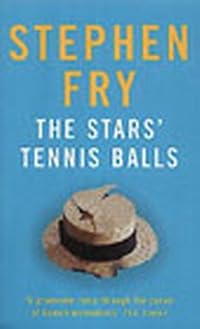
Stephen Fry is an award-winning comedian, actor, presenter, and director. He is also the bestselling author of four novels - The Stars' Tennis Balls, Making History, The Hippopotamus, and The Liar-as well as two previous memoirs- Moab Is My Washpot and The Fry Chronicles, the latter of which is available from The Overlook Press.
Some Editions
Series

Belongs to Publisher Series
rororo (22645)
Common Knowledge
- Canonical title*
- Een jongensleven
- Original title
- Moab is My Washpot
- Original publication date
- 1997; 1996-11
- People/Characters
- Stephen Fry
- Important places*
- Ulley, Engeland; Booton, Norfolk, Engeland
- Epigraph
- 'To live is to war with trolls in heart and soul. To write is to sit in judgement on oneself' - Henrik Ibsen
'The interests of a writer and the interests of his readers are never the same and if, on occasion, they happ... (show all)en to coincide, this is a lucky accident' - W.H. Auden - Dedication
- For You
The Book of D., Verse 10, Chapter 11 - First words
- For some reason I recall it as just me and Bunce.
- Last words
- (Click to show. Warning: May contain spoilers.)You bet I was fucking exuberant.
- Original language*
- Engels
*Some information comes from Common Knowledge in other languages. Click "Edit" for more information.
Classifications
Statistics
- Members
- 3,215
- Popularity
- 5,326
- Reviews
- 68
- Rating
- (3.96)
- Languages
- 5 — Dutch, English, Finnish, German, Russian
- Media
- Paper, Audiobook, Ebook
- ISBNs
- 26
- ASINs
- 15