On This Page
Description
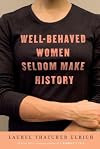
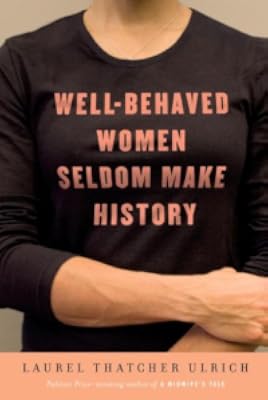
"They didn't ask to be remembered," historian Ulrich wrote in 1976 about the pious women of colonial New England. And then she added a phrase that has since gained widespread currency: "Well-behaved women seldom make history." Today those words appear on T-shirts, bumper stickers, and more--but what do they really mean? Here, Ulrich ranges over centuries and cultures, from the fifteenth-century writer Christine de Pizan, who imagined a world in which women achieved power and influence, to show more the writings of nineteenth-century suffragist Elizabeth Cady Stanton and twentieth-century novelist Virginia Woolf. She contrasts Woolf's imagined story about Shakespeare's sister with biographies of actual women who were Shakespeare's contemporaries. She uses daybook illustrations to look at women who weren't trying to make history, but did. Throughout, she shows how feminist historians, by challenging traditional accounts of both men's and women's histories, have stimulated more vibrant and better-documented accounts of the past.--From publisher description. show lessTags
Recommendations



Member Reviews
Even if you don’t recognize her name, you’re most likely familiar with historian Laurel Thatcher Ulrich’s most famous sentence: “Well-behaved women seldom make history.” This sentence is part of a scholarly article that Ulrich published in 1976. Decades later, Ulrich revisits her viral meme and the many ways it has been interpreted, often by women who proudly proclaim it as their slogan. Ulrich uses works by three women authors as a lens to examine how this statement has been true for women from the Middle Ages until the present day: Book of the City of Ladies by Christine de Pizan, Eighty Years and More by Elizabeth Cady Stanton, and A Room of One’s Own by Virginia Woolf. Ulrich’s writing hits the sweet spot between show more scholarly heft and popular appeal. show less
Not what I expected when I first heard of this book. I thought it would be a series of vignettes of "badly behaved" women who've made history. It was much more than that: a scholarly (but accessible) look at how women have challenged the way history is written, particularly the virtual exclusion of women. The author uses the work of three women: Book of the City of Ladies by Christine de Pizan, Eighty Years and More by Elizabeth Cady Stanton, and A Room of One’s Own by Virginia Woolf to show how her famous line (Well-behaved women seldom make history) has been true for centuries.
The author also explores more modern times, including the rise of the second wave of feminism in the context of the broader civil rights movement. An show more eye-opening read. show less
The author also explores more modern times, including the rise of the second wave of feminism in the context of the broader civil rights movement. An show more eye-opening read. show less
My main objection to this book is that I think devoting an entire book to a famous phrase that you yourself coined is maybe a touch self-aggrandizing. Having said that, I loved this exploration of women's history. It's not a survey -- Ulrich uses various examples to illuminate exactly what she was trying to say when she first wrote "Well-behaved Women Seldom Make History." (It's not necessarily what you think.) My favorite chapter was the discussion of slave narratives, although I also have a soft spot for Christine de Pizan so I liked reading about her, too.
My main objection to this book is that I think devoting an entire book to a famous phrase that you yourself coined is maybe a touch self-aggrandizing. Having said that, I loved this exploration of women's history. It's not a survey -- Ulrich uses various examples to illuminate exactly what she was trying to say when she first wrote "Well-behaved Women Seldom Make History." (It's not necessarily what you think.) My favorite chapter was the discussion of slave narratives, although I also have a soft spot for Christine de Pizan so I liked reading about her, too.
Ulrich is a favorite author of mine and a champion of the ordinary, invisible women in early American history, particularly early New England history. This book takes a much broader approach by discussing what it means for a woman to make history. A reader of feminist literature might not find a lot of new content here, but it's interesting because of the context in which it is discussed. Turns out, well-behaved women do make history when they do the unexpected.
Ulrich, for those who don't know, inadvertently coined the phrase used as the book's title, now plastered on millions of T-shirts and bumper stickers. I found her discussion of the original context of the phrase and how popular culture has co-oped it (and various meanings) also show more interesting.
While there are parts I particularly enjoyed (her chapter on Amazons, for example; or the chapter that talks about the four..or was it five...Harriets), the entire book is accessible, enjoyable and entirely thought-provoking. show less
Ulrich, for those who don't know, inadvertently coined the phrase used as the book's title, now plastered on millions of T-shirts and bumper stickers. I found her discussion of the original context of the phrase and how popular culture has co-oped it (and various meanings) also show more interesting.
While there are parts I particularly enjoyed (her chapter on Amazons, for example; or the chapter that talks about the four..or was it five...Harriets), the entire book is accessible, enjoyable and entirely thought-provoking. show less
Years ago, I saw the title of this book and it grabbed my imagination. The book didn’t exist at the time; this was originally a sentence in an article that she wrote in 1976. The sentence escaped captivity and was used on t-shirts, coffee mugs and bumper stickers- sometimes without either credit or permission. I used the sentence as my sig. line for a couple of years. Here, Ulrich explores what it means to make history.
Years ago, women were pretty much ignored in history books. It took many years of many people digging through old manuscripts to find the women in history. Now days women’s history books and courses are commonplace, but back when Ulrich wrote that sentence, that was just starting. She frames her book using the work show more of three women writers: Christine de Pizan, Elizabeth Cady Stanton and Virginia Woolf. De Pizan- a professional writer who supported her children with her pen in the 1400s- wrote a book about past women who had achieved power and influence, coming up with queens, warriors, poets, saints, inventors and more with which to people a city of ladies. Christine was ahead of her time, bringing up problems women faced, including violence against them. Stanton was a suffragist and abolitionist with a tremendous writing output. Her autobiography, Eighty Years and More, chronicles the making of a rebel. Told by her father upon the death of her last brother that he wished she were a boy, she figures out that to become a boy, one must become educated. She took care of that, besting the boys in school. Virginia Woolf, writing in the first half of the 20th century, satirized women’s legal and social positions in Orlando, and in A Room of One’s Own, writes primarily about women and fiction but also goes into why women are poor compared to men and why there was so little literature produced by women in the past- because of legal and societal restrictions. These three were pioneers of writing about women’s history, who were rediscovered in the latter half of the 20th century, who were the inspirations for women’s history.
The book is not just about women *in* history but about the movement to bring the history of women to everyone’s attention. Well told in a reader friendly format, this book should be required reading for young women who take their rights for granted. show less
Years ago, women were pretty much ignored in history books. It took many years of many people digging through old manuscripts to find the women in history. Now days women’s history books and courses are commonplace, but back when Ulrich wrote that sentence, that was just starting. She frames her book using the work show more of three women writers: Christine de Pizan, Elizabeth Cady Stanton and Virginia Woolf. De Pizan- a professional writer who supported her children with her pen in the 1400s- wrote a book about past women who had achieved power and influence, coming up with queens, warriors, poets, saints, inventors and more with which to people a city of ladies. Christine was ahead of her time, bringing up problems women faced, including violence against them. Stanton was a suffragist and abolitionist with a tremendous writing output. Her autobiography, Eighty Years and More, chronicles the making of a rebel. Told by her father upon the death of her last brother that he wished she were a boy, she figures out that to become a boy, one must become educated. She took care of that, besting the boys in school. Virginia Woolf, writing in the first half of the 20th century, satirized women’s legal and social positions in Orlando, and in A Room of One’s Own, writes primarily about women and fiction but also goes into why women are poor compared to men and why there was so little literature produced by women in the past- because of legal and societal restrictions. These three were pioneers of writing about women’s history, who were rediscovered in the latter half of the 20th century, who were the inspirations for women’s history.
The book is not just about women *in* history but about the movement to bring the history of women to everyone’s attention. Well told in a reader friendly format, this book should be required reading for young women who take their rights for granted. show less
Ulrich, who coined the title phrase in a 1976 scholarly article, spends a fair amount of time here discussing how it took on a life of its own, before settling down to explain what she meant.
The problem, she says, is not that well-behaved women don't make history, but that historians haven't done a very good job of reporting on their achievements. Late 20th-century feminists have pretty well created women's history as a legitimate field of study, less through excavation of potshards than through the patient tracking down of those faint records left in letters, journals, and oral history which show ordinary women doing what needed to be done, and building much of the world we recognize today.
She also takes a look at some show more less-well-behaved women -- Christine de Pizan, who wrote 'The Book of the City of Ladies' at a time when most women not only did not write -- they did not read; abolitionist and women's suffrage leader Elizabeth Cady Stanton; and protofeminist writer Virginia Woolf.
There are passing mentions of many notable points and individuals in the first feminist movement of the mid-19th century, and the "second wave" that came along 100 years later, but few are handled in great detail. The book does, however, provide an excellent jumping-off point for further reading with extensive source notes. show less
The problem, she says, is not that well-behaved women don't make history, but that historians haven't done a very good job of reporting on their achievements. Late 20th-century feminists have pretty well created women's history as a legitimate field of study, less through excavation of potshards than through the patient tracking down of those faint records left in letters, journals, and oral history which show ordinary women doing what needed to be done, and building much of the world we recognize today.
She also takes a look at some show more less-well-behaved women -- Christine de Pizan, who wrote 'The Book of the City of Ladies' at a time when most women not only did not write -- they did not read; abolitionist and women's suffrage leader Elizabeth Cady Stanton; and protofeminist writer Virginia Woolf.
There are passing mentions of many notable points and individuals in the first feminist movement of the mid-19th century, and the "second wave" that came along 100 years later, but few are handled in great detail. The book does, however, provide an excellent jumping-off point for further reading with extensive source notes. show less
Members
- Recently Added By
Author Information

14+ Works 4,862 Members
Laurel Thatcher Ulrich is Phillips Professor of Early American History at Harvard University.
Awards and Honors
Series

Common Knowledge
- Original publication date
- 2007-09-04
- People/Characters
- Christine de Pizan; Elizabeth Cady Stanton; Virginia Woolf
- Epigraph
- But the history of the world shows the vast majority, in every generation, passively accept the conditions into which they are born, while those who demand larger liberties are ever a small, ostracized minority, whose claims ... (show all)are ridiculed and ignored. --Elizabeth Cady Stanton, Eighty Years and More, 1898
For all the dinners are cooked; the plates and cups washed; the children set to school and gone out into the world. Nothing remains of it all. All has vanished. No biography or history has a word to say about it. And the nove... (show all)ls, without meaning to, inevitably lie. --Virginia Woolf, A Room of One's Own, 1929
If I wished to tell you all the great benefits which have come about through women, it would require much too long a book. --Christine de Pizan, The Book of the City of Ladies, 1405 - Dedication
- For my students
- First words
- Some time ago a former student e-mailed me from California: "You'll be delighted to know that you are quoted frequently on bumpers in Berkeley."
- Last words
- (Click to show. Warning: May contain spoilers.)Well-behaved women make history when they do the unexpected, when they create and preserve records, and when later generations care.
Classifications
- Genres
- Nonfiction, Sexuality and Gender Studies, General Nonfiction, History, Biography & Memoir
- DDC/MDS
- 305.42091821 — Society, government, & culture Social sciences, sociology & anthropology Social group - Age, Gender, Ethnicity Women Social role and status of women Standard subdivisions History, geographic treatment, biography
- LCC
- HQ1121 .U517 — Social sciences The family. Marriage, Women and Sexuality The Family. Marriage. Women Women. Feminism
- BISAC
Statistics
- Members
- 540
- Popularity
- 55,420
- Reviews
- 19
- Rating
- (3.86)
- Languages
- English
- Media
- Paper, Ebook
- ISBNs
- 3
- ASINs
- 3