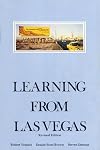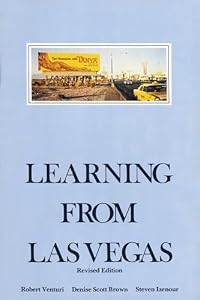
Learning from Las Vegas
by Robert Venturi, Denise Scott Brown, Steven Izenour
On This Page
Description
Surveys the architecture of the Las Vegas Strip and examines the role of urban sprawl, advertising, and commercial iconography in contemporary building design.Tags
Recommendations


















Member Reviews
(These are comments from my blog, A Daily Dose of Architecture, on both the 1972 and 1977 editions of LLV. I'm more partial to the first edition rather than the revised edition, though that might not be apparent below.)
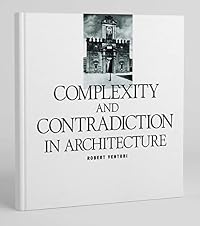
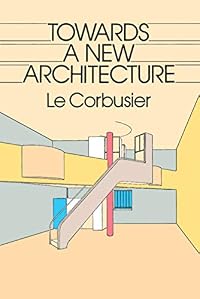
"Learning from Las Vegas" is one of the five most important books of architecture in the 20th century, up there with Le Corbusier's "Towards a New Architecture," Rem Koolhaas's "Delirious New York," Aldo Rossi's "The Architecture of the City," and Venturi's own "Complexity and Contradiction in Architecture." Born from a 1968 Yale architecture studio, the book analyzed the way casinos, hotels and other buildings along the Las Vegas Strip used signage to attract attention and apprise drivers of the contents of the buildings show more set back behind parking lots. Through this, they argued for the Decorated Shed over the Duck, the former using signage to communicate the contents of a simple building and the latter using form to convey its function. Put simply, the Duck represented Modernism while the Decorated Shed represented something else, what would become Postmodernism in ensuing years. Like Venturi's earlier "Complexity and Contradiction," which argued that "Main Street is almost all right," "Learning from Las Vegas" looked at an extreme example of one (the Strip) rather than at capital-A architecture to determine what architecture should be and what architects should learn from.
Like most architects, I first encountered "Learning from Las Vegas" in architecture school. Given that this was the early 1990s, I read the revised edition from 1977 in a seminar class on architectural theory, not the original 1972 edition. (My copy is from 1993, the book's twelfth printing.) Not many books can boast of such different editions: the first edition is a hardcover book whose size and expense (it was expensive originally, over the years as a hard-to-find artifact, and in MIT Press's facsimile edition) signal something special, while the revised edition is a much smaller paperback designed to be affordable to students like myself. The revised edition cut a third of the original book by eliminating part 3, a presentation of Venturi and Rauch's buildings and projects, and many of the images that would not work on a smaller page size. Regardless of these cuts and a substantially different page design, the arguments of the text have held up, while the lower price has guaranteed a wider circulation and lasting influence. show less
"Learning from Las Vegas" is one of the five most important books of architecture in the 20th century, up there with Le Corbusier's "Towards a New Architecture," Rem Koolhaas's "Delirious New York," Aldo Rossi's "The Architecture of the City," and Venturi's own "Complexity and Contradiction in Architecture." Born from a 1968 Yale architecture studio, the book analyzed the way casinos, hotels and other buildings along the Las Vegas Strip used signage to attract attention and apprise drivers of the contents of the buildings show more set back behind parking lots. Through this, they argued for the Decorated Shed over the Duck, the former using signage to communicate the contents of a simple building and the latter using form to convey its function. Put simply, the Duck represented Modernism while the Decorated Shed represented something else, what would become Postmodernism in ensuing years. Like Venturi's earlier "Complexity and Contradiction," which argued that "Main Street is almost all right," "Learning from Las Vegas" looked at an extreme example of one (the Strip) rather than at capital-A architecture to determine what architecture should be and what architects should learn from.
Like most architects, I first encountered "Learning from Las Vegas" in architecture school. Given that this was the early 1990s, I read the revised edition from 1977 in a seminar class on architectural theory, not the original 1972 edition. (My copy is from 1993, the book's twelfth printing.) Not many books can boast of such different editions: the first edition is a hardcover book whose size and expense (it was expensive originally, over the years as a hard-to-find artifact, and in MIT Press's facsimile edition) signal something special, while the revised edition is a much smaller paperback designed to be affordable to students like myself. The revised edition cut a third of the original book by eliminating part 3, a presentation of Venturi and Rauch's buildings and projects, and many of the images that would not work on a smaller page size. Regardless of these cuts and a substantially different page design, the arguments of the text have held up, while the lower price has guaranteed a wider circulation and lasting influence. show less
(These are comments from my blog, A Daily Dose of Architecture, on both the 1972 and 1977 editions of LLV. I'm more partial to the first edition rather than the revised edition, though that might not be apparent below.)
"Learning from Las Vegas" is one of the five most important books of architecture in the 20th century, up there with Le Corbusier's "Towards a New Architecture," Rem Koolhaas's "Delirious New York," Aldo Rossi's "The Architecture of the City," and Venturi's own "Complexity and Contradiction in Architecture." Born from a 1968 Yale architecture studio, the book analyzed the way casinos, hotels and other buildings along the Las Vegas Strip used signage to attract attention and apprise drivers of the contents of the buildings show more set back behind parking lots. Through this, they argued for the Decorated Shed over the Duck, the former using signage to communicate the contents of a simple building and the latter using form to convey its function. Put simply, the Duck represented Modernism while the Decorated Shed represented something else, what would become Postmodernism in ensuing years. Like Venturi's earlier "Complexity and Contradiction," which argued that "Main Street is almost all right," "Learning from Las Vegas" looked at an extreme example of one (the Strip) rather than at capital-A architecture to determine what architecture should be and what architects should learn from.
Like most architects, I first encountered "Learning from Las Vegas" in architecture school. Given that this was the early 1990s, I read the revised edition from 1977 in a seminar class on architectural theory, not the original 1972 edition. (My copy is from 1993, the book's twelfth printing.) Not many books can boast of such different editions: the first edition is a hardcover book whose size and expense (it was expensive originally, over the years as a hard-to-find artifact, and in MIT Press's facsimile edition) signal something special, while the revised edition is a much smaller paperback designed to be affordable to students like myself. The revised edition cut a third of the original book by eliminating part 3, a presentation of Venturi and Rauch's buildings and projects, and many of the images that would not work on a smaller page size. Regardless of these cuts and a substantially different page design, the arguments of the text have held up, while the lower price has guaranteed a wider circulation and lasting influence. show less
"Learning from Las Vegas" is one of the five most important books of architecture in the 20th century, up there with Le Corbusier's "Towards a New Architecture," Rem Koolhaas's "Delirious New York," Aldo Rossi's "The Architecture of the City," and Venturi's own "Complexity and Contradiction in Architecture." Born from a 1968 Yale architecture studio, the book analyzed the way casinos, hotels and other buildings along the Las Vegas Strip used signage to attract attention and apprise drivers of the contents of the buildings show more set back behind parking lots. Through this, they argued for the Decorated Shed over the Duck, the former using signage to communicate the contents of a simple building and the latter using form to convey its function. Put simply, the Duck represented Modernism while the Decorated Shed represented something else, what would become Postmodernism in ensuing years. Like Venturi's earlier "Complexity and Contradiction," which argued that "Main Street is almost all right," "Learning from Las Vegas" looked at an extreme example of one (the Strip) rather than at capital-A architecture to determine what architecture should be and what architects should learn from.
Like most architects, I first encountered "Learning from Las Vegas" in architecture school. Given that this was the early 1990s, I read the revised edition from 1977 in a seminar class on architectural theory, not the original 1972 edition. (My copy is from 1993, the book's twelfth printing.) Not many books can boast of such different editions: the first edition is a hardcover book whose size and expense (it was expensive originally, over the years as a hard-to-find artifact, and in MIT Press's facsimile edition) signal something special, while the revised edition is a much smaller paperback designed to be affordable to students like myself. The revised edition cut a third of the original book by eliminating part 3, a presentation of Venturi and Rauch's buildings and projects, and many of the images that would not work on a smaller page size. Regardless of these cuts and a substantially different page design, the arguments of the text have held up, while the lower price has guaranteed a wider circulation and lasting influence. show less
Drop everything you think you know about architecture and snootiness and re-evaluate. This brilliant-bonkers study mines the genius in the inanity that is Las Vegas. Pre-computer-aided-layout, the book makes gorgeous use of cramped Helvetica and information presentation (this is all way pre-Tufte, kids). Dated, sure, and sort of hard to map onto today's Las Vegas--the surreal landscape there changing so fast--but an academic gem cogent to architecture, art history, sociology and urban studies students. Such a strange city.
Too academic for me. Read because I so much enjoyed [b:The Strip: Las Vegas and the Architecture of the American Dream|31850763|The Strip Las Vegas and the Architecture of the American Dream|Stefan Al|https://i.gr-assets.com/images/S/compressed.photo.goodreads.com/books/1479058750l/31850763._SX50_.jpg|52521157] and that referenced this often, but it turns out that this isn't for an auto-didact with no formal background....
shelved at: 93 VEN : Architects - Robert Venturi and Denise Scott Brown - download from Sharepoint : here
Ratings
Members
- Recently Added By
Lists

Best Architecture Books
87 works; 14 members
Author Information

17+ Works 1,835 Members
Robert Charles Venturi Jr. was born in Philadelphia, Pennsylvania on June 25, 1925. He received undergraduate and graduate degrees from Princeton University. He worked for Eero Saarinen and Louis Kahn, before winning a fellowship at the American Academy in Rome. Venturi spent two years in Europe studying buildings. After returning to the United show more States, he joined the faculty at the University of Pennsylvania. He went into private practice in 1960, first in partnership with William H. Short and then, starting in 1964, with John Rauch. His wife Denise Scott Brown joined the Venturi Rauch firm in 1969. In 1989, Rauch resigned, the firm was renamed Venturi, Scott Brown & Associates. It is now known as VSBA Architects & Planners. His buildings and books helped inspire the movement known as postmodernism. His buildings included the Guild House in Philadelphia, an addition to the National Gallery in London, and the Seattle Art Museum. His books included Complexity and Contradiction in Architecture and Learning from Las Vegas written with Denise Scott Brown and Steven Izenour. He won the Pritzker Prize in 1991. He died from complications of Alzheimer's disease on September 18, 2018 at the age of 93. (Bowker Author Biography) show less
13+ Works 951 Members
2+ Works 856 Members
Series
Belongs to Publisher Series
Bauwelt Fundamente (53)
Work Relationships
Has as a reference guide/companion
Common Knowledge
- Canonical title
- Learning from Las Vegas
- Original publication date
- 1972
- Important places
- Las Vegas, Nevada, USA
- Quotations
- Naked children have never played in *our* fountains, and I.M. Pei will never be happy on Route 66.
Classifications
Statistics
- Members
- 853
- Popularity
- 31,896
- Reviews
- 5
- Rating
- (3.75)
- Languages
- 8 — English, French, German, Italian, Polish, Portuguese, Russian, Spanish
- Media
- Paper
- ISBNs
- 18
- ASINs
- 6