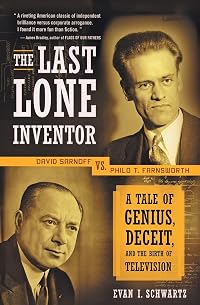
The Last Lone Inventor: A Tale of Genius, Deceit, and the Birth of Television
by Evan I. Schwartz
On This Page
Description
In a story that is both of its time and timeless, Evan I. Schwartz tells a tale of genius versus greed, innocence versus deceit, and independent brilliance versus corporate arrogance. Many men have laid claim to the title "father of television," but Philo T. Farnsworth is the true genius behind what may be the most influential invention of our time.Driven by his obsession to demonstrate his idea, by the age of twenty Farnsworth was operating his own laboratory above a garage in San Francisco show more and filing for patents. The resulting publicity caught the attention of RCA tycoon David Sarnoff, who became determined to control television in the same way he monopolized radio.Based on original research, including interviews with Farnsworth family members, The Last Lone Inventor is the story of the epic struggle between two equally passionate adversaries whose clash symbolized a turning point in the culture of creativity. show lessTags
Recommendations







Member Reviews
I was in college when I learned that a fellow Idahoan Philo T. Farnsworth had invented television. By that time, virtually all patents of technical progress seem done by large electronics companies and one had the sense that Thomas Edison was the last independent inventor of any significant contribution. It was what David Sarnoff and RCA wanted you to believe. This book uncovers that lie in a fascinating story of the battle between independent Farnsworth and mogul David Sarnoff. Pitting brilliance against ego, vison against vision, sense of personal worth against megalomania, one treads the treacherous path Farnsworth trod.
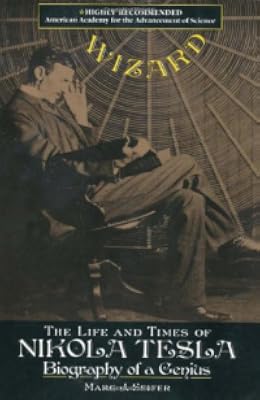
Wiser than Nikola Tesla, Farnsworth understood the critical role of properly owned patents and the costs of show more failing to fully secure them. He also was unprepared for the full arrogance of Sarnoff who, in spite of Farnsworth's undeniable supremacy, claimed publicly Sarnoff was the inventor of television. Even a court decision granting the rights to Farnsworth did not in anyway stymie Sarnoff's claim. Sarnoff had corporate wealth and access to press his claim to a public, a level of access that Farnsworth could never hope to counter.
But geeks are funny people. We love stories of underdogs, seek them out and elevate them to virtual godhood. Joining the ranks of young Steve Jobs and Bill Gates, Tesla has become master and Farnsworth follows close. And Sarnoff today? -- seen only as a faker and a liar who used his massive wealth to hide and hinder. RCA, the electronic giant, visionary and developer of the future is a "was". Farnsworth remains "is". show less
Wiser than Nikola Tesla, Farnsworth understood the critical role of properly owned patents and the costs of show more failing to fully secure them. He also was unprepared for the full arrogance of Sarnoff who, in spite of Farnsworth's undeniable supremacy, claimed publicly Sarnoff was the inventor of television. Even a court decision granting the rights to Farnsworth did not in anyway stymie Sarnoff's claim. Sarnoff had corporate wealth and access to press his claim to a public, a level of access that Farnsworth could never hope to counter.
But geeks are funny people. We love stories of underdogs, seek them out and elevate them to virtual godhood. Joining the ranks of young Steve Jobs and Bill Gates, Tesla has become master and Farnsworth follows close. And Sarnoff today? -- seen only as a faker and a liar who used his massive wealth to hide and hinder. RCA, the electronic giant, visionary and developer of the future is a "was". Farnsworth remains "is". show less
I love studying the history of science and seldom has a book on this topic read more like a novel. The young genius of Philo T. Farnsworth seems to be overflowing with ideas almost from birth. The timing is right for he comes of age just as the information age is being transformed from the print medium that ruled the nineteenth century to audio and video that will rule the twentieth century. Many men have laid claim to the title "The Father of Television," but Philo T. Farnsworth is the true genius behind what may be the most influential invention of our time. Farnsworth ended up a footnote in history yet he was the first to demonstrate an electronic process for scanning, transmitting and receiving moving images, a discovery that show more changed the way we live. Unfortunately Farnsworth, the "lone inventor", comes up against David Sarnoff the media mogul who uses his control over radio leverage the same control over the beginnings of television. Their battle is epic and Evan Schwartz tells the story so well that it kept me interested both through the discoveries and the disaster (for Farnsworth) that followed. Adding to my enjoyment was the opportunity to see a production of Aaron Sorkin's play, The Farnsworth Invention, based in part on Farnsworth's life. show less
Maybe a bit longer than it had to be, but still a fascinating story. I was impressed by Farnsworth's long commitment to developing television, after having the basic idea for an all-electronic device when just 14. Turning this into a commercial product was technically difficult, and also faced challenges from World War 2, from setting consumer standards, from expiring patents, ... His conflict with the entrenched radio patent monopoly RCA gave the story more plot and drama, and perhaps can impart some morals. Schwartz did good research on Farnsworth's life, including interviewing his 92 year-old widow.
> Farnsworth had hired the most gifted electrical engineers he could find. One of them, Archie "Arch" Brolly, had a degree from MIT, show more while another, Russell Varian, was a Stanford graduate who later developed an indispensable radar tube that helped win the Second World War. After the war, Varian became a famous pioneer of a new industrial zone called Silicon Valley.
> A young Berkeley scientist named Ernest Lawrence paid several visits. Lawrence was most fascinated with a device Farnsworth invented to boost the strength of his transmission signal. It was an electron multiplier, and it worked by bouncing electron beams inside a metal chamber, which dislodged more electrons from the metal plates, creating a feedback loop
> David Sarnoff yielded the podium to the leader of the free world. In dedicating what he called the "world’s fai-yah," Franklin D. Roosevelt became the first president of the United States to be televised. … Sarnoff was clearly taking credit for the invention in a way that Farnsworth knew he could never match, creating an impression that could never be erased. Sarnoff was doing this through the very power of television itself.
> In 1958, RCA entered into a landmark consent decree with the Justice Department, agreeing to license its color TV patents to any American set maker at no cost.
> John Kennedy had gone in, if not exactly an unknown, certainly the underdog, and he had come out looking a winner, while Richard Nixon had in one brief appearance squandered the advantage of eight years of the vice-presidency, and had come out looking a loser. The effect was so great that it was sixteen years before two presidential nominees again debated
> perpetual usage of all the remaining Farnsworth patents to RCA, GE, and Zenith for onetime royalty payments. All three firms accepted the offer, yielding a total of about $3 million, which put the Farnsworth Corporation just short of paying off its debt. With no more options, Nicholas moved to put the company up for sale … Farnsworth wanted to find a low-temperature or perhaps a split-second way to achieve fusion safely show less
> Farnsworth had hired the most gifted electrical engineers he could find. One of them, Archie "Arch" Brolly, had a degree from MIT, show more while another, Russell Varian, was a Stanford graduate who later developed an indispensable radar tube that helped win the Second World War. After the war, Varian became a famous pioneer of a new industrial zone called Silicon Valley.
> A young Berkeley scientist named Ernest Lawrence paid several visits. Lawrence was most fascinated with a device Farnsworth invented to boost the strength of his transmission signal. It was an electron multiplier, and it worked by bouncing electron beams inside a metal chamber, which dislodged more electrons from the metal plates, creating a feedback loop
> David Sarnoff yielded the podium to the leader of the free world. In dedicating what he called the "world’s fai-yah," Franklin D. Roosevelt became the first president of the United States to be televised. … Sarnoff was clearly taking credit for the invention in a way that Farnsworth knew he could never match, creating an impression that could never be erased. Sarnoff was doing this through the very power of television itself.
> In 1958, RCA entered into a landmark consent decree with the Justice Department, agreeing to license its color TV patents to any American set maker at no cost.
> John Kennedy had gone in, if not exactly an unknown, certainly the underdog, and he had come out looking a winner, while Richard Nixon had in one brief appearance squandered the advantage of eight years of the vice-presidency, and had come out looking a loser. The effect was so great that it was sixteen years before two presidential nominees again debated
> perpetual usage of all the remaining Farnsworth patents to RCA, GE, and Zenith for onetime royalty payments. All three firms accepted the offer, yielding a total of about $3 million, which put the Farnsworth Corporation just short of paying off its debt. With no more options, Nicholas moved to put the company up for sale … Farnsworth wanted to find a low-temperature or perhaps a split-second way to achieve fusion safely show less
It stars a relative; I ought to read it some time, no?
Ratings
Members
- Recently Added By
Lists

100 Biographies and Memoirs to Read in a (Single) Lifetime
98 works; 12 members
Author Information

8+ Works 478 Members
Evan I. Schwartz is a contributing writer for MIT's Technology Review and a former editor at BusinessWeek
Awards and Honors
Notable Lists
Classifications
- Genres
- Nonfiction, Biography & Memoir, General Nonfiction, Technology, Science & Nature, History, Business
- DDC/MDS
- 621.388 — Applied science & technology Engineering Applied physics Electronics & Computers Electronics, communications engineering Television
- LCC
- TK6635 .F3 .S38 — Technology Electrical engineering. Electronics. Nuclear engineering Electrical engineering. Electronics. Nuclear Telecommunication
- BISAC
Statistics
- Members
- 123
- Popularity
- 263,705
- Reviews
- 4
- Rating
- (3.92)
- Languages
- English
- Media
- Paper, Ebook
- ISBNs
- 8
- ASINs
- 2