Whispers on Flowers
by Matilda Lockwood 
On This Page
Description
In Regency Bath, flowers speak louder than words. Someone is using them to lie. Clara Hartwell makes her living writing the fashionable language of flowers books favored by Bath's society brides. With a careful arrangement of violets for devotion, camellias for admiration, or striped carnations for refusal, a bouquet can express feelings society would rather leave unsaid. For women who cannot always speak their minds, flowers have become a clever secret language. But when a young errand boy show more is found dead by the river with a list of false flower meanings in his pocket, Clara realizes someone in Bath is twisting that language into something dangerous. Determined to uncover the truth, Clara joins forces with Bath's thoughtful new coroner, Dr Gideon Bell, a man who notices far more than he says and who is not easily fooled by polite society's careful appearances. As the two follow a trail of coded bouquets, whispered scandals, and carefully planted lies, Clara begins to suspect the murderer may be hiding in the very circles that commission her work. Complicating matters further is Adrian Vale, a charming perfumer whose interest in Clara may be more than professional. His knowledge of scent and symbolism could either help her solve the mystery or lead her straight into danger. In a city where every bouquet carries a message, Clara must decide which meanings to trust and whether her own heart has been mistranslated. Perfect for readers who love historical romance with mystery strong, clever heroines slow-burn romance found family Victorian flower language and secret messages Because in Bath, a single flower can say everything. Or hide a deadly lie. show lessRecommendations



















Member Reviews
This novel is very unusual. The author is more than competent as a writer, and I believe Miss Lockwood achieved the atmosphere she intended, but it will appeal to a very specific taste.
The premise is intriguing and ingenious. The setting is Bath, England in the 1930s, on the cusp between the Regency and Victoria eras. The heroine, Clara Hartwell is a "floriographer", that is, an expert in the language of flowers, which allows her to eke out a modest living, primarily designing bouquets, nosegays, corsages, etc. that convey unspoken meaning, as well as doing some writing on the subject. She is drawn into the investigation of suspicious deaths where flowers were found that may have been left to convey messages. She is drawn in by Dr. show more Gideon Bell, who is the Bath coroner, and a relative of Lady Jersey who is a patroness of sorts to Clara.
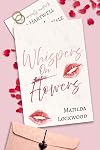
There were several things about the book that did not particularly appeal to me. First, I found the cover to be quite deceptive. The cotton candy pink cover, decorated with lipstick kisses and a wedding invitation promises a story somewhat light and romantic, possibly witty. The true atmosphere of the story is dark and philosophic. There is a romance, actually a triangle, between Clara, Dr. Bell and Adrian Vale, a Bath perfumer who sees rich possibilities in both a personal and professional partnership that would combine Clara's knowledge of the message of flowers and his ability to distill their essences. But for much of the tale, love and possible marriage appears to Clara as cross between a means to security and a trap for her individuality. It is resolved at the end, with a happily-ever-after of sorts, but only when the final couple behaves with very anachronistic modern attitudes of the roles of women and men in marriage. Satisfying, perhaps, but unlikely and presented in a very modern framework.
Also, the symbolism of flowers is EVERYWHERE in this story. As it should be, given the plot, but since the reader would not be conversant with flower meanings, they have to be explained whenever they come up, which makes for a heavy style. It is in many ways in keeping with the message that flowers were often the only acceptable way for women, who were often not encouraged, or even allowed, to speak freely, to express themselves, but it can feel ponderous.
Clara moves among various social classes in her pursuit of her trade: high society via Lady Jersey's patronage, working class women who can occasionally indulge in a floral message, and the dubious world of prostitution. The risk to her reputation, and thus livelihood by this movement is often mentioned, but the lack of real consequences seems unlikely.
Nonetheless, it is an intriguing and atmospheric story, and if you aren't really looking for historical accuracy, but more of a dark tale of the ways that women speak, it could greatly appeal.
I received a copy of this book from the author/publisher in exchange for an honest review. The opinions expressed are purely my own. show less
The premise is intriguing and ingenious. The setting is Bath, England in the 1930s, on the cusp between the Regency and Victoria eras. The heroine, Clara Hartwell is a "floriographer", that is, an expert in the language of flowers, which allows her to eke out a modest living, primarily designing bouquets, nosegays, corsages, etc. that convey unspoken meaning, as well as doing some writing on the subject. She is drawn into the investigation of suspicious deaths where flowers were found that may have been left to convey messages. She is drawn in by Dr. show more Gideon Bell, who is the Bath coroner, and a relative of Lady Jersey who is a patroness of sorts to Clara.
There were several things about the book that did not particularly appeal to me. First, I found the cover to be quite deceptive. The cotton candy pink cover, decorated with lipstick kisses and a wedding invitation promises a story somewhat light and romantic, possibly witty. The true atmosphere of the story is dark and philosophic. There is a romance, actually a triangle, between Clara, Dr. Bell and Adrian Vale, a Bath perfumer who sees rich possibilities in both a personal and professional partnership that would combine Clara's knowledge of the message of flowers and his ability to distill their essences. But for much of the tale, love and possible marriage appears to Clara as cross between a means to security and a trap for her individuality. It is resolved at the end, with a happily-ever-after of sorts, but only when the final couple behaves with very anachronistic modern attitudes of the roles of women and men in marriage. Satisfying, perhaps, but unlikely and presented in a very modern framework.
Also, the symbolism of flowers is EVERYWHERE in this story. As it should be, given the plot, but since the reader would not be conversant with flower meanings, they have to be explained whenever they come up, which makes for a heavy style. It is in many ways in keeping with the message that flowers were often the only acceptable way for women, who were often not encouraged, or even allowed, to speak freely, to express themselves, but it can feel ponderous.
Clara moves among various social classes in her pursuit of her trade: high society via Lady Jersey's patronage, working class women who can occasionally indulge in a floral message, and the dubious world of prostitution. The risk to her reputation, and thus livelihood by this movement is often mentioned, but the lack of real consequences seems unlikely.
Nonetheless, it is an intriguing and atmospheric story, and if you aren't really looking for historical accuracy, but more of a dark tale of the ways that women speak, it could greatly appeal.
I received a copy of this book from the author/publisher in exchange for an honest review. The opinions expressed are purely my own. show less
 This review was written for LibraryThing Early Reviewers.
I was intrigued by this book from the moment I read the description, and the substance of the plot did not disappoint! The main character is flawed but very likeable, grounded, and well-written. I found myself genuinely rooting for Clara as she tried to find a place in her world. The female camaraderie and focus on lifting each other up and building community was also really refreshing to read. The moments discussing the meanings of different flowers were interesting without being too dry and felt like they belonged in the story. I have found some books that try to build off of a historical or factual concept sometimes feel like the author just wanted to show off their knowledge of a subject and so the information doesn't mesh well with show more the story, and that is absolutely NOT the case here. It was a lovely blend of story and history.
My only complaint (and it is a very minor one) is that there were perhaps a few too many metaphors and similes. The author really has a beautiful talent for unconventional description. However, the sheer volume of metaphorical language can be a little bit thick to wade through in places. That being said, this novel is 100% worth a read. show less
My only complaint (and it is a very minor one) is that there were perhaps a few too many metaphors and similes. The author really has a beautiful talent for unconventional description. However, the sheer volume of metaphorical language can be a little bit thick to wade through in places. That being said, this novel is 100% worth a read. show less
This review was written for LibraryThing Early Reviewers.Whispers on Flowers is a dreamy, thoughtful story about a woman striving for independence and respect, while also falling in love and solving a murder. The author weaves social themes in among her bouquets, which results in a strong, unique tale. It is refreshing to read a historical romance that isn't focused on the nobility, but on the working classes.
The novel does have some continuity errors, mostly in the first third of the book, but if you can overlook those, then this is a real gem. I strongly recommend and I'm looking forward to other books by this author.
The novel does have some continuity errors, mostly in the first third of the book, but if you can overlook those, then this is a real gem. I strongly recommend and I'm looking forward to other books by this author.
This review was written for LibraryThing Early Reviewers.Flowers were an important and unique way to communicate in nineteenth century England.
Clara Hartwell is a talented floriographer. Her understanding of flowers helps when she gets involved in murder investigations with the new coroner of Bath. Complicating her life is the
local perfumer who takes an interest in her. When Clara arranged her floral message she had to be aware of the type of flower, color, and the way the flowers were presented.
This is an uncomplicated but well written story. The core theme is the message of flowers and in this narrative the flowers shine as the main characters. The human characters create the bridge for the flowers to tell their story. For the author angelica for an inspiring story.
Clara Hartwell is a talented floriographer. Her understanding of flowers helps when she gets involved in murder investigations with the new coroner of Bath. Complicating her life is the
local perfumer who takes an interest in her. When Clara arranged her floral message she had to be aware of the type of flower, color, and the way the flowers were presented.
This is an uncomplicated but well written story. The core theme is the message of flowers and in this narrative the flowers shine as the main characters. The human characters create the bridge for the flowers to tell their story. For the author angelica for an inspiring story.
This review was written for LibraryThing Early Reviewers.In 1836, Clara Hartwell lives independently as a floriographer on the second floor of a boarding house in Bath, England. While delivering her latest book—requested by Lady Jersey to ensure accurate floriography for a wedding—Clara catches the attention of Dr. Gideon Bell, Lady Jersey's nephew. She also speaks with Thomas Jeffers, a young errand boy, and later, during another errand, meets Adrian Vale, who invites her into his business, Vale's Perfumery. The encounters with these two men and the young boy will come to shape Clara's life in unexpected and significant ways.
Told from Clara's point of view, the novel evokes Jane Austen-style Regency romance through its love triangle, while the mystery hints at the dawn of Victorian show more England. Clara's self-reliance and commitment to truth are compelling. I especially appreciated the strong women around her: Aunt Dinah visiting from Cheltenham; Mrs. Pencombe, the landlady, whose brusque approach to rent conceals genuine kindness; Lady Jersey, the Coroner's aunt and a respected figure in Bath; and the budding friendships with Sabine and Evie.
The inclusion of the Marsh test—developed by James Marsh in 1836 and quickly coming to Dr. Bell's attention—sparked my curiosity. It was fascinating to discover that this forensic technique remained in use until the 1960s, only being phased out as modern methods took over by the 1970s.
I highly recommend beginning with the Author's Note, which introduces Clara, Dr. Bell, and Adrian, and offers a preview of the author's illustrations. The black-and-white floral drawings and floriography explanations at the start of each chapter—as well as the Flower Glossary at the end—are true to Clara's 1836 pamphlets and add a beautiful, meaningful dimension to the story.
Thank you to Matilda Lockwood and LibraryThing for the opportunity to read a digital copy of this novel. show less
Told from Clara's point of view, the novel evokes Jane Austen-style Regency romance through its love triangle, while the mystery hints at the dawn of Victorian show more England. Clara's self-reliance and commitment to truth are compelling. I especially appreciated the strong women around her: Aunt Dinah visiting from Cheltenham; Mrs. Pencombe, the landlady, whose brusque approach to rent conceals genuine kindness; Lady Jersey, the Coroner's aunt and a respected figure in Bath; and the budding friendships with Sabine and Evie.
The inclusion of the Marsh test—developed by James Marsh in 1836 and quickly coming to Dr. Bell's attention—sparked my curiosity. It was fascinating to discover that this forensic technique remained in use until the 1960s, only being phased out as modern methods took over by the 1970s.
I highly recommend beginning with the Author's Note, which introduces Clara, Dr. Bell, and Adrian, and offers a preview of the author's illustrations. The black-and-white floral drawings and floriography explanations at the start of each chapter—as well as the Flower Glossary at the end—are true to Clara's 1836 pamphlets and add a beautiful, meaningful dimension to the story.
Thank you to Matilda Lockwood and LibraryThing for the opportunity to read a digital copy of this novel. show less
This review was written for LibraryThing Early Reviewers.Floriography - a word I'd never heard before. It involves using flowers to send coded messages and was very popular in Victorian times. This novel follows Clara Hartwell as she grows her business of producing poseys and nosegays of flowers to order to send messages for her clients. Along the way, she encounters two murders, which affect her deeply, and since flowers are involved, she is regarded as the expert. This novel has a something for everyone - learning about a little-known subject, solving murder mysteries, considering the social norms of Victorian England, finding some romance and having to make a choice, and Clara's development as an independent woman who follows her head and her heart. I searched for more information on show more floriography as I read the book and learned about something I never knew existed. If I can learn something new while reading a novel, I double-appreciate the book! show less
This review was written for LibraryThing Early Reviewers.I almost stopped reading - the first quarter of the novel was so packed with similes and metaphors (every sentence seemed to have one) that the reading was a slog. But finally the story got underway and there was a conflict and a mystery and character interaction and I started enjoying the storyline. I found the flower communication was interesting but hard to figure out how it related to the murders that were happening. I really liked Clara and how she navigated conflicting demands with her own desires.
This review was written for LibraryThing Early Reviewers.Members
- Recently Added By
Author Information

5 Works 91 Members
Matilda Lockwood is a LibraryThing Author, an author who lists their personal library on LibraryThing.
Common Knowledge
- Original publication date
- 2026-05-01
- Dedication
- For my great-aunt, Bernadette Stemler Velick, a wonderful
woman and a scientific illustrator of nature, especially
botany and human anatomy.
This story of flowers owes more to you than you know. - First words
- In Le Langage des Fleurs, published in 1819, it was claimed that the red camellia meant unpretending excellence, but as Clara Hartwell knew, the meaning had already changed a mere seventeen years later.
- Last words
- (Click to show. Warning: May contain spoilers.)Through the inch of open window, the night leaned in, bringing its smoke and its damp and its unseen listeners…not to hush her, as it once might have done, but to listen.
- Original language
- English US
Classifications
Statistics
- Members
- 21
- Popularity
- 1,234,448
- Reviews
- 11
- Rating
- (4.22)
- Languages
- English
- Media
- Ebook
- ISBNs
- 2
- ASINs
- 1