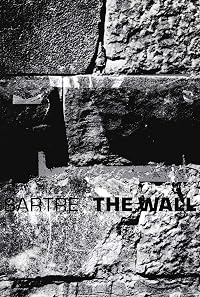
The Wall: (Intimacy) and Other Stories
by Jean-Paul Sartre
On This Page
Description
First published in 1939, a few years before his most influential works in theatre and philosophy, The Wall was Sartre's first and only collection of short fiction. The title piece tells the story of a prisoner during the Spanish Civil War, on the eve of his execution by a firing squad, who is told he will be spared if he can betray the whereabouts of a fellow Republican. This leads him to question his cause and his loyalty, as the mental torment that he and two other inmates endure unfolds show more in unflinching detail.This collection, which also includes 'The Room', 'Erostratus' and 'Intimacy' – short psychological tales in which individuals grapple with questions of madness, sexuality and death – as well as 'The Childhood of a Leader', the extended chronicle of a young man's emotional deterioration and embrace of Fascism, provides a fascinating and accessible introduction to the author who would become the figurehead of Existentialism.
. show less
Tags
Recommendations

























Member Recommendations
Member Reviews
'The Wall', the lead story in this collection, introduces three political prisoners on the night prior to their execution. Through the gaze of an impartial doctor--seemingly there for the men's solace--their mental descent is charted in exquisite, often harrowing detail. And as the morning draws inexorably closer, the men cross the psychological wall between life and death, long before the first shot rings out. This brilliant snapshot of life in anguish is the perfect introduction to a collection of stories where the neurosis of the modern world is mirrored in the lives of the people that inhabit it . This is an unexpurgated edition translated from the French by Lloyd Alexander.
“I wanted my own words. But the ones I use have been dragged through I don't know how many consciences.”
― Jean-Paul Sartre, The Wall
My focus is on one of the book's title piece - The Wall. This existentialist story has the feel of a film shot in stark black and white; the prose is as hard boiled as it gets and is told in first-person. The opening scene takes place in a large bare room with white walls where the narrator, Pablo Ibbieta, a man we can visualize with a thin, chiseled face, slick back hair and looking a bit like Albert Camus or Humphrey Bogart - a visualization in keeping with the tone of one of those 1940s black and white films - is interrogated, and, along with two other men, sentenced to be shot dead. The three show more condemned are taken to a cellar with bench and mats, a room shivering cold and without a trace of warmth or humanity. The story unfolds in this hard, dank, ugly cellar room. Absurdity and despair, anyone?
Sartre has us live through the evening and night with Pablo and the two other convicted men: Tom, who has a thick neck and is fat around the middle (Pablo imagines bullets or bayonets cutting into his flesh), and Juan, who is young and has done nothing, other than being the brother of someone wanted by the authorities. We watch as Pablo and Tom and Juan turn old and gray; we smell urine when Tom unconsciously wets his pants; we hear Tom speaking of men executed by being run over by trucks to save ammunition.
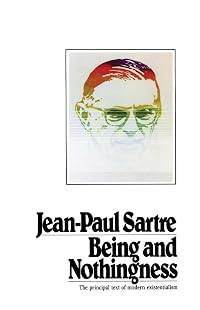
A doctor enters the room and offers cigarettes and asks if anyone wants a priest. No one answers. Pablo falls asleep and wakes, having no thought of death or fear - what he is confronting is nameless; his reaction is physical - his cheeks burn and his head aches. Meanwhile, the doctor, referred to as the Belgian by Pablo, takes Juan's pulse and writes in his notebook. All is clinical; all is calculating. The cold penetrates - the doctor looks blue. Pablo sees that he himself is drenched in sweat. Sartre has written philosophical works such as Being and Nothingness where he addresses the meaninglessness of life and the reality of death in conceptual terms but in this story his ideas are given flesh and blood.
The core of this story is all three men dealing with their own death. Juan sobs. Tom talks so he can recognize himself, that is, talk as a way of anchoring his sense of self in the world. He says something is going to happen he doesn't understand: death is a blank for Tom. And also for Pablo, who observes how the doctor entered the cellar to watch bodies, bodies dying in agony while still alive.
Pablo remembers living as if immortal and reflects he spent his life counterfeiting eternity, although he missed nothing, he understood nothing. Meanwhile, Tom touches the wooden bench as if touching death. Now that Pablo is looking at things through the lens of death, objects appear less dense - several hours or several years are all the same when you have lost the illusion of being eternal. Pablo feels a horrible calm, a distance from his body; his feeling of being with his body is as if he is tied to an enormous vermin. Feeling your body as an enormous vermin - how disgusting and alienating. Just in case you are wondering if this is existentialism, this is existentialism.
The Doctor lets everyone know it is 3:30. At the mention of the time, Juan loses it and become hysterical but Pablo simply wants to die cleanly. After some time, the guards come in and take away Tom and Juan. Pablo hears shots fired out in the yard and wants to scream, but rather grits his teeth and pushes his hands in his pockets to stay clean. What does it mean to die cleanly? We are not given anything more specific.
Pablo is taken to the first floor where he is given a chance to live by revealing the whereabouts of one Ramon Gris. What happens from this point offers a twist, a twist, that is, for a tale soaking in absurdity, dread, alienation and death. Please read The Wall. You will be chilled; you will have an existentialist experience, you just might laugh so hard at the end you will start to cry. show less
I bought this book about a year ago, when I was in the midst of ending a horrible short-lived relationship and felt rather existentialist, though I feel "rather existentialist" on a regular basis, so that's not saying much. The slim volume includes five short stories by Sartre, and of those The Childhood of a Leader is my favorite by far. I would suggest this as bedtime reading if you have a somber side, or else bathtub reading if you adopt a more cheerful attitude toward life.
My focus is on one of the book's five pieces - The Wall. This existentialist story has the feel of a film shot in stark black and white; the prose is as hard boiled as it gets, told in first-person. The opening scene takes place in a large bare room with white walls where the narrator, Pablo Ibbieta, a man we can visualize with a thin, chiseled face, slick back hair and looking a bit like Albert Camus or Humphrey Bogart - a visualization in keeping with the tone of black and white film - is interrogated, and, along with two other men, sentenced to be shot dead. The condemned are taken to a cellar with bench and mats, a room shivering cold and without a trace of warmth or humanity. The story unfolds here in the cellar room that's hard show more and dank and ugly. Absurdity and despair, anyone?
Sartre has us live through the evening and night with Pablo and the two other convicted men: Tom, who has a thick neck and is fat around the middle (Pablo imagines bullets or bayonets cutting into his flesh), and Juan, who is young and has done nothing, other than being the brother of someone wanted by the authorities. We watch as Pablo and Tom and Juan turn old and gray; we smell urine when Tom unconsciously wets his pants; we hear Tom saying how he heard men were executed by being run over by trucks to save ammunition.
A doctor enters the room and offers cigarettes and asks if anyone wants a priest. No one answers. Pablo falls asleep and wakes, having no thought of death or fear - what he is confronting is nameless; his reaction is physical - his cheeks burn and his head aches. Meanwhile, the doctor, referred to as the Belgian by Pablo, takes Juan's pulse and writes in his notebook. All is clinical; all is calculating. The cold penetrates - the doctor looks blue. Pablo sees that he himself is drenched in sweat. Sartre has written philosophical works such as Being and Nothingness where he deals with the meaninglessness of life and the reality of death in conceptual terms. In this story, his ideas are given flesh and blood.
The core of this story is everyone dealing with their own death. Tom talks so he can recognize himself --- talk as a way of anchoring his sense of self in the world. He says something is going to happen he doesn't understand: death is a blank for Tom. And also for Pablo, who observes the doctor entered the cellar to watch bodies, bodies dying in agony while still alive. Pablo remembers living as if immortal and reflects he spent his life counterfeiting eternity but he understood nothing although he missed nothing. Meanwhile, Tom touches the wooden bench as if touching death. Now that Pablo is looking at things through the lens of death, objects appear less dense -- several hours or several years are all the same when you have lost the illusion of being eternal. Pablo feels a horrible calm, a distance from his body; being with his body feels as if he is tied to an enormous vermin. Feeling your body as an enormous vermin - what disgust and alienation. Just in case you are wondering if this is existentialism - this is existentialism.
The Doctor lets everyone know it is 3:30. At the mention of the time, Juan loses it and become hysterical but Pablo simply wants to die cleanly. After some time, the guards come and take away Tom and Juan. Pablo hears shots fired out in the yard and wants to scream, but rather gritts his teeth and pushes his hands in his pockets to stay clean. What does it mean to die cleanly? We are not given anything more specific. Pablo is taken to the first floor where he is given a chance to live by revealing the whereabouts of one Ramon Gris. What happens from this point offers a twist, a twist, that is, for a tale soaking in absurdity, dread, alienation and death. Please order a copy of this book and read The Wall. You will be chilled; you will have an existentialist experience, you just might laugh so hard at the end you will start to cry. show less
Sartre has us live through the evening and night with Pablo and the two other convicted men: Tom, who has a thick neck and is fat around the middle (Pablo imagines bullets or bayonets cutting into his flesh), and Juan, who is young and has done nothing, other than being the brother of someone wanted by the authorities. We watch as Pablo and Tom and Juan turn old and gray; we smell urine when Tom unconsciously wets his pants; we hear Tom saying how he heard men were executed by being run over by trucks to save ammunition.
A doctor enters the room and offers cigarettes and asks if anyone wants a priest. No one answers. Pablo falls asleep and wakes, having no thought of death or fear - what he is confronting is nameless; his reaction is physical - his cheeks burn and his head aches. Meanwhile, the doctor, referred to as the Belgian by Pablo, takes Juan's pulse and writes in his notebook. All is clinical; all is calculating. The cold penetrates - the doctor looks blue. Pablo sees that he himself is drenched in sweat. Sartre has written philosophical works such as Being and Nothingness where he deals with the meaninglessness of life and the reality of death in conceptual terms. In this story, his ideas are given flesh and blood.
The core of this story is everyone dealing with their own death. Tom talks so he can recognize himself --- talk as a way of anchoring his sense of self in the world. He says something is going to happen he doesn't understand: death is a blank for Tom. And also for Pablo, who observes the doctor entered the cellar to watch bodies, bodies dying in agony while still alive. Pablo remembers living as if immortal and reflects he spent his life counterfeiting eternity but he understood nothing although he missed nothing. Meanwhile, Tom touches the wooden bench as if touching death. Now that Pablo is looking at things through the lens of death, objects appear less dense -- several hours or several years are all the same when you have lost the illusion of being eternal. Pablo feels a horrible calm, a distance from his body; being with his body feels as if he is tied to an enormous vermin. Feeling your body as an enormous vermin - what disgust and alienation. Just in case you are wondering if this is existentialism - this is existentialism.
The Doctor lets everyone know it is 3:30. At the mention of the time, Juan loses it and become hysterical but Pablo simply wants to die cleanly. After some time, the guards come and take away Tom and Juan. Pablo hears shots fired out in the yard and wants to scream, but rather gritts his teeth and pushes his hands in his pockets to stay clean. What does it mean to die cleanly? We are not given anything more specific. Pablo is taken to the first floor where he is given a chance to live by revealing the whereabouts of one Ramon Gris. What happens from this point offers a twist, a twist, that is, for a tale soaking in absurdity, dread, alienation and death. Please order a copy of this book and read The Wall. You will be chilled; you will have an existentialist experience, you just might laugh so hard at the end you will start to cry. show less
https://fromtheheartofeurope.eu/intimacy-aka-the-wall-by-jean-paul-sartre/
A collection of five short stories by the famous philosopher, two of which, the first and the last, are really good; “The Wall” is the story of a man condemned to death in the Spanish Civil War awaiting his execution, and “Childhood of a Leader” is the story of an authoritarian politician’s rise to power and abandonment of his emotional connections. I was not as overwhelmed by the others; “Intimacy” is a rather dull story about sex, and portrayal of a serial killer in “Erostratus” is not really in tune with today’s Zeitgeist. But the two good ones are very good.
A collection of five short stories by the famous philosopher, two of which, the first and the last, are really good; “The Wall” is the story of a man condemned to death in the Spanish Civil War awaiting his execution, and “Childhood of a Leader” is the story of an authoritarian politician’s rise to power and abandonment of his emotional connections. I was not as overwhelmed by the others; “Intimacy” is a rather dull story about sex, and portrayal of a serial killer in “Erostratus” is not really in tune with today’s Zeitgeist. But the two good ones are very good.
Sartre is a brilliant writer of fiction and this could have made up his career in another life. I loved these short stories, but the last, "The childhoold of a Leader", tracing the life of a fascist through his own memories, is a little unpleasant when the narrator is a child and then frightening when he is a young man and becomes a thoughtless, racist brute. It's almost too believable, except for the intelligence and awareness of its main character.
De muur (Le Mur) van Sartre is een bundeling van vijf novellen waar het eerste, gelijknamige, verhaal van iedereen te veel aandacht krijgt omdat het een vroeg voorbeeld van zijn existentialisme is. Dat zit voornamelijk in de climax, en hetgeen wat er in aanloop toe gebeurt is in vergelijking met de andere verhalen eigenlijk iets zwakker. Het tweede verhaal is prima, met het fantastische element als hoogtepunt. Het derde verhaal van de sigma loner is het best vertaald denk ik, en de spanning in het verhaal is goed verdeeld. Het vierde verhaal was een beetje verwarrend (komt misschien door vertaling, wie weet?) met de verteller die verandert van een personage naar auctoriaal en dat door een paragraaf heen totdat de vriendin het overneemt show more en dan over en weer tot het einde. Het laatste verhaal is het langste, ook het meest expliciete, over een jongen met complexen en een homoseksuele ervaring, wat uiteindelijk leidt naar een fascist die Joden in elkaar slaat (laatste zin: "Misschien moet ik maar een snor laten groeien" (1939)). De overgang naar jodenhatende Lucien (het desbetreffende hoofdpersonage) ging een beetje te snel wat het wat ongeloofwaardig laat voelen, zeker met dat hele begin over zijn onzekere jeugd waar joden niet genoemd worden? Ja, hij moet een leider zijn, oké, dan moet je dat maar op dé grote leider van 1939 (Time Person of the Year 1938) baseren. Prima. Grappig dat van de vijf verhalen, drie gedragen worden door mannelijke hoofdpersonen, en twee door vrouwen (die zich dan vooral over hun mannen bekommeren) en Sartre fopt ons even, door in het laatste verhaal de jongen ook vrouwelijke trekken te geven, een femboy als het ware, als culminatie! Helaas is de aloude conclusie nog steeds waar; van femboys komen fascisten. Algoeds. show less
Members
- Recently Added By
Lists

Best of French Literature
138 works; 27 members

20th Century Literature
1,161 works; 55 members

In or About the 1930s
198 works; 26 members

Nobel Price Winners
222 works; 20 members

Short and Sweet
246 works; 24 members

1930s
262 works; 5 members

Amanda's Guaranteed Books
110 works; 5 members
Existentialism
90 works; 11 members

Filosofía - Clásicos
217 works; 1 member

Mind Expanding Books by hackerkid
581 works; 8 members

Recommended Reading : 600 Classics Reviewed, Editors of Salem Press, 2015
634 works; 6 members

French Books
102 works; 15 members
Author Information

Sartre is the dominant figure in post-war French intellectual life. A graduate of the prestigious Ecole Normale Superieure with an agregation in philosophy, Sartre has been a major figure on the literary and philosophical scenes since the late 1930s. Widely known as an atheistic proponent of existentialism, he emphasized the priority of existence show more over preconceived essences and the importance of human freedom. In his first and best novel, Nausea (1938), Sartre contrasted the fluidity of human consciousness with the apparent solidity of external reality and satirized the hypocrisies and pretensions of bourgeois idealism. Sartre's theater is also highly ideological, emphasizing the importance of personal freedom and the commitment of the individual to social and political goals. His first play, The Flies (1943), was produced during the German occupation, despite its underlying message of defiance. One of his most popular plays is the one-act No Exit (1944), in which the traditional theological concept of hell is redefined in existentialist terms. In Red Gloves (Les Mains Sales) (1948), Sartre examines the pragmatic implications of the individual involved in political action through the mechanism of the Communist party and a changing historical situation. His highly readable autobiography, The Words (1964), tells of his childhood in an idealistic bourgeois Protestant family and of his subsequent rejection of his upbringing. Sartre has also made significant contributions to literary criticism in his 10-volume Situations (1947--72) and in works on Baudelaire, Genet, and Flaubert. In 1964 he was awarded the Nobel Prize in Literature and refused it, saying that he always declined official honors. (Bowker Author Biography) show less
Some Editions
Awards and Honors
Notable Lists
Series
Belongs to Publisher Series
Loomingu Raamatukogu 2011 (31-34)
Campaña Nacional Eugenio Espejo (Luna de Bolsillo)
Panther Books (1087)
A tot vent (192)
Gallimard, Folio (68-878)
Work Relationships
Common Knowledge
- Canonical title
- The Wall: Stories; The Wall: (Intimacy) and Other Stories (Intimacy)
- Original title
- Enfance d'un chef; Le Mur
- Alternate titles
- Intimacy, and other Stories
- Original publication date
- 1939
- Important places*
- Spanje
- Important events*
- Spaanse Burgeroorlog (1936 | 1939)
- Dedication
- To Olga Koszakiewicz
- First words
- Intimacy (Lloyd Alexander translation): Lulu slept naked because she liked to feel the sheets carressing her body and also because laundry was expensive.
Lulu slept naked because she liked the feel the sheets caressing her body and also because laundry was expensive.
The Wall (Lloyd Alexander translation): They pushed us into a big white room and I began to blink because the light hurt my eyes.
The Room (Lloyd Alexander translation): Mme Darbédat a rahat-loukoum between her fingers. She brought it carefully to her lips and held her breath, afraid that the fine dust of sugar that powdered it would blow away.
Erostratus (Lloyd Alexander translation): You really have to see men from above.
The Childhood of a Leader (Lloyd Alexander translation): "I look adorable in my little angel's costume." - Last words
- (Click to show. Warning: May contain spoilers.)Intimacy (Lloyd Alexander translation): She dropped Pierre's hand: without knowing why, she felt flooded with bitter regret.
(Click to show. Warning: May contain spoilers.)I'll kill you before that.
(Click to show. Warning: May contain spoilers.)The Wall (Lloyd Alexander translation): Everything began to spin and I found myself sitting on the ground: I laughed so hard I cried.
(Click to show. Warning: May contain spoilers.)The Room (Lloyd Alexander translation): Eve bent over Pierre's hand and pressed her lips against it: I'll kill you before that.
(Click to show. Warning: May contain spoilers.)Erostratus (Lloyd Alexander translation): I threw away the revolver and opened the door.
(Click to show. Warning: May contain spoilers.)The Childhood of a Leader (Lloyd Alexander translation): But the mirror only reflected a pretty , headstrong little face that was not yet terrible enough. "I'll grow a moustache", he decided. - Original language
- French
- Canonical DDC/MDS
- 843.91
- Canonical LCC
- PQ2637.A82
- Disambiguation notice
- 5 stories: Intimacy; The wall; The room; Erostratus; The childhood of a leader.
*Some information comes from Common Knowledge in other languages. Click "Edit" for more information.
Classifications
Statistics
- Members
- 3,052
- Popularity
- 5,814
- Reviews
- 32
- Rating
- (3.84)
- Languages
- 23 — Catalan, Czech, Danish, Dutch, English, Estonian, Finnish, French, German, Greek, Hebrew, Hungarian, Italian, Japanese, Norwegian, Farsi/Persian, Polish, Romanian, Russian, Spanish, Swedish, Turkish, Portuguese (Portugal)
- Media
- Paper, Ebook
- ISBNs
- 82
- UPCs
- 1
- ASINs
- 85