On This Page
Description
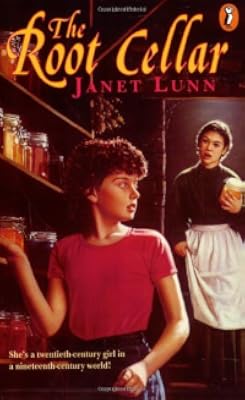
Twelve-year-old orphan Rose, sent to live with unknown relatives on a farm in Canada, ventures into her aunt's root cellar and finds herself making friends with people who lived on the farm more than a century earlier.Tags
Recommendations







Member Recommendations
Member Reviews
At one point in Janet Lunn's The Root Cellar - a time-slip adventure story first published in 1981, and considered a classic of modern Canadian children's literature - the heroine, Rose Larkin, lying in a quiet hospital room, recalling the terrible tales of war she had just been hearing that afternoon, and reflecting on the deep and lasting hurt inflicted by that war on the soldiers who had fought in it, even on those who had survived, reflects with heartfelt grief: "Being a person's too hard...it's just too hard."
That hardness, that difficulty in being a "person" - of not knowing where you belong, or where you should want to belong, or who you even are; of not understanding all the complicated forces at work in the world, forces that show more sometimes help, but often wound, and still being subject to them - is at the heart of this story of a contemporary twelve-year-old girl who, at the death of the grandmother who had raised her, goes to stay with her aunt, uncle and cousins on a small Canadian island just across Lake Ontario from New York state, and finds herself continually thrown back into the past, to the time of the American Civil War.
Rose's adventures in the past, as she befriends Susan Anderson and Will Morrissey, who once lived in the very house her aunt and uncle now own; her journey south with Susan to discover Will's fate, when he runs off to enlist in the Union Army (being American on his mother's side), come to feel more real to her than her life with Aunt Nan and Uncle Bob, and her four (boy) cousins. But is the past, with all its pull, all its reality, truly where she belongs? The process whereby Rose discovers the answer to that question, learning quite a bit about herself in the process - that she can be "mean" (ie: greedy), but also generous, that she can work hard, and, when occasion demands, fight for her rights - make for a story that is as entertaining as it is moving.
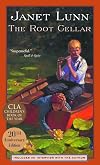
I really enjoyed The Root Cellar, a book I have been meaning to read for some time now, and am glad it was chosen as our October selection, over in the International Books Club to which I belong, where we are currently "visiting" Canada. I'm especially glad that I had the chance to read this commemorative edition, with lovely full-page color plate illustrations by Scott Cameron! All in all, a wonderful reading experience! More than enough to convince me that I need to read more of Janet Lunn... show less
That hardness, that difficulty in being a "person" - of not knowing where you belong, or where you should want to belong, or who you even are; of not understanding all the complicated forces at work in the world, forces that show more sometimes help, but often wound, and still being subject to them - is at the heart of this story of a contemporary twelve-year-old girl who, at the death of the grandmother who had raised her, goes to stay with her aunt, uncle and cousins on a small Canadian island just across Lake Ontario from New York state, and finds herself continually thrown back into the past, to the time of the American Civil War.
Rose's adventures in the past, as she befriends Susan Anderson and Will Morrissey, who once lived in the very house her aunt and uncle now own; her journey south with Susan to discover Will's fate, when he runs off to enlist in the Union Army (being American on his mother's side), come to feel more real to her than her life with Aunt Nan and Uncle Bob, and her four (boy) cousins. But is the past, with all its pull, all its reality, truly where she belongs? The process whereby Rose discovers the answer to that question, learning quite a bit about herself in the process - that she can be "mean" (ie: greedy), but also generous, that she can work hard, and, when occasion demands, fight for her rights - make for a story that is as entertaining as it is moving.
I really enjoyed The Root Cellar, a book I have been meaning to read for some time now, and am glad it was chosen as our October selection, over in the International Books Club to which I belong, where we are currently "visiting" Canada. I'm especially glad that I had the chance to read this commemorative edition, with lovely full-page color plate illustrations by Scott Cameron! All in all, a wonderful reading experience! More than enough to convince me that I need to read more of Janet Lunn... show less
The Root Cellar by Janet Lunn
The Root Cellar is a time-slip adventure first published in 1981, which is considered to be a classic of modern Canadian children's literature. Twelve-year-old Rose Larkin lost her parents in a car accident when she was only three years old. After that, she went to live with her wealthy but emotionally distant grandmother in New York. When her grandmother dies, Rose is sent to live with Aunt Nan, her husband and their four boys in a ramshackle and chaotic home near Lake Ontario in Canada.
Rose is miserable in her new home, partly due to the fact that she has no experience of communicating with other young people, and partly because the family's way of life seems so disorganized compared to that of her very show more prim grandmother.
Shortly after her arrival, Rose accidentally discovers an abandoned root cellar, and quickly realizes that if she steps inside at just the right moment, she will emerge in the middle of the nineteenth century. She meets a girl named Susan who works for the parents of a boy named Will Morrissay. Susan, Will and Rose enjoy a wonderful day together, and Rose feels she has found a place where she really belongs.
Rose returns briefly to her own time for three days, and then on returning to the past is shocked to discover that Susan has aged three years. Will has gone off to fight in the Civil War. By that time, the war has been over for some months, but Will has not returned, and Susan has not heard anything from or about him.
After doing some historical research in her own time, Rose returns to the past, and with Susan embarks on a trip to Washington, D.C. in an attempt to learn what has happened to Will. Since many people in Susan’s time naturally think Rose is a boy because of her short hair, she decides to dress like a boy to provide a little added protection on the trip.
The historical accuracy regarding the nineteenth-century environment and US Civil War is impressive. War in general is portrayed in a very realistic way, and an antiwar and anti-nationalist message is conveyed persuasively through the comments of disillusioned soldiers and the descriptions of their circumstances.
The journey changes Rose from being a self-absorbed girl who looked down on her country-bumpkin relatives into a brave and empathetic young woman. In this way, the book is as much about what it means to be an individual as it is about time travel or history. To quote the book itself:
She remembered that she had thought about marrying Will. She thought about Susan, who wanted only one thing, to have Will home, and about her own self not really knowing what she wanted or even who she was. “Being a person’s too hard,” she thought. “It’s just too hard.”
Indeed, a major theme running throughout this story is the difficulty of not knowing where you belong or even who you are as an individual, and not being able to comprehend all of the factors at play in the world, factors that might occasionally serve to your benefit, but which just as often could bring you harm.
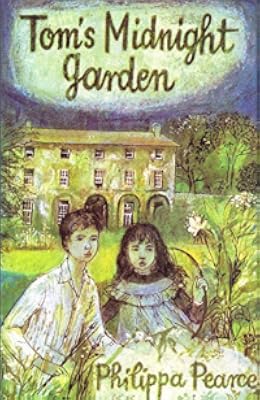
As with other successful works about time travel, for example Tom’s Midnight Garden, much of the poignancy is saved until the end, where all the threads of the story are drawn together and the full significance for the protagonist becomes clear.
Eventually, through experiences both joyful and heartbreaking, Rose comes to understand what is most important, and to know what she wants and where she belongs. All this makes for an emotionally satisfying conclusion.
“Susan,” she whispered, “it’s true. Being a person is very hard.” And she heard, like an echo in her head, “That’s so, Rose,” and could not help smiling.
show less
The Root Cellar is a time-slip adventure first published in 1981, which is considered to be a classic of modern Canadian children's literature. Twelve-year-old Rose Larkin lost her parents in a car accident when she was only three years old. After that, she went to live with her wealthy but emotionally distant grandmother in New York. When her grandmother dies, Rose is sent to live with Aunt Nan, her husband and their four boys in a ramshackle and chaotic home near Lake Ontario in Canada.
Rose is miserable in her new home, partly due to the fact that she has no experience of communicating with other young people, and partly because the family's way of life seems so disorganized compared to that of her very show more prim grandmother.
Shortly after her arrival, Rose accidentally discovers an abandoned root cellar, and quickly realizes that if she steps inside at just the right moment, she will emerge in the middle of the nineteenth century. She meets a girl named Susan who works for the parents of a boy named Will Morrissay. Susan, Will and Rose enjoy a wonderful day together, and Rose feels she has found a place where she really belongs.
Rose returns briefly to her own time for three days, and then on returning to the past is shocked to discover that Susan has aged three years. Will has gone off to fight in the Civil War. By that time, the war has been over for some months, but Will has not returned, and Susan has not heard anything from or about him.
After doing some historical research in her own time, Rose returns to the past, and with Susan embarks on a trip to Washington, D.C. in an attempt to learn what has happened to Will. Since many people in Susan’s time naturally think Rose is a boy because of her short hair, she decides to dress like a boy to provide a little added protection on the trip.
The historical accuracy regarding the nineteenth-century environment and US Civil War is impressive. War in general is portrayed in a very realistic way, and an antiwar and anti-nationalist message is conveyed persuasively through the comments of disillusioned soldiers and the descriptions of their circumstances.
The journey changes Rose from being a self-absorbed girl who looked down on her country-bumpkin relatives into a brave and empathetic young woman. In this way, the book is as much about what it means to be an individual as it is about time travel or history. To quote the book itself:
She remembered that she had thought about marrying Will. She thought about Susan, who wanted only one thing, to have Will home, and about her own self not really knowing what she wanted or even who she was. “Being a person’s too hard,” she thought. “It’s just too hard.”
Indeed, a major theme running throughout this story is the difficulty of not knowing where you belong or even who you are as an individual, and not being able to comprehend all of the factors at play in the world, factors that might occasionally serve to your benefit, but which just as often could bring you harm.
As with other successful works about time travel, for example Tom’s Midnight Garden, much of the poignancy is saved until the end, where all the threads of the story are drawn together and the full significance for the protagonist becomes clear.
Eventually, through experiences both joyful and heartbreaking, Rose comes to understand what is most important, and to know what she wants and where she belongs. All this makes for an emotionally satisfying conclusion.
“Susan,” she whispered, “it’s true. Being a person is very hard.” And she heard, like an echo in her head, “That’s so, Rose,” and could not help smiling.
show less
Interesting book. It handles time travel better than a lot of books - even if it did it mostly by carefully not describing, say, Rose's first encounter with having to haul water from a well to wash dishes. Or with an outhouse (before toilet paper). And the lack of reaction to a girl wearing trousers, from various people. Still, Rose's journey from isolated and badly-socialized child to someone willing to connect with others is nicely handled. I expected them to end up being her ancestors, but no, not quite. There's some horrific (though not detailed) descriptions of Civil War hospitals. The timelines are...interesting; Rose's first encounter with the past is possibly the last from the other end (though the Christmas dinner may have come show more after, hard to tell). And the way Rose skips around in her visits, too. It was interesting, definitely worth reading, possibly worth rereading. show less
I have always thought I read this book in the 5th grade but from looking at the inside cover, where I wrote my name and information, it was 8th grade. Either way, I remember this being the first book that really moved me. I remember finishing this book in the kitchen and bawling at it's ending ... and my Mom not understanding why I was crying so over a foolish book. (She was never a reader.) Because of how this book moved me to tears and my Mom not understanding why, I rarely read afterwards.
It's more than 20 years later and I'll be rereading it again :-)
Edit: Better than I remember :-) and I still cried at the end — did not bawl this time though :-). Definitely a keeper
It's more than 20 years later and I'll be rereading it again :-)
Edit: Better than I remember :-) and I still cried at the end — did not bawl this time though :-). Definitely a keeper
Read on OpenLibrary for Children's Books here:
https://www.goodreads.com/topic/show/21918055-may-2021-time-travel?page=1
Well, I am done. I appreciated it much more this time than I recall doing so several years ago, elsewhere in this group iirc. But I can't quite say I actually enjoyed it. Not sure why. Maybe just being an adult, rather burnt out on juv. historical fiction. Maybe not being fond of the ghostly appearances... it seems to me that the (not completely logical) time slip was sufficient for 'suspension of disbelief.'
But Rose's adventures are adventurous indeed! I imagine some youngsters would thrill to see this setting through her eyes, and would find the educational history pretty painless. Especially interesting was having show more Rose, with her short hair, passing as a young boy, and being expected to do nearly a man's work. show less
https://www.goodreads.com/topic/show/21918055-may-2021-time-travel?page=1
Well, I am done. I appreciated it much more this time than I recall doing so several years ago, elsewhere in this group iirc. But I can't quite say I actually enjoyed it. Not sure why. Maybe just being an adult, rather burnt out on juv. historical fiction. Maybe not being fond of the ghostly appearances... it seems to me that the (not completely logical) time slip was sufficient for 'suspension of disbelief.'
But Rose's adventures are adventurous indeed! I imagine some youngsters would thrill to see this setting through her eyes, and would find the educational history pretty painless. Especially interesting was having show more Rose, with her short hair, passing as a young boy, and being expected to do nearly a man's work. show less
2.5 stars. This review is also available on my blog, Read Till Dawn.
I feel like I would have liked this one a lot better if I'd read it for the first time when I was younger.
It's not so much that it's geared for younger kids (in fact, it's kind of too gruesome for little children), but that the plot feels sort of . . . wobbly. On one hand it's a really cool concept, and it imparts a lot of history without being too painful, but on the other it relies on unrealistic characters and events to carry it on its way.
Rose is the worst offender when it comes to being an unrealistic character. She is, to put it in a single word, unpredictable. And not in the cool, the-author-did-this-on-purpose sort of way. No, she just up and completely changes show more halfway through the book for no reason other than "she went back in time, so she suddenly went from being an inhibited, emotionally-constrained doll-like girl to a headstrong, determined firecracker with a strong mind of her own." It's not that I dislike either side of her character, but I just don't like the way she so radically changes with no real impetus.
The other main thing I found confusing about the book was that it was set in Canada . . . but was about the American Civil War. And by the end, when I'd figured everything out, it was a really cool angle - I'd never known that Canadians came to fight in the war! - but it took me way too long to figure out the basic facts: that Rose is American, and that she's living with her relatives in Canada near the American-Canadian border. For a while, I honestly thought that Rose was Canadian and her relatives were the Americans. I think part of that confusion comes from the fact that Lunn grew up in America, but moved to Canada at eighteen and lived the rest of her life there: there's no real sense of an American identity for Rose to contrast against that of her relatives from Canada, because the author was a member of both countries and didn't herself differentiate between the two. That must be it, because that's the only reason I can think of for the rather muddled distinction between the two nationalities.
I did enjoy the book, though - it was a good feel-good read (except for the gruesome battle descriptions, of course). I can't see myself going out of my way to recommend it in the future, but I'm sure there are some readers out there who would be perfect for this odd little time-travel novel. When I meet one I will happily hand over my copy of the book, and probably forget entirely about it the next day. show less
I feel like I would have liked this one a lot better if I'd read it for the first time when I was younger.
It's not so much that it's geared for younger kids (in fact, it's kind of too gruesome for little children), but that the plot feels sort of . . . wobbly. On one hand it's a really cool concept, and it imparts a lot of history without being too painful, but on the other it relies on unrealistic characters and events to carry it on its way.
Rose is the worst offender when it comes to being an unrealistic character. She is, to put it in a single word, unpredictable. And not in the cool, the-author-did-this-on-purpose sort of way. No, she just up and completely changes show more halfway through the book for no reason other than "she went back in time, so she suddenly went from being an inhibited, emotionally-constrained doll-like girl to a headstrong, determined firecracker with a strong mind of her own." It's not that I dislike either side of her character, but I just don't like the way she so radically changes with no real impetus.
The other main thing I found confusing about the book was that it was set in Canada . . . but was about the American Civil War. And by the end, when I'd figured everything out, it was a really cool angle - I'd never known that Canadians came to fight in the war! - but it took me way too long to figure out the basic facts: that Rose is American, and that she's living with her relatives in Canada near the American-Canadian border. For a while, I honestly thought that Rose was Canadian and her relatives were the Americans. I think part of that confusion comes from the fact that Lunn grew up in America, but moved to Canada at eighteen and lived the rest of her life there: there's no real sense of an American identity for Rose to contrast against that of her relatives from Canada, because the author was a member of both countries and didn't herself differentiate between the two. That must be it, because that's the only reason I can think of for the rather muddled distinction between the two nationalities.
I did enjoy the book, though - it was a good feel-good read (except for the gruesome battle descriptions, of course). I can't see myself going out of my way to recommend it in the future, but I'm sure there are some readers out there who would be perfect for this odd little time-travel novel. When I meet one I will happily hand over my copy of the book, and probably forget entirely about it the next day. show less
I had a hard time getting into this time slip book - I had no trouble putting it down for days at a time. Rose Larkin is used to being an orphan, carried about by her eccentric and cold grandmother. When her grandmother dies, she is sent to live with a houseful of cousins. She immediately get off on the wrong foot with the family, and when she manages to periodically visit the 1860's through an old root cellar, Rose believes that that is the place she was really meant to live.
In the 1860's Rose makes friends, Will and Susan, but her happiness there is broken when Will goes off to join the American Civil War. When the war is over, and Will hasn't returned, Rose and Susan travel from Ontario to try and find him.
Rose isn't a very likeable show more character, and I never warmed to her. I though she was a brat, to the very end of the story. She compares herself to the heroine of The Secret Garden at one point, but unlike Mary Lennox, Rose doesn't become charming as the story progresses.
I'd give this to fans f historical stories, time slip stories, or stories about the US Civil War. show less
In the 1860's Rose makes friends, Will and Susan, but her happiness there is broken when Will goes off to join the American Civil War. When the war is over, and Will hasn't returned, Rose and Susan travel from Ontario to try and find him.
Rose isn't a very likeable show more character, and I never warmed to her. I though she was a brat, to the very end of the story. She compares herself to the heroine of The Secret Garden at one point, but unlike Mary Lennox, Rose doesn't become charming as the story progresses.
I'd give this to fans f historical stories, time slip stories, or stories about the US Civil War. show less
Members
- Recently Added By
Lists

Best Time Travel Novels
165 works; 125 members

Time travel, historical fiction -- children's/young adult fiction
94 works; 8 members

Time travel -- children's/young adult fiction
231 works; 11 members

Books Read in 2016
4,666 works; 197 members

al.vick-wishlist-YA
127 works; 3 members

2025 Books
19 works; 1 member
Talk Discussions
Past Discussions
Found: Time travel (I think) book where I remember the cover in Name that Book (April 2025)
Found: Time travel (I think) book where I remember the cover in Name that Book (April 2025)
Author Information

21+ Works 2,368 Members
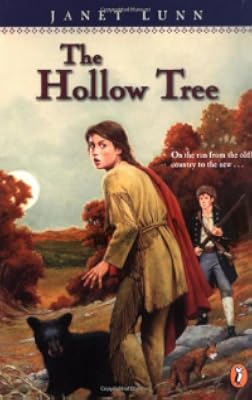
Janet Lunn was born in Dallas, Texas on December 28, 1928. She attended Queen's University in Kingston, Ontario, Canada. Her first book, Double Spell, was published in 1968. Her other books include The Root Cellar, Come to the Fair, and Shadow in Hawthorn Bay. The Hollow Tree received the Governor General's Literary Award in 1998 and The Story of show more Canada written with Christopher Moore received a Mr. Christie's Book Award in 1993. She also received the Canadian Authors Association's Vicki Metcalf Award for Body of Work and The Writer's Trust of Canada's Matt Cohen Award in Celebration of a Writing Life. She died on June 26, 2017 at the age of 88. (Bowker Author Biography) show less
Some Editions
Awards and Honors
Awards
Notable Lists
Series

Common Knowledge
- Original publication date
- 1981
- People/Characters
- Rose Larkin; Will Morrissay; Susan Anderson
- Important places
- Prince Edward County, Ontario, Canada
- Important events
- American Civil War
- Dedication
- To Richard, who has always known the island and the bay, this book is lovingly dedicated.
J.L.
I dedicate this book to Shari Rattle
S.C. - First words
- It was a cold wet afternoon in October when Rose Larkin came to live in the house at Hawthorn Bay.
- Last words
- (Click to show. Warning: May contain spoilers.)But, in the years that followed, Rose thought she saw shadows, and often she felt their presence - especially in the spring when the lilacs and the apples were in blossom.
Classifications
- Genres
- Fiction and Literature, Children's Books, Kids
- DDC/MDS
- 813.54 — Literature & rhetoric American literature in English American fiction in English 1900-1999 1945-1999
- LCC
- PZ7 .L97912 .R — Language and Literature Fiction and juvenile belles lettres Fiction and juvenile belles lettres Juvenile belles lettres
- BISAC
Statistics
- Members
- 671
- Popularity
- 42,796
- Reviews
- 15
- Rating
- (3.93)
- Languages
- English, French, Swedish
- Media
- Paper, Ebook
- ISBNs
- 21
- ASINs
- 4