On This Page
Description
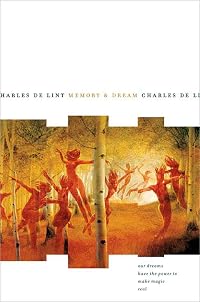
Isabelle Copley, as the young student of the cruel, brilliant artist Vincent Rushkin, discovered that she could paint images so vividly real they brought her wildest fantasies to life. But when the forces she unleashed brought tragedy to those she loved, she turned her back on her talent and her dreams. Now, twenty years later, Isabelle must come to terms with the shattering memories she has long denied and unlock the slumbering power of her brush. This is a tale of love, courage, and the show more transforming power of imagination. show lessTags
Recommendations















Member Recommendations
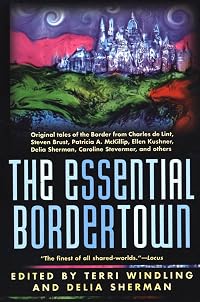
Kerian Memory and Dream takes place before Dreams Underfoot. A difference is that it's a novel versus a collection of short stories. If you wish to continue with short stories in this series, The Ivory and the Horn is the next short story collection.
40

Member Reviews
As the young student of the brilliant Vincent Rushkin, Isabelle Copley discovered she could paint images so real they brought her dreams to life. But when the forces she unleashed brought tragedy to those she loved, she turned her back on her talent - and on those dreams. Now, twenty years later, Isabelle must come to terms with the memories she has long denied, and unlock the power of her brush. And, in a dark reckoning with her old master, she must find the courage to live out her dreams, and bring the magic back to life.
I think I spent just about this entire book wondering exactly how unreliable our unreliable narrator is...and I think that’s fascinating. How much of this can be chalked up to influence, or to mental illness, or show more simply her humanity? Because Isabelle truly is very flawed -- she’s a pushover, she’s the archetypical abuse survivor before realizing she’s being abused, she makes excuses and finds ways to make things her fault. She chews on things in her anxiety until they lose all meaning. We have no idea how much to trust her, because her own friends wonder at her motives and actions and if she truly did things she claims she didn’t.
A story that brings the concept of 'creating our own reality' to life -- and that truth is only the story we tell ourselves. show less
I think I spent just about this entire book wondering exactly how unreliable our unreliable narrator is...and I think that’s fascinating. How much of this can be chalked up to influence, or to mental illness, or show more simply her humanity? Because Isabelle truly is very flawed -- she’s a pushover, she’s the archetypical abuse survivor before realizing she’s being abused, she makes excuses and finds ways to make things her fault. She chews on things in her anxiety until they lose all meaning. We have no idea how much to trust her, because her own friends wonder at her motives and actions and if she truly did things she claims she didn’t.
A story that brings the concept of 'creating our own reality' to life -- and that truth is only the story we tell ourselves. show less
I keep reading de Lint's books, and almost loving them. But I never quite do. I spent some time today thinking about why, and I think it's that, although I like the type of people he tends to feature as characters, and I tend to agree with many of his themes, I think that what he wants to "say" comes before his actual story.
Some books, one feels that the action springs from the characters and who they are - in de Lint's, I feel that he's almost walking them through it.
"Memory and Dream" is about a young art student who meets a famous, reclusive artist. He becomes her mentor - but is also controlling and abusive. But - he teaches her a technique of painting that allows her to open a gateway through her paintings, allowing creatures of show more magic to "step through" and take physical form in our world.
Years later, she has rejected this ability - and through both memories and illusions, we see the story of why - in a tale that involves her best friend's death, friends estranged, hidden child abuse, and a foundation to help troubled kids through art... but also magical beings.
When, five years after her friend's death, a letter that was delayed in the mail arrives, a chain of events is set in motion that will bring all of both the magic and trauma of the past back to be dealt with, and she will realize evil secrets may be deeper than she ever knew.
Actually, that seems to be one of de Lint's themes that I disagree with. If I recall correctly, "Forests of the Heart" had a similar thing going on - someone that people always made excuses for, but who turned out to be PURE EVIL. de Lint seems to be hinting that there isn't such a thing as a flawed person, with both bad and good in them - it's either good or evil, and what people do is just kid themselves that these people aren't really evil. And moreover, I feels there's an agenda behind the writing, to encourage readers to kick those flawed, depressed or controlling/manipulative/abusive people out of their lives. Not that I'm saying that people shouldn't ditch such people - but I think one can recognize an unhealthy relationship without going to the "PURE EVIL!" extreme.
When all the characters fall into "types" (artistic but emotionally sensitive/gullible student, abusive and powerful mentor, rape victim, child abuse victim, well-meaning and kind black social worker, honorable and justice-seeking Native American, good-at-heart gang members, troubled children who are victims of society, etc) it begins to feel a little preachy, and a little idealistic. In this book, I didn't just feel like I was reading a story about people who wanted to run a non-profit agency to help street kids, I felt like I was being exhorted to donate time and money to such charities.
I think the reason for this is that although such "troubled kids" appear in the book, none of them make more than two-dimensional, cameo appearances. It gives the feeling of do-gooders proffering charity, rather than offering insight into what it might be like to grow up on the streets. The brief flashback into the abused character's being forced into child porn really didn't ring true, either...
Hmm. I'm sounding a little harsh now. I did actually like this book. I've read a lot of de Lint's books, and I'll read more. I like the way he meshes magic with a 'modern bohemian' setting. But a message is more effective when more subtly given... show less
Some books, one feels that the action springs from the characters and who they are - in de Lint's, I feel that he's almost walking them through it.
"Memory and Dream" is about a young art student who meets a famous, reclusive artist. He becomes her mentor - but is also controlling and abusive. But - he teaches her a technique of painting that allows her to open a gateway through her paintings, allowing creatures of show more magic to "step through" and take physical form in our world.
Years later, she has rejected this ability - and through both memories and illusions, we see the story of why - in a tale that involves her best friend's death, friends estranged, hidden child abuse, and a foundation to help troubled kids through art... but also magical beings.
When, five years after her friend's death, a letter that was delayed in the mail arrives, a chain of events is set in motion that will bring all of both the magic and trauma of the past back to be dealt with, and she will realize evil secrets may be deeper than she ever knew.
Actually, that seems to be one of de Lint's themes that I disagree with. If I recall correctly, "Forests of the Heart" had a similar thing going on - someone that people always made excuses for, but who turned out to be PURE EVIL. de Lint seems to be hinting that there isn't such a thing as a flawed person, with both bad and good in them - it's either good or evil, and what people do is just kid themselves that these people aren't really evil. And moreover, I feels there's an agenda behind the writing, to encourage readers to kick those flawed, depressed or controlling/manipulative/abusive people out of their lives. Not that I'm saying that people shouldn't ditch such people - but I think one can recognize an unhealthy relationship without going to the "PURE EVIL!" extreme.
When all the characters fall into "types" (artistic but emotionally sensitive/gullible student, abusive and powerful mentor, rape victim, child abuse victim, well-meaning and kind black social worker, honorable and justice-seeking Native American, good-at-heart gang members, troubled children who are victims of society, etc) it begins to feel a little preachy, and a little idealistic. In this book, I didn't just feel like I was reading a story about people who wanted to run a non-profit agency to help street kids, I felt like I was being exhorted to donate time and money to such charities.
I think the reason for this is that although such "troubled kids" appear in the book, none of them make more than two-dimensional, cameo appearances. It gives the feeling of do-gooders proffering charity, rather than offering insight into what it might be like to grow up on the streets. The brief flashback into the abused character's being forced into child porn really didn't ring true, either...
Hmm. I'm sounding a little harsh now. I did actually like this book. I've read a lot of de Lint's books, and I'll read more. I like the way he meshes magic with a 'modern bohemian' setting. But a message is more effective when more subtly given... show less
I found my notes & review for this, and while it's interesting to read through the notes to see how negatively I reacted to this, I think I'll just pull out the more complete portions.
This is a really difficult book to read. I don't think I can overstate that, because this series is looked at with such a love of magic and almost whimsy. I know readers know better, I remember other installments, but this is a very long drawn out story of abuse that is terrifying to read. I think I hate this book? I mean I hate these characters and their choices and justifications. I hate that this is a plotline for entertainment.
Here's the thing... he is good and insightful about real life. I do love his ideas and world-building. I do think this is an show more important journey for the character. But god damn this is a long story with scene after scene of abuse that like we're just supposed to swallow? With this caricature of a Russian bad guy? And as concerned as she is for these fantastic creatures, there is no care whatsoever for his other human victims. Just a throwaway after-the-fact line. Maybe it's a failing of my own empathy. Because I don't like this character. But more than that, for 300 pages, she learns nothing. Nothing.
And I fundamentally don't understand why she keeps making the same choices. I know she's young, and maybe if I'd read this at publication I would have more sympathy, but I don't think so. That would have been incomprehensible to me at that age as well.
Maybe it's that I'd just listened to a conversation about a Polansky film, and got mad all over about how our society responded to him for literal decades. All this discussion about art and artists, and we don't address everyone just allowing Rushkin to continue. show less
This is a really difficult book to read. I don't think I can overstate that, because this series is looked at with such a love of magic and almost whimsy. I know readers know better, I remember other installments, but this is a very long drawn out story of abuse that is terrifying to read. I think I hate this book? I mean I hate these characters and their choices and justifications. I hate that this is a plotline for entertainment.
Here's the thing... he is good and insightful about real life. I do love his ideas and world-building. I do think this is an show more important journey for the character. But god damn this is a long story with scene after scene of abuse that like we're just supposed to swallow? With this caricature of a Russian bad guy? And as concerned as she is for these fantastic creatures, there is no care whatsoever for his other human victims. Just a throwaway after-the-fact line. Maybe it's a failing of my own empathy. Because I don't like this character. But more than that, for 300 pages, she learns nothing. Nothing.
And I fundamentally don't understand why she keeps making the same choices. I know she's young, and maybe if I'd read this at publication I would have more sympathy, but I don't think so. That would have been incomprehensible to me at that age as well.
Maybe it's that I'd just listened to a conversation about a Polansky film, and got mad all over about how our society responded to him for literal decades. All this discussion about art and artists, and we don't address everyone just allowing Rushkin to continue. show less
I've really enjoyed the Newford books I've read before, so I do want to continue with the series and read more. However, this one hit a bit differently than the others I've read before. It felt more intense and less surreal and magical than the others, to the point where about 50-60% of the way through I started to question whether or not it was TOO intense for me. I ended up deciding to switch from the audiobook to the ebook at 68% so that I had a better control over my reading experience. Nothing against the narration; Kate Reading did a great job. But just as I dislike listening to sex scenes (and so I don't listen to Romance audiobooks) I had a lot of trouble listening to some of the more intense scenes of this book.
I enjoyed this show more book, especially the discussions about how fiction and art reflect reality and show truths that we might not otherwise be willing to accept. It was also really interesting to see the different discussions about how art is created; I don't have any personal experience with visual art, but it was fascinating to read about and it was obvious that de Lint has some experience with painting. (Which was confirmed in the afterword in my copy of the ebook.)
All of the various CWs in this book prevented this from being a favorite read for me. I enjoyed it, but it's definitely my least favorite of the Newford books so far. My favorite parts of the series so far have always been the creative ways that de Lint combines reality with fantasy. This book does a wonderful job of that as well—the numena and how Izzy is able to paint gateways for otherworldly creatures to come to our world is very creative and a delightful concept—but for me the magical aspect gets pretty overshadowed by the real world darkness. I still enjoyed the book a lot, but I don't know how often (if ever) I will reread this one.
I did like this book, but the CWs make it hard for me to recommend it. I'm definitely glad that this was not the first Newford book that I read, because if it had been I don't know that I would have ever picked up a second book. As it is, this will definitely make me hesitate to buy any additional audiobooks. (I do already own some other Newford audiobooks, but I won't be buying any more until I have a chance to listen to the ones I own.) This would be a good book for visual artists who are also urban fantasy fans and aren't sensitive to the CWs, but the CWs are heavy enough that they will temper any discussion I have about the book. I look forward to returning to other books in the Newford series though, so that I can see more of de Lint's magic without (hopefully) so much dark content.
CW: suicide, sexual assault, physical abuse, gaslighting, arson, death/murder, drug use (via secretly spiked punch) show less
I enjoyed this show more book, especially the discussions about how fiction and art reflect reality and show truths that we might not otherwise be willing to accept. It was also really interesting to see the different discussions about how art is created; I don't have any personal experience with visual art, but it was fascinating to read about and it was obvious that de Lint has some experience with painting. (Which was confirmed in the afterword in my copy of the ebook.)
All of the various CWs in this book prevented this from being a favorite read for me. I enjoyed it, but it's definitely my least favorite of the Newford books so far. My favorite parts of the series so far have always been the creative ways that de Lint combines reality with fantasy. This book does a wonderful job of that as well—the numena and how Izzy is able to paint gateways for otherworldly creatures to come to our world is very creative and a delightful concept—but for me the magical aspect gets pretty overshadowed by the real world darkness. I still enjoyed the book a lot, but I don't know how often (if ever) I will reread this one.
I did like this book, but the CWs make it hard for me to recommend it. I'm definitely glad that this was not the first Newford book that I read, because if it had been I don't know that I would have ever picked up a second book. As it is, this will definitely make me hesitate to buy any additional audiobooks. (I do already own some other Newford audiobooks, but I won't be buying any more until I have a chance to listen to the ones I own.) This would be a good book for visual artists who are also urban fantasy fans and aren't sensitive to the CWs, but the CWs are heavy enough that they will temper any discussion I have about the book. I look forward to returning to other books in the Newford series though, so that I can see more of de Lint's magic without (hopefully) so much dark content.
CW: suicide, sexual assault, physical abuse, gaslighting, arson, death/murder, drug use (via secretly spiked punch) show less
Izzy Copley is a college student majoring in art when she first meets world-famous artist Vincent Rushkin. She feels unworthy when he chooses to start teaching her his secrets.
There's a reason that he's so secretive. He has a nasty temper and he frequently lashes out at Izzy, both verbally and physically. She's so in awe of him that she lets him get away with it. He finally teaches her the real secret to his work. Each painting is like a doorway to another world, allowing the subject of the painting to take physical shape in our world and stroll around on our streets. Izzy is breathless at the thought. She's delighted when she sees figures that previously only existed in her imagination living their lives on the streets of Newford. And show more then Rushkin shows her exactly how monstrous he can be.
If I'm trying to be objective on this re-read, Memory and Dream is probably 4 to 4.5 stars. But for sheer nostalgia, I'm bumping it up to 5.
This was not my first de Lint book but it was definitely an early one. I was working at my little local library as a high school senior, re-shelving books, when I discovered him. The covers (all three that the library owned anyway) caught my eye so I took one home. I'm pretty sure Spiritwalk was the first. I think this was the second. And I can still see why I've been in love with de Lint's work ever since. A 16-17 year relationship. We're on the record books at this point!
I would consider this to be the first real Newford novel despite the fact that it's technically number five. The initial book, Dreams Underfoot, is a solid start but as a short story collection, it just teased me with wanting more. The next three books are darker than most of de Lint's other work and I consider them outliers. But then comes Memory and Dream.
On this ordered re-read I've undertaken, I am thoroughly enjoying re-visiting my favorite characters when they're so much younger. We've aged together. Crazy to say? Probably. But it feels true. Jilly is only on the fringe of things, as is usual for her, but I love seeing her as a struggling artist/college student painting in Professor Dapple's studio. Geordie barely shows up but he's there, providing the soundtrack in the end. There are a couple of more but my heart really belongs to Jilly and Geordie. I don't recall coming across Cosette in any other books but she reminds me of The Crow Girls and I love her for the association. I love her for herself too though.
Reminiscing aside, this truly is solid, absorbing fantasy. de Lint was one of the first urban fantasy authors and I found him more than ten years before I'd ever heard of the genre. I loved the way that he wove such magical stories into the fabric of what appears to be a generic North American city. For a country girl with no real desire to head to the big city, finding magic on the streets was remarkable. The city is where gangs are and murders and rapes and muggings happen. Yet here are these tales that have so much mystery and wonder in them. Don't get me wrong; there's plenty of darkness too. But it's easy for me to look wide-eyed at the magic and forget the rest.
The appeal of Memory & Dream is the same as it always is for me--the strong cast of characters. Within pages of starting a de Lint book, I feel like I've met new friends or I'm visiting with old ones. Isabelle is not really one of my favorite characters for a couple of reasons, but I still really like her and would like to be in her circle. She spends a little too much time dithering and re-writing events to suit herself but I do completely understand where she's coming from. When she's just being herself, she's intelligent and caring and fun and talented. I want her friends to be my friends. I want to see her paintings and catch a glimpse of her numena out of the corner of my eye. I want to know Cosette and Rosalind and Annie Nin. I want to experience the trustworthy solidness of John Sweetgrass. I want to catch a glimpse of the shy little treeskin, Paddyjack, as he creates his primitive art and music. I want to see leonine Grace in all her rampant beauty. de Lint's descriptions of these fantastic characters fires my imagination. I'm left pondering which figures from paintings I would like to see step out from their canvases. Which characters from books I might call forth and the conversations and fun we might have. That is the magic de Lint calls forth for me with this book. If you want a piece of the magic too, pick this up and give it a try. You won't view art of any kind in the same way ever again. show less
There's a reason that he's so secretive. He has a nasty temper and he frequently lashes out at Izzy, both verbally and physically. She's so in awe of him that she lets him get away with it. He finally teaches her the real secret to his work. Each painting is like a doorway to another world, allowing the subject of the painting to take physical shape in our world and stroll around on our streets. Izzy is breathless at the thought. She's delighted when she sees figures that previously only existed in her imagination living their lives on the streets of Newford. And show more then Rushkin shows her exactly how monstrous he can be.
If I'm trying to be objective on this re-read, Memory and Dream is probably 4 to 4.5 stars. But for sheer nostalgia, I'm bumping it up to 5.
This was not my first de Lint book but it was definitely an early one. I was working at my little local library as a high school senior, re-shelving books, when I discovered him. The covers (all three that the library owned anyway) caught my eye so I took one home. I'm pretty sure Spiritwalk was the first. I think this was the second. And I can still see why I've been in love with de Lint's work ever since. A 16-17 year relationship. We're on the record books at this point!
I would consider this to be the first real Newford novel despite the fact that it's technically number five. The initial book, Dreams Underfoot, is a solid start but as a short story collection, it just teased me with wanting more. The next three books are darker than most of de Lint's other work and I consider them outliers. But then comes Memory and Dream.
On this ordered re-read I've undertaken, I am thoroughly enjoying re-visiting my favorite characters when they're so much younger. We've aged together. Crazy to say? Probably. But it feels true. Jilly is only on the fringe of things, as is usual for her, but I love seeing her as a struggling artist/college student painting in Professor Dapple's studio. Geordie barely shows up but he's there, providing the soundtrack in the end. There are a couple of more but my heart really belongs to Jilly and Geordie. I don't recall coming across Cosette in any other books but she reminds me of The Crow Girls and I love her for the association. I love her for herself too though.
Reminiscing aside, this truly is solid, absorbing fantasy. de Lint was one of the first urban fantasy authors and I found him more than ten years before I'd ever heard of the genre. I loved the way that he wove such magical stories into the fabric of what appears to be a generic North American city. For a country girl with no real desire to head to the big city, finding magic on the streets was remarkable. The city is where gangs are and murders and rapes and muggings happen. Yet here are these tales that have so much mystery and wonder in them. Don't get me wrong; there's plenty of darkness too. But it's easy for me to look wide-eyed at the magic and forget the rest.
The appeal of Memory & Dream is the same as it always is for me--the strong cast of characters. Within pages of starting a de Lint book, I feel like I've met new friends or I'm visiting with old ones. Isabelle is not really one of my favorite characters for a couple of reasons, but I still really like her and would like to be in her circle. She spends a little too much time dithering and re-writing events to suit herself but I do completely understand where she's coming from. When she's just being herself, she's intelligent and caring and fun and talented. I want her friends to be my friends. I want to see her paintings and catch a glimpse of her numena out of the corner of my eye. I want to know Cosette and Rosalind and Annie Nin. I want to experience the trustworthy solidness of John Sweetgrass. I want to catch a glimpse of the shy little treeskin, Paddyjack, as he creates his primitive art and music. I want to see leonine Grace in all her rampant beauty. de Lint's descriptions of these fantastic characters fires my imagination. I'm left pondering which figures from paintings I would like to see step out from their canvases. Which characters from books I might call forth and the conversations and fun we might have. That is the magic de Lint calls forth for me with this book. If you want a piece of the magic too, pick this up and give it a try. You won't view art of any kind in the same way ever again. show less
Fascinating and highly disturbing. The magic is interesting and not any sort of problem for me; the psychology of the numena is - well, it makes sense. The psychology of the humans less so, and the thoroughly scrambled timeline left me more confused than not. I also greatly dislike the 'unreliable narrator' trope - in this case I thought Kathy was making things up, talking about walking down the street two days before she died in hospital...then much later I found out it was Isabelle who had it wrong. And the mugging, and...something else she recast into a different set of facts. Ghahh. But at least I knew what the truth was in those two cases before she recast it. And Kathy's various stories - two even in her journal (or maybe not, show more they're not totally inconsistent, I suppose. But who was Margaret, if not her mother? Step-step?) Rushkin lied most of the time - but some of the time he didn't. John lied some of the time, but most of the time he didn't...The whole thing gave me a headache. It wasn't even consistent within itself - given the final revelation about Rushkin, why was John having trouble? Or did he only think he was? And, and...This is why I find de Lint hard to read. With this lovely story, with fascinating concepts and a nice happy (more or less) ending, I'm still left with more questions than answers. It's going to niggle at me from time to time, probably forever. I think I'm glad I read it, I doubt I will ever reread. show less
Isabelle Copley learns that she has the ability to usher beings into our world through her paintings. The revelation is provided by her mentor, Rushkin, a master painter who is a more artist than good person. These peculiar beings to whom Isabelle gives life begin to disappear, and Isabelle has disturbing dreams that Rushkin is feeding on them. She must choose whether to abandon her gift or let the beings make their own choices.
DeLint is known for almost single-handedly creating the sub-genre of urban fantasy. What he’s also known for is his light touch and for creating sweet, human characters to offset the evil in his stories. There’s not always a happy ending, but the stories are infused with imminently real and human characters show more who try to act nobly and benevolently in the face of darkness. These aren’t your typical good vs. evil fantasy, like [Lord of the Rings], but are more firmly anchored in the real world. The stories exist in the periphery, just out of sight but still a part of the everyday.
Bottom Line: Urban fantasy at its best – deLint is a master.
4 bones!!!!! show less
DeLint is known for almost single-handedly creating the sub-genre of urban fantasy. What he’s also known for is his light touch and for creating sweet, human characters to offset the evil in his stories. There’s not always a happy ending, but the stories are infused with imminently real and human characters show more who try to act nobly and benevolently in the face of darkness. These aren’t your typical good vs. evil fantasy, like [Lord of the Rings], but are more firmly anchored in the real world. The stories exist in the periphery, just out of sight but still a part of the everyday.
Bottom Line: Urban fantasy at its best – deLint is a master.
4 bones!!!!! show less
Members
- Recently Added By
Lists

Canadian Fiction
11 works; 1 member

Saiyuki Reload Best Summer Reads
159 works; 2 members
Author Information

196+ Works 43,464 Members
Charles de Lint, an extraordinarily prolific writer of fantasy works, was born in the Netherlands in 1951. Due to his father's work as a surveyor, the family lived in many different places, including Canada, Turkey, and Lebanon. De Lint was influenced by many writers in the areas of mythology, folklore, and science fiction. De Lint originally show more wanted to play Celtic music. He only began to write seriously to provide an artist friend with stories to illustrate. The combination of the success of his work, The Fane of the Grey Rose (which he later developed into the novel The Harp of the Grey Rose), the loss of his job in a record store, and the support of his wife, Mary Ann, helped encourage de Lint to pursue writing fulltime. After selling three novels in one year, his career soared and he has become a most successful fantasy writer. De Lint's works include novels, novellas, short stories, chapbooks, and verse. He also publishes under the pseudonyms Wendelessen, Henri Cuiscard, and Jan Penalurick. He has received many awards, including the 2000 World Fantasy Award for Best Collection for Moonlight and Vines, the Ontario Library Association's White Pine Award, as well as the Great Lakes Great Books Award for his young adult novel The Blue Girl. His novel Widdershins won first place, Amazon.com Editors' Picks: Top 10 Science Fiction & Fantasy Books of 2006. In 1988 he won Canadian SF/Fantasy Award, the Casper, now known as the Aurora for his novel Jack, the Giant Killer. Also, de Lint has been a judge for the Nebula Award, the World Fantasy Award, the Theodore Sturgeon Award and the Bram Stoker Award. (Bowker Author Biography) show less
Some Editions
Awards and Honors
Series

Common Knowledge
- Original title
- Memory and Dream
- Original publication date
- 1994
- People/Characters
- Isabelle Copley; Katharine Mully; Vincent Rushkin; Alan Grant; John Sweetgrass; Cosette (show all 10); Rosalind; Marisa; Rolanda Hamilton; Jilly Coppercorn
- Important places
- Newford
- Epigraph
- Night hovers all day in the boughs
of the fir tree.
--Ralph Waldo Emerson, from "Experience," 1844
Our dreams make us large.
--Jack Kirby, from an interview on Prisoners of Gravity, TV Ontario; broadc... (show all)ast January 7, 1993 - Dedication
- dedicated to the memory of Ron Nance
I'm gonna miss you, pal
The leaves are coming down, another circle going round
Reminding me of you and brighter times
When I got the news I cried and later realized
I'll... (show all) carry a piece of you for all my life
--Kiya Heartwood, from "No Goodbyes, No Regrets" - First words
- Katharine Mully had been dead for five years and two months, the morning Isabelle received the letter from her.
- Last words
- (Click to show. Warning: May contain spoilers.)"So would I," she said.
- Publisher's editor
- Windling, Terri
- Original language
- English
Classifications
Statistics
- Members
- 1,698
- Popularity
- 13,120
- Reviews
- 24
- Rating
- (4.06)
- Languages
- English
- Media
- Paper, Audiobook, Ebook
- ISBNs
- 15
- ASINs
- 9