On This Page
Description
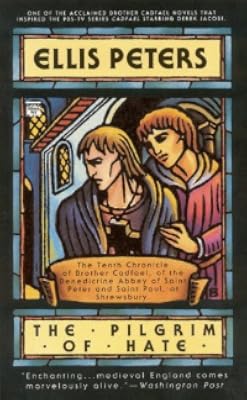
Amid a flood of pilgrims seeking solace in a saintly celebration, Brother Cadfael seeks the killer of a dear friend In the year of our Lord 1141, civil war over England's throne leaves a legacy of violence-and the murder of a knight dear to Brother Cadfael. And with gentle bud-strewn May, a flood of pilgrims comes to the celebration of Saint Winifred at the Abbey of Saint Peter and Saint Paul, carrying with it many strange souls-and perhaps the knight's killer. Brother Cadfael's shrewd eyes show more see all: the prosperous merchant who rings false, an angelic lame boy, his beautiful dowerless sister, and two wealthy penitents. In the name of justice Cadfael decides to uncover the strange and twisted tale that accompanies these travelers. Instead he unearths a quest for vengeance, witnesses a miracle, and finds himself on a razor's edge between death and the absolution of love. show lessTags
Recommendations







Member Reviews
As the Shrewsbury abbey prepares to celebrate the translation of Welsh Saint Winifred's bones, pilgrims gather from the far reaches of the country in hope of a healing miracle. The anniversary follows close on the heels of a conference in Winchester between the opposing factions in the civil war between King Stephen and his cousin, the Empress Maud. A knight was killed as he left the conference, and his murdered managed to escape. Is it possible that a murderer is hidden among the pilgrims who are temporary guests at the abbey? If so, Brother Cadfael will find him.
The series has become somewhat formulaic by this point. The highlights of this episode in the series are the confidences shared between Cadfael and his friend, sheriff Hugh show more Beringar, that reveal added depths in Cadfael's character, and the disabled adolescent Rhun, who is one of the most likable of the characters I've encountered in this series so far. Each book in the series includes a pair of young lovers, and this one is no exception. Although I usually hope for a happy ending to the romance, this time was different.One scene ended violently, with Matthew striking Melangell hard enough to leave her face bruised. Attitudes may have been different in the Middle Ages regarding violence between men and women, but I don't have to like it. show less
The series has become somewhat formulaic by this point. The highlights of this episode in the series are the confidences shared between Cadfael and his friend, sheriff Hugh show more Beringar, that reveal added depths in Cadfael's character, and the disabled adolescent Rhun, who is one of the most likable of the characters I've encountered in this series so far. Each book in the series includes a pair of young lovers, and this one is no exception. Although I usually hope for a happy ending to the romance, this time was different.
Summary: The Feast of the translation of St. Winifred is the occasion of new found love, a fugitive fleeing from murder, thievery, and a miracle, all of which engage Cadfael’s attention.
Abbot Radulfus has just returned from a legatine council where the support of the religious was urged for Empress Maud, maneuvering to be crowned Queen, seizing the crown from Stephen. The council ended in disorder and murder when Stephen’s wife sends an emissary to plead for his release, and a band attempts his murder only to be foiled by one of Maud’s knights, Rainald Bossard, who is stabbed in the back for his efforts, with the murderer at large. Radulfus is deeply disturbed by the murder and the depths of disorder he sees in the show more country.
Nevertheless, he returns at a time of celebration, the anniversary of the translation of the remains of Saint Winifred to the Abbey. The celebration finds Cadfael troubled. Only he and Hugh know that her actual remains lay in Wales, something Cadfael deeply believes she would have wanted. But does she look with favor on his subterfuge? Miracles continue to occur in Wales, but not in Shrewsbury. Cadfael hopes for a sign that what he did was right.
The Feast draws a crowd of pilgrims of all sorts. Among them are those who hope for a miracle. Dame Alice Weaver hopes for one for her nephew Rhun, a young man with a withered leg and twisted foot, able to walk only with crutches. Rhun is more concerned for his sister Melangell, who, without a dowry, faces a hard life. Cadfael ministers to Rhun, working the knotted muscles, but Rhun refuses potions to ease his pain, wishing them for others with greater need. There are also four suspicious merchants, actually thieves, causing mischief throughout the story, with Hugh close on their tails. Finally, two other pilgrims traveling together attract Cadfael’s attention. One is Ciaran, under a vow to walk barefoot to Wales, wearing a heavy cross that cuts into his neck that he refuses to remove. He is accompanied by Matthew that has taken a vow to accompany Ciaran. Along the way, he has occasion to render assistance to Melangell, the beginning of a growing bond between them.
Then Olivier de Bretagne shows up, who we first encountered in The Virgin in the Ice, when he works with Cadfael to rescue some refugee children. He is hoping to persuade Hugh to come over to Empress Maud’s side. Having sworn fealty to King Stephen, Hugh will not abandon his word. In a way, Olivier expected nothing less. He asks help on another matter. He is seeking Luc Meverel, son of the murdered Rainald Bossard, who went missing after the murder. Meanwhile Hugh is seeking Bossard’s murderer. Could these two be among the pilgrims, perhaps even guests at the abbey?
All these threads come to a head at the procession of the saints relic’s to the abbey church and the service that followed. Matthew and Melangell are in the procession, transported in both worship and love. Earlier, Ciaran had confided in Melangell that he released Matthew from his vow and was going alone to Wales, slipping away during the festivities. He swears her to silence. Then, as pilgrims approach the reliquary in prayer, it comes Rhun’s turn. He comes with no expectation for himself, praying for Melangell, when suddenly he puts his crutches aside, putting weight on the twisted foot which untwists, his atrophied leg becoming strong before the eyes of all. He climbs the steps, then kneels, and the church bursts out in praise. Cadfael, who has ministered to the young man, knows the extent of the miracle and the sign he has been given
But all is not wonderful. When Matthew learns Ciaran has left, and that Melangell knew of it, in anger, he strikes her on the cheeks, and goes in pursuit. Olivier goes after them on one road, believing one of them is Luc. Cadfael and Hugh learn they had taken a different path and follow, believing one is a murderer. Meanwhile, remember those thieves? They turn up as well, putting Cadfael at great risk. Meanwhile, a grieving Melangell waits in uncertainty back in Shrewsbury.
The procession and miracle, to me were a high point in the writing in this whole series, as if Peters were caught up in the events as well. The miracle comes as a grace, as all such works of God do. Rhun seems surprised as any, going forward in submission to his Aunt and out of love for Melangell. And Cadfael receives another gift, time with Olivier. Hugh notes their connection, and even resemblance, and is entrusted with a confidence from Cadfael, a mark of their ever-deepening friendship. This is all wonderful writing, reminding the reader that amid turmoil, evil, and murder, there is a deeper goodness, a richer beauty, and a wonder to be embraced. show less
Abbot Radulfus has just returned from a legatine council where the support of the religious was urged for Empress Maud, maneuvering to be crowned Queen, seizing the crown from Stephen. The council ended in disorder and murder when Stephen’s wife sends an emissary to plead for his release, and a band attempts his murder only to be foiled by one of Maud’s knights, Rainald Bossard, who is stabbed in the back for his efforts, with the murderer at large. Radulfus is deeply disturbed by the murder and the depths of disorder he sees in the show more country.
Nevertheless, he returns at a time of celebration, the anniversary of the translation of the remains of Saint Winifred to the Abbey. The celebration finds Cadfael troubled. Only he and Hugh know that her actual remains lay in Wales, something Cadfael deeply believes she would have wanted. But does she look with favor on his subterfuge? Miracles continue to occur in Wales, but not in Shrewsbury. Cadfael hopes for a sign that what he did was right.
The Feast draws a crowd of pilgrims of all sorts. Among them are those who hope for a miracle. Dame Alice Weaver hopes for one for her nephew Rhun, a young man with a withered leg and twisted foot, able to walk only with crutches. Rhun is more concerned for his sister Melangell, who, without a dowry, faces a hard life. Cadfael ministers to Rhun, working the knotted muscles, but Rhun refuses potions to ease his pain, wishing them for others with greater need. There are also four suspicious merchants, actually thieves, causing mischief throughout the story, with Hugh close on their tails. Finally, two other pilgrims traveling together attract Cadfael’s attention. One is Ciaran, under a vow to walk barefoot to Wales, wearing a heavy cross that cuts into his neck that he refuses to remove. He is accompanied by Matthew that has taken a vow to accompany Ciaran. Along the way, he has occasion to render assistance to Melangell, the beginning of a growing bond between them.
Then Olivier de Bretagne shows up, who we first encountered in The Virgin in the Ice, when he works with Cadfael to rescue some refugee children. He is hoping to persuade Hugh to come over to Empress Maud’s side. Having sworn fealty to King Stephen, Hugh will not abandon his word. In a way, Olivier expected nothing less. He asks help on another matter. He is seeking Luc Meverel, son of the murdered Rainald Bossard, who went missing after the murder. Meanwhile Hugh is seeking Bossard’s murderer. Could these two be among the pilgrims, perhaps even guests at the abbey?
All these threads come to a head at the procession of the saints relic’s to the abbey church and the service that followed. Matthew and Melangell are in the procession, transported in both worship and love. Earlier, Ciaran had confided in Melangell that he released Matthew from his vow and was going alone to Wales, slipping away during the festivities. He swears her to silence. Then, as pilgrims approach the reliquary in prayer, it comes Rhun’s turn. He comes with no expectation for himself, praying for Melangell, when suddenly he puts his crutches aside, putting weight on the twisted foot which untwists, his atrophied leg becoming strong before the eyes of all. He climbs the steps, then kneels, and the church bursts out in praise. Cadfael, who has ministered to the young man, knows the extent of the miracle and the sign he has been given
But all is not wonderful. When Matthew learns Ciaran has left, and that Melangell knew of it, in anger, he strikes her on the cheeks, and goes in pursuit. Olivier goes after them on one road, believing one of them is Luc. Cadfael and Hugh learn they had taken a different path and follow, believing one is a murderer. Meanwhile, remember those thieves? They turn up as well, putting Cadfael at great risk. Meanwhile, a grieving Melangell waits in uncertainty back in Shrewsbury.
The procession and miracle, to me were a high point in the writing in this whole series, as if Peters were caught up in the events as well. The miracle comes as a grace, as all such works of God do. Rhun seems surprised as any, going forward in submission to his Aunt and out of love for Melangell. And Cadfael receives another gift, time with Olivier. Hugh notes their connection, and even resemblance, and is entrusted with a confidence from Cadfael, a mark of their ever-deepening friendship. This is all wonderful writing, reminding the reader that amid turmoil, evil, and murder, there is a deeper goodness, a richer beauty, and a wonder to be embraced. show less
Review of The Pilgrim of Hate: The Tenth Chronicle of Brother Cadfael by Ellis Peters
Published by William Morrow & Co (1985)
I discovered Brother Cadfael by chance when PBS's Mystery ran Britain's ITV adaptations of Ellis Peter's medieval mysteries, starring Derek Jacobi as the eponymous Brother Cadfael. I was so taken with the first series (the one that co-starred the best of the Hugh Beringars, Sean Pertwee), that I began tracking down the books. Some were available at my local library, though over time I also acquired a number of the Warner Books/The Mysterious Press paperback editions for my own, and even tracked down a coveted copy of Brother Cadfael's Herb Garden by Rob Talbot & Robin Whiteman.
But a copy of The Pilgrim of Hate show more eluded me. And while I had no direct point of reference with which to compare it, I was less than pleased with the tone of the television adaptation of that title. There was a meanness to it, a smallness of character that seemed at odds with what I had read in the rest of the Brother Cadfael books. Oh, not with the beloved Brother Cadfael himself, but the overall tone of the screenplay was very unsatisfying. It seemed painfully skeptical, even a little hostile, toward matters of faith: of self-sacrifice, the hope of redemption, and the belief that miracles are indeed possible. And the reviews that I read online of the film adaptation confirmed that it bore no resemblance to Ellis Peter's novel of the same name, making me even more eager to read the novel for myself.
I finally was able to get a copy of the book via the inter-library loan system and settled in to read it – I confess a part of my eagerness was to read more about Cadfael's son (whose role was also excised from the film adaptation). Olivier didn't make his entrance until about midway into the story, and well before that point I knew just how hideously the screenplay had distorted Ellis Peter's wonderfully complex characters, and their intertwined tales of hatred, vengeance, despair, hope and reclamation.
Along the way my appreciation for Peters's medieval monk/detective, his friend Hugh Beringar, and his beautiful son – beautiful in both his person and his spirit – has been more firmly cemented. The experience has also reinforced my determination not to judge any story by its film adaptation. I am grateful for the TV series in that it inspired me to seek out the books – something too many people seem to think unnecessary (J.R.R. Tolkien's Lord of the Rings vs Peter Jackson's films is a prime example of that particular mindset – but I digress). I cannot believe that, had the author still been alive when The Pilgrim of Hate was filmed, she would have approved it. And if that adaptation is an indication of the direction the producers would have gone with any subsequent screenplays of the Brother Cadfael mysteries, then I for one am grateful that it was the last one. Much as I admire Derek Jacobi, that particular episode has been removed from my viewing list, especially now that I have read the infinitely superior original.
Addendum: I came across this quote from Ellis Peters(aka Edith Pargeter) that reinforces my opinion that she would not have approved the filmed version that bears the title (but little else) of her book:
'She explained that, for her, a thriller must be a morality story. "If it strays from the side of the angels, provokes total despair ... takes pleasure in evil, that is unforgivable ... It is probably true that I am not very good at villains. The good interests me so much more."' show less
Published by William Morrow & Co (1985)
I discovered Brother Cadfael by chance when PBS's Mystery ran Britain's ITV adaptations of Ellis Peter's medieval mysteries, starring Derek Jacobi as the eponymous Brother Cadfael. I was so taken with the first series (the one that co-starred the best of the Hugh Beringars, Sean Pertwee), that I began tracking down the books. Some were available at my local library, though over time I also acquired a number of the Warner Books/The Mysterious Press paperback editions for my own, and even tracked down a coveted copy of Brother Cadfael's Herb Garden by Rob Talbot & Robin Whiteman.
But a copy of The Pilgrim of Hate show more eluded me. And while I had no direct point of reference with which to compare it, I was less than pleased with the tone of the television adaptation of that title. There was a meanness to it, a smallness of character that seemed at odds with what I had read in the rest of the Brother Cadfael books. Oh, not with the beloved Brother Cadfael himself, but the overall tone of the screenplay was very unsatisfying. It seemed painfully skeptical, even a little hostile, toward matters of faith: of self-sacrifice, the hope of redemption, and the belief that miracles are indeed possible. And the reviews that I read online of the film adaptation confirmed that it bore no resemblance to Ellis Peter's novel of the same name, making me even more eager to read the novel for myself.
I finally was able to get a copy of the book via the inter-library loan system and settled in to read it – I confess a part of my eagerness was to read more about Cadfael's son (whose role was also excised from the film adaptation). Olivier didn't make his entrance until about midway into the story, and well before that point I knew just how hideously the screenplay had distorted Ellis Peter's wonderfully complex characters, and their intertwined tales of hatred, vengeance, despair, hope and reclamation.
Along the way my appreciation for Peters's medieval monk/detective, his friend Hugh Beringar, and his beautiful son – beautiful in both his person and his spirit – has been more firmly cemented. The experience has also reinforced my determination not to judge any story by its film adaptation. I am grateful for the TV series in that it inspired me to seek out the books – something too many people seem to think unnecessary (J.R.R. Tolkien's Lord of the Rings vs Peter Jackson's films is a prime example of that particular mindset – but I digress). I cannot believe that, had the author still been alive when The Pilgrim of Hate was filmed, she would have approved it. And if that adaptation is an indication of the direction the producers would have gone with any subsequent screenplays of the Brother Cadfael mysteries, then I for one am grateful that it was the last one. Much as I admire Derek Jacobi, that particular episode has been removed from my viewing list, especially now that I have read the infinitely superior original.
Addendum: I came across this quote from Ellis Peters(aka Edith Pargeter) that reinforces my opinion that she would not have approved the filmed version that bears the title (but little else) of her book:
'She explained that, for her, a thriller must be a morality story. "If it strays from the side of the angels, provokes total despair ... takes pleasure in evil, that is unforgivable ... It is probably true that I am not very good at villains. The good interests me so much more."' show less
Just when I was starting to feel like these books were all getting very samey, a return to what I liked about the first one: sincere religious feeling, spiritual doubt, and a hefty dash of medieval politics.
1141. The fourth anniversary of the transfer of Saint Winifred's bones to the Abbey at Shrewsbury is a time of celebration for the 12th-century pilgrims gathering from far and wide. In distant Winchester, however, a knight has been murdered. Could it be because he was a supporter of the Empress Maud, one of numerous pretenders to the throne? It's up to herbalist, sleuth, and Benedictine monk Brother Cadfael to track down the killer in the pious throng.
Another interesting albeit contrived mystery involving Brother Cadfael. What's best about these books is their description of time, place and people. I grow fonder of the characters in each installment. And I'm getting closer to my goal of reading a great mystery without a murder. A murder happens, but not in Shrewsbury and Cadfael does not have to solve it as the murderer has already been punished. It's the mystery of a vengeful adherent the plays at the center of this book
Six-word review: Penance and vengeance provide narrative twists.
Extended review:
While staying with a successful formula involving Brother Cadfael in solving murders and abetting young love against a backdrop of medieval politics and monastic routine, this tenth in the series introduces some fresh relationship dynamics that lend savor to the mystery.
Extended review:
While staying with a successful formula involving Brother Cadfael in solving murders and abetting young love against a backdrop of medieval politics and monastic routine, this tenth in the series introduces some fresh relationship dynamics that lend savor to the mystery.
Members
- Recently Added By
Lists

Historical Fiction
889 works; 90 members

British Mystery
469 works; 14 members

Crime and Mysteries to Read
746 works; 31 members

Detective Stories
343 works; 5 members

al.vick-parents books
301 works; 1 member

Books Read in 2021
5,361 works; 114 members

Books Read in 2025
4,128 works; 98 members
Author Information

154+ Works 58,607 Members
Ellis Peters is the pseudonym for Edith Pargeter, who was born in Horsehay, Shropshire. She was a chemist's assistant from 1933 to 1940 and participated during World War II in the Women's Royal Navy Service. The name "Ellis Peters" was adopted by Edith Pargeter to clearly mark a division between her mystery stories and her other work. Her brother show more was Ellis and Petra was a friend from Czechoslovakia, thus the name. She came to writing mysteries, she says, "after half a lifetime of novel-writing." Her detective fiction features well-rounded, knowledgeable characters with whom the reader can empathize. Her most famous literary creation is the medieval monk Brother Cadfael. The blend of history and the formula of the detective story gives Peters's works their popular appeal. As detective hero, Brother Cadfael remains faithful to the requirements of the formula, yet the historical milieu in which he operates is both fully realized and well textured. Peters received the Mystery Writers of America's Edgar Award in 1963 and the Crime Writers Association's Silver Dagger Award in 1981. (Bowker Author Biography) show less
Some Editions
Series

Belongs to Publisher Series
Work Relationships
Common Knowledge
- Canonical title
- The Pilgrim of Hate
- Original title
- The Pilgrim of Hate
- Original publication date
- 1984
- People/Characters
- Brother Cadfael; Hugh Beringar; Abbot Radulfus; Prior Robert Pennant; Brother Jerome; Olivier de Bretagne
- Important places
- Shrewsbury, Shropshire, England, UK; Abbey of St. Peter and St. Paul, Shrewsbury, Shropshire, England, UK
- Important events
- Nineteen Year Winter (1135 | 1154)
- Related movies
- Cadfael (1994 | IMDb); The Pilgrim of Hate (1998 | IMDb)
- Epigraph
- [None]
- Dedication
- [None]
- First words
- They were together in Brother Cadfael's hut in the herbarium, in the afternoon of the twenty-fifth day of May, and the talk was of high matters of state, of kings and empresses, and the unbalanced fortunes that plagued the ir... (show all)reconcilable contenders for thrones.
- Last words
- (Click to show. Warning: May contain spoilers.)"I always meant to tell you, some day," he said tranquilly, "what he does not know, and never will from me. He is my son."
- Original language*
- Engels
*Some information comes from Common Knowledge in other languages. Click "Edit" for more information.
Classifications
Statistics
- Members
- 1,812
- Popularity
- 12,053
- Reviews
- 32
- Rating
- (3.82)
- Languages
- 11 — Czech, Dutch, English, Estonian, French, German, Italian, Japanese, Portuguese, Spanish, Swedish
- Media
- Paper, Audiobook, Ebook
- ISBNs
- 57
- UPCs
- 3
- ASINs
- 25