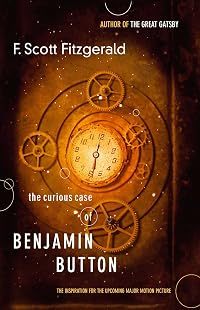
The Curious Case of Benjamin Button
by F. Scott Fitzgerald
On This Page
Description
The Curious Case of Benjamin Button is a short story by F. Scott Fitzgerald, originally published in Colliers Magazine on May 27th, 1922. The story follows Benjamin's life from his birth in 1860. However he is no ordinary child, as he has the appearance of a 70 year old man, already capable of speech. His family soon realizes that Benjamin is aging in reverse, becoming younger as the years go by. The fascinating story looks at his triumphs and struggles as he slowly gains his youth. Adding show more in themes of love and acceptance, F. Scott Fitzgerald details the difficulties and feelings of not fitting into ones designated age group in an entertaining and insightful manor. show lessTags
Recommendations






Member Recommendations
Member Reviews
An interesting, sometimes humorous, account of a man who lives his life backward. He is born quite old and gets younger. Once you have disassociated yourself from the impossibility of any woman surviving such a birth and the idea that any man would accept that this even older man is his son, you begin to have a view of Benjamin Button as a soul sadly out of time. Not, therefore, much unlike some of the rest of us, who are living our lives in forward time and having just as difficult a time fitting in.
Enjoyable and certainly thought-provoking. Can't imagine what suggested this idea to Fitzgerald.
Enjoyable and certainly thought-provoking. Can't imagine what suggested this idea to Fitzgerald.
I stumbled on this little book at my local used book store. Immediately, I was surprised that this little illustrated 63 pages book can turn into a 2 hr, 48 min movie. Well, not quite. The movie is loosely based on the book, and the book took some creative conveniences to walk a fairly straight line in the storytelling, skipping big chunks of time as it suits FSF. “Of the life of Benjamin Button between his twelfth and twenty-first year I intend to say little.” The biggest gap is the complete absence of Benjamin’s mom, for that matter, just about all normal female characters except the future wife and nurse. When his wife turned old (~59), FSF just shipped her off to Italy and kicked her out of the story altogether. Nonetheless, show more I’d imagine its original release in 1922 (included in ‘Tales of the Jazz Age’) still caused a buzz.
Conveniences or not, FSF did a fine job in the timeline reversal, starting with the old age birth, stepping us through his age/year and the corresponding ‘visual’ age, through to the end. With this short length, FSF does not always take the reader in depth to address how Benjamin feels. We learn about frustrations of his father at the beginning, his inability to attend kindergarten and college, and the later years when he is too young to be a contributing member of society. I had liked the movie, and I liked this version of the plot too. (Psst, they’re different!) Perhaps I’m too practical, but with such a short book and a relatively dense story, I did not expect an emotional roller coaster. And there wasn’t one. I will give props on the words that delivered the ending. I’ll let you discover those yourselves.
One last note, this illustrated version is wonderful. And extra 1/2 star for this aspect.
Some quotes:
On jealousy:
“… He stood close to the wall, silent, inscrutable, watching with murderous eyes the young bloods of Baltimore as they eddied around Hildegarde Moncrief, passionate admiration in their faces. How obnoxious they seemed to Benjamin; how intolerably rosy! Their curling brown whiskers aroused in him a feeling equivalent to indigestions.
But when his own time came, and he drifted with her out upon the changing floor to the music of the latest waltz from Paris, his jealousies and anxieties melted from him like a mantle of snow. Blind with enchantment, he felt that life was just beginning.”
On Love and Aging – made me think a little:
“’I like men of your age,’ Hildegarde told him. ‘Young boys are so idiotic. They tell me how much champagne they drink at college, and how much money they lose playing cards. Men of your age know how to appreciate women… …You’re just the romantic age – fifty. Twenty-five is too wordly-wise; thirty is apt to be pale from overwork; forty is the age of long stories that take a whole cigar to tell; sixty is – oh, sixty is too near seventy; but fifty is the mellow age. I love fifty.’” show less
Conveniences or not, FSF did a fine job in the timeline reversal, starting with the old age birth, stepping us through his age/year and the corresponding ‘visual’ age, through to the end. With this short length, FSF does not always take the reader in depth to address how Benjamin feels. We learn about frustrations of his father at the beginning, his inability to attend kindergarten and college, and the later years when he is too young to be a contributing member of society. I had liked the movie, and I liked this version of the plot too. (Psst, they’re different!) Perhaps I’m too practical, but with such a short book and a relatively dense story, I did not expect an emotional roller coaster. And there wasn’t one. I will give props on the words that delivered the ending. I’ll let you discover those yourselves.
One last note, this illustrated version is wonderful. And extra 1/2 star for this aspect.
Some quotes:
On jealousy:
“… He stood close to the wall, silent, inscrutable, watching with murderous eyes the young bloods of Baltimore as they eddied around Hildegarde Moncrief, passionate admiration in their faces. How obnoxious they seemed to Benjamin; how intolerably rosy! Their curling brown whiskers aroused in him a feeling equivalent to indigestions.
But when his own time came, and he drifted with her out upon the changing floor to the music of the latest waltz from Paris, his jealousies and anxieties melted from him like a mantle of snow. Blind with enchantment, he felt that life was just beginning.”
On Love and Aging – made me think a little:
“’I like men of your age,’ Hildegarde told him. ‘Young boys are so idiotic. They tell me how much champagne they drink at college, and how much money they lose playing cards. Men of your age know how to appreciate women… …You’re just the romantic age – fifty. Twenty-five is too wordly-wise; thirty is apt to be pale from overwork; forty is the age of long stories that take a whole cigar to tell; sixty is – oh, sixty is too near seventy; but fifty is the mellow age. I love fifty.’” show less
"Life can only be understood backwards; but it must be lived forwards." -Søren Kirkegaard
This wonderful short story blurs a lot of lines. It's definitely a satire about aging and how it affects one's position in society, but it's also unequivocally a bittersweet tragedy. A whimsical odyssey in reverse, a story of falling in and out of love, a rumination on memory, a chronicle of one odd branch of a family tree.
The Curious Case of Benjamin Button truly is all of these things, but first and foremost it is the beautifully sad chronicle of a life lived backwards, of seldom being in the right time, of knowing that the years ahead of you don't hold canes and and greying hair, but swaddles and cribs.
Fitzgerald's writing is great here- show more sparkling and effervescent when it should be, wracked with Benjamin's frustrations and joys in the right spots, all while retaining the nostalgic tone. This story is very much like the faded and yellowing pages of a worn book coming to a close, the cover closed softly and placed upon a high shelf to gather the dust of time.
I'll leave you with this quote, and as always you can read the story here.
This wonderful short story blurs a lot of lines. It's definitely a satire about aging and how it affects one's position in society, but it's also unequivocally a bittersweet tragedy. A whimsical odyssey in reverse, a story of falling in and out of love, a rumination on memory, a chronicle of one odd branch of a family tree.
The Curious Case of Benjamin Button truly is all of these things, but first and foremost it is the beautifully sad chronicle of a life lived backwards, of seldom being in the right time, of knowing that the years ahead of you don't hold canes and and greying hair, but swaddles and cribs.
Fitzgerald's writing is great here- show more sparkling and effervescent when it should be, wracked with Benjamin's frustrations and joys in the right spots, all while retaining the nostalgic tone. This story is very much like the faded and yellowing pages of a worn book coming to a close, the cover closed softly and placed upon a high shelf to gather the dust of time.
I'll leave you with this quote, and as always you can read the story here.
The past- the wild charge at the head of his men up San Juan Hill; the first years of his marriage when he worked late into the summer dusk down in the busy city for young Hildegarde whom he loved; the days before that when he sat smoking far into the night in the gloomy old Button house on Monroe Street with his grandfather- all these had faded like unsubstantial dreams from his mind as though they had never been. He did not remember.show less
This book was like a masterclass on how to write the perfect short story - I'd forgotten just how genius Fitzgerald is with words on a page. Some of the main threads of the stories were utterly bonkers yet totally brilliant. He manages to combine crazy plots with wry humour, and then interweaves a heavy thread of irony. I was conscious how fresh the stories felt, despite being over 90 years old in many cases, which I think is testament to how ahead of the game he was in his day.
Of the 7, I had 3 favourites. 'The Curious Case of Benjamin Button' is pretty well known now, but I've not seen the film so I was able to delight in this clever tale with fresh eyes. The idea of someone living their life back to front from old to young was show more inspired, and it was hilarious how he played with this. I really did think this was a funny story.
'The Cut Glass Bowl' was probably my favourite of all - this was about a big glass bowl that a woman is given as a wedding present by a jilted beau with the ill words: "I'm going to give a present that's as hard as you are and as beautiful and as empty and as easy to see through". His words set some kind of curse upon the bowl, which causes a series of significant catastrophes in the woman's life.
'The Four Fists' was also so clever: a man is punched 4 times in his life, and each time he has a total revelation about his own wrongdoings, in effect literally having some sense knocked into him.
The other 4 stories are also sharp and enjoyable. In 'Head and Shoulders' there's huge irony as to the ultimate independent successes of a university prodigy and his uneducated mediocre actress of a wife. 'May Day', set around a Yale sorority alumni party, is about the harsh realities of success and failure, mobs and hard partying. 'O Russet Witch!' is set around a bookshop and a man's fleeting encounters in life with a mysterious enchantress, and 'Crazy Sunday' tells the story of a young Hollywood continuity writer and his bizarre relationship with a director and his wife.
As with most of Fitzgerald's work, many of the stories include a backdrop of parties and excessive drinking. The men invariably tend to end up disillusioned and down on their luck, and the women are generally stereotyped as one dimensional adulteresses who cause the men's downfalls in one form or another. Perhaps because of this, I wasn't always riveted the whole way through this book, yet when I think about each story in turn I'm just blown away by their cleverness.
4 stars for me I think. I'm generally not a fan of short stories - the jumping in and out of completely different characters and plots isn't my favourite type of reading, so this was never going to be a favourite book for me, but this are so well crafted I have to doff my hat to the great man once again. show less
Of the 7, I had 3 favourites. 'The Curious Case of Benjamin Button' is pretty well known now, but I've not seen the film so I was able to delight in this clever tale with fresh eyes. The idea of someone living their life back to front from old to young was show more inspired, and it was hilarious how he played with this. I really did think this was a funny story.
'The Cut Glass Bowl' was probably my favourite of all - this was about a big glass bowl that a woman is given as a wedding present by a jilted beau with the ill words: "I'm going to give a present that's as hard as you are and as beautiful and as empty and as easy to see through". His words set some kind of curse upon the bowl, which causes a series of significant catastrophes in the woman's life.
'The Four Fists' was also so clever: a man is punched 4 times in his life, and each time he has a total revelation about his own wrongdoings, in effect literally having some sense knocked into him.
The other 4 stories are also sharp and enjoyable. In 'Head and Shoulders' there's huge irony as to the ultimate independent successes of a university prodigy and his uneducated mediocre actress of a wife. 'May Day', set around a Yale sorority alumni party, is about the harsh realities of success and failure, mobs and hard partying. 'O Russet Witch!' is set around a bookshop and a man's fleeting encounters in life with a mysterious enchantress, and 'Crazy Sunday' tells the story of a young Hollywood continuity writer and his bizarre relationship with a director and his wife.
As with most of Fitzgerald's work, many of the stories include a backdrop of parties and excessive drinking. The men invariably tend to end up disillusioned and down on their luck, and the women are generally stereotyped as one dimensional adulteresses who cause the men's downfalls in one form or another. Perhaps because of this, I wasn't always riveted the whole way through this book, yet when I think about each story in turn I'm just blown away by their cleverness.
4 stars for me I think. I'm generally not a fan of short stories - the jumping in and out of completely different characters and plots isn't my favourite type of reading, so this was never going to be a favourite book for me, but this are so well crafted I have to doff my hat to the great man once again. show less
A melancholic story about a man who is born old and grows younger with age, always a stranger in his own body and a disappointment to the expectations of the world around him. The characters are not photorealistic individuals like we're used to from modern stories, but stand-ins for social archetypes. Women don't exist, not in any meaningful role. But Fitzgerald unveils the pitfalls of these archetypes in a clever way until the inevitable disillusion fades away in the nescience of the child.
I wasn't going to read this because I really, really hated the movie. But, when I found out that the book was nothing like the movie I decided to pick it up.
I'm glad I did. It was an interesting little read. It was fun to see the stereotypical male human life in reverse.
My only complaint is- what the heck? Where are the women in this book? The dad goes to pick up his son from the hospital- and it's a full grown man. I would hope that one of the first thoughts in aa/ head would be "is there a chance at all that my wife survived this?"
Nah. He didn't even need a wife. You know- you just show up at the hospital and they have a baby (or 65 year old man) waiting for you.
? Wah?
Ps, it's late and I fell asleep at the touchscreen at least show more twice while writing this review. Sorry if it stinks. show less
I'm glad I did. It was an interesting little read. It was fun to see the stereotypical male human life in reverse.
My only complaint is- what the heck? Where are the women in this book? The dad goes to pick up his son from the hospital- and it's a full grown man. I would hope that one of the first thoughts in aa/ head would be "is there a chance at all that my wife survived this?"
Nah. He didn't even need a wife. You know- you just show up at the hospital and they have a baby (or 65 year old man) waiting for you.
? Wah?
Ps, it's late and I fell asleep at the touchscreen at least show more twice while writing this review. Sorry if it stinks. show less
Benjamin Button was born in the usual way just before the outbreak of the Civil War. And yet he was not at all the usual baby. Instead of the frantic cries and cherub cheeks you would expect to find in the hospital nursery, there sat an old man, white whiskers, rheumy eyes and all. As the years passed something even more remarkable began to happen, instead of aging in the usual manner he seemed to live his life in reverse. Each year he grew younger, stronger, smarter. Incredibly he eventually died, an infant.
F. Scott Fitzgerald was at one time even more well known for his short stories than he was for his full length novels. After having read arguably his most famous, I can understand completely why this was so. Normally a short story show more leaves me wanting, feeling as if too much had been left untold. They are usually either heavy on the description and short on plot, or lacking in both departments. Benjamin Button was neither. It seems that Mr. Fitzgerald struck upon the perfect combination. In just 25 pages he managed to pull me into the story and even make me care about what happened to his title character. That shows an immeasurable level of talent. This short story will definitely be the ruler by which I will measure all others. show less
F. Scott Fitzgerald was at one time even more well known for his short stories than he was for his full length novels. After having read arguably his most famous, I can understand completely why this was so. Normally a short story show more leaves me wanting, feeling as if too much had been left untold. They are usually either heavy on the description and short on plot, or lacking in both departments. Benjamin Button was neither. It seems that Mr. Fitzgerald struck upon the perfect combination. In just 25 pages he managed to pull me into the story and even make me care about what happened to his title character. That shows an immeasurable level of talent. This short story will definitely be the ruler by which I will measure all others. show less
Members
- Recently Added By
Lists

Watched the Movie, Probably Won't Read the Book
185 works; 34 members

Out of Copyright
244 works; 14 members

Books Read in 2014
2,343 works; 86 members

1920s
141 works; 6 members

Books Read in 2020
4,379 works; 124 members

Books Read in 2017
4,249 works; 129 members

Authors from the United States
245 works; 3 members
Talk Discussions
Past Discussions
Arete Editions’ The Curious Case of Benjamin Button in Fine Press Forum (November 2023)
Author Information

634+ Works 143,107 Members
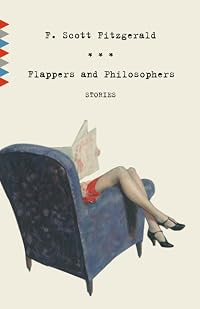
F(rancis) Scott Fitzgerald was born in St. Paul, Minnesota, on September 24, 1896. He was educated at Princeton University and served in the U.S. Army from 1917 to 1919, attaining the rank of second lieutenant. In 1920 Fitzgerald married Zelda Sayre, a young woman of the upper class, and they had a daughter, Frances. Fitzgerald is regarded as one show more of the finest American writers of the 20th Century. His most notable work was the novel, The Great Gatsby (1925). The novel focused on the themes of the Roaring Twenties and of the loss of innocence and ethics among the nouveau riche. He also made many contributions to American literature in the form of short stories, plays, poetry, music, and letters. Ernest Hemingway, who was greatly influenced by Fitzgerald's short stories, wrote that Fitzgerald's talent was "as fine as the dust on a butterfly's wing." Yet during his lifetime Fitzgerald never had a bestselling novel and, toward the end of his life, he worked sporadically as a screenwriter at motion picture studios in Los Angeles. There he contributed to scripts for such popular films as Winter Carnival and Gone with the Wind. Fitzgerald's work is inseparable from the Roaring 20s. Berenice Bobs Her Hair and A Diamond As Big As The Ritz, are two short stories included in his collections, Tales of the Jazz Age and Flappers and Philosophers. His first novel The Beautiful and Damned was flawed but set up Fitzgerald's major themes of the fleeting nature of youthfulness and innocence, unattainable love, and middle-class aspiration for wealth and respectability, derived from his own courtship of Zelda. This Side of Paradise (1920) was Fitzgerald's first unqualified success. Tender Is the Night, a mature look at the excesses of the exuberant 20s, was published in 1934. Much of Fitzgerald's work has been adapted for film, including Tender is the Night , The Great Gatsby, and Babylon Revisited which was adapted as The Last Time I Saw Paris by Metro-Goldwyn-Mayer in 1954. The Last Tycoon, adapted by Paramount in 1976, was a work in progress when Fitzgerald died of a heart attack on December 21, 1940, in Hollywood, California. Fitzgerald is buried in the historic St. Mary's Cemetery in Rockville, Maryland. (Bowker Author Biography) show less
Some Editions
Series
Belongs to Publisher Series
Work Relationships
Is contained in
Novels and Stories 1920-1922: This Side of Paradise / Flappers and Philosophers / The Beautiful and the Damned / Tales of the Jazz Age by F. Scott Fitzgerald (indirect)
F Scott Fitzgerald Premium 9 Book Collection (5 novels & 40 short stories) by F. Scott Fitzgerald (indirect)
Has the adaptation
Common Knowledge
- Canonical title
- The Curious Case of Benjamin Button [short story]; The Curious Case of Benjamin Button
- Original title
- The Curious Case of Benjamin Button [novelette]
- Alternate titles*
- De merkwaardige historie van Benjamin Button
- Original publication date
- 1922
- People/Characters
- Benjamin Button; Roger Button; Roscoe Button; Hildegarde Moncrief
- Important places*
- Baltimora, Maryland, USA; Maryland, USA; USA
- Important events
- Spanish-American War
- Related movies
- The Curious Case of Benjamin Button (2008 | IMDb)
- First words
- As long ago as 1860 it was the proper thing to be born at home.
- Last words
- (Click to show. Warning: May contain spoilers.)Then it was all dark, and his white crib and the dim faces that moved about him, and the warm sweet aroma of the milk, faded out altogether from his mind.
- Original language*
- Inglese
- Disambiguation notice
- This is the entry for the single story. Please don't combine with any collections or adaptions!
Also, do not combine with the graphic novel, which contains an adapted text by Nunzio DeFilippis & Christina Weir.
*Some information comes from Common Knowledge in other languages. Click "Edit" for more information.
Classifications
Statistics
- Members
- 2,160
- Popularity
- 9,422
- Reviews
- 105
- Rating
- (3.40)
- Languages
- 14 — Catalan, Chinese, Czech, Dutch, English, Finnish, French, German, Italian, Japanese, Portuguese, Spanish, Swedish, Turkish
- Media
- Paper, Audiobook, Ebook
- ISBNs
- 173
- ASINs
- 59