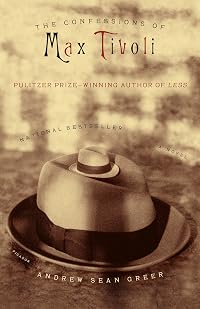
The Confessions of Max Tivoli
by Andrew Sean Greer
On This Page
Description
Born as an old man, Max Tivoli lives his life aging backwards, falling in love and living an odd, sometimes terrifying life in San Francisco at the turn of the nineteenth century.Tags
Recommendations
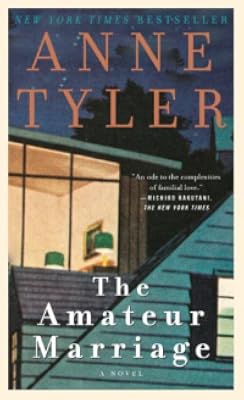
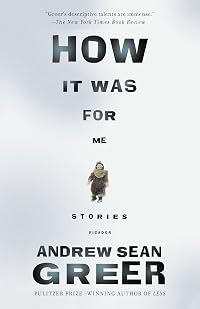
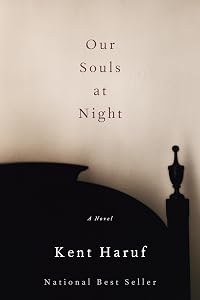
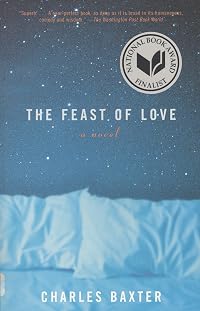



Member Recommendations
crazybatcow This short story about Benjamin Button has the same premise as Max Tivoli but the movie rendition of this title, with Brad Pitt, far far outweighs the short story on which it was based.
30
Member Reviews
Max Tivoli is an odd person. He is born an old man and is growing old even though his body becomes younger. His parents at first keep him mostly hidden, cared for by a Maid and his grandmother. Slowly, he is allowed to interact with others and find companions, such as Hughie, who simply accepts him for who or what he is.
The book is very thoughtful. It explores interactions among people and the psychology not only of being different but of the process of aging and the disparity between people of different ages. The writing is beautiful--so evocative of a time in the past and a pervasive love. Amazingly--in the middle of the book--I realized that the name of the “monster” and the woman he loved were Max and Alice--the exact names of show more my parents!
I think this is a gorgeous love story. There is something about a forbidden love or a transient love that almost has more power than a love which is consummated and then allowed to fade over time. I found this book very passionate--both in emotion and in thoughts. It made me think about the transient nature of relationships--among acquaintances, friends, family, and the great loves of a person’s life. This book examines these from all angles so poignantly and in such a beautiful manner.
I really, really loved this book. I thought the writing was beautiful in how well it expressed the agonies, not only of unrequited love, but also what it's like being "different" in today's society. Although the premise of the story (a person being born old and growing younger) might not be real, being considered a "monster" in today's society (for various reasons in which one person might be different from another) is certainly true enough. The thoughts about which Max wrote show a real understanding of the pain of such marginalization.
Another reason I was impressed with this story was its mind-bending aspect! I had enough of a problem trying to figure out how a person who is growing younger while others are growing older would relate psychologically, physically, and chronologically to others...but the author made it all seem so easy! He did it with such eloquence.
I really got into the character of Max, felt for him, and much appreciated the character of Hughie, a true friend.
There were some chords that struck unusually close to home. Max and Alice (the two most important characters in this novel) were also the names of my parents! I believe that the author grew up in Rockville, Maryland (my home town). show less
The book is very thoughtful. It explores interactions among people and the psychology not only of being different but of the process of aging and the disparity between people of different ages. The writing is beautiful--so evocative of a time in the past and a pervasive love. Amazingly--in the middle of the book--I realized that the name of the “monster” and the woman he loved were Max and Alice--the exact names of show more my parents!
I think this is a gorgeous love story. There is something about a forbidden love or a transient love that almost has more power than a love which is consummated and then allowed to fade over time. I found this book very passionate--both in emotion and in thoughts. It made me think about the transient nature of relationships--among acquaintances, friends, family, and the great loves of a person’s life. This book examines these from all angles so poignantly and in such a beautiful manner.
I really, really loved this book. I thought the writing was beautiful in how well it expressed the agonies, not only of unrequited love, but also what it's like being "different" in today's society. Although the premise of the story (a person being born old and growing younger) might not be real, being considered a "monster" in today's society (for various reasons in which one person might be different from another) is certainly true enough. The thoughts about which Max wrote show a real understanding of the pain of such marginalization.
Another reason I was impressed with this story was its mind-bending aspect! I had enough of a problem trying to figure out how a person who is growing younger while others are growing older would relate psychologically, physically, and chronologically to others...but the author made it all seem so easy! He did it with such eloquence.
I really got into the character of Max, felt for him, and much appreciated the character of Hughie, a true friend.
There were some chords that struck unusually close to home. Max and Alice (the two most important characters in this novel) were also the names of my parents! I believe that the author grew up in Rockville, Maryland (my home town). show less
I finished Andrew Sean Greer's The Confessions of Max Tivoli not for the story, but for the prose. Greer unspools lyrical chains of words, primarily description but aphorisms are scattered throughout, appearing every 10 or 20 pages. The prose in these instances is arresting and almost out of place, in the sense my attention shifts immediately from following the plot to appreciating the wordcraft.
The story is suited to the premise, though. Max's journal unfolds prosaically, entries hopping back and forth in time. The end result is the story functions a bit like a thriller, with unexpected (for me) turns of fate and coincidence which in retrospect seem ludicrously obvious. But also, inevitable: when a boy's life hinges on the fact that show more he grows older, mentally and in experience, even as his body grows younger, from a newborn senility to a doddering infancy, the major turning points in relationships are a given. Greer handles them well, not avoiding them or running from them, but fitting them to his tale so it seems he chose them. In fact, he could have chosen little else. In the end, it's interesting to note how common Max's life was, in terms of his friendships and his internal dramas, despite the enormous challenges of his whimsical condition. Perhaps the best that could be made from such a premise, after all.
I know of two movies using similar premises: The Curious Life of Benjamin Button, based upon a short story by F. Scott Fitzgerald; and the Tom Hanks vehicle, Big. There are other kin, including a minor character in Phantom Tollbooth and (thanks to another LT review) the Jonathan Winter's character in Mork & Mindy. Greer successfully avoids having his book seem like a mere copy, though I've not read or seen the Benjamin Button story to know how derivative it might be.
I was surprised at the poignancy of the ending sections (there are no proper chapters, just four parts divided into sections to mimic new entries in a diary). The end is logical, given the fantastical premise, so it's not a surprise, exactly. But it emphasizes the parallel situations (physical, mental) between children and the elderly, and is all the more emotional for it. I think it avoids becoming overly sentimental or even saccharine, but I might disagree if I read it a second time. (I give the book 3 rather than 2 stars based upon the effect the ending had on me.)
I've grown tired of the literary conceit of publishing an alleged "found text", with the author pretending to serve merely as editor rather than creator. Greer leans on this device, and saves himself primarily in the clever details (and brevity) of his "A Note on the Text". show less
The story is suited to the premise, though. Max's journal unfolds prosaically, entries hopping back and forth in time. The end result is the story functions a bit like a thriller, with unexpected (for me) turns of fate and coincidence which in retrospect seem ludicrously obvious. But also, inevitable: when a boy's life hinges on the fact that show more he grows older, mentally and in experience, even as his body grows younger, from a newborn senility to a doddering infancy, the major turning points in relationships are a given. Greer handles them well, not avoiding them or running from them, but fitting them to his tale so it seems he chose them. In fact, he could have chosen little else. In the end, it's interesting to note how common Max's life was, in terms of his friendships and his internal dramas, despite the enormous challenges of his whimsical condition. Perhaps the best that could be made from such a premise, after all.
I know of two movies using similar premises: The Curious Life of Benjamin Button, based upon a short story by F. Scott Fitzgerald; and the Tom Hanks vehicle, Big. There are other kin, including a minor character in Phantom Tollbooth and (thanks to another LT review) the Jonathan Winter's character in Mork & Mindy. Greer successfully avoids having his book seem like a mere copy, though I've not read or seen the Benjamin Button story to know how derivative it might be.
I was surprised at the poignancy of the ending sections (there are no proper chapters, just four parts divided into sections to mimic new entries in a diary). The end is logical, given the fantastical premise, so it's not a surprise, exactly. But it emphasizes the parallel situations (physical, mental) between children and the elderly, and is all the more emotional for it. I think it avoids becoming overly sentimental or even saccharine, but I might disagree if I read it a second time. (I give the book 3 rather than 2 stars based upon the effect the ending had on me.)
I've grown tired of the literary conceit of publishing an alleged "found text", with the author pretending to serve merely as editor rather than creator. Greer leans on this device, and saves himself primarily in the clever details (and brevity) of his "A Note on the Text". show less
When I first started it, I was extremely doubtful. The premise sounded interesting, but the writing was so thick and wordy. Something about it just left me extremely bored. I didn't really care about Max and none of his problems got me interested.
I'm not sure where that changed. At some point it got super deep and fascinating and I found myself wishing I were reading it whenever I wasn't. The last half sped by. I finally got to the point where I didn't want to put it down. The wordy writing turned eloquent and beautiful, and my heart started to break a bit with every new problem Max had to go through.
Sometimes he was stupid. Sometimes I couldn't believe the choices he made. But I don't think I ever hated him. It was all too tragic and show more perhaps beautiful.
In short, it's a very beautiful and powerful book. Yet, I'm still not sure if I liked it or not. show less
I'm not sure where that changed. At some point it got super deep and fascinating and I found myself wishing I were reading it whenever I wasn't. The last half sped by. I finally got to the point where I didn't want to put it down. The wordy writing turned eloquent and beautiful, and my heart started to break a bit with every new problem Max had to go through.
Sometimes he was stupid. Sometimes I couldn't believe the choices he made. But I don't think I ever hated him. It was all too tragic and show more perhaps beautiful.
In short, it's a very beautiful and powerful book. Yet, I'm still not sure if I liked it or not. show less
We are each the love of someone's life.
I wanted to put that down in case I am discovered and unable to complete these pages, in case you become so disturbed by the facts of my confession that you throw it into the fire before I get to tell you of great love and murder...
I have so much to explain, but first you must believe:
Inside this wretched body, I grow old. But outside - in every part of me but my mind and soul - I grow young.
And so begins the tale of Max Tivoli, who began life as a gnarled old infant. His chronological age and mental age always add up to seventy - a daunting balancing act that is his personal hell. Through the years as he grows ever younger, he struggles to hold on to the love of the one woman who captured his show more heart and maintain his only true friendship.
A long time ago LT member SqueakyChu recommended this book to me. I filed away the title along with the hundreds of other books on my To Be Read roster but I was not in any hurry to find a copy to read. In this, I was a fool.
The Confessions of Max Tivoli is beautifully written - I drank in every word on these pages. And what a story! If you're worried, it's not gimmicky or filled with science-fictiony explanations. It's a human story - of love and life and loss. And as I turned the last page I was utterly bereft because it had ended.
So don't do as I did - read this one immediately! Oh, and thank you Madeline! I owe you a recommendation. show less
I wanted to put that down in case I am discovered and unable to complete these pages, in case you become so disturbed by the facts of my confession that you throw it into the fire before I get to tell you of great love and murder...
I have so much to explain, but first you must believe:
Inside this wretched body, I grow old. But outside - in every part of me but my mind and soul - I grow young.
And so begins the tale of Max Tivoli, who began life as a gnarled old infant. His chronological age and mental age always add up to seventy - a daunting balancing act that is his personal hell. Through the years as he grows ever younger, he struggles to hold on to the love of the one woman who captured his show more heart and maintain his only true friendship.
A long time ago LT member SqueakyChu recommended this book to me. I filed away the title along with the hundreds of other books on my To Be Read roster but I was not in any hurry to find a copy to read. In this, I was a fool.
The Confessions of Max Tivoli is beautifully written - I drank in every word on these pages. And what a story! If you're worried, it's not gimmicky or filled with science-fictiony explanations. It's a human story - of love and life and loss. And as I turned the last page I was utterly bereft because it had ended.
So don't do as I did - read this one immediately! Oh, and thank you Madeline! I owe you a recommendation. show less
This is one of the more finely wrought things I've read in a while. The prose is beautiful (some might say purple, but it really worked for me), the story weird and funny (and sometimes a little creepy) and crushing. I read it quickly but it deserves to be read slowly.
Disappointing. A love story which draws all its affect from its fantastic premise. If you're looking for an undemanding, romantic, tragic tale with an interesting McGuffin, this is that - but it could have been so much more. The characterisation, in particular, is poor - you never get a sense of just what it is about the hero's lifelong beloved that makes his devotion to her so all-consuming, nor is there any real development other than that mandated by the plot events. It's a terrible passion which is neither terrible nor passionate, while the really terrible events - family breakups, desertions etc. - seem not to have much of an effect on anyone. Tivoli's topsy-turvy life, including an off-stage war, doesn't appear to alter him a jot. show more Perhaps this is the point? But I found it hard to swallow when Greer sent him to dissipate in a flophouse for several years only for a chance visit from his one true friend to make it all right again.
The tone is self-consciously "confessional", the 1st person protagonist constantly addressing his beloved (presumptive reader) as "my sweet', "my love", "oh my dear" etc etc. The prose too is sentimental, oozing with romantic flourishes which nauseate after a while. There's a road-trip tacked on at the end, which just shows that Greer writes about the rest of America in the same cloying, period-clichéd way he describes turn-of-the-century San Francisco. The author has plotted diligently and been sure to dot the narrative with stand-out historical events, but the artifice is apparent. I wish he had been more ambitious and not used the concept and setting (one of my favourites) in the service of such a one-dimensional romance.
I'd rate it less than 4/10, but I sense that it was written and sold as a book-group romance, and on those terms I suppose it's a success. show less
The tone is self-consciously "confessional", the 1st person protagonist constantly addressing his beloved (presumptive reader) as "my sweet', "my love", "oh my dear" etc etc. The prose too is sentimental, oozing with romantic flourishes which nauseate after a while. There's a road-trip tacked on at the end, which just shows that Greer writes about the rest of America in the same cloying, period-clichéd way he describes turn-of-the-century San Francisco. The author has plotted diligently and been sure to dot the narrative with stand-out historical events, but the artifice is apparent. I wish he had been more ambitious and not used the concept and setting (one of my favourites) in the service of such a one-dimensional romance.
I'd rate it less than 4/10, but I sense that it was written and sold as a book-group romance, and on those terms I suppose it's a success. show less
It is a delicate task to write a book in which the main character repeatedly ruins the life of and frightens almost to death another major character and to make that protagonist sympathetic. You understand why he does what he does, you see how he fools himself into believing the consequences of his actions will not be bad as they truly unfold to be, and you watch with great empathy for both him and his victim. It is a balancing act to show such obsessive love as Andrew Sean Greer does in The Confessions of Max Tivoli while not shirking from the end results of such love.Let me just also add that this demanding balancing act also has to exist within the confines of an entire book built around a peculiar fantastical device. Like something show more quite similar to the joke conceit of the Jonathan Winters character Mearth from 70s sitcom, Mork & Mindy, the titular protagonist is born a shriveled, decrepit old man who grows physically younger as he ages chronologically. We are spared the considerations of scale in the actual birthing process by the oddity of Max being infant-sized then rapidly growing into the size and shape and appearance of a 70 year old man. Seventy is indeed the magical number, Max’s apparent age always 70 minus his chronological age. Thus the book opens with what appears to be a twelve year old writing down his experiences over the last 58 years.Starting from his birth in 1871, Max’s experiences also manage to form some rather fine historical set-piece writing by Greer filled with a sort of filigreed detailing, small touches here and there like a man’s vulcanized rubber tooth fillings, a beetle attached to a minuscule gold chain worn as a leashed pendant, whorehouse tricks with latch keys. And so we have here on our hands what amounts to a romanticized fantasy historical novel about the corrosive effects of obsessive love wrapped up in a morbid reflection on one’s own ever present mortality. Did I mention this is only Greer’s second novel?While the course of the story sometimes veers into sentimentality, it never feels terribly mawkish or absurd, more an outgrowth out of a certain type of young man who grew up in a certain time and place. Greer directs him right into the kind of trouble a seventeen year old would get up to, falling in love with a girl a little younger, then stirs up the tensions with the fact of Max’s fifty year looks. Alice, the object of his affection, we get to watch grow up the normal fashion, as Max’s desperate pursuit of her, her inability to believe his tale, and his dying quest to end his life with her, slowly warp and twist her life into a thing of hidden bitterness.Originally falling in love with Alice when she is the fourteen year old daughter of his family’s tenant, Max kisses her one night after her heart is broken by another boy. This leads to her mother packing up all their belongings and moving away, disappearing into the turn of the century, escaping the apparent child molester. When he refinds Alice, it is a charming moment, Max given a second chance at love in a strange new way. Greer knows how to sweetly slide the blade in. “This sounds like a wretchedly broken heart, you’re thinking; this sounds like revenge.” When they both confess to each other the story of their first kisses, meaning each other years ago, it is a fanciful dance of perspective, hers filling in the other half of the story, his avoiding it. Max should learn from this a lesson his entire life should have prepared him for: your perspective is not reality.Indeed, it is Max’s inability to see past his own specific wants and desires that is the novel’s weakest element. Max ought to know better than anyone that perception can radically depart from reality and he ought to better understand Alice’s reaction to the old him of years ago and how he cast a shadow over her present life with him. That he remains so trapped in his own ideas can’t be excused by his — what shall we call it? — temporal condition because his entire life is lived according to the precept his parents instilled in him “Be what they think you are.” At one point he muses, “What do we abandon to claim our heart’s desire? What do we become?” but the question is rather moot as he never does this, even in the face of Alice’s horror.I had, while listening, a great sense at the book’s beginning that the author wanted to write a deep, intellectual book with a fantastical conceit, wanted to show us the real world, the simpler, more profound world under all our nonsense, but it didn’t seem at first as if Greer were really capable of writing that kind of book. As things moved along, the book started to work on me, yet there remained a nagging feeling that this wasn’t smart enough, nor clever enough, not sensitive or wise enough to pierce the skin of existence quite as deeply as he wanted. I was won over to the book after some initial struggle, but that tense feeling remained until I read through many of the quotes I took from the novel, until I had time away from the actual reading of it.And that was when it struck me how instrumental a reader can be to one’s judgment of a novel, and how correct my wife was in insisting that part of what made listening to an audiobook fundamentally different from reading it was the interpretive spin a reader brought to the words. Keeler has a saccharine voice on the high end of the register, a pleasant tootling little trumpet better suited to mystery novels wherein cats solve crimes and smoke meerschaums while dressed in feline model deerstalkers.This story is a sad one, melancholy, bitter even, yet Keeler reads as though he were narrating one of those sweeter Hallmark Presents coming-of-age made-for-TV movies. Lines like “We all hate what we become,” referring to the self loathing that comes over us as we age, is not a sticky line of plucked heart strings, but the reader sounds like a well-coifed, friendly uncle telling you a charming tale of sleeping princesses. “The body, that pale spider, stuns the mind” is another fine phrase made a bit treacley by the narration. Occasionally, he can work his voice up to a sneering emotion, such as the elderly Max’s irritation at having to pretend to be a boy and learn the times tables, but this edge is missing throughout when it is most necessary.It is for this reason that I have pledged to revisit this novel some months from now, long after the effects of a particularly cloying reading have vanished, long after the taint may have subsided, when I can return to Max Tivoli once more. I plan to dilute the effect prior to this by tracking down Greer’s other works, his debut novel, The Path of Minor Planets as well as his short story collection, How It Was for Me. It is clear from his abilities here that Greer writes with an uncommonly confident style. show less
Members
- Recently Added By
Published Reviews
ThingScore 75
Max may be a monster, but he is a profoundly human one, a creature whose unusual disorder, far from making him a freak to be wondered at, simply magnifies his normal and recognizable emotions, sharpening their poignancy. The course of true love, after all, doesn't run smooth -- even for those of us whose biological clocks move forward. So Max turns out to be not so strange a beast after all. show more He's doomed to improvise his way through life, just like the rest of us, dodging heartbreak and disappointment at every step, forever baffled by the absurd, hopeless ordeal of loving another human being. show less
added by SimoneA
Lists

Books You Read During High School (For School)
301 works; 52 members

A Novel Cure
742 works; 23 members

Books Read in 2004
200 works; 7 members

Unshelved Book Clubs
579 works; 5 members

Books We Love to Reread
688 works; 296 members
Author Information

14+ Works 9,753 Members
Andrew Sean Greer was born in Washington, D.C. on November 5, 1970. He received a bachelor's degree from Brown University and a master of fine arts degree from the University of Montana. His collections of stories, How It Was for Me, was published in 2000. His novels include The Path of Minor Planets, The Story of a Marriage, and The Impossible show more Lives of Greta Wells. The Confessions of Max Tivoli received the California Book Award and the New York Public Library Young Lions Award for an author under 35 and Less received the Pulitzer Prize for fiction in 2018. (Bowker Author Biography) show less
Some Editions
Awards and Honors
Awards
Series
Belongs to Publisher Series
Seuil, Points (P2222)
Common Knowledge
- Canonical title
- The Confessions of Max Tivoli
- Original title
- The Confessions of Max Tivoli
- Original publication date
- 2004 (1e édition originale américaine, Farrar, Straus and Giroux) (1e édition originale américaine, Farrar, Straus and Giroux); 2005-02-11 (1e traduction et édition française, Editions de l'Olivier) (1e traduction et édition française, Editions de l'Olivier); 2009-09-10 (Réédition française, Points, Seuil) (Réédition française, Points, Seuil)
- People/Characters
- Max Tivoli; Alice Levy Van Daler Ramsey; Hughie Dempsey; Samuel "Sammy" Harper
- Important places
- San Francisco, California, USA
- Epigraph
- Love..., ever unsatisfied, lives always in the moment that is about to come.--Marcel Proust
- Dedication
- For Bill Clegg
- First words
- We are each the love of someone's life.
- Quotations
- We are each the love of someone’s life.
And though I knew the smile faintly forming on her face as she left was not for me, and the sleepless night she would spend was not over my bearded face, still I was there in it somewhere. I was a houseboy of her heart. When ... (show all)we are very young, we try to live on what can never be enough. [78-79]
The past had its back already turned; there was no speaking with it. [82]
We were wed in May 1908 and I knew every inch of ecstasy. [167]
But people do not keep their secrets because they are so clever or discreet; love is never discreet. They keep them because we don't care enough to notice. [196] - Last words
- (Click to show. Warning: May contain spoilers.)I will float down the current until it meets the river, slowly, over weeks, for I will just be sleeping, still alive, growing younger every hour, as the river takes me along its swelling center, a boy, a child, ever younger until I am at last a little baby floating under the stars, a shivering baby, dreaming of no particular thing--borne into the dark womb of the sea.
- Blurbers
- Updike, John; Ogle, Connie; Heim, Joe; Kipen, David; Cunningham, Michael; Chabon, Michael (show all 7); Carey, Peter
- Original language*
- Anglais (Etats-Unis) (Etats-Unis)
*Some information comes from Common Knowledge in other languages. Click "Edit" for more information.
Classifications
Statistics
- Members
- 1,726
- Popularity
- 12,810
- Reviews
- 56
- Rating
- (3.66)
- Languages
- 10 — Czech, Danish, Dutch, English, French, German, Italian, Portuguese, Romanian, Spanish
- Media
- Paper, Audiobook, Ebook
- ISBNs
- 33
- ASINs
- 13