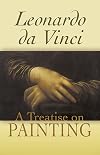
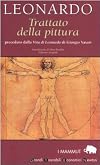
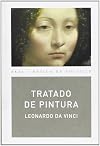
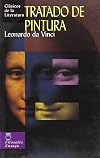
A Treatise on Painting
by Leonardo da Vinci
On This Page
Description
Leonardo da Vinci's written observations about painting rank among the most remarkable from any era. Never edited by the author himself into a single coherent book, these writings were compiled many years after Leonardo's death into the principal repository of his practical thoughts on the techniques of drawing and painting. A Treatise on Painting begins with precise instructions on drawing the human body and then moves on to techniques of rendering motion. Other topics include perspective, show more composition, the expression of various emotions, creating effects of light and shadow, and color. show lessTags
Recommendations




















Member Reviews
Este es el libro que deberían leer todos los que se han leído "El código Da Vinci" y van por ahí diciendo tonterías sobre lo que Leonardo pintó o dejó de pintar en "La Última Cena".
En realidad es un tratado completísimo con las ideas y conocimientos que el pintor tenía acerca de su arte, cómo elaborar las pinturas, cómo ver las escenas en perspectiva, cómo conseguir lo volúmenes o la sensación cerca - lejos, cómo adquirir destreza con el dibujo... Es una especie de miscelánea que respira aún lo medieval pero que se nota cómo ya vive en el Renacimiento. Y son destacables también los "retratos escritos" que hace de ciertas personas, como preparación para luego retratarlas en cuadros. Tiene sabrosas enseñanzas no show more sólo para el estudiante de bellas artes, sino también para usuarios entonces insospechados, como los fotógrafos o incluso los directores de cine. Que me consta que alguno de estos últimos aún aprendió algo que le vino bien del viejo genio florentino, gracias a este libro. show less
En realidad es un tratado completísimo con las ideas y conocimientos que el pintor tenía acerca de su arte, cómo elaborar las pinturas, cómo ver las escenas en perspectiva, cómo conseguir lo volúmenes o la sensación cerca - lejos, cómo adquirir destreza con el dibujo... Es una especie de miscelánea que respira aún lo medieval pero que se nota cómo ya vive en el Renacimiento. Y son destacables también los "retratos escritos" que hace de ciertas personas, como preparación para luego retratarlas en cuadros. Tiene sabrosas enseñanzas no show more sólo para el estudiante de bellas artes, sino también para usuarios entonces insospechados, como los fotógrafos o incluso los directores de cine. Que me consta que alguno de estos últimos aún aprendió algo que le vino bien del viejo genio florentino, gracias a este libro. show less
Oct 21, 2020Spanish
El Tratado de la Pintura comprende novecientos cuarenta y cuatro epígrafes, una colección de pensamientos y de notas extraídas de los manuscritos de Leonardo Da Vinci y compilada póstumamente (hacia 1550) por un autor anónimo. El Tratado comienza con una disquisición acerca de si la pintura es o no una ciencia, continúa con toda una reflexión filosófica sobre la manera que tiene el hombre de conocer –principalmente, a través de la vista. Leonardo destaca a la pintura por sobre la poesía. El pintor es, por lo tanto, “señor de toda clase de gentes y de las cosas todas”. Luego reflexiona también sobre la escultura, y dedica muchas páginas del Tratado a comparar la perspectiva lineal con la perspectiva menguante, la show more perspectiva del color y la perspectiva aérea. Destaca la importancia de las luces y sombras, el uso del color, y las técnicas adecuadas para representar personas, paisajes y objetos. show less
Jun 6, 2017Spanish
Ratings
Members
- Recently Added By
Lists

Renacimiento
24 works; 1 member

Art History and Appreciation
36 works; 1 member
Author Information

449+ Works 6,119 Members
Leonardo da Vinci, born April 15, 1452, is often called the archetype of the Renaissance Man; this genius in science, engineering, aeronautics, technology was also one of the world's greatest painters, as well as a sculptor, an architect, and a town planner. Born in Vinci, Leonardo was apprenticed as a 14-year-old to the sculptor-painter Andrea show more Verrocchio in Florence. In 1482, he went to Milan as a military engineer, sculptor, and architect, and remained there for 17 years. While in Milan, he designed the crossing tower of the Milan cathedral and, among many other works, painted The Last Supper (1496--97), a mural in the Church of Santa Maria delle Grazie. During these years in Milan, da Vinci also composed his Treatise on Painting (1489--1518) and filled his notebooks. Leonardo's drawing of the Vitruvian Man is also regarded as a cultural icon. In 1499, da Vinci returned to Florence. The Mona Lisa (1503--06) dates from that period. After a short and unsuccessful time in Rome (1513--16), he settled in France under the patronage of Francis I. He died in Amboise at the age of 67 on May 2, 1519, and was buried in the Chapel of Saint-Hubert in Château d'Amboise, in France. A supposedly lost manuscript of da Vinci's was rediscovered at the National Library in Madrid in 1965 and published in 1974. (Bowker Author Biography) show less
All Editions
Some Editions
Awards and Honors
Notable Lists
Series
Belongs to Publisher Series
Common Knowledge
- Canonical title
- A Treatise on Painting
- Original title
- Trattato della pittura
- Original publication date
- 1651
- People/Characters*
- Stefano della Bella
*Some information comes from Common Knowledge in other languages. Click "Edit" for more information.
Classifications
Statistics
- Members
- 206
- Popularity
- 159,349
- Reviews
- 2
- Rating
- (4.14)
- Languages
- 6 — English, French, German, Italian, Polish, Spanish
- Media
- Paper, Ebook
- ISBNs
- 46
- UPCs
- 1
- ASINs
- 7