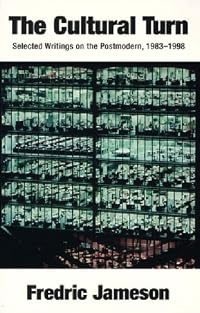
Cultural Turn: Selected Writings on the Postmodern 1983-1998
by Fredric Jameson
On This Page
Description
Fredric Jameson, a leading voice on the subject of postmodernism, assembles his most powerful writings on the culture of late capitalism in this essential volume. Classic insights on pastiche, nostalgia, and architecture stand alongside essays on the status of history, theory, Marxism, and the subject in an age propelled by finance capital and endless spectacle. Surveying the debates that blazed up around his earlier essays, Jameson responds to critics and maps out the theoretical positions show more of postmodernism's prominent friends and foes. show lessTags
Recommendations







Member Reviews
Well, this is seminal stuff. The postmodern defined and instantiated; while there's possibly a split in use-value between the first couple of essays, which are structure-setting, and some of the ones that apply Marxian analyses to the postmodern characteristics of some literature, film and architecture, it's still cool for the versed reader to have all this stuff in one place. Jameson's cornerstones you know if you've read anything about this stuff before (or even if you haven't, you'll probably find this stuff familiar if you've ever, like, watched The Simpsons): the move from parody into pastiche, the crisis of historicity, the "perpetual present," the multiplication away from the modern, even--we go back this far--the arguments show more against the vulgar Marxism of economic base and cultural superstructure (Gramsci is not mentioned(!). A lot of it must have seemed like collation even then, but oh, what exquisite collation! "It seems to be easier for us today to imagine the thoroughgoing deterioration of the earth and of nature than the breakdown of late capitalism; perhaps that is due to some weakness in our imaginations." E.g. And other times he meanders, and you wish for a little more of the vulgar Marxist's clear-eyed flensing.
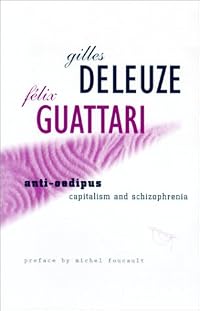
Ironically in light of Colin MacCabe's genuinely moronic back-cover blurb to the effect that "it can be truly said that nothing cultural is alien to him", Jameson's unexpected shining moment here is in connecting the tripartite "M-C-M" movement of money (liquid acquisition, capitalization, "solid" acquisition--land, factories, etc.) in Capital with the rise of the postmodern financial sector--the sign of a neoimperial capitalism that has extended itself as far as possible, as with the old imperial financial centres of the early 20th century, and then the intensive turn, "the feverish search not so much for new markets--as these are also saturated--as for the new kind of profits available in financial transactions themselves and as such". But then, he connects it too with land, which from our perspective seems so apparent as to be almost quaint, but from a Marxist perspective that theorizes capital value as labour and exchange value, is evidently a relief to him, twenty years back--land is not a capital refuge, it's the last deterritorialization, in the Anti-Oedipus sense--the deterritorialization of territory itself, its transformation into the biggest bonanza of liquidity ever. Welcome to the subprime crisis! It's the Spanish Empire and Inca silver all over again!
Man, that's depressing. And all Jameson can think to do with this insight is a little minianalysis of Rockefeller Center's development history and the referentiality of postmodern architecture, no longer the modern phallus, no longer the storehouse of treasure. Super interesting, but you wonder if he's now wishing he could appear to his younger self in a dream and cause him to make those few missing connections. And then what? To the IMF? Nobody ever listens to prophetic Marxist savants, even when they should (49% of the time at most). show less
Ironically in light of Colin MacCabe's genuinely moronic back-cover blurb to the effect that "it can be truly said that nothing cultural is alien to him", Jameson's unexpected shining moment here is in connecting the tripartite "M-C-M" movement of money (liquid acquisition, capitalization, "solid" acquisition--land, factories, etc.) in Capital with the rise of the postmodern financial sector--the sign of a neoimperial capitalism that has extended itself as far as possible, as with the old imperial financial centres of the early 20th century, and then the intensive turn, "the feverish search not so much for new markets--as these are also saturated--as for the new kind of profits available in financial transactions themselves and as such". But then, he connects it too with land, which from our perspective seems so apparent as to be almost quaint, but from a Marxist perspective that theorizes capital value as labour and exchange value, is evidently a relief to him, twenty years back--land is not a capital refuge, it's the last deterritorialization, in the Anti-Oedipus sense--the deterritorialization of territory itself, its transformation into the biggest bonanza of liquidity ever. Welcome to the subprime crisis! It's the Spanish Empire and Inca silver all over again!
Man, that's depressing. And all Jameson can think to do with this insight is a little minianalysis of Rockefeller Center's development history and the referentiality of postmodern architecture, no longer the modern phallus, no longer the storehouse of treasure. Super interesting, but you wonder if he's now wishing he could appear to his younger self in a dream and cause him to make those few missing connections. And then what? To the IMF? Nobody ever listens to prophetic Marxist savants, even when they should (49% of the time at most). show less
Ratings
Members
- Recently Added By
Author Information

72+ Works 6,711 Members
Fredric R. Jameson, Marxist theorist and professor of comparative literature at Duke University, was born in Cleveland in 1934. He earned a Ph.D. from Harvard University and taught at Harvard, the University of California at San Diego, and Yale University before moving to Duke in 1985. He most famous work is Postmodernism, or the Cultural Logic of show more Late Capitalism, which won the Modern Language Association's Lowell Award. Jameson was among the first to associate a specific set of political and economic circumstances with the term postmodernism. His other books include Sartre: The Origin of a Style, The Seeds of Time, and The Cultural Turn. (Bowker Author Biography) show less
Series
Belongs to Publisher Series
Radical Thinkers (44 - Set 4(8))
Common Knowledge
- Original title
- The Cultural Turn: Selected Writings on the Postmodern, 1983-1998
- Original publication date
- 1998
Classifications
- Genres
- Nonfiction, Literature Studies and Criticism, Philosophy, Fiction and Literature
- DDC/MDS
- 809.9113 — Literature & rhetoric Literature, rhetoric & criticism History, description, critical appraisal of more than two literatures Literature displaying specific features, miscellaneous writings Literature displaying specific qualities of style, mood, viewpoint Nontraditional viewpoints
- LCC
- PN98 .P67 .J27 — Language and Literature Literature (General) Literature (General) Criticism
- BISAC
Statistics
- Members
- 311
- Popularity
- 101,996
- Reviews
- 1
- Rating
- (4.03)
- Languages
- 5 — English, Lithuanian, Portuguese, Spanish, Turkish
- Media
- Paper, Ebook
- ISBNs
- 9
- ASINs
- 4