1759: The Year Britain Became Master of the World
by Frank McLynn
On This Page
Description
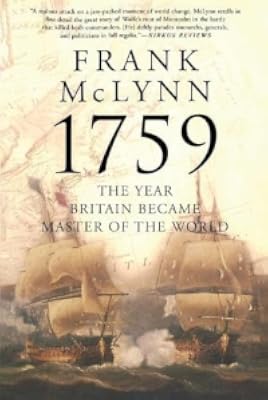
History would have been different if not for the events of 1759. It was the fourth year of the Seven Years', or the French-and-Indian, War, and crucial victories against the French in the first truly global conflict laid the foundations of British supremacy throughout the world for the next hundred years. The defeat of the French not only paved the way for the global hegemony of the English language but also made the emergence of the United States possible. Guiding us through England's often show more extremely narrow victories in India, North America, and the Caribbean, McLynn controversially suggests that the birth of the British Empire was more a result of luck than of rigorous planning. McLynn includes anecdotes of the intellectual and cultural leaders of the day--Swedenborg, Hume, Voltaire--and sources ranging from the Vatican archives to oral histories of Native Americans.--From publisher description. show lessTags
Recommendations
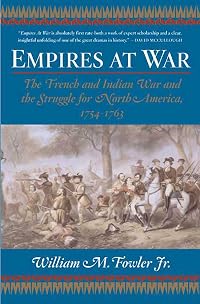

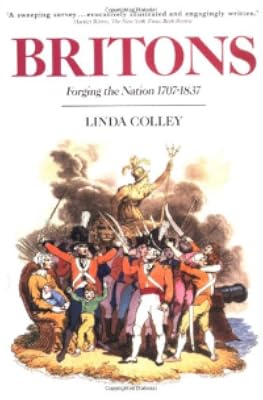
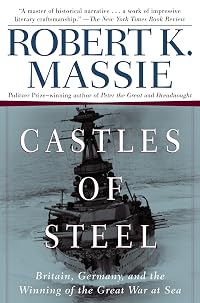
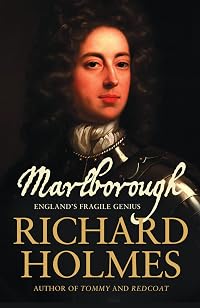








Member Reviews
History books are notably hard to write for an inattentive, probably ill-educated mass audience. Books written by historians for historians are hard to sell, because they're usually inelegantly written. Okay, they're usually BORING to the point of suicide.
This is a popular history written like a standard work of today's non-fiction, with real attention to the narrative drive of the story and also a fine hand at illuminating the character of the dramatis personae. McLynn's book is very involving, and it's a rarity in that the subject matter, the role of the events of a single year in the subsequent development of the world, is handled un-portentously.
The urge to shout and wave one's arms about when presenting historical facts that one show more knows will be important later must be nigh on irresistible. McLynn resists. He lets the story develop at the same pace as the year itself did, though inevitably the events move out of strict time sequence because the narrative is driven by the locations as much as by the time. I was impressed by the analysis in the book, the support for his contention that, had 1759 turned out differently at any point, then so would our present world. It's very hard to make that weave into a book about the past without coming across as a cranky, tendentious old fuffertut. McLynn manages to do it, so KUDOS!
Why, then, only 3-1/2 stars? Because I don't think McLynn accomplished his stated aim of making a watertight case for 1759 being the final turning-point of the British march to world domination. I'm certainly not an historian, but there are some unsupported assertions in the book that could simply represent holes in my education and be facts that are Received Wisdom. But there are enough of them that I wasn't all the way convinced by the text.
Recommended? Oh yes, please go get one and read it of you're an Anglophile, a Francophobe, or an aficionado of the 18th century's fascinating history. It will repay you...especially the last chapter, on the naval Battle of Quiberon Way. Exciting stuff! show less
This is a popular history written like a standard work of today's non-fiction, with real attention to the narrative drive of the story and also a fine hand at illuminating the character of the dramatis personae. McLynn's book is very involving, and it's a rarity in that the subject matter, the role of the events of a single year in the subsequent development of the world, is handled un-portentously.
The urge to shout and wave one's arms about when presenting historical facts that one show more knows will be important later must be nigh on irresistible. McLynn resists. He lets the story develop at the same pace as the year itself did, though inevitably the events move out of strict time sequence because the narrative is driven by the locations as much as by the time. I was impressed by the analysis in the book, the support for his contention that, had 1759 turned out differently at any point, then so would our present world. It's very hard to make that weave into a book about the past without coming across as a cranky, tendentious old fuffertut. McLynn manages to do it, so KUDOS!
Why, then, only 3-1/2 stars? Because I don't think McLynn accomplished his stated aim of making a watertight case for 1759 being the final turning-point of the British march to world domination. I'm certainly not an historian, but there are some unsupported assertions in the book that could simply represent holes in my education and be facts that are Received Wisdom. But there are enough of them that I wasn't all the way convinced by the text.
Recommended? Oh yes, please go get one and read it of you're an Anglophile, a Francophobe, or an aficionado of the 18th century's fascinating history. It will repay you...especially the last chapter, on the naval Battle of Quiberon Way. Exciting stuff! show less
A comprehensive history of the year 1759, seen from the perspective of Britain and its primary opponent in the Seven Years War, then in progress; France. McLynn looks at the theatres of war - Canada, India, Prussia, the West Indies and the home front. Not being a specialist in 18th Century history, I had previously been unaware of the French invasion plans. It was also interesting to read of the political influence of Bonnie Prince Charlie after the 1745 uprising; truly these could be described as Charles Edward Stuart's "wilderness years", but - spoiler alert! - these never came to an end. Although all French plans for the invasion of Britain theoretically had Charles Stuart written into them, in practice this was only to bring show more Jacobite factions, both in Britain and in exile, on-side for as long as they were useful. The Young Pretender was in practice kept as much out of the loop as possible.
McLynn prefaces most of the chapters with examinations of the cultural events and personalities of the year. This I found interesting. Indeed, his pen portraits of some well-known names were quite illuminating, James Wolfe, for example. And I discovered the likely origin of some well-known words, such as 'bigot' (although not stated, the connection to Francois Bigot, a deeply corrupt French administrator in Canada cannot be coincidence) and 'Silhouette' (Etienne de Silhouette, Louis XV's finance minister, "...a man whose phantom career made his name synonymous with a mere outline..."). He also gives a good picture of the nature and organisation of the North American peoples that were to play quite a large part in the conflict in Canada. He is less open about slavery in the West Indies; at this time, the triangular trade was in full swing, but McLynn treats it only as a part of the background, as abolitionism had little or no impact on the politics of the era. This isn't a book about slavery, and it was written some twenty years ago; but some examination of the state of slavery, which after all was considered a big part of the economic equation of the times, would perhaps be expected now, and slave revolts were to break out in the years following 1759.
I found this a difficult read. The book presents page after page of tightly-packed print in a small typeface, and McLynn doesn't allow his train of thought to be at all halted briefly within chapters. The comprehensiveness becomes your enemy here; and, despite the book's title and the author's thesis, the story requires extension both before and after 1759, which McLynn provides. It was a year of victories, to be sure, but the stories McLynn tells continued into the remainder of the Seven Years War, which continued up to 1763. It's possible to make a case for that conflict being the turning point that led Britain to global dominance; picking the middle year of the war seems just too convenient.
I had other problems with McLynn's style. He seems to be fond of using words that others won't be familiar with, some of them utterly out of context - "Fabian" used as an adjective, for example. The Fabian Society would not come into existence until 1884, so he can't be using the word to describe some sort of radicalism (and even if he was, it's so far out of context as to be unbelievable). The only other definition I could find of "Fabian" used adjectivally was "Like Fabianus, a bean farmer". He speaks of "Leicester House", which I divined to refer to the Prince of Wales' political faction; when I checked this, I found I was right, but then why only use it in Chapter Eight and not throughout the rest of the book? He also uses the term "Grub Street" to refer to the London press; that one I knew, but others might not. And there were statements which I think he was wrong about - at one point, McLynn talks about the strangeness of the Canadian environment, with beasts that Europeans would not have come across before, including bears - which were common in quite widespread parts of Europe well into the 19th and even 20th centuries. And McLynn quotes Dr. Samuel Johnson's "most famous saying" which I'd never come across in nearly 60 years of reading. The style struck me as quite dry, partly driven by the need to get so much detail in. I put up with it up to Chapter 6, 'Wolfe at Quebec'; I was going to bail out at that point (after all, I'm British and so I know how it ends), but I then found the following two chapters, on French invasion plans (even though the chapter title, 'Lagos Bay, Portugal', was rather misleading, as the battle of that name only takes place in the final few pages) and the Battle of Minden re-engaged my interest - though once again, there is a vast amount of detail in that chapter, and the supplied map is totally inadequate. By the end of chapter eight, I had had enough; I skimmed the last three chapters and cut to the Conclusion.
If I ever needed to know the intimate details of the Canada campaign, or of Roger's Rangers, I can go back to this book; but I don't anticipate reading it again for pleasure or enlightenment. show less
McLynn prefaces most of the chapters with examinations of the cultural events and personalities of the year. This I found interesting. Indeed, his pen portraits of some well-known names were quite illuminating, James Wolfe, for example. And I discovered the likely origin of some well-known words, such as 'bigot' (although not stated, the connection to Francois Bigot, a deeply corrupt French administrator in Canada cannot be coincidence) and 'Silhouette' (Etienne de Silhouette, Louis XV's finance minister, "...a man whose phantom career made his name synonymous with a mere outline..."). He also gives a good picture of the nature and organisation of the North American peoples that were to play quite a large part in the conflict in Canada. He is less open about slavery in the West Indies; at this time, the triangular trade was in full swing, but McLynn treats it only as a part of the background, as abolitionism had little or no impact on the politics of the era. This isn't a book about slavery, and it was written some twenty years ago; but some examination of the state of slavery, which after all was considered a big part of the economic equation of the times, would perhaps be expected now, and slave revolts were to break out in the years following 1759.
I found this a difficult read. The book presents page after page of tightly-packed print in a small typeface, and McLynn doesn't allow his train of thought to be at all halted briefly within chapters. The comprehensiveness becomes your enemy here; and, despite the book's title and the author's thesis, the story requires extension both before and after 1759, which McLynn provides. It was a year of victories, to be sure, but the stories McLynn tells continued into the remainder of the Seven Years War, which continued up to 1763. It's possible to make a case for that conflict being the turning point that led Britain to global dominance; picking the middle year of the war seems just too convenient.
I had other problems with McLynn's style. He seems to be fond of using words that others won't be familiar with, some of them utterly out of context - "Fabian" used as an adjective, for example. The Fabian Society would not come into existence until 1884, so he can't be using the word to describe some sort of radicalism (and even if he was, it's so far out of context as to be unbelievable). The only other definition I could find of "Fabian" used adjectivally was "Like Fabianus, a bean farmer". He speaks of "Leicester House", which I divined to refer to the Prince of Wales' political faction; when I checked this, I found I was right, but then why only use it in Chapter Eight and not throughout the rest of the book? He also uses the term "Grub Street" to refer to the London press; that one I knew, but others might not. And there were statements which I think he was wrong about - at one point, McLynn talks about the strangeness of the Canadian environment, with beasts that Europeans would not have come across before, including bears - which were common in quite widespread parts of Europe well into the 19th and even 20th centuries. And McLynn quotes Dr. Samuel Johnson's "most famous saying" which I'd never come across in nearly 60 years of reading. The style struck me as quite dry, partly driven by the need to get so much detail in. I put up with it up to Chapter 6, 'Wolfe at Quebec'; I was going to bail out at that point (after all, I'm British and so I know how it ends), but I then found the following two chapters, on French invasion plans (even though the chapter title, 'Lagos Bay, Portugal', was rather misleading, as the battle of that name only takes place in the final few pages) and the Battle of Minden re-engaged my interest - though once again, there is a vast amount of detail in that chapter, and the supplied map is totally inadequate. By the end of chapter eight, I had had enough; I skimmed the last three chapters and cut to the Conclusion.
If I ever needed to know the intimate details of the Canada campaign, or of Roger's Rangers, I can go back to this book; but I don't anticipate reading it again for pleasure or enlightenment. show less
As a Brit, reading this book is easy. After all, we come out on top in all the particular campaigns talked about. I imagine a patriotic Frenchman would find it rather irritating.
However, I must somewhat take issue with the title of the book. 1759 was not, so far as I am aware, quite the year that Frank McLynn cranks it out to be. Oh to be sure there were a crucial series of events, but Canada and India were not finished off for another couple of years, the war in Europe itself dragged on, and so on and so forth. The only particular part where I think the subtitle is merited is when it comes the Battle of Quiberon Bay, and even there it is incidental. The Seven Years War was the point when Britain managed to get naval logistics sorted show more out, and Quiberon Bay was surely one of the results. The seeds harvested at Trafalgar were sowed here, and in that small realm the title has some truth.
A fun read though, as I said. And quite useful in its way if you want a little more detail on the first half of the Seven Years War - at least from Britain's perspective. For as I have intimated, this book is thoroughly Anglo-centric. show less
However, I must somewhat take issue with the title of the book. 1759 was not, so far as I am aware, quite the year that Frank McLynn cranks it out to be. Oh to be sure there were a crucial series of events, but Canada and India were not finished off for another couple of years, the war in Europe itself dragged on, and so on and so forth. The only particular part where I think the subtitle is merited is when it comes the Battle of Quiberon Bay, and even there it is incidental. The Seven Years War was the point when Britain managed to get naval logistics sorted show more out, and Quiberon Bay was surely one of the results. The seeds harvested at Trafalgar were sowed here, and in that small realm the title has some truth.
A fun read though, as I said. And quite useful in its way if you want a little more detail on the first half of the Seven Years War - at least from Britain's perspective. For as I have intimated, this book is thoroughly Anglo-centric. show less
This book is very detailed and informative. However, the writing style of the author is very dry.I feel like i'm reading a textbook. It took me a while to get through this book. I would only recommend this book if you really want to learn more about the subject matter, otherwise find somethings else that provides better narration of the events for the year 1759.
Ratings
Members
- Recently Added By
Lists

What A Year: Books titled with a particular year
147 works; 2 members
Author Information

33 Works 3,258 Members
Frank McLynn is currently visiting professor in the Department of Literature at Strathclyde University.
Common Knowledge
- Important places
- Québec, Canada
- Important events
- French and Indian War
Classifications
- Genres
- History, Nonfiction, General Nonfiction
- DDC/MDS
- 941.07 — History & geography History of Europe British Isles Historical periods of British Isles 1714-1837 Period of House of Hanover
- LCC
- DA500 .M24 — History of Europe, Asia, Africa and Oceania Great Britain History of Great Britain England History By period Modern, 1485- 1714-1760
- BISAC
Statistics
- Members
- 243
- Popularity
- 133,504
- Reviews
- 4
- Rating
- (3.75)
- Languages
- English
- Media
- Paper, Ebook
- ISBNs
- 7
- ASINs
- 2