The Wild Irish Girl
by Lady Morgan
On This Page
Description
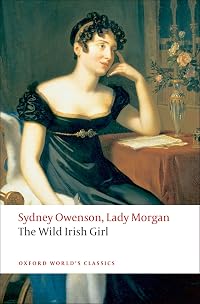
`I long to study the purely national, natural character of an Irishwoman'When Horatio, the son of an English lord, is banished to his father's Irish estate as punishment for gambling debts and dissipated living, he adopts the persona of knight errant and goes off in search of adventure. On the wild west coast of Connaught he finds remnants of a romantic Gaelic past adilapidated castle, a Catholic priest, a deposed king and the king's lovely and learned daughter, Glorvina. In this setting and show more among these characters Horatio learns the history, culture and language of a country he had once scorned, but he must do so in disguise for his own English ancestors areresponsible for the ruin of the Gaelic family he comes to love.Written after the Act of Union, The Wild Irish Girl (1806) is a passionately nationalistic novel and a founding text in the discourse of Irish nationalism. The novel proved so controversial in Ireland that Sydney Owenson, later Lady Morgan, was put under surveillance by Dublin Castle. show lessTags
Recommendations



















Member Reviews
The Short and Sweet of It
Horatio has been a bad boy, and as his punishment, he is sent to his father's estate in Ireland. While there, he infiltrates the residence of the local Irish royalty his family displaced. He quickly becomes enamored of the family and their
A Bit of a Ramble
This story's subtitle is "A National Tale" and I think that subtitle is more relevant than the title itself. Much of this book is focused on A Look at the Legend of Ireland: History, Culture, and Politics. The "wild Irish girl" in question, Glorvina, is certainly a focal point as she is the vehicle through which much of the Irish culture is filtered for our English protagonist, Horatio. While the romance between Horatio and Glorvina remains at the forefront of show more Horatio's letters, it is the reversal of Horatio's biased opinions of the Irish and the breakdown of Irish stereotypes that really takes center stage (and comprises the majority of the text).
I think if I was in the right mood while reading this, I could have learned a crapton about Ireland, especially if I had done further research on some of the information. I really am interested to know if the history presented is in fact true. Unfortunately, I do not currently have the time to delve into a project of this sort, so I took the lessons learned at face value and maintained my focus on the story rather than the national history.
And the "story" - the romance - is certainly worthy of attention. Horatio and Glorvina have a slow, understated courtship which is sweet in its subtlety (a type of romance not popular in contemporary lit). Their love is practically unsaid, a connection of minds and personality. To add a twist to the tale, the reader receives the plot through letters Horatio is writing to one of his friends back in England. I find epistolary novels interesting in that they have such a unique point of view - so focused on the thoughts of the protagonist.
Something I didn't like: I would like to start by saying that I adore footnotes. I like annotated copies of works. I actually enjoy reading books about books. And yet, I was annoyed with the footnotes in this book, and pretty much skimmed them (okay, I may even have just completely skipped a few). I couldn't fully explain why these footnotes are so different from those I adore. I guess, in part, I didn't understand why some of the footnotes were footnotes. So much of the text is taken up with discussing Irish history and culture that the separate footnotes for certain historical/cultural tidbits confused me. And I wasn't too impressed with the tone of the footnotes; they weren't that interestingly written (and many footnotes I have really enjoyed are brimming with personality). I guess I need a unique separation and a real voice for my footnotes.
The Wild Irish Girl was a wee bit entertaining and a wee bit informative but didn't wow me on either count. I will say, though, that I really mean it when I say if you get the chance, you should read it. show less
Horatio has been a bad boy, and as his punishment, he is sent to his father's estate in Ireland. While there, he infiltrates the residence of the local Irish royalty his family displaced. He quickly becomes enamored of the family and their
A Bit of a Ramble
This story's subtitle is "A National Tale" and I think that subtitle is more relevant than the title itself. Much of this book is focused on A Look at the Legend of Ireland: History, Culture, and Politics. The "wild Irish girl" in question, Glorvina, is certainly a focal point as she is the vehicle through which much of the Irish culture is filtered for our English protagonist, Horatio. While the romance between Horatio and Glorvina remains at the forefront of show more Horatio's letters, it is the reversal of Horatio's biased opinions of the Irish and the breakdown of Irish stereotypes that really takes center stage (and comprises the majority of the text).
I think if I was in the right mood while reading this, I could have learned a crapton about Ireland, especially if I had done further research on some of the information. I really am interested to know if the history presented is in fact true. Unfortunately, I do not currently have the time to delve into a project of this sort, so I took the lessons learned at face value and maintained my focus on the story rather than the national history.
And the "story" - the romance - is certainly worthy of attention. Horatio and Glorvina have a slow, understated courtship which is sweet in its subtlety (a type of romance not popular in contemporary lit). Their love is practically unsaid, a connection of minds and personality. To add a twist to the tale, the reader receives the plot through letters Horatio is writing to one of his friends back in England. I find epistolary novels interesting in that they have such a unique point of view - so focused on the thoughts of the protagonist.
Something I didn't like: I would like to start by saying that I adore footnotes. I like annotated copies of works. I actually enjoy reading books about books. And yet, I was annoyed with the footnotes in this book, and pretty much skimmed them (okay, I may even have just completely skipped a few). I couldn't fully explain why these footnotes are so different from those I adore. I guess, in part, I didn't understand why some of the footnotes were footnotes. So much of the text is taken up with discussing Irish history and culture that the separate footnotes for certain historical/cultural tidbits confused me. And I wasn't too impressed with the tone of the footnotes; they weren't that interestingly written (and many footnotes I have really enjoyed are brimming with personality). I guess I need a unique separation and a real voice for my footnotes.
The Wild Irish Girl was a wee bit entertaining and a wee bit informative but didn't wow me on either count. I will say, though, that I really mean it when I say if you get the chance, you should read it. show less
Ratings
Members
- Recently Added By
Lists

1898 C.K. Shorter List of Best 100 Novels
100 works; 34 members

el
1,139 works; 1 member
Author Information

22+ Works 311 Members
Some Editions
Awards and Honors
Notable Lists
Series
Belongs to Publisher Series
Work Relationships
Common Knowledge
- Canonical title
- The Wild Irish Girl
- Original title
- The Wild Irish Girl, A National Tale
- Original publication date
- 1806
- People/Characters
- the Prince of Inismore
- Important places
- Ireland
- Epigraph
- "Questa gente benche mostra selvagea/E pur gli monte la contrada accierba/Nondimento l'e dolcie ad cui l'assagia."
- First words
- If there are certain circumstances under which a fond father can address an imprisoned son, without suffering the bitterest heart-renderings of paternal agony, such are not those under which I now address you.
- Last words
- (Click to show. Warning: May contain spoilers.)Cherish by kindness into renovating life those national virtues, which though so often blighted in the full luxuriance of their vigorous blow by the fatality of circumstances, have still been ever found vital at the root, which only want the nutritive beam of encouragement, the genial glow of confiding affection, and the refreshing dew of tender commiseration, to restore them to their pristine bloom and vigour: place the standard of support within their sphere; and like the tender vine which has been suffered by neglect to waste its treasures on the sterile earth, you will behold them naturally turning and gratefully twining round the fostering stem, which rescues them from a cheerless and grovelling destiny: and when by justly and adequately rewarding the laborious exertions of that life devoted to your service, the source of their poverty shall be dried up, and the miseries that flowed from it shall be forgotten; when the warm hand of benevolence shall have wiped away the cold dew of despondency from their brow; when reiterated acts of tenderness and humanity shall have thawed the ice which chills the native flow of their ardent feelings; and when the light of instruction shall have dispelled the gloom of ignorance and prejudice from their neglected minds, and their lightened hearts shall again throb with the cheery pulse of national exility;---then, then, and not till then, will you behold the day-star of national virtue rising brightly over the horizon of their happy existence; while the felicity which has awakened to the touch of reason and humanity, shall return back to, and increase the source from which it originally flowed: as the elements, which in gradual progress brighten into flame, terminate in a liquid light, which, reverberating in sympathy to its former kindred, genially warms and gratefully cheers the whole order of universal nature.
- Original language
- English
Classifications
Statistics
- Members
- 189
- Popularity
- 172,447
- Reviews
- 1
- Rating
- (3.58)
- Languages
- English, Italian
- Media
- Paper, Ebook
- ISBNs
- 16
- ASINs
- 2