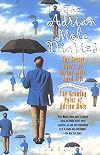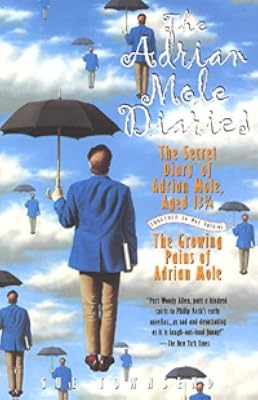
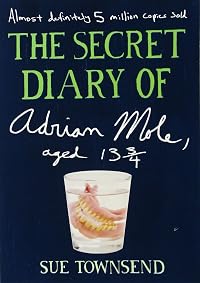
The Adrian Mole Diaries: The Secret Diary of Adrian Mole, Aged 13¾ & The Growing Pains of Adrian Mole
by Sue Townsend
Adrian Mole (Collections and Selections — Omnibus 1-2)
On This Page
Description
British adolescent angst has never been so "laugh-out-loud funny" (The New York Times)—the journey begins with these first two books in the heartbreakingly hilarious series.Commiserate with "one of literature's most endearing figures" (The Observer)—a sharp-witted, pining, and achingly honest underdog of great expectations and dwindling patience who knows all (or believes he does) and tells all. First published in 1982, Adrian Mole's chronicle of angst has sold more than 20 million show more copies worldwide, spawned seven sequels, been adapted for television, and staged as a musical—truly "a phenomenon" (The Washington Post).
The Secret Diary of Adrian Mole, Aged 13and ¾: Adrian Mole must amass his grievances—his acne vulgaris is grotesque; his crush, Pandora, has received seventeen Valentine's Day cards (seventeen!); his PE teacher is a sadist; he fears his parents' marriage is over since they no longer smoke together; his dog has gone AWOL; no one appreciates his poetry; and Animal Farm has set him off pork for good. If everyone were as appalled as Adrian Mole, it would be a better world. For now, for us, it's just "screamingly funny" (The Sunday Times).
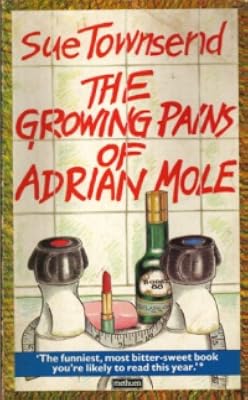
The Growing Pains of Adrian Mole: Growing up among inferiors in Great Britain isn't easy for a sensitive "poet of the Midlands" like Adrian, considering everything in the world is conspiring to scar him for life—his hormones are in a maelstrom; his mother is pregnant (at her age!); his girlfriend is in shut down; and he's become allergic to non-precious metals. As his "crisply hilarious saga" (Booklist) continues, the changes Adrian undergoes will surely be profound.
"Townsend's wit is razor sharp" (Daily Mirror) as she shows us the world through the haunted eyes of her luckless teenage diarist and self-proclaimed "undiscovered intellectual," proving again and again why she's been called "a national treasure" (The New York Times Book Review).
. show less
Tags
Recommendations














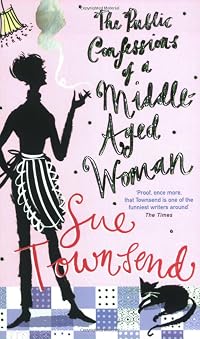



Member Reviews
It's surprisingly easy to forget at this distance, nearly forty years on and post-Harry-Potter, but Adrian Mole was the British publishing sensation of the 1980s. Sue Townsend sold over six million copies of the first two books in the UK within the decade, which put her a long way ahead of niche authors like Jeffrey Archer, Jackie Collins and Barbara Taylor Bradford as the bestselling writer of the eighties. And yet, she was exactly the sort of "sponger" Mrs Thatcher was keenest to demonise: a working-class single mother from the East Midlands who left school at fifteen without any proper qualifications...
Like many other great comic writers, Townsend started out as a playwright, when she was persuaded, in her early thirties, to go to a show more writing workshop at a local theatre. A couple of successful stage plays were followed by a BBC commission for a short series of radio plays about a teenager called Nigel Mole (later changed to Adrian to avoid confusion with the hero of Down with skool!). And the rest, as they say, is history.
A lot of the appeal of Adrian Mole is quite simply down to it being very clever comic writing. All the diaries are full of brilliant one-liners and more sophisticated buried jokes, some that you would probably only spot on a third or fourth reading. There are brilliant set-pieces in which absurd situations are brought about in the most natural and plausible way imaginable. But it also succeeded commercially because of the way Townsend was able to sneak a lot of the hard realities of Thatcherite Britain into a superficially innocent narrative: it was a book that you could enjoy whether you were an adult or a teenager, working-class or middle-class, on the left or on the right. Re-reading forty years on, it's striking how multi-culti it was: even in the early eighties this very mainstream book was full of non-white, non-heterosexual and non-stereotype characters. Reading it obviously didn't reform British society and overcome its prejudices, but it might have mitigated a few of them.
Townsend talked about the diary form as a very easy one to work with: she felt that you could do anything you like with it, provided you stuck to a linear time-sequence. (And a single point of view, obviously.) In a way, teenage Adrian is just an updated Mr Pooter, reporting on things that don't make sense to him but are much clearer to us, and getting into embarrassing or humiliating situations that he tells us about in a disarmingly frank way (going to A&E with a model aeroplane stuck to his nose after a failed attempt to try glue-sniffing). His overestimation of his own literary talents and his failure to understand other people (especially women) often make him a little bit contemptible, but this is always offset by his honesty, kindness and compassion. The way he is constantly being seduced by elderly people into becoming their unpaid carer is much more important to us than his conviction that his experimental novel Lo! The flat hills of my homeland and his serial-killer sitcom The white van are masterpieces. We can't help liking him and feeling that, if we had the bad luck to get into situations like those he is constantly finding himself in, we probably wouldn't do much better at maintaining our dignity. show less
Like many other great comic writers, Townsend started out as a playwright, when she was persuaded, in her early thirties, to go to a show more writing workshop at a local theatre. A couple of successful stage plays were followed by a BBC commission for a short series of radio plays about a teenager called Nigel Mole (later changed to Adrian to avoid confusion with the hero of Down with skool!). And the rest, as they say, is history.
A lot of the appeal of Adrian Mole is quite simply down to it being very clever comic writing. All the diaries are full of brilliant one-liners and more sophisticated buried jokes, some that you would probably only spot on a third or fourth reading. There are brilliant set-pieces in which absurd situations are brought about in the most natural and plausible way imaginable. But it also succeeded commercially because of the way Townsend was able to sneak a lot of the hard realities of Thatcherite Britain into a superficially innocent narrative: it was a book that you could enjoy whether you were an adult or a teenager, working-class or middle-class, on the left or on the right. Re-reading forty years on, it's striking how multi-culti it was: even in the early eighties this very mainstream book was full of non-white, non-heterosexual and non-stereotype characters. Reading it obviously didn't reform British society and overcome its prejudices, but it might have mitigated a few of them.
Townsend talked about the diary form as a very easy one to work with: she felt that you could do anything you like with it, provided you stuck to a linear time-sequence. (And a single point of view, obviously.) In a way, teenage Adrian is just an updated Mr Pooter, reporting on things that don't make sense to him but are much clearer to us, and getting into embarrassing or humiliating situations that he tells us about in a disarmingly frank way (going to A&E with a model aeroplane stuck to his nose after a failed attempt to try glue-sniffing). His overestimation of his own literary talents and his failure to understand other people (especially women) often make him a little bit contemptible, but this is always offset by his honesty, kindness and compassion. The way he is constantly being seduced by elderly people into becoming their unpaid carer is much more important to us than his conviction that his experimental novel Lo! The flat hills of my homeland and his serial-killer sitcom The white van are masterpieces. We can't help liking him and feeling that, if we had the bad luck to get into situations like those he is constantly finding himself in, we probably wouldn't do much better at maintaining our dignity. show less
I grew up with Adrian Mole (literally, we're the same age). He is the epitome of the insecure, somewhat clueless, never boring every lad. While some of his exploits are breathtakingly insipid (writing the great British novel without using the letter "e"), they are earnest and hysterical.
Adrian Mole is so good I don't know whether to admit that it makes me cry more often than I laugh at him. Miserable adolescence is the fate of most of us, but it is very well realised by Townsend. Hang in there, Adrian, we're rooting for you!
I chose this book to read because one of the review of Henrick Groen's Diary said that the book was similar to Adrian Mole's Diary. The style is very similar as they are both diaries of characters that have very dry wits and are laugh out loud funny. The difference of course being that Henrick is 83 and Adrian is 13. Adrian's entries are about pimples, girls, being bullied at school, charity work with the elderly, and his parents marital problems. The book is a bit dated as it was written in the late 1970s. I think if the main characters of books are teenagers then they should be marketed as YA books and not adult books. I think most teenagers would understand the situations, there is not profanity or sexual references that a boy that show more age wouldn't get it. show less
What a cracker. Laugh out loud diary of an adolescent...
This book wasn't at all what I had expected. After reading so many reviews about how hilariously funny it was, I found it to be a total let-down.
I chuckled over a few parts, but more often than not I was stuck on the British mannerisms and references to things of which I had no idea what the characters were talking about. I gave up after the fifth chapter.
Maybe others will find it a lot more humorous and easier to read than I did!
I chuckled over a few parts, but more often than not I was stuck on the British mannerisms and references to things of which I had no idea what the characters were talking about. I gave up after the fifth chapter.
Maybe others will find it a lot more humorous and easier to read than I did!
I checked this out on a day when I was sick and my supervisor sent me home. It helped take my mind off my misery and is so British and funny.
Members
- Recently Added By
Lists

Epistolary Books
105 works; 24 members

Which Books Made You Laugh Out Loud (Literally)
23 works; 2 members

Animals in the Title
498 works; 11 members
Author Information

49+ Works 16,522 Members
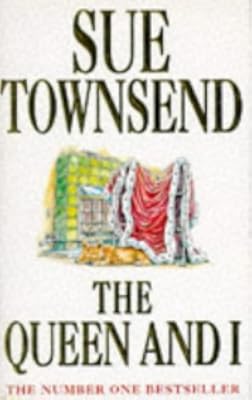
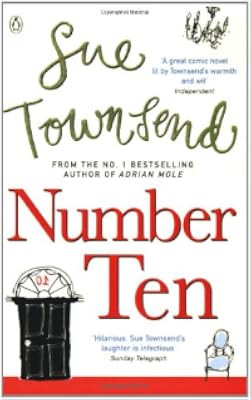
Sue Townsend was born in Leicester, England on April 2, 1946. She left school at fifteen and worked a series of jobs before becoming a full-time author. She was best known for her books about the neurotic diarist Adrian Mole including The Secret Diary of Adrian Mole Aged 13 ¾, The Growing Pains of Adrian Mole, Adrian Mole: The Wilderness Years, show more Adrian Mole and the Weapons of Mass Destruction, and Adrian Mole: The Prostrate Years. Her other works include The Queen and I, Number Ten, The Public Confessions of a Middle-Aged Woman Aged 55¾, and The Woman Who Went to Bed for a Year. She died after a stroke on April 10, 2014 at the age of 68. (Bowker Author Biography) show less
Series

Work Relationships
Common Knowledge
- Canonical title
- The Adrian Mole Diaries: The Secret Diary of Adrian Mole, Aged 13¾ & The Growing Pains of Adrian Mole
- Alternate titles
- The Secret Diary & Growing Pains of Adrian Mole Aged 13 ¾
- Original publication date
- 1986-04-10
- People/Characters
- Pandora Braithwaite; Adrian Mole
- Related movies
- The Secret Diary of Adrian Mole Aged 13¾ (1985 | IMDb); The Growing Pains of Adrian Mole (1987 | IMDb)
- Original language
- English
Classifications
Statistics
- Members
- 688
- Popularity
- 41,631
- Reviews
- 10
- Rating
- (3.94)
- Languages
- 6 — Catalan, English, Hungarian, Lithuanian, Portuguese, Spanish
- Media
- Paper, Ebook
- ISBNs
- 18
- ASINs
- 9