On This Page
Description
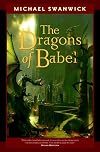
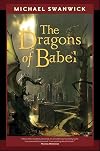
Enslaved by a war-dragon of Babel, young Will evacuates to the Tower of Babel where he meets the confidence trickster,Nat Whilk, and becomes a hero to the homeless living in the tunnels under the city. As he rises from an underling to a politician, Will falls in love with a high-elven woman he dare not aspire to.--From publisher description.Tags
Recommendations








Member Reviews
Set in the same world as [book: The Iron Dragon's Daughter]. Will is a happy-go-lucky fairie peasant boy--until a draconic cyborg machine of death crash lands in his village. The dragon chooses Will to be his mouthpiece and spy, which makes him grow up very fast and very dark. Eventually, Will escapes to the city, where he adventures first as a vigilante in the sewers and then as a conman in high society.
Unfortunately, this book doesn't hold together quite as well as The Iron Dragon's Daughter. It began as short stories, and the link between each set of adventures is a bit thin. Will himself doesn't really have a set personality. That said, however, Swanwick is not equalled in feypunk. There is no one else with his verve or craft. Even show more when he's a little off his game, he's still the best in town. show less
Unfortunately, this book doesn't hold together quite as well as The Iron Dragon's Daughter. It began as short stories, and the link between each set of adventures is a bit thin. Will himself doesn't really have a set personality. That said, however, Swanwick is not equalled in feypunk. There is no one else with his verve or craft. Even show more when he's a little off his game, he's still the best in town. show less
This sequel to [b:The Iron Dragon's Daughter|25781|The Iron Dragon's Daughter|Michael Swanwick|https://d.gr-assets.com/books/1288125591s/25781.jpg|522367] shares practically every wonderfully skewed fantasy AND SF tradition from the first book, but don't expect anything quite like the same story. We've still got demon cyborgs who are airships wanting to see the world burn while ostensibly under control of the war effort, mythical half-mortals who are absolutely in the minority in this Elf-rich land and highly coveted for their ability to withstand the iron, and so many richly thought-out stage pieces that make these novels truly delightful and subversive at the same time.
They're not your standard fantasy, even while so many of the show more tropes exist in outline, or perhaps in inverted colors.
The same thing is true even for the main plot of this book, where we have the poor orphan in his quest to become king. Sound familiar? Well, not the way this is told, because Will is a Dragon's dupe, an ignorant exile, a burgeoning and later quite skilled con-man, hero to the people, star-crossed lover of a princess, and the executor of the biggest heist in history.
The crown.
And the twist was so worth it. Every step of the way, this novel was an inverted mirror to so much classic SF and classic fantasy, full of rich ideas from every corner of both fields, and written with such style and competence and rich, rich myth, that I can do nothing but bow to a master storyteller.
I've read a good number of Swanwick's novels, now, and a collection of short stories, and I can honestly say that there isn't a bad or an even mediocre one in the bunch. They're all fantastic and my trust is now boundless. :) show less
They're not your standard fantasy, even while so many of the show more tropes exist in outline, or perhaps in inverted colors.
The same thing is true even for the main plot of this book, where we have the poor orphan in his quest to become king. Sound familiar? Well, not the way this is told, because Will is a Dragon's dupe, an ignorant exile, a burgeoning and later quite skilled con-man, hero to the people, star-crossed lover of a princess, and the executor of the biggest heist in history.
The crown.
And the twist was so worth it. Every step of the way, this novel was an inverted mirror to so much classic SF and classic fantasy, full of rich ideas from every corner of both fields, and written with such style and competence and rich, rich myth, that I can do nothing but bow to a master storyteller.
I've read a good number of Swanwick's novels, now, and a collection of short stories, and I can honestly say that there isn't a bad or an even mediocre one in the bunch. They're all fantastic and my trust is now boundless. :) show less
This has got to be one of the most original worlds I've read about in a long time. It took me quite a while to get used to--maybe as much as a quarter of the book--but it was well worth it in the end. What started out looking like a typical medieval-ish fantasy actually has a lot of very modern elements: refrigerators, subways, and motorcycles, to name a few.
But it's also a great melting pot of fantasy creatures and elements from all over the world. There's a definite favoring of the Fertile Crescent mythology--this is Babel, after all--but there are also creatures from Chinese, Aztec, Norse, Greek, and Russian stories, among others. There was a great phrase..."the thousand races," I think.
And of course they all come together at show more Babel, a massive city carved out of and built on top of Mount Ararat (bless Swanwick for not ignoring the location--I was dying to know!). I recognized city sectors and streets from New York, London, Boston, and Rome, and the mesh was wonderful and creative.
I picked this book up entirely because of the short story I'm working on, which was inspired by dragons (and Battlestar Glactica). The dragons in the story have far too small a role--I could read a whole book about them.
On that note, I kept reading this book almost entirely for the world building. I couldn't really connect with the character, though I was certainly interested in a lot of the people he met. I don't know, he just seemed so detached from his own story, like nothing that happened before really influenced how he behaved later, even though the whole point of the book is dependent on a decision he makes based on his experiences. I also had a tough time figuring out and keeping track of his age. Always throws me when I don't know about how old a character is. I would far rather have read this book from the perspective of the last character introduced in the book than from Will's.
Alas, there was the usual dose of fantasy sexism. Main character sees love interest, falls in love with her immediately, pursues her and persuades her to love him despite the fact that doing so will risk her life. I'm not saying the women characters weren't pretty cool--they definitely were--I'm just sick of these stupid love-at-first-sight, being-a-pest-gets-you-the-girl story lines. They teach readers lessons that are potentially very dangerous.
Finally, as much as the plot didn't drive forward, I did have most of it figured out as I went a long. Almost every twist was predictable, at least to me (someone who has read a LOT of books).
So yeah, really cool book but the characters and the plot let me down.
Quote Roundup
p58:
--"All right, the male elders can leave now. We'll handle this as a lady-moot"
--"Be ye sure? Ye haven't the right of coercion without us."
--"He cried. So we'll do this by persuasion."
Yep. Because even in fantasy, only women handle emotion. Ugh.
p69: Will's taken in by a bunch of centaurs.
--"I . . . I have to take a leak."
--"Piss away," she said carelessly. "You don't need my permission." And then, when he started into the woods, "Hey! Where the fuck do you think you're going?"
--Again Will flushed, remembering how casually his companions had voided themselves during the night, dropping turds behind them even as they conversed. "My kind needs privacy," he said, and plunged into the bush.
--Behind him, he heard Cammpaspe say, "Well, la-de-da!"
I just loved this little detail. It's not something that ever gets mentioned in fantasy, but I'm sure it's one of those things we all wonder at some point. (C'mon, if you've read Harry Potter and the Order of the Phoenix, you must've wondered how Firenze does his business.)
p84:
--"Someday the ancient war between the Ocean and the Land will be over, and the Moon will return to her mother's womb."
A great touch of detail hinting at a larger mythology.
--"Memento mori. It means 'remember to die.' It's on your list of things to do and if you haven't done it yet, you haven't led a full life."
An interesting take on this phrase that I've never heard before.
p111:
--"There's an old saying: Teach a man to fish, and he'll only eat when the fish are biting. Teach him a good scam, and the suckers will always bite."
p169:
--"It is easy to believe. It is hard, impossibly hard, to know."
p256:
--"Don't let's start passing judgement on an affair until we know how it comes out, eh? It ain't romantic till it's over."
[Side note: "Till" was used consistently throughout the text for "until." The former is rarely used in US English, so it threw me for a loop every time I saw it.]
p287:
--"A democracy is a bovine thing that wants nothing more than to be left alone to endlessly chew its cud and fertilize the fields. It has no taste for blood. Only in extremis, and at the urging of the elite, will it rise to greatness, and when the crisis is over it inevitably sinks back down into the muck of inaction and petty corruption." show less
But it's also a great melting pot of fantasy creatures and elements from all over the world. There's a definite favoring of the Fertile Crescent mythology--this is Babel, after all--but there are also creatures from Chinese, Aztec, Norse, Greek, and Russian stories, among others. There was a great phrase..."the thousand races," I think.
And of course they all come together at show more Babel, a massive city carved out of and built on top of Mount Ararat (bless Swanwick for not ignoring the location--I was dying to know!). I recognized city sectors and streets from New York, London, Boston, and Rome, and the mesh was wonderful and creative.
I picked this book up entirely because of the short story I'm working on, which was inspired by dragons (and Battlestar Glactica). The dragons in the story have far too small a role--I could read a whole book about them.
On that note, I kept reading this book almost entirely for the world building. I couldn't really connect with the character, though I was certainly interested in a lot of the people he met. I don't know, he just seemed so detached from his own story, like nothing that happened before really influenced how he behaved later, even though the whole point of the book is dependent on a decision he makes based on his experiences. I also had a tough time figuring out and keeping track of his age. Always throws me when I don't know about how old a character is. I would far rather have read this book from the perspective of the last character introduced in the book than from Will's.
Alas, there was the usual dose of fantasy sexism. Main character sees love interest, falls in love with her immediately, pursues her and persuades her to love him despite the fact that doing so will risk her life. I'm not saying the women characters weren't pretty cool--they definitely were--I'm just sick of these stupid love-at-first-sight, being-a-pest-gets-you-the-girl story lines. They teach readers lessons that are potentially very dangerous.
Finally, as much as the plot didn't drive forward, I did have most of it figured out as I went a long. Almost every twist was predictable, at least to me (someone who has read a LOT of books).
So yeah, really cool book but the characters and the plot let me down.
Quote Roundup
p58:
--"All right, the male elders can leave now. We'll handle this as a lady-moot"
--"Be ye sure? Ye haven't the right of coercion without us."
--"He cried. So we'll do this by persuasion."
Yep. Because even in fantasy, only women handle emotion. Ugh.
p69: Will's taken in by a bunch of centaurs.
--"I . . . I have to take a leak."
--"Piss away," she said carelessly. "You don't need my permission." And then, when he started into the woods, "Hey! Where the fuck do you think you're going?"
--Again Will flushed, remembering how casually his companions had voided themselves during the night, dropping turds behind them even as they conversed. "My kind needs privacy," he said, and plunged into the bush.
--Behind him, he heard Cammpaspe say, "Well, la-de-da!"
I just loved this little detail. It's not something that ever gets mentioned in fantasy, but I'm sure it's one of those things we all wonder at some point. (C'mon, if you've read Harry Potter and the Order of the Phoenix, you must've wondered how Firenze does his business.)
p84:
--"Someday the ancient war between the Ocean and the Land will be over, and the Moon will return to her mother's womb."
A great touch of detail hinting at a larger mythology.
--"Memento mori. It means 'remember to die.' It's on your list of things to do and if you haven't done it yet, you haven't led a full life."
An interesting take on this phrase that I've never heard before.
p111:
--"There's an old saying: Teach a man to fish, and he'll only eat when the fish are biting. Teach him a good scam, and the suckers will always bite."
p169:
--"It is easy to believe. It is hard, impossibly hard, to know."
p256:
--"Don't let's start passing judgement on an affair until we know how it comes out, eh? It ain't romantic till it's over."
[Side note: "Till" was used consistently throughout the text for "until." The former is rarely used in US English, so it threw me for a loop every time I saw it.]
p287:
--"A democracy is a bovine thing that wants nothing more than to be left alone to endlessly chew its cud and fertilize the fields. It has no taste for blood. Only in extremis, and at the urging of the elite, will it rise to greatness, and when the crisis is over it inevitably sinks back down into the muck of inaction and petty corruption." show less
This 2008 novel is set in the world of Swanwick's 1993 The Iron Dragon's Daughter, though it's not a direct sequel. That earlier book envisioned a world of faerie wherein sentient dragons are not born, but constructed of cold iron in giant, Dickensian factories. Dragons are merciless, jet-propelled weapons of war, equipped with missiles and firebombs to use against the chosen enemies of the ruling, high-elven lords. Some reviewers thought Daughter pointed out a new direction in fantasy, but the future belonged more to George R. R. Martin. I decided to read Babel now because The Iron Dragon's Mother will be published in June.
Protagonist Will's life is upended by the arrival of a dragon in his rural village; he becomes its unwilling show more servant. Calamity follows disruption, Will becomes homeless, and a migrant to the capital city, Babel. Starting as a member of a criminal gang in the city's dark sewers, he rises through the brutal society of faerie and the vast, vertical tower itself, all the while raging against the rulers who destroyed his home and killed his family. As Will finds revenge within reach, he must ask whether he wants it.
Swanwick is hugely inventive in imagining the varied sorts of paranormal beings and places in his world. Allusions abound to other stories of the fantastic - e.g., that Will's home district is called the Debatable Hills is a nod to Jack Vance. Digressions include a brief police procedural, and a fantasia on what story one of the Public Library's stone lions might tell.
The Dragons of Babel is less dark than its predecessor. It didn't change the direction of modern fantasy either, but it's an excellent book. Swanwick is an amazing writer, and I clearly have no excuse for having so many of his books lying unread around the house. show less
Protagonist Will's life is upended by the arrival of a dragon in his rural village; he becomes its unwilling show more servant. Calamity follows disruption, Will becomes homeless, and a migrant to the capital city, Babel. Starting as a member of a criminal gang in the city's dark sewers, he rises through the brutal society of faerie and the vast, vertical tower itself, all the while raging against the rulers who destroyed his home and killed his family. As Will finds revenge within reach, he must ask whether he wants it.
Swanwick is hugely inventive in imagining the varied sorts of paranormal beings and places in his world. Allusions abound to other stories of the fantastic - e.g., that Will's home district is called the Debatable Hills is a nod to Jack Vance. Digressions include a brief police procedural, and a fantasia on what story one of the Public Library's stone lions might tell.
The Dragons of Babel is less dark than its predecessor. It didn't change the direction of modern fantasy either, but it's an excellent book. Swanwick is an amazing writer, and I clearly have no excuse for having so many of his books lying unread around the house. show less
This book is set in the same universe as the "Iron Dragon's Daughter". The story is about Will LeFey and his journey from a peasant child in a small village to an adult in a large city. The writing is fantastic, the story is captivating, and the twist came as a surprise. But, I only liked the book when I should have loved it. Maybe it was that I couldn't connect with the main character, or how everything that happened to Will was so random - or maybe little Esme was just so cute as to be annoying. Parts of me wanted to give up within the first chapters, but the world was so well written and captivating it drew me in and I couldn't stop.
Merideth says: Will, a young orphan, is made the lietenant of a war dragon that crashes in his village. The dragon, a mechanical/beast hybrid, declares himself king of the village, and uses Will to enforce his orders. Will is instrumental in destroying the dragon, but earns the undying hatred of his village for his actions while in the dragon's thrall. Swept into the unending war between his land and the neighbooring kingdom, Will becomes a refugee in enemy territory. He also finds himself responsible for an old woman willingly trapped in the body of a child, a hero to sewer dwellers, apprentice to a con-man, lover to an elven aristocrat, and a suspected heir to the throne.
I think this is a strange choice for an Alex Award. There is a show more lot of 'there there'. Each of the book's 318 pages is crammed with information, and the plot wanders all over the place. Personally, I found this meandering frustrating, but a more patient reader of high fantasy might enjoy it. Swanwick does create a unique setting, from the post-industrial village of Will's youth to the sprawling metropolis of Babel. To me, this book felt like the love child of Peter David and China Meiville, the way it mixed high concept with low humor. Some fairly explicit and crude sexual references were fairly jarring, as they seemed sort of arbitrary. I can't envision the teen who would enjoy this book, but I'm sure she's out there. show less
I think this is a strange choice for an Alex Award. There is a show more lot of 'there there'. Each of the book's 318 pages is crammed with information, and the plot wanders all over the place. Personally, I found this meandering frustrating, but a more patient reader of high fantasy might enjoy it. Swanwick does create a unique setting, from the post-industrial village of Will's youth to the sprawling metropolis of Babel. To me, this book felt like the love child of Peter David and China Meiville, the way it mixed high concept with low humor. Some fairly explicit and crude sexual references were fairly jarring, as they seemed sort of arbitrary. I can't envision the teen who would enjoy this book, but I'm sure she's out there. show less
This is a strange and involving fantasy story in a different vein; it takes place in the land of Faerie in the machine age. Lots of the fantasy tropes here but with a twist that makes them real. Mostly because Swanwich is a very fine writer with a great imagination. Highly recommended.
Members
- Recently Added By
Lists

New Weird Fiction
69 works; 12 members
Author Information

455+ Works 8,468 Members
Michael Swanwick has received the Hugo, Nebula, Theodore Sturgeon, and World Fantasy Awards for his work
Some Editions
Awards and Honors
Awards
Distinctions
Notable Lists
Series

Work Relationships
Common Knowledge
- Original publication date
- 2008-01
- Dedication
- For my father, John Francis Swanwick,
who gave me life
And for William Christian Porter,
who gave me something even more precious - First words
- The dragons came at dawn, flying low and in formation, their jets so thunderous they shook the ground like the great throbbing heartbeat of the world.
- Last words
- (Click to show. Warning: May contain spoilers.)"Got a light?"
Classifications
Statistics
- Members
- 525
- Popularity
- 56,714
- Reviews
- 22
- Rating
- (3.79)
- Languages
- English
- Media
- Paper, Audiobook, Ebook
- ISBNs
- 9
- ASINs
- 4