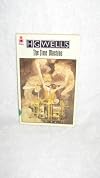
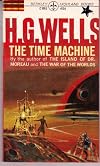
The Time Machine / The Man Who Could Work Miracles
by H. G. Wells
On This Page
Recommendations








Member Reviews
Though over a 120 years old now, this has aged very well for science fiction (which I don't usually like), particularly the central idea of time travel. Aside from this, the other main scientific concept explored - human evolution and speciation, is handled less convincingly in some of its details (speaking as a biologist), though the general idea works quite well. Further aspects of the plot revolve around the basis of society, class, and being human, and these work together with the scientific ideas to provide more for both the protagonist and reader to contemplate. Together this short novel is really very rich in its use of concepts, and these emerge naturally out of the events so that it can be appreciated on more than one level by show more either educated adults or younger readers.
As a story it is told with a particular humour that I appreciated, and with an atmosphere that draws you right into the moment. There could have been slightly more action and edge-of-the-seat events, and a bit less predictability, but there was sufficient pace to maintain interest most of the time. As this is a relatively short novel at 102 pages, it would be difficult not to recommend this to most readers. It may alter how you see society and the world and the human condition, as well the historical and cosmic context of our time on earth. show less
As a story it is told with a particular humour that I appreciated, and with an atmosphere that draws you right into the moment. There could have been slightly more action and edge-of-the-seat events, and a bit less predictability, but there was sufficient pace to maintain interest most of the time. As this is a relatively short novel at 102 pages, it would be difficult not to recommend this to most readers. It may alter how you see society and the world and the human condition, as well the historical and cosmic context of our time on earth. show less
The version I'm holding in my hands is a 1953 edition and 1979 copy.
Apart from the little novella The Time Machine it also includes the short story "The Man who could Work Miracles".
H.G. Wells The Time Machine reminds me of Poe, Swift (Jonathan) and Darwin. The novella has the same scientific approach as Poe's detective stories. Here as well smart men gather to talk about the world in some kind of Socratic dialogue. Wells' Science Fiction is far more scientific than many later works in the genre. It is a combination of logical thinking and fiction, while later SF-works tend to be more fantastic (I'm speaking here of which I've read).
The novel also reminds me of Swift. The way one speaks about his own experiences, brought me back to a show more younger version of me who was listening to the story of Gulliver on tape.
Darwin is all over the book in my opinion. He is the basis of the Time Traveler's analysis of how the future civilization has evolved in the way it has. This all combined with a socialistic sauce.
I like the fact that the framework of the novel guides the reader into disbelieving the time traveler. The story is told by a dear friend, who retells the story the time traveler has told him.
"The Man who could Work Miracles"
The little story grips me more than any of Poe's works. The SF writing style with its "what if" way of implying things make it far more interesting and frightening than Poe's Gothic shorts.
Poe is a builder of dreams and Wells is the master of implication. show less
Apart from the little novella The Time Machine it also includes the short story "The Man who could Work Miracles".
H.G. Wells The Time Machine reminds me of Poe, Swift (Jonathan) and Darwin. The novella has the same scientific approach as Poe's detective stories. Here as well smart men gather to talk about the world in some kind of Socratic dialogue. Wells' Science Fiction is far more scientific than many later works in the genre. It is a combination of logical thinking and fiction, while later SF-works tend to be more fantastic (I'm speaking here of which I've read).
The novel also reminds me of Swift. The way one speaks about his own experiences, brought me back to a show more younger version of me who was listening to the story of Gulliver on tape.
Darwin is all over the book in my opinion. He is the basis of the Time Traveler's analysis of how the future civilization has evolved in the way it has. This all combined with a socialistic sauce.
I like the fact that the framework of the novel guides the reader into disbelieving the time traveler. The story is told by a dear friend, who retells the story the time traveler has told him.
"The Man who could Work Miracles"
The little story grips me more than any of Poe's works. The SF writing style with its "what if" way of implying things make it far more interesting and frightening than Poe's Gothic shorts.
Poe is a builder of dreams and Wells is the master of implication. show less
Short, but packed with implications and ideas.
The language and style hasn't survived as well as others of this time period, but the story is still interesting.
Ratings
Members
- Recently Added By
Lists

Books Read in 2025
4,091 works; 97 members

Books Read in 2026
1,813 works; 63 members
Author Information

1,548+ Works 108,575 Members
H. G. Wells was born in Bromley, England on September 21, 1866. After a limited education, he was apprenticed to a draper, but soon found he wanted something more out of life. He read widely and got a position as a student assistant in a secondary school, eventually winning a scholarship to the Royal College of Science in South Kensington, where show more he studied biology. He graduated from London University in 1888 and became a science teacher. He also wrote for magazines. When his stories began to sell, he left teaching to write full time. He became an author best known for science fiction novels and comic novels. His science fiction novels include The Time Machine, The War of the Worlds, The Wonderful Visit, The Island of Doctor Moreau, The Invisible Man, The First Men in the Moon, and The Food of the Gods. His comic novels include Love and Mr. Lewisham, Kipps: The Story of a Simple Soul, The History of Mr. Polly, and Tono-Bungay. He also wrote several short story collections including The Stolen Bacillus, The Plattner Story, and Tales of Space and Time. He died on August 13, 1946 at the age of 79. (Bowker Author Biography) show less
Series
Belongs to Publisher Series
Pan Books (G697)
Work Relationships
Common Knowledge
- Canonical title
- The Time Machine / The Man Who Could Work Miracles
- Original publication date
- 1895 (The Time Machine) (The Time Machine); 1898-06 (The Man Who Could Work Miracles) (The Man Who Could Work Miracles); 1953 (anthology) (anthology)
- People/Characters
- The Time Traveller; Filby; The Psychologist; The Medical Man; The Provincial Mayor; The Very Young Man (show all 11); Weena; Eloi; Morlocks; George McWhirter Fotheringay; Toddy Beamish
- Important places
- Richmond, Surrey, England, UK
- First words
- The TIME TRAVELLER (for so it will be convenient to speak of him) was expounding a recondite matter to us.
- Quotations
- Nature never appeals to intelligence until habit and instinct are useless.
- Original language
- English
- Canonical DDC/MDS
- 823.087621
- Canonical LCC
- PR5774
- Disambiguation notice
- This edition contains two stories, often not noted as such on the cover, being the novella, The Time Machine and the short story, The Man Who Could Work Miracles. Please do not combine with either standalone wor... (show all)k, nor with other selections of stories..
Classifications
Statistics
- Members
- 212
- Popularity
- 153,582
- Reviews
- 5
- Rating
- (3.94)
- Languages
- English
- Media
- Paper, Ebook
- ISBNs
- 1
- ASINs
- 9