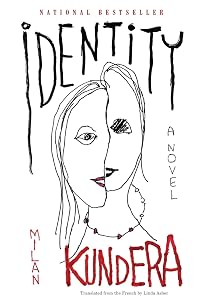
Identity
by Milan Kundera
On This Page
Description
There are situations in which we fail for a moment to recognize the person we are with, in which the identity of the other is erased while we simultaneously doubt our own. This also happens with couples--indeed, above all with couples, because lovers fear more than anything else "losing sight" of the loved one. With stunning artfulness in expanding and playing variations on the meaningful moment, Milan Kundera has made this situation--and the vague sense of panic it inspires--the very fabric show more of his new novel. Here brevity goes hand in hand with intensity, and a moment of bewilderment marks the start of a labyrinthine journey during which the reader repeatedly crosses the border between the real and the unreal, between what occurs in the world outside and what the mind creates in its solitude. Of all contemporary writers, only Kundera can transform such a hidden and disconcerting perception into the material for a novel, one of his finest, most painful, and most enlightening. Which, surprisingly, turns out to be a love story. show lessTags
Recommendations















Member Reviews
What is human identity? How can such an intangible concept be preserved, manipulated, lost, developed, and fade all during a life time? Sounds like an absurd question in today's fast-paced world where we drown ourselves in formulaic self-help books, watch an endless succession of talk-shows and other people's realities and even hire so-called "life coaches" to help us cope with our own existence. And yet, when reading Milan Kundera's "Identity", one starts to wonder that perhaps people need to have more questions to ponder, without being so needy about the answers...?
The story about the two lovers, Chantal and Jean-Marc, starts out on the Normandy coast. We gradually get glimpses into their respective ponderings about their own show more identity. Chantal is startled to discover that "men don't look at her anymore" - a realization that causes her to explore why that is so important to her - especially since she has the most devoted lover she could wish for. Meanwhile, while visiting a dying old friend, Jean Marc discovers that his friend viewed their friendship not so much a union of two different individuals, but more like a "mirror that reflects oneself". In both instances the characters start questioning their own identity as it is perceived by others, including each other, as well as to themselves.
What follows is an engaging tale about how Chantal and Jean-Marc embarks on answering these and other related questions. And finally, true to form, Kundera twists the story to focus on us - the readers. We are challenged to ponder not only the factual events of the story, but also whether we need to have all the answers instead of the more ethereal questions.
If you are already a Kundera fan, I predict you will embrace this delightful novella. However, if you are reading Kundera for the first time, you might want to get aquainted with some of his earlier works first (I recommend "Life is Elsewhwere" or "The Unbearable Lightness of Being") in order to get a deeper appreciation for the unique literary tradition Kudera presents us. show less
The story about the two lovers, Chantal and Jean-Marc, starts out on the Normandy coast. We gradually get glimpses into their respective ponderings about their own show more identity. Chantal is startled to discover that "men don't look at her anymore" - a realization that causes her to explore why that is so important to her - especially since she has the most devoted lover she could wish for. Meanwhile, while visiting a dying old friend, Jean Marc discovers that his friend viewed their friendship not so much a union of two different individuals, but more like a "mirror that reflects oneself". In both instances the characters start questioning their own identity as it is perceived by others, including each other, as well as to themselves.
What follows is an engaging tale about how Chantal and Jean-Marc embarks on answering these and other related questions. And finally, true to form, Kundera twists the story to focus on us - the readers. We are challenged to ponder not only the factual events of the story, but also whether we need to have all the answers instead of the more ethereal questions.
If you are already a Kundera fan, I predict you will embrace this delightful novella. However, if you are reading Kundera for the first time, you might want to get aquainted with some of his earlier works first (I recommend "Life is Elsewhwere" or "The Unbearable Lightness of Being") in order to get a deeper appreciation for the unique literary tradition Kudera presents us. show less
Some dreams you can’t wake from. They’re too real, all too real. Chantal and Jean-Marc love each other. At least they love a version of each other. Whether that version is the real one is the question that confronts them. Their search for the answer turns into a series of misunderstandings, whose increasingly bizarre nature blurs the line between dreams and waking life. It’s unclear by the end what was dreamt and what experienced, but one thing is apparent: the distinction matters, and anyone who tells you otherwise has designs on you. Some dreams you can’t wake from, no, but it’s better to die trying than accept them as reality.
I feel even three stars is generous as this book is really rather thin.
If good Kundera is a strong tea, this is Kundera after the tea bag has been reused about 4
times...you can sense the same flavor but it has much less impact on the palate than you
had hoped.
I long for that "middle period" but the world has changed and he did not move with it.
If good Kundera is a strong tea, this is Kundera after the tea bag has been reused about 4
times...you can sense the same flavor but it has much less impact on the palate than you
had hoped.
I long for that "middle period" but the world has changed and he did not move with it.
Kundera explores a question we all face, who am I? It's simple on the surface but extremely complex and nuanced. Kundera goes there. He peels the simple explanations and explores the more complex second thoughts. Yes, it changes, especially with your present mode. It's not constant, but it's always there, it won't go away. The amazing thing is that Kundera helps us explore by looking at someone else's exploration. Perhaps it's always easier when you can detach yourself from it and think this applies to them and not really you. But that's the magic, it's all about you. Just the names have been changed to allow you some deniability. You don't have to admit he's talking about the truth of everyone's existence. Fascinating trick. And done show more by a Czech, probably thinking in Czech, writing in French, and then translated by someone else into English. Amazing that it still rings true despite all the hoops it's gone through.
Chantal's the central character, her first marriage ended in divorce long ago. Her young son died at five years old, and she was feeling family pressure to have another. She resisted having sex with her husband to rebel against the pressure. Finding a lover, Jean-Marie, she quickly ended the marriage. She's been living with Jean-Marie for years. Is it time to marry? She's getting older, and let Jean-Maire know she's noticed that men no longer look at her.
Suddenly, letters appear in her mailbox without going through the postal system. Someone is watching her. She's intrigued and puts the letters in the drawer where she stores her brassieres, under them, and does not tell Jean-Marie about them. The letters keep coming and contain details that make her wonder who could be sending them and how they know so much about her. They're signed C.D.B. She begins to suspect neighbors and people standing in the street. She gets aroused by them and even purchases a red slip at their suggestion. She realizes C.D.B. stands for Cyrano du Bergerac, the famous fictional person who hides both his identity and his love for Roxanne. Eventually she realizes the author must be Jean-Marie, who has clearly discovered that she keeps the letters in her drawer.
Rather than being flattered, she is insulted that Jean-Marie has violated her private space and confronts him. How Kundera works out where this is going keeps us wondering. I'll only say there's a plot twist at the end which changes everything. I recommend reading it. show less
Chantal's the central character, her first marriage ended in divorce long ago. Her young son died at five years old, and she was feeling family pressure to have another. She resisted having sex with her husband to rebel against the pressure. Finding a lover, Jean-Marie, she quickly ended the marriage. She's been living with Jean-Marie for years. Is it time to marry? She's getting older, and let Jean-Maire know she's noticed that men no longer look at her.
Suddenly, letters appear in her mailbox without going through the postal system. Someone is watching her. She's intrigued and puts the letters in the drawer where she stores her brassieres, under them, and does not tell Jean-Marie about them. The letters keep coming and contain details that make her wonder who could be sending them and how they know so much about her. They're signed C.D.B. She begins to suspect neighbors and people standing in the street. She gets aroused by them and even purchases a red slip at their suggestion. She realizes C.D.B. stands for Cyrano du Bergerac, the famous fictional person who hides both his identity and his love for Roxanne. Eventually she realizes the author must be Jean-Marie, who has clearly discovered that she keeps the letters in her drawer.
Rather than being flattered, she is insulted that Jean-Marie has violated her private space and confronts him. How Kundera works out where this is going keeps us wondering. I'll only say there's a plot twist at the end which changes everything. I recommend reading it. show less
This small gripping novel is the story of two lovers, Jean-Marc and Chantal. It moves from one to the other, following assumptions, emotions, beliefs and ideas - some shared, but mostly held in secret. It's about being seen, and about how we see each other. Identity is not fixed but is drawn from the mirrors around us.
One of the messages of this novel is that, in order to love, you need to be certain that you know who the other person is. Once you start to doubt your lover's identity, love is eroded. In this novel, when love starts to crumble, the lovers encounter their own secret fears. For Chantal, this means being naked, and for Jean-Marc, it means becoming a beggar. The desperation of their own fears drive them back to the safety show more of their relationship.
One thread of the story concerns Jean-Marc and his friend F (who is nameless because he is rejected as a friend). Jean-Marc does not trust F any more, and withholds recognition of their shared past.
Throughout the book, every trembling inner movement is echoed by some outer event, even if only a passing glance or a quick conversation. This gives the novel a sure rhythm. show less
One of the messages of this novel is that, in order to love, you need to be certain that you know who the other person is. Once you start to doubt your lover's identity, love is eroded. In this novel, when love starts to crumble, the lovers encounter their own secret fears. For Chantal, this means being naked, and for Jean-Marc, it means becoming a beggar. The desperation of their own fears drive them back to the safety show more of their relationship.
One thread of the story concerns Jean-Marc and his friend F (who is nameless because he is rejected as a friend). Jean-Marc does not trust F any more, and withholds recognition of their shared past.
Throughout the book, every trembling inner movement is echoed by some outer event, even if only a passing glance or a quick conversation. This gives the novel a sure rhythm. show less
Warning: this review gives away the ending.
There’s something intensely dissatisfying about stories that end “but it was all a dream and then she woke up.”
Logically, I suppose there shouldn’t be. We accept that a story is made up, we accept that nothing is true, that it is all in effect a dream being dreamt onto the page by the author. But to have the characters dream for large parts of the book is beyond the pale. I felt cheated on reading it, as if I had wasted a few hours reading something that wasn’t true. Well, that’s a novel, dream or no dream.
I think saying “and it was all a dream” is a problem because it is so reminiscent of badly written trash like ‘Dallas’, where the writers get themselves into a situation show more they don’t want and solve it by saying that everything after the point where the story started to get lost was a dream. It seems too easy, too much of a shortcut.
That isn’t true of this novel, though. I am sure that Milan Kundera did not write himself into a dead end and think, “To hell with it, I’ll make it a dream then.” There are clear dreamlike moments from early on, for example seeing characters in odd places - a waiter from a cafe turns up in a graphologist’s office. And it’s all very well orchestrated, so that only towards the end, when Chantal goes to London and the story becomes incredibly confused and illogical, does it become clear that it’s a dream. Kundera then openly asks the reader who was dreaming and when it started.
The fact that it was a dream raises certain questions, one of which is Kundera’s - who’s dreaming? The novel is narrated from two separate points of view, the lovers Chantal and Jean-Marc, and the perspectives are quite separate, marked off by chapter breaks. So whose dream is it? Another problem is that the dream is not very dreamlike for a long time. There are hints, moments, but mostly it’s a logical story, often with some quite complex ideas being expressed, the sort that seem unlikely even for a casual conversation between lovers and even more unlikely for a dream. For example, Jean-Marc soliloquising after visiting a dying friend in hospital: “Friendship is indispensable to man for the proper function of his memory. Remembering our past, carrying it around with us always, may be the necessary requirement for maintaining, as they say, the wholeness of the self. To ensure that the self doesn’t shrink, to see that it holds on to its volume, memories have to be watered like potted flowers, and the watering calls for regular contact with the witnesses of the past, that is to say, with friends. They are our mirror; our memory; we ask nothing of them but that they polish the mirror from time to time so we can look at ourselves in it.” Very insightful and beautifully expressed, but it sounds like Kundera’s thoughts, not Jean-Marc’s speech and certainly not like any kind of dream.
I might read the book again, to see if the boundary between dream and reality becomes clearer. It’s quite short, more of a novella, so it wouldn’t take long. But in any case it is interesting to see how the dream resolution irritated me. I suppose that I had become interested in the characters and the situation, which was very cleverly contrived on a series of misunderstandings. Chantal was in a bad mood, and when Jean-Marc questioned her she said it was because men didn’t look at her any more, which was a thought that had occurred to her but was not really important to her - she said it more to get him off her back. He, however, took it very seriously and decided to write anonymous letters of admiration to her, to make her feel better. She hides them away, and when he sees this it makes him jealous. She, on the other hand, is furious when she discovers that he is the writer and, more, that he has found where she hides the letters. She feels invaded and spied upon, and thinks Jean-Marc has contrived the whole thing to trap her.
I found this a very interesting plot, and sympathised with the characters. I wanted to see where it went, and so to have it go nowhere at all was dissatisfying, despite a grudging admiration for the way the story had been told to keep the balance just right and the truth revealed at the right time.
The tenses of the narration shifted constantly, and I’m not sure why. The present tense seemed to be used mostly for thoughts or feelings, and the past tense for action. Perhaps this was hinting at the dream resolution. Chantal thinks early on in the book “That is why she dislikes dreams: they impose an unacceptable equivalence among the various periods of the same life, a levelling contemporaneity of everything a person has ever experienced; they discredit the present by denying it its privileged status.”
Perhaps the mixed-up tenses are part of the author’s dream. Perhaps it’s not Chantal or Jean-Marc who are dreaming at all, but Milan Kundera. show less
There’s something intensely dissatisfying about stories that end “but it was all a dream and then she woke up.”
Logically, I suppose there shouldn’t be. We accept that a story is made up, we accept that nothing is true, that it is all in effect a dream being dreamt onto the page by the author. But to have the characters dream for large parts of the book is beyond the pale. I felt cheated on reading it, as if I had wasted a few hours reading something that wasn’t true. Well, that’s a novel, dream or no dream.
I think saying “and it was all a dream” is a problem because it is so reminiscent of badly written trash like ‘Dallas’, where the writers get themselves into a situation show more they don’t want and solve it by saying that everything after the point where the story started to get lost was a dream. It seems too easy, too much of a shortcut.
That isn’t true of this novel, though. I am sure that Milan Kundera did not write himself into a dead end and think, “To hell with it, I’ll make it a dream then.” There are clear dreamlike moments from early on, for example seeing characters in odd places - a waiter from a cafe turns up in a graphologist’s office. And it’s all very well orchestrated, so that only towards the end, when Chantal goes to London and the story becomes incredibly confused and illogical, does it become clear that it’s a dream. Kundera then openly asks the reader who was dreaming and when it started.
The fact that it was a dream raises certain questions, one of which is Kundera’s - who’s dreaming? The novel is narrated from two separate points of view, the lovers Chantal and Jean-Marc, and the perspectives are quite separate, marked off by chapter breaks. So whose dream is it? Another problem is that the dream is not very dreamlike for a long time. There are hints, moments, but mostly it’s a logical story, often with some quite complex ideas being expressed, the sort that seem unlikely even for a casual conversation between lovers and even more unlikely for a dream. For example, Jean-Marc soliloquising after visiting a dying friend in hospital: “Friendship is indispensable to man for the proper function of his memory. Remembering our past, carrying it around with us always, may be the necessary requirement for maintaining, as they say, the wholeness of the self. To ensure that the self doesn’t shrink, to see that it holds on to its volume, memories have to be watered like potted flowers, and the watering calls for regular contact with the witnesses of the past, that is to say, with friends. They are our mirror; our memory; we ask nothing of them but that they polish the mirror from time to time so we can look at ourselves in it.” Very insightful and beautifully expressed, but it sounds like Kundera’s thoughts, not Jean-Marc’s speech and certainly not like any kind of dream.
I might read the book again, to see if the boundary between dream and reality becomes clearer. It’s quite short, more of a novella, so it wouldn’t take long. But in any case it is interesting to see how the dream resolution irritated me. I suppose that I had become interested in the characters and the situation, which was very cleverly contrived on a series of misunderstandings. Chantal was in a bad mood, and when Jean-Marc questioned her she said it was because men didn’t look at her any more, which was a thought that had occurred to her but was not really important to her - she said it more to get him off her back. He, however, took it very seriously and decided to write anonymous letters of admiration to her, to make her feel better. She hides them away, and when he sees this it makes him jealous. She, on the other hand, is furious when she discovers that he is the writer and, more, that he has found where she hides the letters. She feels invaded and spied upon, and thinks Jean-Marc has contrived the whole thing to trap her.
I found this a very interesting plot, and sympathised with the characters. I wanted to see where it went, and so to have it go nowhere at all was dissatisfying, despite a grudging admiration for the way the story had been told to keep the balance just right and the truth revealed at the right time.
The tenses of the narration shifted constantly, and I’m not sure why. The present tense seemed to be used mostly for thoughts or feelings, and the past tense for action. Perhaps this was hinting at the dream resolution. Chantal thinks early on in the book “That is why she dislikes dreams: they impose an unacceptable equivalence among the various periods of the same life, a levelling contemporaneity of everything a person has ever experienced; they discredit the present by denying it its privileged status.”
Perhaps the mixed-up tenses are part of the author’s dream. Perhaps it’s not Chantal or Jean-Marc who are dreaming at all, but Milan Kundera. show less
Sparked by a misunderstanding brought on when his slightly older, middle-aged lover hides the reason for her hot flashes, Jean-Marc begins writing her anonymous love letters as a means of making her feel desired under the gaze of another. With the notion that she is being watched, Chantal responds in ways not entirely keeping with the person Jean-Marc thought she was. This, in turn, causes a change in Jean-Marc.
Through these two characters and their changing relationship Kundera reveals that identity, even though tied to the body, even if one were to reduce oneself to the body, is nevertheless unstable. In a similar vein, the boundaries between reality and fantasy are equally unfixed, and as the novel continues on elements of show more improbability and surrealism (or what Kundera has dubbed ‘oeneric’ narrative or dream narrative) enter into the story.
This is the second novel of Kundera’s to be written originally in French, but the English translation manages to maintain a continuity of voice and narrative style (an irony when one thinks of this book’s subject) found in his other works. His is neither a poetic nor a strongly visual style, but relies largely on philosophical musings. For this reason his writing can often sound flat, but the storylines of his other books, such as The Unbearable Lightness of Being, were strong enough to carry the voice. Identity, unfortunately, is a slighter book—not simply in size, but in its dramatic handling. show less
Through these two characters and their changing relationship Kundera reveals that identity, even though tied to the body, even if one were to reduce oneself to the body, is nevertheless unstable. In a similar vein, the boundaries between reality and fantasy are equally unfixed, and as the novel continues on elements of show more improbability and surrealism (or what Kundera has dubbed ‘oeneric’ narrative or dream narrative) enter into the story.
This is the second novel of Kundera’s to be written originally in French, but the English translation manages to maintain a continuity of voice and narrative style (an irony when one thinks of this book’s subject) found in his other works. His is neither a poetic nor a strongly visual style, but relies largely on philosophical musings. For this reason his writing can often sound flat, but the storylines of his other books, such as The Unbearable Lightness of Being, were strong enough to carry the voice. Identity, unfortunately, is a slighter book—not simply in size, but in its dramatic handling. show less
Members
- Recently Added By
Published Reviews
ThingScore 75
Ein schönes Buch sicherlich, eine angenehm melancholische Lektüre für ein paar Stunden. Und ein Buch, das uns dazu anregt, wieder einmal nach seinen alten Meisterwerken zu greifen.
added by Indy133
Lists

Authors from the Czech Republic
3 works; 1 member

Authors from France
23 works; 2 members
Author Information

53+ Works 61,353 Members
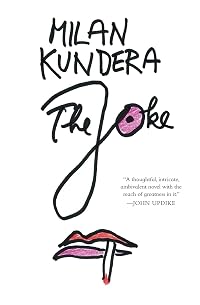
One of the foremost contemporary Czech writers, Kundera is a novelist, poet, and playwright. His play The Keeper of the Keys, produced in Czechoslovakia in 1962, has long been performed in a dozen countries. His first novel, The Joke (1967), is a biting satire on the political atmosphere in Czechoslovakia in the 1950s. It tells the story of a show more young Communist whose life is ruined because of a minor indiscretion: writing a postcard to his girlfriend in which he mocks her political fervor.The Joke has been translated into a dozen languages and was made into a film, which Kundera wrote and directed. His novel Life Is Elsewhere won the 1973 Prix de Medicis for the best foreign novel. Kundera has been living in France since 1975. His books, for a long time suppressed in his native country, are once again published.The Unbearable Lightness of Being (1984), won him international fame and was a successful English-language film. In this work Kundera moves toward more universal and philosophically tinged themes, thus transforming himself from a political dissident into a writer of international significance. (Bowker Author Biography) show less
Some Editions
Awards and Honors
Awards
Series
Belongs to Publisher Series
Fabula [Adelphi] (105)
Gallimard, Folio (3327)
Work Relationships
Is contained in
Common Knowledge
- Canonical title
- Identity
- Original title
- L'identité
- Alternate titles*
- Identiteit : roman
- Original publication date
- 1998
- People/Characters
- Chantal; Jean-Marc; The beggar
- Important places
- Paris, France; Normandy, France; France; Czechoslovakia
- First words
- A hotel in a small town on the Normandy coast, which they found in a guidebook.
- Last words
- (Click to show. Warning: May contain spoilers.)And then: "I'm going to leave the lamp on all night. Every night."
- Original language
- French
- Canonical DDC/MDS
- 891.8636
*Some information comes from Common Knowledge in other languages. Click "Edit" for more information.
Classifications
- Genres
- General Fiction, Fiction and Literature
- DDC/MDS
- 891.8636 — Literature & rhetoric Literatures of other languages East Indo-European and Celtic literatures West and South Slavic languages (Bulgarian, Slovene, Polish, Czech, Slovak, Serbo-Croatian, and Macedonian) Czech Czech fiction 1989–
- LCC
- PQ2671 .U47 .I3413 — Language and Literature French, Italian, Spanish and Portuguese literatures French literature Modern literature 1961-2000
- BISAC
Statistics
- Members
- 2,531
- Popularity
- 7,547
- Reviews
- 37
- Rating
- (3.45)
- Languages
- 27 — Arabic, Catalan, Chinese, Czech, Danish, Dutch, English, Estonian, Finnish, French, German, Greek, Hebrew, Hungarian, Icelandic, Italian, Korean, Lithuanian, Norwegian (Bokmål), Farsi/Persian, Polish, Portuguese, Romanian, Serbian, Spanish, Swedish, Turkish
- Media
- Paper, Audiobook, Ebook
- ISBNs
- 79
- ASINs
- 17