On This Page
Description
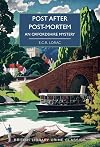
[A] twisty "snake in the garden" country-house mystery [where] Lorac constructs a challenging puzzle and provides a marvelous glimpse into pre-WWII Oxford life." - Booklist, Starred Review "Lorac keeps everything professional and smartly paced"- Kirkus Reviews "Now tell us about your crime novel. Take my advice and don't try to be intellectual over it. What the public likes is blood." The Surrays and their five children form a prolific writing machine, with scores of treatises, reviews, and show more crime thrillers published under their family name. Following a rare convergence of the whole household at their Oxfordshire home, Ruth-middle sister who writes "books which are just books"- decides to spend some weeks there recovering from the pressures of the writing life, while the rest of the brood scatter to the winds again. Their next return is heralded by the tragic news that Ruth has taken her life after an evening at the Surrays's hosting a set of publishers and writers, one of whom is named as Ruth's literary executor in the will she left behind. Despite some suspicions from the family, the verdict at the inquest is suicide-but when Ruth's brother Richard receives a letter from the deceased which was delayed in the post, he enlists the help of CID Robert Macdonald to investigate what could only be an ingeniously planned murder. show lessTags
Recommendations























Member Reviews
I love Detective Inspector Robert MacDonald, that persistent, attentive Scotland Yard man; I really do. But this was not one of E.C.R. Lorac’s best works. To start with, the insufferable Surray family is at the heart of the novel; such a smug, pretentious group of poseurs! One of the Surray daughters, a writer and renowned critic, is first thought a suicide, but it’s then revealed she’s a murder victim. How dreadful is this family? As MacDonald notes, speaking of the late Ruth Surray: “I think you’re all so obsessed with keeping her memory sacrosanct that a small point like discovering who murdered her seems immaterial to you.” They surround themselves with friends and associates who are just as misguided.
But that’s just show more part of it. The novel doesn’t really get interesting until Chapter 4, about a fifth of the way through. I love to see MacDonald at work, so that was a pleasure. However, the ending beggars belief. After having to deal with the self-righteous Surrays, I needed a better reward. This novel was just not up to Lorac’s usual high caliber.
In the interest of full disclosure, I received this book from NetGalley and Poisoned Pen Press in exchange for an honest review. show less
But that’s just show more part of it. The novel doesn’t really get interesting until Chapter 4, about a fifth of the way through. I love to see MacDonald at work, so that was a pleasure. However, the ending beggars belief. After having to deal with the self-righteous Surrays, I needed a better reward. This novel was just not up to Lorac’s usual high caliber.
In the interest of full disclosure, I received this book from NetGalley and Poisoned Pen Press in exchange for an honest review. show less
This is clever and if the subject matter weren't so grim it would be very amusing. As it is, Ruth is found dead in her room after taking what appears to be an overdose of sleeping pills, wjich she had been prescribed to counter insomina caused by overwork. The family and guests in the house close ranks to present the minimum of evidence and the coroner comes up with a verdict of death by suicide. All well and good, until a mis-addressed letter arrived at Richard's house, having been delayed by the poor addressing. This is from Ruth and it throws a rather different light on her mental state, such that the suicide is not quite so clear cut as it had been made to appear.
This is set in intellectual circles, with writers, publishers, poets show more and academics wandering round, throwing facts and random thoughts about like daisies in a meadow - which MacDonald has to pick up and sort through. He's called in by Richard and agrees to get the case assigned to him on nothing more than that he'd consulted Richard on a professional manner and displayed more humanity that a conventional copper might. Richard has more than one qualm about setting such a keen observer onto the problem and not liking the turn that the investigation takes.
All in all, very neatly and intricately plotted. It feels a little like the dark side of a drawing room farce of the interwar years. show less
This is set in intellectual circles, with writers, publishers, poets show more and academics wandering round, throwing facts and random thoughts about like daisies in a meadow - which MacDonald has to pick up and sort through. He's called in by Richard and agrees to get the case assigned to him on nothing more than that he'd consulted Richard on a professional manner and displayed more humanity that a conventional copper might. Richard has more than one qualm about setting such a keen observer onto the problem and not liking the turn that the investigation takes.
All in all, very neatly and intricately plotted. It feels a little like the dark side of a drawing room farce of the interwar years. show less
As the book begins, Mrs Surray is admiring the beauty of her garden and reflecting on her family. Her children are so successful, and her house so perfect, that Mrs Surray worries that there is nothing left for her to do with her life. But then her daughter Ruth is found dead, apparently a suicide. Ruth was an intellectual, which is problematic for women because their constitutions aren't strong enough to cope with the demands of their brains. This is the amusing thing about E. C. R. Lorac: she knows how people are meant to be and she judges them harshly. In others of her books I've been amused by villains who wear too much mascara, or don't know that it's proper to wear tweeds in the country. There are a few potential suspects: an show more insomniac psychiatrist brother; a womanising explorer who dumped Ruth for her younger sister; a publisher who is always on the spot when disaster happens.
I liked this book for its idiosyncrasies. show less
I liked this book for its idiosyncrasies. show less
During a gathering of a family of writers and intellectuals, a daughter kills herself. But a few days later a letter arrives making it clear she was happy and had plans for the future. Was it suicide? Inspector MacDonald reopens the case and interviews an interesting cast of characters, many of whom had motives for murder. A pleasant Golden Age mystery from 1936. I’ve read several by this author and appreciate the puzzles and her sly humor.
Post After Post-Mortem suggests sometimes it is best to let sleeping suicides lie. When the successful writer Ruth Surray is found dead at a family gathering that included some of her publishing friends, a verdict is quickly decided and the family is spared a lot of unwelcome and intrusive publicity. But then her brother receives a letter from her, mailed the night she died and it’s clear that suicide was not on her mind. So he seeks out the help of CID Robert Macdonald, asking him to investigate as discreetly as possible.
The family is surprisingly unwelcoming. It confused me that her mother would prefer a verdict of suicide over murder. Suicide is not more genteel. But then her mother begins the book by congratulating herself on show more getting her house just-so and having the youngest of her children graduate with honors. She’s afraid life will be boring now that everything is perfect. But her perfect world starts cracking with Ruth’s death and continues to crack under the pressure of the investigation. After all, the suspect pool is limited to her own family and a couple visitors.
I liked Post After Post-Mortem and thought the mystery was fair. There were no hidden clues or surprises and all the suspects and the villain were introduced in the beginning. However, I thought it truly weird that a family would not jump at the chance of their family member being murdered rather than committing suicide. It is painful to think of family in such despair. I know the aftermath of suicide and cannot imagine preferring that. I also think the motive for the murder is bizarre. I guess someone could think that way, but it is not a very credible motive. However, I liked the successful sense of place, the slow comfort of the country home and the hustle of the city, for example. The characters were well-drawn and distinct. In all, it’s a successful book with a few creaky hinges.
I received an e-galley of Post After Post-Mortem from the publisher through NetGalley.
Post After Post-Mortem at Poisoned Pen Press | Sourcebooks
E. C. R. Lorac at Wikipedia and Books In Order
Fell Murder by E.C.R. Lorac
Murder in the Mill-Race by E. C. R. Lorac
Murder by Matchlight by E. C. R. Lorac
https://tonstantweaderreviews.wordpress.com/2023/02/23/post-after-post-mortem-by... show less
The family is surprisingly unwelcoming. It confused me that her mother would prefer a verdict of suicide over murder. Suicide is not more genteel. But then her mother begins the book by congratulating herself on show more getting her house just-so and having the youngest of her children graduate with honors. She’s afraid life will be boring now that everything is perfect. But her perfect world starts cracking with Ruth’s death and continues to crack under the pressure of the investigation. After all, the suspect pool is limited to her own family and a couple visitors.
I liked Post After Post-Mortem and thought the mystery was fair. There were no hidden clues or surprises and all the suspects and the villain were introduced in the beginning. However, I thought it truly weird that a family would not jump at the chance of their family member being murdered rather than committing suicide. It is painful to think of family in such despair. I know the aftermath of suicide and cannot imagine preferring that. I also think the motive for the murder is bizarre. I guess someone could think that way, but it is not a very credible motive. However, I liked the successful sense of place, the slow comfort of the country home and the hustle of the city, for example. The characters were well-drawn and distinct. In all, it’s a successful book with a few creaky hinges.
I received an e-galley of Post After Post-Mortem from the publisher through NetGalley.
Post After Post-Mortem at Poisoned Pen Press | Sourcebooks
E. C. R. Lorac at Wikipedia and Books In Order
Fell Murder by E.C.R. Lorac
Murder in the Mill-Race by E. C. R. Lorac
Murder by Matchlight by E. C. R. Lorac
https://tonstantweaderreviews.wordpress.com/2023/02/23/post-after-post-mortem-by... show less
I was so pleased to discover this whodunnit by a previously unknown (to me) Golden Age of Mystery author, E.C.R. Lorac. What a find!!
In this 1936 puzzler, one of the members of the Surray family, a family of authors with lots of books to their credit, is found dead at the family home in what is initially ruled a suicide. But was it? The case is reopened and Chief Inspector Macdonald attempts to get to the bottom of it in this well-plotted, interesting murder mystery.
Highly recommended to fans of Golden Age mysteries!! So pleased to find this gem and I now have lots and lots of other Lorac mysteries to track down.
(I received a copy of this book from the publisher, via Net Galley, in exchange for a fair and honest review.)
In this 1936 puzzler, one of the members of the Surray family, a family of authors with lots of books to their credit, is found dead at the family home in what is initially ruled a suicide. But was it? The case is reopened and Chief Inspector Macdonald attempts to get to the bottom of it in this well-plotted, interesting murder mystery.
Highly recommended to fans of Golden Age mysteries!! So pleased to find this gem and I now have lots and lots of other Lorac mysteries to track down.
(I received a copy of this book from the publisher, via Net Galley, in exchange for a fair and honest review.)
I won't recap the story because the publisher's blurb is pretty good and therefore no need. I enjoyed Martin Edwards' foreword and found the mystery to be sneaky and excellent. The writing was smooth and easily translates to most timeframes while making each of the characters clear and engaging. Besides, I am partial to the Crime Classics in general and Lorac in particular. Enjoy!
Members
- Recently Added By
Lists

British Mystery
469 works; 14 members

Books Read in 2022
5,166 works; 114 members

Books Read in 2025
4,091 works; 97 members
Author Information

77+ Works 3,369 Members
Some Editions
Series

Belongs to Publisher Series
British Library Crime Classics (Novel)
Common Knowledge
- Canonical title
- Post After Post-Mortem
- Original publication date
- 1936
- People/Characters
- Robert MacDonald
- Important places
- Oxfordshire, UK
- First words
- Mrs. Surray, her hands busy among the long stems of the sweet peas she was arranging, bent her beautiful silver head to inhale a deep breath of their fragrance.
- Last words
- (Click to show. Warning: May contain spoilers.)And Macdonald replied, "That's about it."
Classifications
Statistics
- Members
- 156
- Popularity
- 209,296
- Reviews
- 13
- Rating
- (3.72)
- Languages
- English, Italian
- Media
- Paper, Audiobook, Ebook
- ISBNs
- 10
- ASINs
- 5