
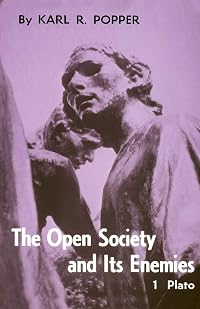
The Open Society and Its Enemies, Volume I: The Spell of Plato
by Karl Raimund Popper
The Open Society and Its Enemies (1)
On This Page
Description
Written in political exile in New Zealand during the Second World War and published in two volumes in 1945, The Open Society and its Enemies was hailed by Bertrand Russell as a 'vigorous and profound defence of democracy'. This legendary attack on the philosophies of Plato, Hegel and Marx prophesied the collapse of communism in Eastern Europe and exposed the fatal flaws of socially engineered political systems. It remains highly readable, erudite and lucid and as essential reading today as show more on publication in 1945. It is available here in a special centenary single-volume edition. show lessTags
Recommendations
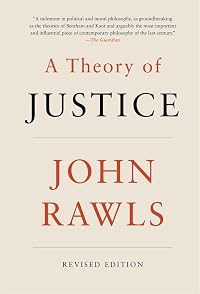
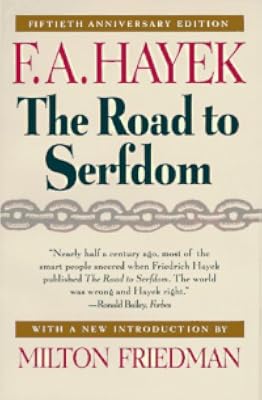

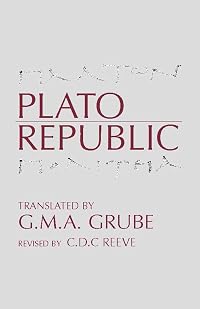
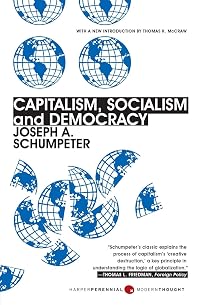







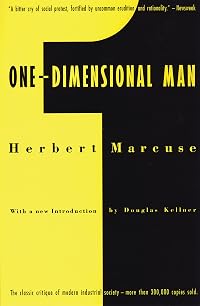
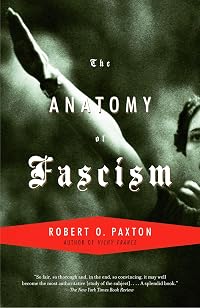
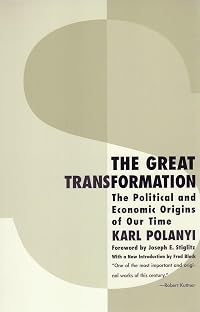
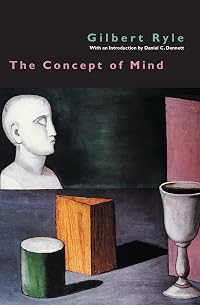



Member Recommendations
Rigour Touching often on similar themes, but sometimes more accessible.
Member Reviews
This is Volume I centered on Plato. The tos and fros of philosophy have always been a trial for me and this presentation is no different. Still, I am grateful that Popper has shown me what totalitarian tendencies Plato had and the environment that he was reacting against. Athenian democracy was (and still is) a messy work in progress that included slavery. Plato is shown as a traitor to Socrates and accepting lying and force as part of his propaganda and way to get back to the perfect state. It is interesting to note that change itself was a big enemy of his. That this was written during World War II suggests why the inquiry into totalitarianism is direct and intense and has the added sense of immediacy.
Quotes: (page 56) “His stories show more of the Decline and Fall, and with it nearly all the later stories, exhibit at least two characteristics which we have not discussed so far. He conceived these declining societies as some kind of organism, and the decline as a process similar to aging. And he believed that the decline is well deserved in the sense of moral decay, a fall and decline of the soul, goes hand in hand with that of the social body.”
(page 86) “His fundamental demands can be expressed in either of two formulae, the first corresponding to his idealist theory of change and rest, the second to his naturalism. The idealist formula is: Arrest all political change! Change is evil, rest divine. All change can be arrested if the state is made an exact copy of the original, ie, of the Form or Idea of the city. Should it be asked how this is practicable, we can reply with the naturalistic formula: Back to nature! Back to the original state of our forefathers, the primitive state founded in accordance with human nature, and therefore stable; back to tribal patriarchy of the time before the Fall, to the natural class rule of the wise few over the ignorant many.”
(page 148) “But the claim of the Pythagoreans to a supernatural basis of their authority remained. Thus Plato's philosophical education has a definite political function. It puts a mark on the rulers, and it establishes a barrier between the rulers and the ruled. (This has remained a major function of 'higher' education down to our time.) Platonic wisdom is acquired largely for the sake of establishing a permanent political class rule.”
(page 200) “ Socrates had refused to compromise his personal integrity. Plato, with all his uncompromising, canvas-clearing, was led along a path on which he compromised his integrity with every step he took. He was forced to combat free thought, and the pursuit of truth. He was led to defend lying, political miracles, tabooistic superstition, the suppression of truth, and ultimately brutal violence. In spite of Socrates' warning against misanthropy and misology, he was led to distrust man and to fear argument. In spite of his own hatred of tyranny, he was led to look to a tyrant for help, and to defend the most tyrannical measures. By the internal logic of his anti-humanitarian aim, the internal logic of power, he was led unawares to the same point to which once the Thirty had been led, and at which, later, his friend Dio arrived, and among others his numerous tyrant-disciples. He did not succeed in arresting social change.” show less
Quotes: (page 56) “His stories show more of the Decline and Fall, and with it nearly all the later stories, exhibit at least two characteristics which we have not discussed so far. He conceived these declining societies as some kind of organism, and the decline as a process similar to aging. And he believed that the decline is well deserved in the sense of moral decay, a fall and decline of the soul, goes hand in hand with that of the social body.”
(page 86) “His fundamental demands can be expressed in either of two formulae, the first corresponding to his idealist theory of change and rest, the second to his naturalism. The idealist formula is: Arrest all political change! Change is evil, rest divine. All change can be arrested if the state is made an exact copy of the original, ie, of the Form or Idea of the city. Should it be asked how this is practicable, we can reply with the naturalistic formula: Back to nature! Back to the original state of our forefathers, the primitive state founded in accordance with human nature, and therefore stable; back to tribal patriarchy of the time before the Fall, to the natural class rule of the wise few over the ignorant many.”
(page 148) “But the claim of the Pythagoreans to a supernatural basis of their authority remained. Thus Plato's philosophical education has a definite political function. It puts a mark on the rulers, and it establishes a barrier between the rulers and the ruled. (This has remained a major function of 'higher' education down to our time.) Platonic wisdom is acquired largely for the sake of establishing a permanent political class rule.”
(page 200) “ Socrates had refused to compromise his personal integrity. Plato, with all his uncompromising, canvas-clearing, was led along a path on which he compromised his integrity with every step he took. He was forced to combat free thought, and the pursuit of truth. He was led to defend lying, political miracles, tabooistic superstition, the suppression of truth, and ultimately brutal violence. In spite of Socrates' warning against misanthropy and misology, he was led to distrust man and to fear argument. In spite of his own hatred of tyranny, he was led to look to a tyrant for help, and to defend the most tyrannical measures. By the internal logic of his anti-humanitarian aim, the internal logic of power, he was led unawares to the same point to which once the Thirty had been led, and at which, later, his friend Dio arrived, and among others his numerous tyrant-disciples. He did not succeed in arresting social change.” show less
«As palavras ríspidas proferidas neste livro acerca de algumas das principais figuras intelectuais da humanidade não são motivadas, quero crer, por um qualquer desejo meu de as diminuir. Nascem antes da minha convicção de que, para que a nossa civilização sobreviva, temos de quebrar o hábito da deferência para com os grandes homens. [Este livro] Esboça algumas das dificuldades que a nossa civilização enfrenta - uma civilização que podia talvez ser definida por almejar a humanidade e a razoabilidade, a igualdade e a liberdade; uma civilização que está ainda na sua infância, por assim dizer, e que continua a crescer apesar do facto de ter sido muitas vezes traída por tantos dos próceres intelectuais da humanidade. O show more livro tenta mostrar que esta civilização ainda não se recompôs por completo do choque do seu nascimento - a transição da sociedade tribal ou "fechada", com a sua submissão a forças mágicas, para a "sociedade aberta", que liberta os poderes críticos do homem. Tenta mostrar que o choque dessa transição é um dos fatores que tornam possível a ascensão desses movimentos reacionários que têm tentado, e continuam a tentar, derrubar a civilização e regressar ao tribalismo. E sugere que aquilo a que hoje chamamos totalitarismo pertence a uma tradição que é tão velha, ou tão nova, quanto a nossa própria civilização. Tenta, deste modo, contribuir para a nossa compreensão do totalitarismo e do significado da luta eterna contra ele.» Karl Popper[...] show less
This first part of The Open Society and its Enemies is a very fine piece of work. I was new to Popper, and found his attack on Plato very persuasive. The poisonous nature of the Platonic antipathy to change and desire for ‘perfection’, and the multifarious tyrannies produced by its influence, are elucidated effectively, and the falseness and staggering vanity of Plato’s project exposed.
When Popper was writing, the targets of the second volume – Hegel and Marx – were perhaps considered the more pressing enemies, but it is Plato, the root, who is more so now and in the longer term.
Recently I read a book published in 2001 that discussed Popper as a thinker fading into history because of his success, who would only need to be show more re-discovered in the event of resurgence in communism, fascism, or religious fundamentalism. Safe to say we could use him now! show less
When Popper was writing, the targets of the second volume – Hegel and Marx – were perhaps considered the more pressing enemies, but it is Plato, the root, who is more so now and in the longer term.
Recently I read a book published in 2001 that discussed Popper as a thinker fading into history because of his success, who would only need to be show more re-discovered in the event of resurgence in communism, fascism, or religious fundamentalism. Safe to say we could use him now! show less
Popper's book is a radical re-reading of Plato whom he argues provides, in his authoritarian vision of the perfect state, a template for twentieth-century totalitarianism oppression (Nazism, Stalinism). Rather than a champion of rational social organisation, Plato is therefore in fact the enemy of true political freedom. Perhaps the most unsettling claim - for philosophers anyway - is that Plato's use of the character of Socrates in his dialogues is a complete distortion of what the real Socrates stood for - the opposite, in fact. The book is well-argued, clear, and - apart from some sections which will be challenging to non-philosophers - a pleasure to read. I'm still not sure about all of what Popper says, mind you, but it's show more definitely a must read for anyone interested in Plato or political theory.
Gareth Southwell is a philosopher, writer and illustrator. show less
Gareth Southwell is a philosopher, writer and illustrator. show less
Wow. This books gives the kind of insight that's almost impossible to find in more recent books. Popper masterfully combines his interpretation of plato with contemporary political philosophy, philosophy of social science and greek history. Whether he's "right" or "wrong" about plato is not really the relevant question. The value of this book is in that it provides a clearly argued, broad-minded starting point from which you can re-read both plato's works and greek history to reconsider their influence on today's world. I immediately added Popper to my favorite authors after reading this book.
I'm still in some shock from the utter thrashing that Popper perpetrates upon Plato, maybe the most venerated philosopher in the history of the world. For that alone the book is exceedingly welcome, although I'm admittedly no expert on ancient Greek philosophy, so it's not prudent to accept everything Popper says on just his word. Indeed, one of the problems I had with the book is that, despite his various reminders that he means nothing personal, and that he still holds Plato in the highest esteem, Popper seems almost gleeful at times while knocking the old Greek down several notches. So were his disclaimers deceptive, ironic, or just disingenuous?
That said, the man has a capacity for argumentation that I'm not sure I've ever show more encountered. His arguments are clear, logical, and strong. He uses primarily Plato's Republic to paint Socrates' alum as the originator of totalitarianism, highlighting his proposed class stratification, state propaganda to maintain order, and the suppression of intellectual and all other freedoms. One of his most shocking and damning criticisms is the evidence that Plato actively supported selective breeding as one of the first forms of eugenics, to maintain as pure the "master race." Also quite impressive was the documentation of Plato's perversion of his own mentor's teaching. Socrates comes out of this as a shining beacon of liberalism and humanitarianism.
My main criticisms of the book are incidental to the larger point. The brief discussion in Note 4 of Ch. 7 troubled me. In discussing the "paradox of tolerance," Popper correctly notes that a completely tolerant society will breed intolerance, just because they will tolerate an intolerant person or group to rise to power and begin repression. His solution, that it's therefore necessary to repress intolerance, seems like a very slippery slope. I can respect it, as a hater of ignorance myself, but assuming that some abuse-proof way of controlling intolerance is within our grasp seems awfully idealistic. In his abhorrence of Plato's totalitarianism, he seems to err on the side of Tocqueville's "tyranny of the majority." Who can say which is preferable?
This goes into my larger criticism. As more of a radical than Popper (in his literal sense of the word), I remain skeptical of his deep faith in democratic institutes and the process of reform. Maybe he would have thought differently about our democratic process had he lived a couple of decades longer (i.e. witnessing the rise of FoxNews and the neocon). Or maybe he would have just emphasized the need to repress such hateful intolerance, who knows? But for all the cojones and free-thinking Popper shows in going after the originators of Western thought and civilization as we know them, it's a little surprising that he doesn't take it to the next level, wondering if there isn't some problem with our civilization as a whole. Or if there isn't some compromise between the magical tribalism of his Closed Society and the humanist rationalism of the Open. show less
That said, the man has a capacity for argumentation that I'm not sure I've ever show more encountered. His arguments are clear, logical, and strong. He uses primarily Plato's Republic to paint Socrates' alum as the originator of totalitarianism, highlighting his proposed class stratification, state propaganda to maintain order, and the suppression of intellectual and all other freedoms. One of his most shocking and damning criticisms is the evidence that Plato actively supported selective breeding as one of the first forms of eugenics, to maintain as pure the "master race." Also quite impressive was the documentation of Plato's perversion of his own mentor's teaching. Socrates comes out of this as a shining beacon of liberalism and humanitarianism.
My main criticisms of the book are incidental to the larger point. The brief discussion in Note 4 of Ch. 7 troubled me. In discussing the "paradox of tolerance," Popper correctly notes that a completely tolerant society will breed intolerance, just because they will tolerate an intolerant person or group to rise to power and begin repression. His solution, that it's therefore necessary to repress intolerance, seems like a very slippery slope. I can respect it, as a hater of ignorance myself, but assuming that some abuse-proof way of controlling intolerance is within our grasp seems awfully idealistic. In his abhorrence of Plato's totalitarianism, he seems to err on the side of Tocqueville's "tyranny of the majority." Who can say which is preferable?
This goes into my larger criticism. As more of a radical than Popper (in his literal sense of the word), I remain skeptical of his deep faith in democratic institutes and the process of reform. Maybe he would have thought differently about our democratic process had he lived a couple of decades longer (i.e. witnessing the rise of FoxNews and the neocon). Or maybe he would have just emphasized the need to repress such hateful intolerance, who knows? But for all the cojones and free-thinking Popper shows in going after the originators of Western thought and civilization as we know them, it's a little surprising that he doesn't take it to the next level, wondering if there isn't some problem with our civilization as a whole. Or if there isn't some compromise between the magical tribalism of his Closed Society and the humanist rationalism of the Open. show less
This book about one of the fundamental thinkers of Western Civilization was written in the shadow of the fascist threat to that civilization, from Popper's first conception of the book in 1938 to its publication in 1943. A blurb on its back cover describes the book as "a survey of Greek philosophy... a history of the rise and fall of Athens, a formal philosophical critique of idealism... and a defense of clarity, scientific method, and democratic procedure." I'm not sure if this should be read before or after having read Plato. It's so lucid, that even in his passionate refutation of Plato's totalitarian tendencies, Popper's book nevertheless makes a good introduction to Platonic ideas. Although personally I've always found Plato among show more the most lucid, accessible, as well as readable, of philosophers. His dialogues are on the whole brilliant philosophical plays, with plenty of personality and wit.
Popper's book however does make sense of a lot that puzzled me in Plato, and I don't mean the content of the ideas themselves, which are far more understandable than, say, Descartes or Kant, but some of their contradictions. Popper suggests that there's a divide between the philosophy of Socrates, Plato's mouthpiece, and that of Plato himself. That especially in the Apology dealing with Socrates trial, after all a recent event in Athens' history, Plato couldn't do much to alter Socrates' expression of belief in the "open society" of free inquiry, debate and democracy. I certainly saw and admired this Socrates and his precepts in such dialogues as Crito, Apology and Gorgias. But then one finds a rather different spirit in for instance Plato's most famous dialogue, The Republic. (The title of which Popper revealingly claims is more accurately translated, The State.) In the end I found Popper's book a stimulating and thought-provoking study of the connections between such abstruse ideas as Plato's Forms and his advocacy of an unchanging, censorious authoritarianism, between the tensions between the individual and society, and trial and error piecemeal reform over utopian schemes. show less
Popper's book however does make sense of a lot that puzzled me in Plato, and I don't mean the content of the ideas themselves, which are far more understandable than, say, Descartes or Kant, but some of their contradictions. Popper suggests that there's a divide between the philosophy of Socrates, Plato's mouthpiece, and that of Plato himself. That especially in the Apology dealing with Socrates trial, after all a recent event in Athens' history, Plato couldn't do much to alter Socrates' expression of belief in the "open society" of free inquiry, debate and democracy. I certainly saw and admired this Socrates and his precepts in such dialogues as Crito, Apology and Gorgias. But then one finds a rather different spirit in for instance Plato's most famous dialogue, The Republic. (The title of which Popper revealingly claims is more accurately translated, The State.) In the end I found Popper's book a stimulating and thought-provoking study of the connections between such abstruse ideas as Plato's Forms and his advocacy of an unchanging, censorious authoritarianism, between the tensions between the individual and society, and trial and error piecemeal reform over utopian schemes. show less
Members
- Recently Added By
Author Information

Although he writes widely in philosophy, Sir Karl Raimund Popper is best known for his thesis that an empirical statement is meaningless unless conditions can be specified that could show it to be false. He was born and educated in Vienna, where he was associated with, although not actually a member of, the Vienna Circle. Two years after the show more German publication of his Logic of Scientific Discovery (1935), he left Austria for New Zealand, where he was senior lecturer at the University of Canterbury. In 1945 he moved to England and began a distinguished career at the London School of Economics and Political Science. According to Popper, there is no "method of discovery" in science. His view holds that science advances by brilliant but unpredictable conjectures that then stand up well against attempts to refute them. This view was roundly criticized by more dogmatic positivists, on the one hand, and by Feyerabend and Kuhn, on the other. In 1945 he published The Open Society and Its Enemies, which condemns Plato, Georg Hegel, and Karl Marx as progenitors of totalitarianism and opponents of freedom. The scholarship that underpins this book remains controversial. Popper's later works continue his interest in philosophy of science and also develop themes in epistemology and philosophy of mind. He is particularly critical of historicism, which he regards as an attitude that fosters a deplorable tendency toward deterministic thinking in the social sciences. (Bowker Author Biography) show less
Series

Belongs to Publisher Series
Work Relationships
Is contained in
Is a reply to
Common Knowledge
- Canonical title
- The Open Society and Its Enemies, Volume I: The Spell of Plato
- Original title
- The open society and its enemies
- Original publication date
- 1945
- People/Characters
- Plato
Classifications
Statistics
- Members
- 1,152
- Popularity
- 21,785
- Reviews
- 14
- Rating
- (4.13)
- Languages
- 13 — Czech, Danish, English, Estonian, French, German, Greek, Italian, Polish, Portuguese, Croatian, Spanish, Swedish
- Media
- Paper, Ebook
- ISBNs
- 37
- ASINs
- 15