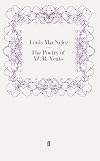
The Poetry of W. B. Yeats
by Louis MacNeice
46 Members (5.00)
On This Page
Description
The poet Louis MacNeice's pioneering critical study of W. B. Yeats was undertaken in 1939, shortly after the death of Yeats, and published early in 1941, in time of war - as an attempt to disentangle MacNeice's own feelings about the elder poetic statesman and compatriot, but also to investigate the reality of poetry at a historical moment when its uses seemed most tenuous. As Richard Ellmann remarked: 'MacNeice's book on Yeats is still as good an introduction to that poet as we have, with show more the added interest that it is also an introduction to MacNeice. It discloses a critical mind always discontented with its own formulations, full of self-questionings and questionings of others, scrupling to admire, reluctant to be won. Yet mistrust of Yeats is overcome by wary approval, in a rising tone of endorsement'. MacNeice's study succeeded in delineating those aspects of Yeats that remain central to discussion of the poet today. show lessTags
Recommendations




















Member Reviews
Members
- Recently Added By
Author Information

53+ Works 1,413 Members
Born in Belfast and raised in Carrickfergus, MacNeice was the son of an Anglican clergyman who became a bishop. His education in English schools and Oxford University made him ill at ease with his Puritan upbringing, but it never caused him to lose his sense of northern Irish roots. At Oxford, MacNeice became friends with Stephen Spender and show more later, W. H. Auden, with whom he collaborated on "Letters from Iceland" (1937). After graduating with a double first, MacNeice accepted a lectureship in the classics at Birmingham University and, after the traumatic elopement of his first wife, at Bedford College of the University of London. He joined the BBC as scriptwriter and producer in 1941 and remained with it for the remainder of his career. He also did an admired translation of Aeschylus's "Agamemnon" and the well-known book "The Poetry of W. B. Yeats" (1941). MacNeice defended his own poetry and that of Auden, Spender, and C. Day Lewis in his book "Modern Poetry" (1938). There he called for an "impure poetry" that would react against the giants of the previous generation by embracing the partisanship that he missed in W. B. Yeats and involvement with life that he found lacking in T. S. Eliot, both of whom had otherwise influenced him. While engaged with personal and political issues of the 1930's, MacNeice maintained a more skeptical stance than many of his contemporaries. His best verse---such as "Valediction" or "Bagpipe Music"---brings wit and strong rhythms to bear on contemporary life and often harks back to scenes of his youth. After joining the BBC, he also wrote more than 150 scripts, of which a dozen radio dramas have been published. An autobiography, "The Strings Are False," was published posthumously in 1966. During his lifetime, MacNeice was overshadowed by Auden, but in recent years, reevaluation of his work has regarded him as a major literary figure. (Bowker Author Biography) show less
Common Knowledge
- People/Characters
- William Butler Yeats
Classifications
Statistics
- Members
- 46
- Popularity
- 650,436
- Rating
- (5.00)
- Languages
- English
- Media
- Paper
- ISBNs
- 4
- ASINs
- 1