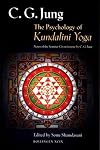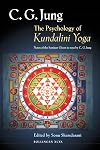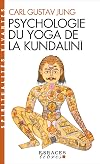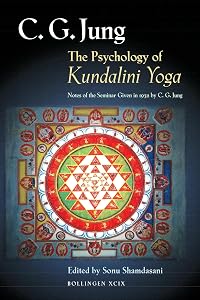
The Psychology of Kundalini Yoga
by C. G. Jung
On This Page
Description
Sonu Shamdasani is a historian of psychology at the Wellcome Institute for the History of Medicine, London. He is the editor of Theodore Flournoy's From India to the Planet Mars: A Case of Multiple Personality with Imaginary Languages (Princeton), of Michael Fordham's Analyst-Patient Interaction, and, with Michael Munchow, Speculations after Freud: Psychoanalysis, Philosophy, Culture. "Kundalini yoga presented Jung with a model of something that was almost completely lacking in Western show more psychology--an account of the development phases of higher Jung's insistence on the psychogenic and symbolic significance of such states is even more timely now than then. As R. D. Laing 'It was Jung who broke the ground here, but few followed him.'"--From the introduction by Sonu Shamdasani Jung's seminar on Kundalini yoga, presented to the Psychological Club in Zurich in 1932, has been widely regarded as a milestone in the psychological understanding of Eastern thought and of the symbolic transformations of inner experience. Kundalini yoga presented Jung with a model for the developmental phases of higher consciousness, and he interpreted its symbols in terms of the process of individuation. With sensitivity toward a new generation's interest in alternative religions and psychological exploration, Sonu Shamdasani has brought together the lectures and discussions from this seminar. In this volume, he re-creates for today's reader the fascination with which many intellectuals of prewar Europe regarded Eastern spirituality as they discovered more and more of its resources, from yoga to tantric texts. Reconstructing this seminar through new documentation, Shamdasani explains, in his introduction, why Jung thought that the comprehension of Eastern thought was essential if Western psychology was to develop. He goes on to orient today's audience toward an appreciation of some of the questions that stirred the minds of Jung and his seminar group: What is the relation between Eastern schools of liberation and Western psychotherapy? What connection is there between esoteric religious traditions and spontaneous individual experience? What light do the symbols of Kundalini yoga shed on conditions diagnosed as psychotic? Not only were these questions important to analysts in the 1930s but, as Shamdasani stresses, they continue to have psychological relevance for readers on the threshold of the twenty-first century. This volume also offers newly translated material from Jung's German language seminars, a seminar by the indologist Wilhelm Hauer presented in conjunction with that of Jung, illustrations of the cakras, and Sir John Woodroffe's classic translation of the tantric text, the Sat-cakra Nirupana. ? "The Psychology of Kundalini Yoga serves as an excellent introduction to the higher realms of I enthusiastically recommend this book as an introduction to realms of analytic thought generally outside the classical and mainstream views."---David Nichol, Psychoanalytic Books: A Quarterly Journal of Reviews "In these four lectures ... Jung placed some very complex Indian concepts within the Western psychological understanding of his time, thereby helping us to grasp better both systems of thought and realization."---Betsy Halpern, Quadrant "Shamdasani has performed a valuable service by editing these seminar notes and making them available to a wider audience. In addition to Jung's four lectures [he] provides an excellent introduction as well as informative This volume is a welcome addition to the Bollingen Seminar Series."---William E. Kotsch, Journal of Analytical Psychology. show lessTags
Recommendations









Member Reviews
The book consists of three part, roughly equal in size, although the second part is somewhat larger.
The first part (written by the Editor) provides a historical background for the second part; this second part contains four lectures of Jung about Tantra Yoga. The third part (Appendix) contains further material from Jung.
This first part is understandable/readable and deserves a higher rating. The second part is very unintelligible and I could not make much sense of the words in there. This part deserves a lower rating. I stopped reading it after 7 pages. I did then not look at the third part.
The first part (written by the Editor) provides a historical background for the second part; this second part contains four lectures of Jung about Tantra Yoga. The third part (Appendix) contains further material from Jung.
This first part is understandable/readable and deserves a higher rating. The second part is very unintelligible and I could not make much sense of the words in there. This part deserves a lower rating. I stopped reading it after 7 pages. I did then not look at the third part.
swami mukrananda talks about kundalini, the secret of life
Jung pontifie sur un sujet qu'il ne maîtrise pas, tout en nous mettant en garde contre cet écueil. Il assimile le phénomène de montée de la Kundalini à des étapes de développement psychologique, ce qui rabaisse le livre à un exposé des différents chakras assaisonné à la mode Jungienne. Sans intérêt, sauf pour les inconditionnels de Jung.
Feb 25, 2011French
> Babelio : https://www.babelio.com/livres/Jung-Psychologie-du-yoga-de-la-Kundalini/98852
> PSYCHOLOGIE DU YOGA DE LA KUND, de Carl Gustav Jung. — Parmi les différentes écoles de yoga, celle de la kundalinî vise à accorder les principes d’ordinaire opposés de la sexualité et de la spiritualité, en faisant fusionner leurs énergies au sein du corps humain. Alors que la psychologie de l’époque était sous l’emprise grandissante de la psychanalyse, il allait offrir à Jung un modèle qui manquait totalement à la psychologie occidentale : une description, à partir de l’étude symbolique des chakras, des phases de développement de la conscience supérieure. Ed. Albin Michel, 2005 (Spiritualités Vivantes)
> PSYCHOLOGIE DU show more YOGA DE LA KUNDALINÎ, de Carl Gustav Jung. — En 1932 Jung donna quatre conférences sur un sujet peu connu à l'époque : le yoga de la Kundalinî. Ces causeries suivaient les conférences de l' indianiste allemand Wilhelm Hauer et donnèrent lieu à des questions-réponses que vous trouverez aussi dans ce livre.
Extrait : … C'est bien cette quête qui rend la vie vivante - et il s'agit précisément de la Kundalinî la pulsion divine. Quand par exemple, un chevalier du Moyen Age accomplissait de merveilleux exploits, à l'instar des fameux travaux d'Hercule, quand il combattait les dragons et délivrait les vierges, il réalisait tout cela au nom de sa dame - qui était la Kundalinî même … (traduit de l' anglais) Edition Albin Michel (collection de poche) 271 pages, 7 €.
—Infos Yoga, (51), Févr./Mars 2005, (p. 45) show less
> PSYCHOLOGIE DU YOGA DE LA KUND, de Carl Gustav Jung. — Parmi les différentes écoles de yoga, celle de la kundalinî vise à accorder les principes d’ordinaire opposés de la sexualité et de la spiritualité, en faisant fusionner leurs énergies au sein du corps humain. Alors que la psychologie de l’époque était sous l’emprise grandissante de la psychanalyse, il allait offrir à Jung un modèle qui manquait totalement à la psychologie occidentale : une description, à partir de l’étude symbolique des chakras, des phases de développement de la conscience supérieure. Ed. Albin Michel, 2005 (Spiritualités Vivantes)
> PSYCHOLOGIE DU show more YOGA DE LA KUNDALINÎ, de Carl Gustav Jung. — En 1932 Jung donna quatre conférences sur un sujet peu connu à l'époque : le yoga de la Kundalinî. Ces causeries suivaient les conférences de l' indianiste allemand Wilhelm Hauer et donnèrent lieu à des questions-réponses que vous trouverez aussi dans ce livre.
Extrait : … C'est bien cette quête qui rend la vie vivante - et il s'agit précisément de la Kundalinî la pulsion divine. Quand par exemple, un chevalier du Moyen Age accomplissait de merveilleux exploits, à l'instar des fameux travaux d'Hercule, quand il combattait les dragons et délivrait les vierges, il réalisait tout cela au nom de sa dame - qui était la Kundalinî même … (traduit de l' anglais) Edition Albin Michel (collection de poche) 271 pages, 7 €.
—Infos Yoga, (51), Févr./Mars 2005, (p. 45) show less
Apr 12, 2021 (Edited)French
> Babelio : https://www.babelio.com/livres/Jung-Les-Energies-de-lame--Seminaire-sur-le-yoga-...
> LES ÉNERGIES DE L’ÂME, de Carl G. Jung, éd. Albin Michel. — En 1932, Jung organise un séminaire, à Zurich, pour faire le point sur les liens entre l’esprit occidental et l’esprit oriental, notamment entre la psychanalyse, le yoga et le tantra. Avec audace, il propose des cas cliniques, comparant notamment l’énergie psychique et la fameuse kundalini. Une vision incroyablement prémonitoire, qui nous éclaire encore, soixante-dix ans plus tard. Le dialogue entre Jung et les participants au séminaire est remarquable. (Saluons la publication, chez le même éditeur, de lettres de Jung sur les religions, choisies et présentées show more par Michel Cazenave sous le titre Le Divin dans l’Homme). —P.V.E.
—Nouvelles Clés, (23), Automne 1999 show less
> LES ÉNERGIES DE L’ÂME, de Carl G. Jung, éd. Albin Michel. — En 1932, Jung organise un séminaire, à Zurich, pour faire le point sur les liens entre l’esprit occidental et l’esprit oriental, notamment entre la psychanalyse, le yoga et le tantra. Avec audace, il propose des cas cliniques, comparant notamment l’énergie psychique et la fameuse kundalini. Une vision incroyablement prémonitoire, qui nous éclaire encore, soixante-dix ans plus tard. Le dialogue entre Jung et les participants au séminaire est remarquable. (Saluons la publication, chez le même éditeur, de lettres de Jung sur les religions, choisies et présentées show more par Michel Cazenave sous le titre Le Divin dans l’Homme). —P.V.E.
—Nouvelles Clés, (23), Automne 1999 show less
May 7, 2025French
Ratings
Members
- Recently Added By
Author Information

905+ Works 42,923 Members
Carl Gustav Jung was born in Switzerland on July 26, 1875. He originally set out to study archaeology, but switched to medicine and began practicing psychiatry in Basel after receiving his degree from the University of Basel in 1902. He became one of the most famous of modern psychologists and psychiatrists. Jung first met Sigmund Freud in 1907 show more when he became his foremost associate and disciple. The break came with the publication of Jung's Psychology of the Unconscious (1912), which did not follow Freud's theories of the libido and the unconscious. Jung eventually rejected Freud's system of psychoanalysis for his own "analytic psychology." This emphasizes present conflicts rather than those from childhood; it also takes into account the conflict arising from what Jung called the "collective unconscious"---evolutionary and cultural factors determining individual development. Jung invented the association word test and contributed the word complex to psychology, and first described the "introvert" and "extrovert" types. His interest in the human psyche, past and present, led him to study mythology, alchemy, oriental religions and philosophies, and traditional peoples. Later he became interested in parapsychology and the occult. He thought that unidentified flying objects (UFOs) might be a psychological projection of modern people's anxieties. He wrote several books including Studies in Word Association, Flying Saucers: A Modern Myth of Things Seen in the Skies, and Psychology and Alchemy. He died on June 6, 1961 after a short illness. (Bowker Author Biography) show less
Some Editions
Series
Belongs to Publisher Series
Bollingen Series (99.04)
Common Knowledge
- Original title
- Die Psychologie des Kundalini-Yoga. Nach Aufzeichnungen des Seminars 1932
- Original publication date
- 1933
- Original language
- English
Classifications
- Genres
- Nonfiction, Religion & Spirituality, General Nonfiction, Philosophy
- DDC/MDS
- 294.543 — Religion Other religions Dharmic religions Hinduism Religious experience, life, practice, religious ethics Worship, meditation, yoga
- LCC
- BL1238.56 .K86 .J86 — Philosophy, Psychology and Religion Religions. Mythology. Rationalism Religions. Mythology. Rationalism History and principles of religions Asian. Oriental By religion Religious life
- BISAC
Statistics
- Members
- 234
- Popularity
- 138,743
- Reviews
- 5
- Rating
- (3.35)
- Languages
- 7 — Dutch, English, French, German, Italian, Polish, Spanish
- Media
- Paper, Ebook
- ISBNs
- 17
- ASINs
- 1