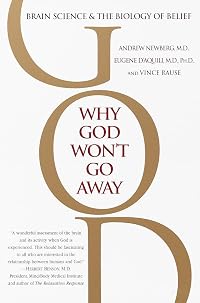
Why God Won't Go Away: Brain Science and the Biology of Belief
by Andrew Newberg, Eugene G. D'Aquili
On This Page
Description
Why have we humans always longed to connect with something larger than ourselves? Even today in our technologically advanced age, more than seventy percent of Americans claim to believe in God. Why, in short, won't God go away? In this groundbreaking new book, researchers Andrew Newberg and Eugene d'Aquili offer an explanation that is at once profoundly simple and scientifically precise: The religious impulse is rooted in the biology of the brain. In Why God Won't Go Away, Newberg and show more d'Aquili document their pioneering explorations in the field of neurotheology, an emerging discipline dedicated to understanding the complex relationship between spirituality and the brain. Blending cutting-edge science with illuminating insights into the nature of consciousness and spirituality, they bridge faith and reason, mysticism and empirical data. The neurological basis of how the brain identifies the "real" is nothing short of miraculous. This fascinating, eye-opening book dares to explore both the miracle and the biology of our enduring relationship with God. show lessTags
Recommendations


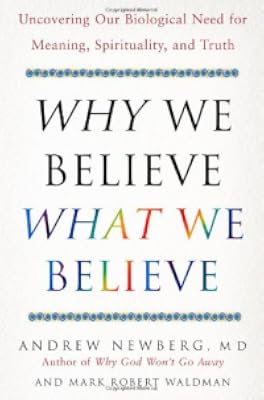
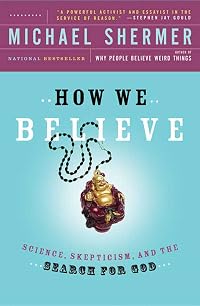
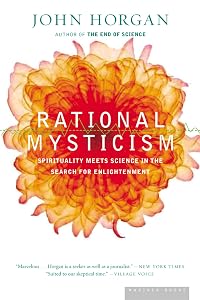
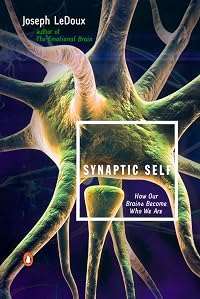

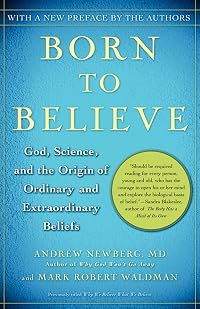

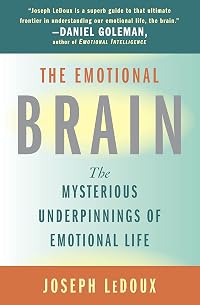
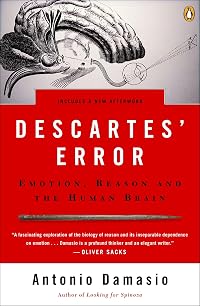
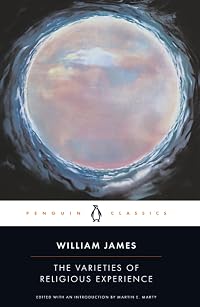






Member Recommendations
Member Reviews
This book was very thought provoking. I expected it to be more of a Dawkinian approach to squash religion with science, and was pleasantly surprised to find that it has a much more even-handed approach to the traditional dichotomy, making a real concerted effort to bridge the divide. The book basically centers around the attention and orientation centers of the brain, and the principle that certain events/behaviors can deafferent them (or shut them down), providing an extra-sensory experience. As opposed to taking a radical scientific standpoint (i.e. this proves there is no god) the authors suggest that perhaps during these mystical "altered states" (which we all attain periodically in varying degrees) we are in fact perceiving a truer show more reality than our own. Their arguments are often driven by conjecture, although still backed by scientific evidence, and make for great contemplation. show less
I could tell that the authors were trying very hard to make their work accessible (i.e., dumb it down) for the general public, but it was still quite a sweat. I had to read most paragraphs and some sentences 2 or 3 times before I felt I had a grip on what they were on about. And I'm not sure how accurate that feeling is.
Altho the authors take no position on whether or not God (or what they prefer to call Absolute Unitary Being - AUB) actually exists they declare that their research reveals that the human brain is wired for mystical experiences from which perception of "god", and religion to appease/celebrate that god, are born. As far as they'll go regarding the god issue is to state that god could either be neuron blips in the brain, show more or a perception authentically experienced in a mystical state that indicates a non-material reality, and that they're betting on the second one.
Their bet is based on their research, which is frequently mentioned but not described -- at least that I could see. Not being well versed in science, I could have simply not recognized it or not understood it, but I read nothing that made a compelling case for non-material reality over brain blips. To me, the possibilities seemed 50/50 at best and, based on what I read in this book, I'd be betting for the brain blips.
One point I wish they would have stressed more is that when they used the word "god" they are always referring to their AUB, which is some non-physical, non-personal and certainly non-individual form of ultimate reality -- what some philosophers call the ground of being. They are most definately not referring to any human-like entity with a separate and individual personality, nature, emotions or plans for humankind. They also aren't referring to anything with a gender, anything that is an actual "he", and they did point this out once but then continued to refer to god as "He" rather than the more accurate "It".
I can understand this, a lot of people find the use of "it" as a pronoun insulting (except for animals) and I expect the authors felt that even people who understood it's use would have a knee-jerk negative reaction to it, and to their work. I do believe they should have soldiered on with "It" tho, not because it's politically or metaphorically correct, but because it would be the best way to drive home the otherness of their meaning of "god".
Having written all that negative sounding quibbling, I did enjoy the book very much. Their theory is fascinating and well worth the struggle of reading for someone who didn't even take basic biology in high school. show less
Altho the authors take no position on whether or not God (or what they prefer to call Absolute Unitary Being - AUB) actually exists they declare that their research reveals that the human brain is wired for mystical experiences from which perception of "god", and religion to appease/celebrate that god, are born. As far as they'll go regarding the god issue is to state that god could either be neuron blips in the brain, show more or a perception authentically experienced in a mystical state that indicates a non-material reality, and that they're betting on the second one.
Their bet is based on their research, which is frequently mentioned but not described -- at least that I could see. Not being well versed in science, I could have simply not recognized it or not understood it, but I read nothing that made a compelling case for non-material reality over brain blips. To me, the possibilities seemed 50/50 at best and, based on what I read in this book, I'd be betting for the brain blips.
One point I wish they would have stressed more is that when they used the word "god" they are always referring to their AUB, which is some non-physical, non-personal and certainly non-individual form of ultimate reality -- what some philosophers call the ground of being. They are most definately not referring to any human-like entity with a separate and individual personality, nature, emotions or plans for humankind. They also aren't referring to anything with a gender, anything that is an actual "he", and they did point this out once but then continued to refer to god as "He" rather than the more accurate "It".
I can understand this, a lot of people find the use of "it" as a pronoun insulting (except for animals) and I expect the authors felt that even people who understood it's use would have a knee-jerk negative reaction to it, and to their work. I do believe they should have soldiered on with "It" tho, not because it's politically or metaphorically correct, but because it would be the best way to drive home the otherness of their meaning of "god".
Having written all that negative sounding quibbling, I did enjoy the book very much. Their theory is fascinating and well worth the struggle of reading for someone who didn't even take basic biology in high school. show less
Interesting book on the physiology of our brains when we meditate or pray. I read this for a book club for my Skeptic group. Not a real fast read but very interesting, especially if you are science minded. The book doesn't end up saying one way or the other whether god is a figment of our imagination or real.
A single quote from this book probably explains all we need to know about why God won’t go away:
So impressive are the health benefits of religion … that after reviewing more than a thousand studies on the impact of religion upon health, Dr. Harold Koenig of Duke University Medical Center recently told The New Republic, that “Lack of religious involvement has an effect on mortality that is equivalent to forty years of smoking one pack of cigarettes per day.
What more evidence do we need that evolution has wired us for religion? The subtitle is Brain Science & The Biology of Belief, and the back cover copy promises, “This fascinating, eye-opening book dares to explore both the miracle and the biology of our enduring relationship show more with God.”
The book begins with a short overview of the brain; in particular, the orientation association area that defines the “self.” The authors believe this area is extremely important in the brain’s sense of mystical and religious experiences.
Religion is far from new. The graves and shrines of the Neanderthals are the earliest known evidence of religious behavior. As soon as hominids began to behave like human beings, they began to wonder and worry about the deepest mysteries of existence—and found resolutions for those mysteries in the stories we call myths. This observation is central to the authors’ quest for understanding our religious need. Why would the human mind compel us, in every culture and throughout time, to seek answers to our most troubling problems in myth?
The book next discusses ritual, mysticism, and the mind’s search for absolutes … for the “realer than real.” Our minds are drawn by the intuition of a deeper reality, an utter sense of oneness with the Absolute. God, say the authors, will not go away, so long as we are capable of sensing something more. show less
So impressive are the health benefits of religion … that after reviewing more than a thousand studies on the impact of religion upon health, Dr. Harold Koenig of Duke University Medical Center recently told The New Republic, that “Lack of religious involvement has an effect on mortality that is equivalent to forty years of smoking one pack of cigarettes per day.
What more evidence do we need that evolution has wired us for religion? The subtitle is Brain Science & The Biology of Belief, and the back cover copy promises, “This fascinating, eye-opening book dares to explore both the miracle and the biology of our enduring relationship show more with God.”
The book begins with a short overview of the brain; in particular, the orientation association area that defines the “self.” The authors believe this area is extremely important in the brain’s sense of mystical and religious experiences.
Religion is far from new. The graves and shrines of the Neanderthals are the earliest known evidence of religious behavior. As soon as hominids began to behave like human beings, they began to wonder and worry about the deepest mysteries of existence—and found resolutions for those mysteries in the stories we call myths. This observation is central to the authors’ quest for understanding our religious need. Why would the human mind compel us, in every culture and throughout time, to seek answers to our most troubling problems in myth?
The book next discusses ritual, mysticism, and the mind’s search for absolutes … for the “realer than real.” Our minds are drawn by the intuition of a deeper reality, an utter sense of oneness with the Absolute. God, say the authors, will not go away, so long as we are capable of sensing something more. show less
At times it is slightly repetitive in an academic way (clearly states the thesis repeatedly) but there is enough variety in topics (meditation, myth,personal gods) to keep it interesting. The background in brain physiology was so clearly explained it made me feel smart while I was reading it (but don't quiz me on it now, please). Overall the authors make a sound, thoughtful argument for the biological capacity for spiritual experiences that is thought provoking and inspiring.
A Photograph of God?: An Introduction to the Biology of Belief
Brain Machinery: The Science of Perception
Brain Architecture: How the Brain Makes the Mind
Myth-making: The Compulsion to Create Stories and Beliefs
Ritual: The Physical Manifestation of Meaning
Mysticism: The Biology of Transcendence
The Origins of Religion: The Persistence of a Good Idea
Realer Than Real: The Mind in Search of Absolutes
Why God Won't Go Away: The Metaphor of God and the Mythology of Science
Epilogue: So Just What Is Neurotheology Anyway?
Notes
References
About the Authors
Index
Brain Machinery: The Science of Perception
Brain Architecture: How the Brain Makes the Mind
Myth-making: The Compulsion to Create Stories and Beliefs
Ritual: The Physical Manifestation of Meaning
Mysticism: The Biology of Transcendence
The Origins of Religion: The Persistence of a Good Idea
Realer Than Real: The Mind in Search of Absolutes
Why God Won't Go Away: The Metaphor of God and the Mythology of Science
Epilogue: So Just What Is Neurotheology Anyway?
Notes
References
About the Authors
Index
> Babelio : https://www.babelio.com/livres/Newberg-Pourquoi-Dieune-disparaitra-pas--Quand-la....
> POURQUOI "DIEU" NE DISPARAÎTRA PAS, Quand la science explique la religion, de Andrew Newberg et Eugene d’Aquili. — Andrew Newberg et Eugene d’Aquili, tous deux biologistes à l’Université de Pennsylvanie, initient une nouvelle discipline, la neurothéologie, qui cherche à concilier religion et biologie. Leur approche avant tout expérimentale repose sur des techniques d’imagerie du cerveau. Bouddhistes tibétains en méditation et moniales franciscaines en prière sont leurs sujets d’étude. Ils montrent la réalité des expériences mystiques et spirituelles où le méditant connaît « un état de pure conscience, une show more conscience dépouillée de l’ego, focalisée sur rien, inconsciente du passage du temps et des sensations physiques. Cette conscience… percevrait et interpréterait la réalité comme un tout unifié sans forme, sans limite…. » Les auteurs proposent aussi un fondement théorique - que nous n’aborderons pas dans cette rubrique - expliquant les phénomènes mis en évidence dans leurs expérimentations qui rejoignent les descriptions des enseignements traditionnels d’un niveau de conscience non-duel.
Selon eux, le cerveau est programmé pour connaître des « états de transcendance unitaire » dans lesquels l’activité du cerveau abolit la sensation de séparation de soi et de l’univers. Les auteurs vont même jusqu’à affirmer que « l’esprit peut exister sans l’ego. »
Un élément de ce livre est cependant déstabilisant : le tiraillement constant des auteurs entre les faits, selon eux indéniables, qui démontrent la réalité des états de transcendance, et leur crainte de trop s’éloigner des conceptions scientifiques matérialistes. Les auteurs cherchent ainsi à montrer que cette fonction neurologique de transcendance s’inscrit parfaitement dans un modèle évolutionniste darwinien. Par exemple, ils affirment que cette fonction biologique a été sélectionnée par la nature parce qu’elle était bonne pour l’homme (pour sa santé…), ou alors ils comparent le rituel religieux humain au rituel sexuel animal. Ces deux exemples un peu caricaturaux, sont, bien sûr, parfaitement recevables. Mais ces hésitations contribuent à créer un certain flottement chez un lecteur averti, et le sens de leur démarche épistémologique échappe parfois. En fait, leur conviction est que la « réalité ultime », que connaissent ces moines et moniales, est une réalité d’ordre supérieure à la réalité dite matérielle que nous connaissons dans la vie ordinaire.
Un ouvrage intéressant au carrefour de la spiritualité et de la science. 2003 - Sully, 2003. 320 p.
—3e millénaire, (71), Printemps 2004 show less
> POURQUOI "DIEU" NE DISPARAÎTRA PAS, Quand la science explique la religion, de Andrew Newberg et Eugene d’Aquili. — Andrew Newberg et Eugene d’Aquili, tous deux biologistes à l’Université de Pennsylvanie, initient une nouvelle discipline, la neurothéologie, qui cherche à concilier religion et biologie. Leur approche avant tout expérimentale repose sur des techniques d’imagerie du cerveau. Bouddhistes tibétains en méditation et moniales franciscaines en prière sont leurs sujets d’étude. Ils montrent la réalité des expériences mystiques et spirituelles où le méditant connaît « un état de pure conscience, une show more conscience dépouillée de l’ego, focalisée sur rien, inconsciente du passage du temps et des sensations physiques. Cette conscience… percevrait et interpréterait la réalité comme un tout unifié sans forme, sans limite…. » Les auteurs proposent aussi un fondement théorique - que nous n’aborderons pas dans cette rubrique - expliquant les phénomènes mis en évidence dans leurs expérimentations qui rejoignent les descriptions des enseignements traditionnels d’un niveau de conscience non-duel.
Selon eux, le cerveau est programmé pour connaître des « états de transcendance unitaire » dans lesquels l’activité du cerveau abolit la sensation de séparation de soi et de l’univers. Les auteurs vont même jusqu’à affirmer que « l’esprit peut exister sans l’ego. »
Un élément de ce livre est cependant déstabilisant : le tiraillement constant des auteurs entre les faits, selon eux indéniables, qui démontrent la réalité des états de transcendance, et leur crainte de trop s’éloigner des conceptions scientifiques matérialistes. Les auteurs cherchent ainsi à montrer que cette fonction neurologique de transcendance s’inscrit parfaitement dans un modèle évolutionniste darwinien. Par exemple, ils affirment que cette fonction biologique a été sélectionnée par la nature parce qu’elle était bonne pour l’homme (pour sa santé…), ou alors ils comparent le rituel religieux humain au rituel sexuel animal. Ces deux exemples un peu caricaturaux, sont, bien sûr, parfaitement recevables. Mais ces hésitations contribuent à créer un certain flottement chez un lecteur averti, et le sens de leur démarche épistémologique échappe parfois. En fait, leur conviction est que la « réalité ultime », que connaissent ces moines et moniales, est une réalité d’ordre supérieure à la réalité dite matérielle que nous connaissons dans la vie ordinaire.
Un ouvrage intéressant au carrefour de la spiritualité et de la science. 2003 - Sully, 2003. 320 p.
—3e millénaire, (71), Printemps 2004 show less
Apr 8, 2019 (Edited)French
Members
- Recently Added By
Author Information

23+ Works 1,754 Members
Andrew Newberg is director of research at the Marcus Institute of Integrative Health and a physician at Thomas Jefferson University Hospital. His books include Why God Won't Go Away: Brain Science and the Biology of Belief (2001), How God Changes Your Brain: Breakthrough Findings from a Leading Neuroscientist (2009), and Principles of show more Neurotheology (2010). show less
6 Works 762 Members
All Editions
Work Relationships
Classifications
Statistics
- Members
- 644
- Popularity
- 45,208
- Reviews
- 7
- Rating
- (3.42)
- Languages
- Dutch, English, French, German
- Media
- Paper, Audiobook, Ebook
- ISBNs
- 12
- ASINs
- 2