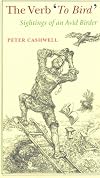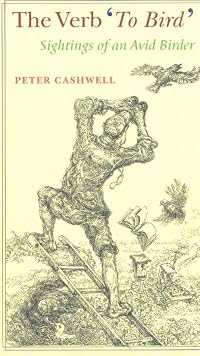
The Verb To Bird
by Peter Cashwell
On This Page
Description
"[A] delightfully literary and eclectic memoir about the manifold joys of birding...Cashwell is a storyteller. A very literate, observant, insightful storyteller."--The Bloomsbury Review "Reading this book was the next best thing to wandering in the woods with Peter Cashwell hoping to add a rufous-capped warbler to my life list. No, it was better--I could laugh out loud in delight as I turned the pages without fear of scaring the birds."--Katharine Weber, author of The Music Lesson "An show more entertaining and witty meditation on birding."--Library Journal All around the world, birds are the subject of intense, even spiritual, fascination, but relatively few people see the word bird as a verb. Peter Cashwell is one who does, and with good reason: He birds (because he can't help it), and he teaches grammar (because he's paid to). An English teacher by profession and an avid birder by inner calling, Cashwell has written a whimsical and critical book about his many obsessions--birds, birders, language, literature, parenting, pop culture, and the human race. Cashwell lovingly but irreverently explores the practice of birding, from choosing a field guide to luring vultures out of shrubbery, and gives his own eclectic travelogue of some of the nation's finest bird habitats. Part memoir, part natural history, part apology, The Verb 'To Bird' will enlighten and entertain anyone who's ever wandered around wet fields at the crack of dawn with dog-eared field guides crushed against the granola bars in their pockets. But you don't have to know the field marks of an indigo bunting to appreciate Cashwell's experiences with non-lending libraries, venomous insects, sports marketing, and animated Christmas specials. "Birders as well as all others interested in birds will enjoy this witty and informative meditation. Declaring himself a victim of birding compulsive disorder, Cashwell, an English teacher in Virginia, does an excellent job of describing his fascination with observing and listening to birds."--Publishers Weekly "Peter Cashwell possesses one of the rarest of all qualities in a nature writer: an intelligent wit."--Robert Finch, co-editor of The Norton Book of Nature Writing "A fine literary ramble and a good laugh to boot--no mean feat in a genre that perhaps takes itself to seriously."--John Hanson Mitchell, Editor of Sanctuary, Journal of the Massachusetts Audubon Society "Writing with humor and gentle environmental rants, Cashwell does for his beloved birds what Bill Bryson did for the Appalachian Trail in his best-selling A Walk in the Woods."--Fredericksburg Free-Lance Star "[Cashwell] does not stint on the details that matter to birders, but it's his ability to translate the joy of the experience for the non-birder that extends the book's appeal beyond the Nature/Ornithology shelves."--The Charlotte Observer "Cashwell plays with the language as joyfully and skillfully as a musician coaxes melodies from his instrument."--Rocky Mount Telegram Birds first captured Peter Cashwell's attention when his mother hung an avian mobile over his crib. He was born in Raleigh, N.C., grew up in Chapel Hill, and graduated from the University of North Carolina, where he took every creative writing course permitted by the English department (and one that wasn't). Cashwell has worked at lots of different jobs--radio announcer, rock musician, comic-book critic, improv comedy accompanist. Now he teaches English and speech at Woodberry Forest School in the foothills of Virginia'sBlue Ridge Mountains. show lessTags
Recommendations






Member Reviews
They're everywhere. We're surrounded by feathers, beaks, wingbeats, caws and chirps. If you're a character in an Alfred Hitchcock movie, this could be rather troubling; but for the majority of us, birds are literally the background music in our daily lives. Birds are so common, we hardly know they're there. You probably passed 150 birds on your way to work today and didn't even give them a blink of thought.
For some people like Peter Cashwell, however, every bird is a cause for celebration and an excuse to pull off to the side of the road, grab the binoculars, and thumb frantically through Petersen's Field Guide to Birds. Cashwell, a high school English teacher, has a particular hobby--actively pursuing birds to add to his "life list" of show more sightings. That's why, in the pages of The Verb "To Bird", you'll find him walking along a Delaware shore in a howling wind in search of an American Avocet or enduring swarms of biting bugs in South Carolina to get a positive ID on a female Painted Bunting. Each new bird means a checkmark and a private whoop of joy.
That joy is contagious on every page of his book. Some of you may be thinking that a book on birding would be about as exciting as reading Hexnuts and the Paintings of Vermeer: a Critical Comparison, but I'm here to tell you that The Verb "To Bird" might just be the most stimulating thing you've read in a long time--it's the literary equivalent of a caffeine-laced, sugar-jolted energy drink.
The book opens with an engaging argument on why the noun "bird" can also be used as a verb for the singular obsession with All Things Feathered. Through grammatical breakdown and reasonable persuasion, Cashwell shows how he and others like him bird like other people fish.
I don't think it's accurate, however, to say that people like me "bird-watch." The term suggests that we lie around waiting for birds to appear, and that when they do, we sit passively and stare at them. In reality, those who bird pursue birds, observing them, memorizing their names, learning their field marks and calls, chasing them over hill and dale, recording their voices, netting and banding them, photographing them, and, most importantly, arguing about them with other birders. I doubt that clock-watchers act this way around clocks.
Cashwell peppers the book with self-deprecating humor (he knows he's a member of a geeky clique), pop culture references and sly word play. He's also an intelligent guide on our tour of the avian world, patiently explaining the differences between the Great Egret, the Snowy Egret and the Cattle Egret.
He takes us on several weekend treks along the Eastern Shoreline, spreading his enthusiasm for the Winged Ones every step of the way.
At under six inches, the Carolina Wren will never be considered spectacular in the same way as a Whooping Crane, but its teakettle teakettle teakettle cry is astonishing in its volume, the knob of which, as Spinal Tap's Nigel Tufnel would say, clearly goes to eleven.
Whether he's describing the first folio of Audubon's Birds of North America which weighed 56 pounds and was the size of a bathtowel because the painter-naturalist wanted the bird portraits to be life-size ("Coffee tables must have cowered in terror at the mere mention of Audubon's name") or whether he's giving us an etymological history of how the Cardinal came to be named, the prose is always light and engaging, masterfully combining science, history, humor, and memoir.
This is one of those rare books I tore through in practically two sittings. As I neared the end, I so desperately did not want it to end. Cashwell's book is infectious...like a good strain of bird flu. show less
For some people like Peter Cashwell, however, every bird is a cause for celebration and an excuse to pull off to the side of the road, grab the binoculars, and thumb frantically through Petersen's Field Guide to Birds. Cashwell, a high school English teacher, has a particular hobby--actively pursuing birds to add to his "life list" of show more sightings. That's why, in the pages of The Verb "To Bird", you'll find him walking along a Delaware shore in a howling wind in search of an American Avocet or enduring swarms of biting bugs in South Carolina to get a positive ID on a female Painted Bunting. Each new bird means a checkmark and a private whoop of joy.
That joy is contagious on every page of his book. Some of you may be thinking that a book on birding would be about as exciting as reading Hexnuts and the Paintings of Vermeer: a Critical Comparison, but I'm here to tell you that The Verb "To Bird" might just be the most stimulating thing you've read in a long time--it's the literary equivalent of a caffeine-laced, sugar-jolted energy drink.
The book opens with an engaging argument on why the noun "bird" can also be used as a verb for the singular obsession with All Things Feathered. Through grammatical breakdown and reasonable persuasion, Cashwell shows how he and others like him bird like other people fish.
I don't think it's accurate, however, to say that people like me "bird-watch." The term suggests that we lie around waiting for birds to appear, and that when they do, we sit passively and stare at them. In reality, those who bird pursue birds, observing them, memorizing their names, learning their field marks and calls, chasing them over hill and dale, recording their voices, netting and banding them, photographing them, and, most importantly, arguing about them with other birders. I doubt that clock-watchers act this way around clocks.
Cashwell peppers the book with self-deprecating humor (he knows he's a member of a geeky clique), pop culture references and sly word play. He's also an intelligent guide on our tour of the avian world, patiently explaining the differences between the Great Egret, the Snowy Egret and the Cattle Egret.
He takes us on several weekend treks along the Eastern Shoreline, spreading his enthusiasm for the Winged Ones every step of the way.
At under six inches, the Carolina Wren will never be considered spectacular in the same way as a Whooping Crane, but its teakettle teakettle teakettle cry is astonishing in its volume, the knob of which, as Spinal Tap's Nigel Tufnel would say, clearly goes to eleven.
Whether he's describing the first folio of Audubon's Birds of North America which weighed 56 pounds and was the size of a bathtowel because the painter-naturalist wanted the bird portraits to be life-size ("Coffee tables must have cowered in terror at the mere mention of Audubon's name") or whether he's giving us an etymological history of how the Cardinal came to be named, the prose is always light and engaging, masterfully combining science, history, humor, and memoir.
This is one of those rare books I tore through in practically two sittings. As I neared the end, I so desperately did not want it to end. Cashwell's book is infectious...like a good strain of bird flu. show less
As an avid birder, I am drawn toward books on the topic. This is tied for the top slot of all time for me with Providence of a Sparrow by Chris Chester. Hilariously funny (if you are a birder). Highly, Highly recommend it!!
Mildly amusing essays on birding and birds. Got a little cloying after a while, but there were a few funny bits.
I'm glad I read, very glad I didn't buy it. My complaints and praises are both trivial and mentioned by others in their reviews. So, on to the bookdarts:
"Angels are usually portrayed with the wings of birds, not bats, dragonflies, or moths...."
(Do any of you know why that is... something written in the Bible maybe?)
[a:Ted Hughes|996|Ted Hughes|https://images.gr-assets.com/authors/1215068226p2/996.jpg]' cycle of Crow poems.. would that be [b:Crow: From the Life and Songs of the Crow|97684|Crow From the Life and Songs of the Crow|Ted Hughes|https://images.gr-assets.com/books/1493505481s/97684.jpg|94172]? I'm adding that to my list, as Hughes is known to me from [b:The Iron Giant|724659|The Iron Giant|Ted show more Hughes|https://images.gr-assets.com/books/1333577862s/724659.jpg|1359732] and others.
I need to find [a:E.B. White|988142|E.B. White|https://images.gr-assets.com/authors/1198519412p2/988142.jpg]'s essay "Mr. Forbush's Friends."
Another quote Cashwell uses is from Whitman's [b:Specimen Days|6966799|Specimen Days|Walt Whitman|https://images.gr-assets.com/books/1266982245s/6966799.jpg|556925]. I'm not sure about that one, and so will have to look it up.
(For that matter I need to find [a:Edward Howe Forbush|821007|Edward Howe Forbush|https://s.gr-assets.com/assets/nophoto/user/u_50x66-632230dc9882b4352d753eedf9396530.png]'s [b:A Natural History Of American Birds Of Eastern And Central North America|24362874|A Natural History Of American Birds Of Eastern And Central North America|Edward Howe Forbush|https://images.gr-assets.com/books/1420685081s/24362874.jpg|19886037] or maybe his [b:The Starling|28067016|The Starling|Edward Howe Forbush|https://s.gr-assets.com/assets/nophoto/book/50x75-a91bf249278a81aabab721ef782c4a74.png|48070015] or [b:The Domestic Cat|31820685|The Domestic Cat|Edward Howe Forbush|https://images.gr-assets.com/books/1472774525s/31820685.jpg|52476511]....)
"Chinese Zen master Huang Po said, 'The foolish reject what they see, not what they think; the wise reject what they think, not what they see.'"
From the bibliography, I am also intrigued by:
[b:Catesby's Birds of Colonial America|843743|Catesby's Birds of Colonial America|Alan Feduccia|https://images.gr-assets.com/books/1348801784s/843743.jpg|829272]
[b:Another Field Guide to Little-Known and Seldom-Seen Birds of North America|650991|Another Field Guide to Little-Known and Seldom-Seen Birds of North America|Ben Sill|https://images.gr-assets.com/books/1347650704s/650991.jpg|637127] or others by the Sills
and of course [b:Essays of E.B. White|394616|Essays of E.B. White|E.B. White|https://images.gr-assets.com/books/1439001918s/394616.jpg|1243367] and [b:Zen to Go|2724209|Zen to Go|Jon Winokur|https://images.gr-assets.com/books/1267055279s/2724209.jpg|2749811]. show less
"Angels are usually portrayed with the wings of birds, not bats, dragonflies, or moths...."
(Do any of you know why that is... something written in the Bible maybe?)
[a:Ted Hughes|996|Ted Hughes|https://images.gr-assets.com/authors/1215068226p2/996.jpg]' cycle of Crow poems.. would that be [b:Crow: From the Life and Songs of the Crow|97684|Crow From the Life and Songs of the Crow|Ted Hughes|https://images.gr-assets.com/books/1493505481s/97684.jpg|94172]? I'm adding that to my list, as Hughes is known to me from [b:The Iron Giant|724659|The Iron Giant|Ted show more Hughes|https://images.gr-assets.com/books/1333577862s/724659.jpg|1359732] and others.
I need to find [a:E.B. White|988142|E.B. White|https://images.gr-assets.com/authors/1198519412p2/988142.jpg]'s essay "Mr. Forbush's Friends."
Another quote Cashwell uses is from Whitman's [b:Specimen Days|6966799|Specimen Days|Walt Whitman|https://images.gr-assets.com/books/1266982245s/6966799.jpg|556925]. I'm not sure about that one, and so will have to look it up.
(For that matter I need to find [a:Edward Howe Forbush|821007|Edward Howe Forbush|https://s.gr-assets.com/assets/nophoto/user/u_50x66-632230dc9882b4352d753eedf9396530.png]'s [b:A Natural History Of American Birds Of Eastern And Central North America|24362874|A Natural History Of American Birds Of Eastern And Central North America|Edward Howe Forbush|https://images.gr-assets.com/books/1420685081s/24362874.jpg|19886037] or maybe his [b:The Starling|28067016|The Starling|Edward Howe Forbush|https://s.gr-assets.com/assets/nophoto/book/50x75-a91bf249278a81aabab721ef782c4a74.png|48070015] or [b:The Domestic Cat|31820685|The Domestic Cat|Edward Howe Forbush|https://images.gr-assets.com/books/1472774525s/31820685.jpg|52476511]....)
"Chinese Zen master Huang Po said, 'The foolish reject what they see, not what they think; the wise reject what they think, not what they see.'"
From the bibliography, I am also intrigued by:
[b:Catesby's Birds of Colonial America|843743|Catesby's Birds of Colonial America|Alan Feduccia|https://images.gr-assets.com/books/1348801784s/843743.jpg|829272]
[b:Another Field Guide to Little-Known and Seldom-Seen Birds of North America|650991|Another Field Guide to Little-Known and Seldom-Seen Birds of North America|Ben Sill|https://images.gr-assets.com/books/1347650704s/650991.jpg|637127] or others by the Sills
and of course [b:Essays of E.B. White|394616|Essays of E.B. White|E.B. White|https://images.gr-assets.com/books/1439001918s/394616.jpg|1243367] and [b:Zen to Go|2724209|Zen to Go|Jon Winokur|https://images.gr-assets.com/books/1267055279s/2724209.jpg|2749811]. show less
Ratings
Members
- Recently Added By
Lists

BIRDS IN FICTION & NON-FICTION
17 works; 1 member

Top Five Books of 2023
767 works; 317 members
Author Information
3+ Works 136 Members
Peter Cashwell dabbled in everything from radio announcing to improve comedy before settling into his career as a writer and teacher. His lifelong fascination with birds and language eventually inspired him to write The Verb 'To Bird', a Barnes Noble Discover Great New Writers selection (Paul Dry Books, 2003). Since 1995, Cashwell has taught at show more Woodberry Forest School in Virginia, where he lives with his wife and two sons. Follow him on Twittercommat;PeterCashwell and at PeterCashwell.com. show less
Common Knowledge
- Original publication date
- 2003
- Dedication
- For my grandparents, Mama Lea, who gave me books, Papa, who gave me laughs, Mama Lou, who gave me words, Daddy Joe, who gave me birds
- First words
- Yes, it's a noun.
- Last words
- (Click to show. Warning: May contain spoilers.)We bird.
Classifications
Statistics
- Members
- 116
- Popularity
- 280,518
- Reviews
- 4
- Rating
- (3.50)
- Languages
- English
- Media
- Paper, Ebook
- ISBNs
- 2
- ASINs
- 2