On This Page
Description
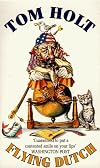
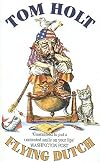
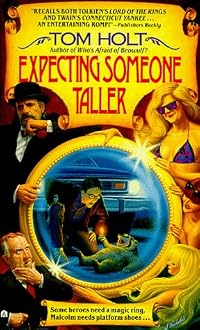
A comic fantasy novel by the author of Expecting Someone Taller and Who's Afraid of Beowulf? . Vanderdecken, the Flying Dutchman, did not, as is believed, make a deal with the Devil which left him cast away for centuries. The truth is different, and very confusing.Tags
Recommendations




Member Reviews
I first came across the work of Tom Holt with his first novel, Expecting Someone Taller, which was a comic fantasy based on Wagner's Ring cycle. Over the years, I read more of his work, but I found myself getting into a frame of mind where I only found every other one of his novels actually funny. Others reported this too, though I cannot say whether their "every other book" was the same as mine. Eventually, the act of keeping track of 'funny/not funny' became too much and I stopped reading Holt's books. In recent years, I have come across another of his literary identities - K.J. Parker - and read and enjoyed his Sixteen Ways to defend a walled City. I read that before I was aware that Parker and Holt were one and the same, so I cannot show more say I was influenced.
Somehow, I had avoided reading Flying Dutch, though. It was Holt's third novel, and - as the title suggests - it, too, is based around Wagnerian myth; in this case, that of the Flying Dutchman, the sailor cursed by the Devil to sail the seas endlessly until redeemed by love. Holt takes this story and pulls it apart, giving it a new rationale (and undoing most of the Wagnerian connections, although the composer has a cameo appearance). Having pulled the story apart, Holt then re-assembles it with a slightly less fantastical, secular underpinning involving an alchemist with an Elixir of Life, and a life insurance policy never designed for immortals.
The book was first published in 1991, and it shows. There are a lot of things in this book that we no longer have - fax machines, phone cards and High Street bank branches to name but three. There is a bank called the National Lombard, though you had to be around in the 1990s to remember that 'Lombard' was yuppie slang for "Lots Of Money But A Real Dickhead". There is a lot of knowing humour, and the whole thing is very clever. But funny? I wouldn't go that far. There is quite of lot of comedy born out of ignorance, which is quite a common thing across the whole spectrum of humour. Most jokes about aspects of modern life, such as bureaucracy or accountancy, are created by people with little direct knowledge of those things. Their jokes then fall flat when bureaucrats or accountants hear them, but that's not because accountants and bureaucrats have no sense of humour. Rather, it's because the view from inside shows up where the funny or ridiculous things really are; most bureaucrats or accountants reckon they could do as well in the comic writing arena. That more do not just goes to show how difficult comedy really is.
Anyway, I was distinctly unimpressed by this book up to around the 40% mark, at which point the plot got into its stride and my interest was engaged by how Holt would make all this come right, and whether the comedy was actually working for me took second place. That actually lasted to the end of the book, much to my surprise.
So in the end, a reasonable outcome. I want to explore K.J. Parker's work further, but I shall probably not look to bring myself up to date with Tom Holt's output (though I may make an exception for one of his books entitled Snow White and the Seven Samurai, mainly because that's a title I wish I'd thought of first.) (Actually, the radical British comedian Alexei Sayle got there before either of us, but never mind.) But as for Flying Dutch, I'm happy to allow it house room for the foreseeable future. show less
Somehow, I had avoided reading Flying Dutch, though. It was Holt's third novel, and - as the title suggests - it, too, is based around Wagnerian myth; in this case, that of the Flying Dutchman, the sailor cursed by the Devil to sail the seas endlessly until redeemed by love. Holt takes this story and pulls it apart, giving it a new rationale (and undoing most of the Wagnerian connections, although the composer has a cameo appearance). Having pulled the story apart, Holt then re-assembles it with a slightly less fantastical, secular underpinning involving an alchemist with an Elixir of Life, and a life insurance policy never designed for immortals.
The book was first published in 1991, and it shows. There are a lot of things in this book that we no longer have - fax machines, phone cards and High Street bank branches to name but three. There is a bank called the National Lombard, though you had to be around in the 1990s to remember that 'Lombard' was yuppie slang for "Lots Of Money But A Real Dickhead". There is a lot of knowing humour, and the whole thing is very clever. But funny? I wouldn't go that far. There is quite of lot of comedy born out of ignorance, which is quite a common thing across the whole spectrum of humour. Most jokes about aspects of modern life, such as bureaucracy or accountancy, are created by people with little direct knowledge of those things. Their jokes then fall flat when bureaucrats or accountants hear them, but that's not because accountants and bureaucrats have no sense of humour. Rather, it's because the view from inside shows up where the funny or ridiculous things really are; most bureaucrats or accountants reckon they could do as well in the comic writing arena. That more do not just goes to show how difficult comedy really is.
Anyway, I was distinctly unimpressed by this book up to around the 40% mark, at which point the plot got into its stride and my interest was engaged by how Holt would make all this come right, and whether the comedy was actually working for me took second place. That actually lasted to the end of the book, much to my surprise.
So in the end, a reasonable outcome. I want to explore K.J. Parker's work further, but I shall probably not look to bring myself up to date with Tom Holt's output (though I may make an exception for one of his books entitled Snow White and the Seven Samurai, mainly because that's a title I wish I'd thought of first.) (Actually, the radical British comedian Alexei Sayle got there before either of us, but never mind.) But as for Flying Dutch, I'm happy to allow it house room for the foreseeable future. show less
I love Tom Holt because reading his books doesn’t seem like work. There’s a fatigue that comes with stories written by someone who is visibly exerting themselves. When every word and sentence bears weight, when each paragraph and chapter fits neatly into a larger structure, to read quickly is a sin. It’s the same obligation for attention that follows a lot of what we consider “high culture,” literature and visual arts and music, the idea that you must sit still and appreciate to get the most out of something. Consuming media this way certainly has much to recommend it, and provides many rewards, but it is not the only way to do things. After a day of work, when collapsed on the couch, I don’t look at a book for a spiritual show more experience; I look at it for a good time. And I never regret it, with Tom Holt.
I’m not familiar with Wagner, much less this opera, so I believe I was starting on something of an even footing with Jane, the protagonist, the accountant who meets Julius Vanderdecker, the immortal captain whose life insurance policy provides the basis for the plot. It’s a good story! I loved reading it, and I love the way that Holt connects things, the way he ties everything in, the way he makes everything seem like a bit of a conspiracy and then instead of flat-earthing you, shows that it’s best in even the most exceptional circumstances not to lose one’s head.
If I keep writing, I would love to know how to make things like this. The world has enough manifestos, enough poetic masterworks. Maybe life should be lived like a great work, and entertainment can be appreciated and adored as it is instead of having to serve some great moral purpose. show less
I’m not familiar with Wagner, much less this opera, so I believe I was starting on something of an even footing with Jane, the protagonist, the accountant who meets Julius Vanderdecker, the immortal captain whose life insurance policy provides the basis for the plot. It’s a good story! I loved reading it, and I love the way that Holt connects things, the way he ties everything in, the way he makes everything seem like a bit of a conspiracy and then instead of flat-earthing you, shows that it’s best in even the most exceptional circumstances not to lose one’s head.
If I keep writing, I would love to know how to make things like this. The world has enough manifestos, enough poetic masterworks. Maybe life should be lived like a great work, and entertainment can be appreciated and adored as it is instead of having to serve some great moral purpose. show less
Reread of book read some time ago. It holds up pretty well. I do wonder whether Holt was cursed at birth by an accountant.
Follows the life of the Flying Dutchman. Is a funny book in places and other places it kind of drags. The story is based on the premise that a 16th Century sea captain is "cursed" by drinking the elixir of life. He and his crew are now immortal. The only hang up is that they smell terrible. The smell only abates once every 7 years for a week. Fast forward from the time that they are cursed to the present day. An a female accountant is given the responsibility of the Vanderdecker policy. This is in fact the insurance policy for noted sea captain. The policy was written when sea captain rarely lived past the age of 40 and has a clause if the noted person reached the age of 65 that the policy would pay out at 1 1/2 times per year that they show more passed 65. If the captain cashes in his policy it could ruin world economics. As noted is funny at some points and then gets bogged down in others. A semi-enjoyable read overall. show less
Witty, but ultinmately not as funny or as thought provoking as Terry Pratchett
Holt takes on another myth cycle; this time, vn der Deecken and the Flying Dutchman, who are indeed travelling under a curse, but a very different one than the one in the legends. Mildly amusing, but not as funny as [Expecting Someone Taller].
Tom Holt never disappoints. I very much enjoyed this light read.
Members
- Recently Added By
Lists

Books Read in 2021
5,361 works; 114 members
Author Information

67+ Works 15,179 Members
Some Editions
Series

Work Relationships
Is contained in
Was inspired by
Common Knowledge
- Original publication date
- 1991
- People/Characters
- Julius Vanderdecker (Captain); Jane Doland; Juan de Montalban (AKA Fortunatus Magnus); Danny Bennett; The Flying Dutchman; Antonius (show all 21); Sebastian van Doorning; Pieter Pretorius; Dirk Pretorius; Jan Christian Duysberg; Wilhelm Trigaart; Johannes; Cornelius; Mr Clough; Mr Demaris; Mr Gleeson; Craig Ferrara; Harvey Beardsley; Neville; Jo; Martha
- Important places
- London, England, UK; Dounreay, Caithness, Scotland, UK; Verdomde (Ship); Bridport, Dorset, England, UK; Erdkrieger (Ship)
- Dedication
- To Malcolm
- First words
- It is always a little startling to hear your name in a public place, and Vanderdecker froze.
- Quotations
- Mrs. Clarke shuddered and went away. Although she was not a religious woman, she knew where people who let hot drinks go cold went when they died. [p.123]
- Last words
- (Click to show. Warning: May contain spoilers.)And they all lived happily. Ever after.
Classifications
Statistics
- Members
- 564
- Popularity
- 52,001
- Reviews
- 7
- Rating
- (3.77)
- Languages
- Czech, English, French, German
- Media
- Paper, Ebook
- ISBNs
- 9
- ASINs
- 4