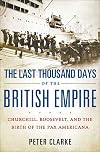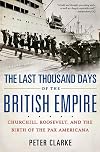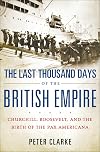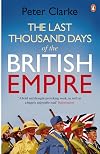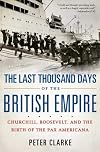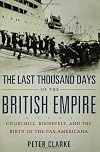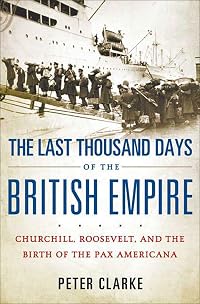
The Last Thousand Days of the British Empire: Churchill, Roosevelt, and the Birth of the Pax Americana
by Peter Clarke
On This Page
Description
"Winston Churchill's declaration in W November 1942, just as the tide of the Second World War was beginning to turn, pugnaciously affirmed his loyalty to the worldwide institution that he had served for most of his life. Britain fought and sacrificed on a worldwide scale to defeat Hitler and his allies - and won. Yet less than five years after Churchill's defiant speech, the British Empire effectively ended with Indian independence in August 1947 and the end of the British mandate in show more Palestine in May 1948. As the sun set on Britain's empire, the age f America as world superpower dawned." "How did this rapid change of fortune come about? Peter Clarke's book is the first to explore the abrupt transition from Rule Britannia to Pax Americana. He shows how Roosevelt and his successors were determined that Britain must be sustained both during the war and after, but that the British Empire must not; and how the tension between Allied war aims, suppressed while the fighting was going on, became rapidly apparent when it ended. His swiftly paced narrative draws on letters, diaries, and a host of other primary sources to put us vividly in the presence of the figures around whom history pivoted: Churchill, Gandhi, Roosevelt, Stalin, Truman, and other, lesser-known individuals, through whom Clarke shows the human dimension of epochal events."--Jacket. show lessTags
Recommendations











Member Reviews
Did the Empire begin to fail with the loss of America? What about the Irish Easter Rising of 1916? Wasn’t that a strong signal that the end was nigh?… To this list so many, many other historical events that foretold the fall might be added, but this book ‘The Last Thousand Days of the British Empire’ by Peter Clarke concentrates on that last coda that saw out Britain’s great civilising force for good in the world (as the British saw it). Within that circumscription the author tries to select a few key nails that finally fixed the lid in place.
Peter Clarke chooses as the ‘last 1000 days’ the period from September 1944 until August 1947. That fateful September was the month that Churchill met Roosevelt in Quebec and admitted show more that Britain had no money to run its Empire. Other matters were discussed of course: the war was going well, military matters had to be decided and this was the conference where the partitioning of Germany, and other future political strategies, were agreed. But money matters took up a sizeable part of the proceedings. America had already forked out a lot of cash towards winning the war and the common grumble in the US was that the country was ‘being taxed of thousands of lives and billions of dollars to save the British Empire’. So it was that Churchill’s frank admission that Britain was financially broken that occupied most of the discussions. The outcome between the ‘co-equal’ allies was that the US Treasury was in effect given control over the British balance of payments by agreeing to extend the Lend-Lease arrangements, already in operation, into the post-war period. This then was the future: Britain and her Empire was in hock to the Americans, had been for some time and definitely was now, in the light of the agreements undertaken at that Quebec conference.
Moving onwards towards the very last of the ‘thousand days’, by December 1946 the writing was on the wall as regards the ‘jewel in the crown’ of the Empire, India. There ensued conferences and committees and hearings and parliamentary debates but the outcome was never in doubt and the date for British Departure from India finally was set for June 1948. In fact, power was handed over on 15 August 1947 and Peter Clarke sees this as the day the sun finally set on the British Empire. In his words:”The King had to get used to signing himself George R. and not George R. I., like his father. He did so a few days later in a letter to his mother, Queen Mary, who noted on the back of the envelope: ‘The first time Bertie wrote me a letter with the I for Emperor of India left out, very sad.’ “
Very sad indeed, And If the British had any shred of Churchillian self-delusion left as to being a ‘world power’ it was dispelled when they were lumped in with the rest of ’Europe’ by the Americans in the subsequent negotiations for aid from the Marshall Plan. There was to be no more trading as ‘The British Empire’, and no reference whatsoever was made to the ‘Special Relationship’ which Churchill believed had been built up between the Allies over the years prior to, and over the course of, the war. As far as President Truman was concerned his General, Marshall, was to deal with Britain as just another of those European countries which, now that America had won the war for them (again), had to be helped out of the financial hole they had dug for themselves.
A great read, even though the author strays a bit here and there and gives us rather more details of the various theatres of war than we really need to have. He is really, really good on conveying the personalities of the huge number and range of the politicians and apparatchiks involved in this great ‘winding down’ of Empire or, as some would say, reluctant withdrawal from other people’s countries. show less
Peter Clarke chooses as the ‘last 1000 days’ the period from September 1944 until August 1947. That fateful September was the month that Churchill met Roosevelt in Quebec and admitted show more that Britain had no money to run its Empire. Other matters were discussed of course: the war was going well, military matters had to be decided and this was the conference where the partitioning of Germany, and other future political strategies, were agreed. But money matters took up a sizeable part of the proceedings. America had already forked out a lot of cash towards winning the war and the common grumble in the US was that the country was ‘being taxed of thousands of lives and billions of dollars to save the British Empire’. So it was that Churchill’s frank admission that Britain was financially broken that occupied most of the discussions. The outcome between the ‘co-equal’ allies was that the US Treasury was in effect given control over the British balance of payments by agreeing to extend the Lend-Lease arrangements, already in operation, into the post-war period. This then was the future: Britain and her Empire was in hock to the Americans, had been for some time and definitely was now, in the light of the agreements undertaken at that Quebec conference.
Moving onwards towards the very last of the ‘thousand days’, by December 1946 the writing was on the wall as regards the ‘jewel in the crown’ of the Empire, India. There ensued conferences and committees and hearings and parliamentary debates but the outcome was never in doubt and the date for British Departure from India finally was set for June 1948. In fact, power was handed over on 15 August 1947 and Peter Clarke sees this as the day the sun finally set on the British Empire. In his words:”The King had to get used to signing himself George R. and not George R. I., like his father. He did so a few days later in a letter to his mother, Queen Mary, who noted on the back of the envelope: ‘The first time Bertie wrote me a letter with the I for Emperor of India left out, very sad.’ “
Very sad indeed, And If the British had any shred of Churchillian self-delusion left as to being a ‘world power’ it was dispelled when they were lumped in with the rest of ’Europe’ by the Americans in the subsequent negotiations for aid from the Marshall Plan. There was to be no more trading as ‘The British Empire’, and no reference whatsoever was made to the ‘Special Relationship’ which Churchill believed had been built up between the Allies over the years prior to, and over the course of, the war. As far as President Truman was concerned his General, Marshall, was to deal with Britain as just another of those European countries which, now that America had won the war for them (again), had to be helped out of the financial hole they had dug for themselves.
A great read, even though the author strays a bit here and there and gives us rather more details of the various theatres of war than we really need to have. He is really, really good on conveying the personalities of the huge number and range of the politicians and apparatchiks involved in this great ‘winding down’ of Empire or, as some would say, reluctant withdrawal from other people’s countries. show less
While indeed Peter Clarke does indeed cover a wide spread of events, and in that sense is a huge book, I believe that he does go into so many details that, after a while, I started to lose the plot.
I lost the plot in the sense that i was wondering how all this lead to the end of the British Empire. He did not bring about a good analysis of all these events, and their interconnectedness.
The Palestine and Indian issues were, in my view, glossed over.
All in all, a detailed book. Yet, I was not that much wiser at the end
I lost the plot in the sense that i was wondering how all this lead to the end of the British Empire. He did not bring about a good analysis of all these events, and their interconnectedness.
The Palestine and Indian issues were, in my view, glossed over.
All in all, a detailed book. Yet, I was not that much wiser at the end
James Meek, a British writer and journalist, has chosen to discuss , Peter Clarke’s “The Last Thousand Days of the British Empire", on FiveBooks (http://five-books.com) as one of the top five on his subject - The Death of Empires, saying that:
“…It’s a very sad story. It’s more despair than anger, and most despair at Winston Churchill. It’s a bleak portrait of the prime minister. His obstinacy with regards to India, his belief that purely through his charisma he could keep Britain as a world player alongside the Soviet Union and America. …”
The full interview is available here: http://thebrowser.com/books/interviews/james-meek
“…It’s a very sad story. It’s more despair than anger, and most despair at Winston Churchill. It’s a bleak portrait of the prime minister. His obstinacy with regards to India, his belief that purely through his charisma he could keep Britain as a world player alongside the Soviet Union and America. …”
The full interview is available here: http://thebrowser.com/books/interviews/james-meek
Ratings
Members
- Recently Added By
Published Reviews
ThingScore 100
“…It’s a very sad story. It’s more despair than anger, and most despair at Winston Churchill. It’s a bleak portrait of the prime minister. His obstinacy with regards to India, his belief that purely through his charisma he could keep Britain as a world player alongside the Soviet Union and America. …”
added by FiveBooks
“…It’s a very sad story. It’s more despair than anger, and most despair at Winston Churchill. It’s a bleak portrait of the prime minister. His obstinacy with regards to India, his belief that purely through his charisma he could keep Britain as a world player alongside the Soviet Union and America. …”
added by FiveBooks
Author Information
11+ Works 905 Members
Common Knowledge
- People/Characters
- Winston Churchill; Franklin Delano Roosevelt; Louis Mountbatten Earl Mountbatten of Burma; Mohandas Gandhi; Mackenzie King
- Important places
- India; Palestine
Classifications
- Genres
- History, Nonfiction, General Nonfiction
- DDC/MDS
- 909.09712410824 — History & geography History World history Other Geographic Classifications Socioeconomic Regions By Political Orientation British Empire
- LCC
- DA16 .C56 — History of Europe, Asia, Africa and Oceania Great Britain History of Great Britain British Empire. Commonwealth of Nations. The
- BISAC
Statistics
- Members
- 251
- Popularity
- 129,233
- Reviews
- 3
- Rating
- (3.89)
- Languages
- English
- Media
- Paper, Ebook
- ISBNs
- 5
- ASINs
- 5