On This Page
Description
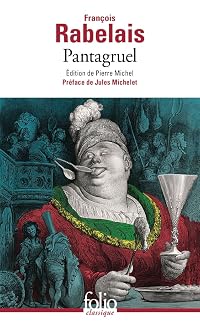
"From his mythical lineage and portentous birth, it is clear that Pantagruel is destined to be a very special giant. His adventures, his exploits and even his friends - most notably the lecherous, foul-mouthed Panurge - are all larger than life. Yet despite the hyperbolic and disproportionate nature of anything connected to him, Pantagruel's history is told with breathtaking lightness and wit. Filling his pages with ingenious new coinages, and an unashamed obsession with the scatological show more side of life, Rabelais blends prose and poetry, the sacred and the profane, to offer a heady satire of the religious society of his day."--BOOK JACKET. show lessTags
Recommendations
































Member Reviews
The story of the giant Pantagruel is presented as the sequel to a popular chapbook of the time, the Grandes et inestimables Chronicques de l'énorme géant Gargantua (although Rabelais later went back and wrote his own prequel about Panatagruel's father, Gargantua) and ties in to a long popular tradition of giant stories. If Rabelais is to be believed (and he insists that everything he tells us is true, so obviously he should be), Gargantua and Pantagruel have a heritage that goes right back to the Book of Genesis, set out in one of the opening chapters in a three-page list of "and he begat ...".
But what's new in Rabelais is that he serves up the grotesque and fantastic elements of the giant story in an incongruous context of humanist show more renaissance scholarship. Pantagruel is not just any giant, he's a man of the moment, a graduate of the Sorbonne who can debate with visiting scholars, settle law cases, advise on medical matters, and much else, usually taking the opportunity to make scholastics, alchemists, indulgence-sellers and other enemies of humanism look silly in the process. I found it very interesting to discover how often Rabelais reminds us that we are living in a Renaissance surrounded by new, exciting ideas and need to get rid of the clutter of medieval thought. I hadn't expected to find this so explicitly set out! And of course it was this aspect of the books that repeatedly got Rabelais into trouble with the Church and the authorities at the Sorbonne.
However, we all know what "Rabelaisian" means: transgressive humour in glorious excess. And we get a lot of that: double-entendres, hundreds of codpiece and fart jokes, mammoth drinking sessions resulting in oceans of piss, baby giants eating live bears, a whole army sheltering under Pantagruel's tongue, and all the rest of it. I was amused to see how often the editor of the 1964 edition I was using felt he had to resort to blanks and circumlocutions in the Notes for things that were unmistakably explicit in the original text. As if his delicate young readers could be protected from unpleasant words by 16th century spelling conventions alone...
Is it still funny for modern readers? Well, yes, but not always. Some scenes still work brilliantly - I loved the philosophical debate conducted entirely in (meaningless) signs and gestures, for instance, which would have been equally effective as a Monty Python sketch. Perfect timing and a narrator who just about manages to maintain the pretence that he is taking it all seriously keep us on the edge of doubting that there might be some meaning in it all after all. The multilingual discussion when Pantagruel first meets Panurge is another triumph. And on the smaller scale, Rabelais is good at setting us up for the terrible puns he's about to sneak in. But in other places it can feel a bit formulaic - a fart or a reference to codpieces is just thrown in gratuitously when Rabelais wants to change the pace. The list jokes also seem to go on for about three times as long as they need to, and some one-liners are ruined when Rabelais draws them out too long (e.g. the notion that the walls of Paris should be rebuilt using female genitals because they can be had for much less money than building-stone at the moment - a joke that becomes decidedly unpleasant as soon as you start to think about it).
I was expecting to have trouble with the 16th-century French, but actually it's not all that difficult: the main hurdle to get over for a reader is the different spelling convention, and once you've got that sorted out, there turn out to be rather few words that aren't current any more, and most of those are either picked up by the Notes or obvious from the context. show less
But what's new in Rabelais is that he serves up the grotesque and fantastic elements of the giant story in an incongruous context of humanist show more renaissance scholarship. Pantagruel is not just any giant, he's a man of the moment, a graduate of the Sorbonne who can debate with visiting scholars, settle law cases, advise on medical matters, and much else, usually taking the opportunity to make scholastics, alchemists, indulgence-sellers and other enemies of humanism look silly in the process. I found it very interesting to discover how often Rabelais reminds us that we are living in a Renaissance surrounded by new, exciting ideas and need to get rid of the clutter of medieval thought. I hadn't expected to find this so explicitly set out! And of course it was this aspect of the books that repeatedly got Rabelais into trouble with the Church and the authorities at the Sorbonne.
However, we all know what "Rabelaisian" means: transgressive humour in glorious excess. And we get a lot of that: double-entendres, hundreds of codpiece and fart jokes, mammoth drinking sessions resulting in oceans of piss, baby giants eating live bears, a whole army sheltering under Pantagruel's tongue, and all the rest of it. I was amused to see how often the editor of the 1964 edition I was using felt he had to resort to blanks and circumlocutions in the Notes for things that were unmistakably explicit in the original text. As if his delicate young readers could be protected from unpleasant words by 16th century spelling conventions alone...
Is it still funny for modern readers? Well, yes, but not always. Some scenes still work brilliantly - I loved the philosophical debate conducted entirely in (meaningless) signs and gestures, for instance, which would have been equally effective as a Monty Python sketch. Perfect timing and a narrator who just about manages to maintain the pretence that he is taking it all seriously keep us on the edge of doubting that there might be some meaning in it all after all. The multilingual discussion when Pantagruel first meets Panurge is another triumph. And on the smaller scale, Rabelais is good at setting us up for the terrible puns he's about to sneak in. But in other places it can feel a bit formulaic - a fart or a reference to codpieces is just thrown in gratuitously when Rabelais wants to change the pace. The list jokes also seem to go on for about three times as long as they need to, and some one-liners are ruined when Rabelais draws them out too long (e.g. the notion that the walls of Paris should be rebuilt using female genitals because they can be had for much less money than building-stone at the moment - a joke that becomes decidedly unpleasant as soon as you start to think about it).
I was expecting to have trouble with the 16th-century French, but actually it's not all that difficult: the main hurdle to get over for a reader is the different spelling convention, and once you've got that sorted out, there turn out to be rather few words that aren't current any more, and most of those are either picked up by the Notes or obvious from the context. show less
In this book appears Panourge with a speech in many languages, including imaginary ones.
La continuación del "Gargantúa" narra las aventuras del hijo del gigante. En general, son similares a las de su padre, y se vuelve a presentar como un hombre culto, alegre y pacifista. Sin embargo, me ha gustado más que el anterior. Las procacidades han bajado algo de tono y, por otro lado, se aprecia más claramente la estructura de la obra, por lo demás idéntica a su predecesora: nacimiento y niñez, educación en París, guerra contra sus vecinos. La principal variación es la presencia de Panurge, una especie de pícaro culto que da mucho juego. Da la impresión de que, en la generación que va de Gargantúa a Pantagruel, todo se ha clarificado, los modos se han moderado y se ha entrado en una nueva era. No sé si el autor show more pretendía esto, o si ha sido simplemente que yo ya me había acostumbrado al tono general de estas obras con el Gargantúa. Merece destacarse aquí el disparatado catálogo de la biblioteca del monasterio de San Víctor, divertida parodia de los libros al uso show less
Mar 9, 2011Spanish
Suomentajalle ilmeisesti kiitos, yllättävän helppolukuinen näin vanhaksi kirjaksi. Kieli on kovin karskia, ja härskit jutut oikeasti välillä naurattivat. Hauska kirja. Seuraavaksi Gargantua, jonka suomennos on paljon vanhempi, jännä nähdä onko näissä miten iso ero...
Feb 21, 2020Finnish
Un peu déçue, l'humour est vraiment lourdingue et pas mal de passages sont un peu ennuyeux. C'est le premier livre écrit par Rabelais, j'ai bon espoir que les suivants seront meilleurs.
Lu dans le texte original (un peu difficile au début mais on apprend et ça devient plus fluide avec l'habitude) dans l'édition du Livre de Poche qui date un peu mais les notes sont suffisantes pour comprendre le texte. Mais franchement, quand on ne peut pas se résoudre à imprimer le mot pet sans lui mettre des astérisques, il faut éditer la Comtesse de Ségur, pas Rabelais !!!
Lu dans le texte original (un peu difficile au début mais on apprend et ça devient plus fluide avec l'habitude) dans l'édition du Livre de Poche qui date un peu mais les notes sont suffisantes pour comprendre le texte. Mais franchement, quand on ne peut pas se résoudre à imprimer le mot pet sans lui mettre des astérisques, il faut éditer la Comtesse de Ségur, pas Rabelais !!!
Dec 7, 2015French
Indeholder "Oversætterens Forord", "Forfatterens Fortale", "I. Om den store Pantagruels Oprindelse og hans Slægts Ælde", "II. Om den saare frygtede Pantagruels Fødsel", "III. Hvorledes Gargantua sørgede over sin Kone Badebec", "VI. Hvorledes Pantagruel mødte en Mand fra Limoges, der forvanskede det franske Sprog", "VII. Hvorledes Pantagruel kom til Paris og om de smukke Bøger i Sankt-Victor-Biblioteket", "VIII. Hvorledes Pantagruel, mens han var i Paris, fik Brev fra sin Fader Gargantua, og dette Brevs Indhold", "IX. Hvorledes Pantagruel traf Panurge, hvem han elskede hele sit Liv", "X. Hvorledes Pantagruel dømte i en vidunderlig dunkel og vanskelig Sag paa saa retfærdig Vis, at hans Dom blev kaldet saare beundringsværdig", show more "XI. Hvorledes de høje Herrer de Baisecul og de Humevesne førte deres Sag for Pantagruel uden Advokater", "XII. Hvorledes den naadige Hr. de Humevesne førte sit Forsvar for Dommeren Pantagruel", "XIII. Pantagruels Kendelse i de to Herrers Tvistemaal", "XIV. Panurge fortæller, hvorledes han slap ud af Tyrkernes Hænder", "XV. Panurge fortæller om en hel ny Maade at bygge Paris' Mure paa", "XVI. Panurges Sæder og Kaar", "XVII. Hvorledes Panurge vandt Syndsforladelse og giftede gamle Koner bort, samt om de Processer, han førte i Paris", "XVIII. Hvorledes en stor engelsk Lord vilde disputere mod Pantagruel, og hvorledes han blev besejret af Panurge", "XIX. Hvorledes Panurge gjorde Englænderne til Skamme og disputerede ved Tegn", "XX. Hvorledes Thaumaste fortæller om Panurges fremragende Egenskaber og Lærdom", "XXI. Hvorledes Panurge blev forelsket i en fornem Dame i Paris", "XXII. Hvorledes Panurge spillede Pariserdamen et Puds, der ikke blev til hendes Fordel", "XXIII. Hvorledes Pantagruel rejste fra Paris, da han høret at Dipsoderne (de Tørstige) havde gjort Indfald i Amauroternes Land, og Grunden til at Milene er saa smaa i Frankrig", "XXIV. Et Brev, som et Bud bragte Pantagruel fra en Dame i Paris, og Forklaring paa et Ord, der stod som Indskrift i en Guldring", "XXV. Hvorledes Panurge, Carpalim, Eustenes og Epistemon, Pantagruels Følgesvende, paa snedig Vis gjordet det af med 600 Riddere", "XXVI. Hvorledes Pantagruel og hans Vaabenfæller var lede og kede af at spise salt Oksekød, og hvorledes Carpalim gik paa Jagt for at faa Vildt", "XXVII. Hvorledes Pantagruel rejste en Trofæ til Minde om sine Folks Bedrift og Panurge en anden til Minde om Harerne, og hvorledes Pantagruel med sine Fjærte avlede de smaa Mænd og med sine Vinde de smaa Kvinder. Og hvorledes Pantagruel brækkede en stor Stok over to Glas", "XXVII. Hvorledes Pantagruel paa en højst besynderlig Maade vandt Sejr over Dipsoderne og Kæmperne", "XXIX. Hvorledes Pantagruel slog de tre Hundrede Kæmper i Kampestensrustning samt deres Hærfører Varulv", "XXX. Hvorledes Epistemon, som havde faaet Hovedet skaaret af, snildelig blev helbredet af Panurge samt Historier om Djævle og Fordømte", "XXXI. Hvorledes Pantagruel trængte ind i Amauroternes By, og hvorledes Panurge giftede Kong Anarchos bort og lod ham raabe med grøn Sovs", "XXXII. Hvorledes Pantagruel med sin Tunge dækkede en hel Armé, og hvad Forfatteren saa i hans Mund", "XXXIII. Hvorledes Pantagruel blev syg, og hvorledes han blev kureret", "XXXIV. Slutningen af nærværende Bog og Forfatterens Undskyldning".
Forfatteren er født ca 1494, dvs lidt efter Martin Luther. Gargantua er en overdrivelsesroman, hvor folk æder, drikker, skider og pisser i et væk. Ret underholdende. I 1532 udgiver han Pantagruel under pseudonymet Mester Alcofribas Nasier. Senere kommer bogen om Gargantua som en prequel og efter at Rabelais er død kommer den fjerde bog om Pantagruel. Af fortællekronologiske grunde har man så anbragt Gargantua som bog 1 og de fire om Pantagruel efterfølgende. show less
Forfatteren er født ca 1494, dvs lidt efter Martin Luther. Gargantua er en overdrivelsesroman, hvor folk æder, drikker, skider og pisser i et væk. Ret underholdende. I 1532 udgiver han Pantagruel under pseudonymet Mester Alcofribas Nasier. Senere kommer bogen om Gargantua som en prequel og efter at Rabelais er død kommer den fjerde bog om Pantagruel. Af fortællekronologiske grunde har man så anbragt Gargantua som bog 1 og de fire om Pantagruel efterfølgende. show less
Aug 16, 2023Danish
Francês muito difícil. Não percebi quase nada, por isso desisti na página 126.
Apr 1, 2021Portuguese (Portugal)
Members
- Recently Added By
Lists

Books and authors mentioned by Le Clézio in his Nobel Prize speech
87 works; 3 members

Lectuurlijst
63 works; 1 member
Author Information

399+ Works 8,676 Members
One of the leading humanist writers of the French Renaissance, Rabelais was at first a Franciscan and then a Benedictine monk, a celebrated physician and professor of anatomy, and later cure of Meudon. The works of Rabelais are filled with life to the overflowing, hence the term "Rabelaisian." His principal protagonists, Gargantua and his son, show more Pantagruel, are appropriately giants, not only in size, but also in spirit and action. The five books of their adventures are separate works, containing, in different measure, adventures, discussions, farcical scenes, jokes, games, satires, philosophical commentaries, and anything else that a worldly, learned man of genius such as Rabelais could pour into his work. His style is innovative and idiosyncratic, marked by humorous neologisms made up from the learned languages, Greek and Latin, side by side with the most earthy, humble, and rough words of the street and barnyard. His Gargantua, published in 1534, satirizes the traditional education of Parisian theologians and, in the Abbe de Theleme episode, recommends a free, hedonistic society of handsome young men and women in contrast to the restrictive life of monasticism. The gigantic scope of Rabelais's work also reflects the Renaissance thirst for encyclopedic knowledge. (Bowker Author Biography) show less
Some Editions
Series

Belongs to Publisher Series
Work Relationships
Is contained in
Has as a student's study guide
Common Knowledge
- Original title
- Pantagruel roy des dipsodes restitué à son naturel avec ses faictz et prouesses espoventables
- Alternate titles
- The Horrible and Terrifying Deeds and Words of the Very Renowned Pantagruel King of the Dipsodes, Son of the Great Giant Gargantua
- Original publication date
- 1532
- Important places*
- Seuilly, Centre-Val de Loire, Frankrijk; Centre-Val de Loire, Frankrijk
- First words
- Tresillustres & treschevaleureux champions gentilzhommes & aultres, qui voluntiers vous adonnez à toutes gentillesses et honnestetez, vous avez nagueres veu, leu, et sceu les grandes & inestimables chronicques de l'enorme ge... (show all)ant Gargantua, & comme vrays fideles les avez creues tout ainsi que texte de Bible ou du sainct Evangile, & y avez maintesfoys passé vostre temps avecques les honorables dames et damoiselles, leurs en faisans beaux & longs narrez, alors qu'estiez hors de propos: dont estiez bien dignes de grand louenge.
- Last words
- (Click to show. Warning: May contain spoilers.)Bonsoir messieurs, pardonnate my, & ne pensez pas tant à mes faultes que vous ne pensez bien es vostres.
*Some information comes from Common Knowledge in other languages. Click "Edit" for more information.
Classifications
Statistics
- Members
- 493
- Popularity
- 61,133
- Reviews
- 11
- Rating
- (3.80)
- Languages
- 11 — Danish, English, Finnish, French, French (Middle), Hungarian, Norwegian (Bokmål), Portuguese, Spanish, Swedish, Turkish
- Media
- Paper, Audiobook, Ebook
- ISBNs
- 45
- ASINs
- 12