
Jules Michelet (1798–1874)
Author of Satanism and Witchcraft: The Classic Study of Medieval Superstition
About the Author
Jules Michelet (1798-1874) was a French historian and an internationally known scholar of theology and the occult.
Image credit: Courtesy of the NYPL Digital Gallery
(image use requires permission from the New York Public Library)
(image use requires permission from the New York Public Library)
Series
Works by Jules Michelet
Histoire de france - tome treizième - XVII° siecle - louis XIV et la revocation de l'edit de Nante (1999) 5 copies
Précis de l'histoire moderne 4 copies
On the highways of Europe 3 copies
Jules Michelet. Introduction à l'histoire universelle : . Tableau de la France. Préface à l'histoire de France. Texte présenté par… (1962) 3 copies
A Feiticeira 3 copies
GESCHICHTE DER FRANZÖSISCHEN REVOLUTION. BAND II: Die Flucht des Königs nach Varennes und ihre Folgen / Der Sturz des Königtums (1988) 3 copies
L'Etudiant : cours de 1847-1848 3 copies
Géricault 2 copies
Michelet's Jeanne D'Arc: Edited with Introduction, Notes, Questionnaire and Vocabulary (Classic Reprint) (2016) 2 copies
Oeuvres Choisies 2 copies
Fransız İhtilali Tarihi 2 copies
Michelet. Épisodes de la Révolution française : . Choix des textes, introduction et notes par Henri Calvet (1959) — Author — 2 copies
Memoires d'une enfant 1 copy
Jeanne d'Arc. Charles VII 1 copy
La renaissance 1 copy
Sobre as feiticeiras 1 copy
La sorcière. Enquête historique sur les sorcières, possessions et les pouvoirs occultes (2023) 1 copy
La convención 1 copy
La regence 1 copy
Martelaren van Rusland 1 copy
Lettere d'amore 1 copy
フランス革命史〈上〉 1 copy
Les Grands Monuments de l'Histoire, Tome 9, Histoire de la Révolution - Histoire du XIXe Siècle. 1 copy
michelet pages choisies II 1 copy
Um Olhar Sobre os mares 1 copy
Histoire de France (vol. 1) 1 copy
Histoire de France 5 tomes 1 copy
Storia di Giovanna d'Arco 1 copy
France before Europe 1 copy
Lo studente 1 copy
Extraits historiques 1 copy
Géricault 1 copy
L'Etudiant 1 copy
Sobre as Feiticeiras 1 copy
Michelet 1 copy
Associated Works
Tagged
Common Knowledge
- Canonical name
- Michelet, Jules
- Legal name
- Michelet, Jules
- Birthdate
- 1798-08-21
- Date of death
- 1874-02-09
- Gender
- male
- Education
- Lycée Charlemagne
- Occupations
- historian
professor
author (natural history) - Organizations
- Collège de France
Ecole Normale Supérieure - Relationships
- Michelet, Athénaïs-Marguerite Mialaret (wife)
- Short biography
- Jules Michelet wrote both short and lengthy works, including the monumental 19-volume Histoire de France. He visualized himself as a champion of the people and wrote with great emotional power. His innovation was to try to write from the point of the nation as a whole, not just that of great persons or groups. He was extremely sympathetic to the French Revolution, and pictured the whole world watching it "conscious that France at her own risk and peril is acting for the entire human race." After his second marriage to Athénaïs Mialaret, he co-wrote with her a number of books on natural history, including L'Oiseau (1856), L'Insecte (1857), La Mer (1861), and La Montagne (1868).
- Nationality
- France
- Birthplace
- Paris, France
- Places of residence
- Paris, France (birthplace)
Hyères, France - Place of death
- Hyères, Var, Provence-Alpes-Côte d'Azur, France
- Burial location
- Cimetière du Père-Lachaise, Paris, France
- Map Location
- France
- Associated Place (for map)
- France
Members
Reviews

Michelet provided a seminal treatment of witchcraft, influential on readers such as Gerald Gardner who went on to organize neo-pagan religion and influence modern ideas of occultism. In Michelet's view, medieval witches were adherents of indigenous, pre-Christian religion, and they expressed popular resistance against the oppressions of church and state. Heretics, witches and satanists all reflect a measure of virtuous anti-authoritarianism, containing the seeds of rational show more enlightenment.
Although Michelet was a credentialed historian capable of meticulous research, his Satanism and Witchcraft was written in broad, romanticizing strokes for a popular audience. Thus it is highly readable, but not all that reliable in its details as a work of positive history. It found its market well enough, and it has stayed perpetually in print. show less
Although Michelet was a credentialed historian capable of meticulous research, his Satanism and Witchcraft was written in broad, romanticizing strokes for a popular audience. Thus it is highly readable, but not all that reliable in its details as a work of positive history. It found its market well enough, and it has stayed perpetually in print. show less

'The Sea' is another of M. Michelet's dreamy volumes,—half science, half fancy, with a blending in both of sensuous suggestion. M. Michelet takes the seas of the world in his hands, manipulates them, invokes their monsters, assembles all their finny droves, gossips with the sirens, sails among the Hyperborean waters with Behemoth, and is on intimate terms with Tennyson's little shell-king, who lives in a palace with doors of diamond, and wears a rainbow frill, for the admiration of the show more nations that dwell in his dim, sunken wildernesses. * * * * * He discourses upon marine terrors and beauties, and tells the reader, as a sublime Peter Parley might, that the salt of all the seas, if piled upon America, would spread over the continent a solid, cliff-edged mass, 4,500 feet high. There are chapters on Sands, Cliffs and Beaches; on Waves; on the anatomy of the Sea itself, which resembles "a gigantic animal arrested in the earliest stage of its organization;" on Tempests; on the sympathy between Air and Water; on the Fecundity of the Sea, which, were it not self-devouring, would putrefy, according to M. Michelet into one solid mass of herring; on Fish of every species, and especially on Pearls. The Queens of the East, he says, dislike the gleams of the diamond. They will allow nothing to touch their skins except pearls. A necklace and two bracelets of pearls constitute the perfection of ornament. The pearls silently say to the woman, "Love us! hush!" In the North, too, dainty Countesses love their pearls,—wearing them beneath their clothes by night and by day, concealing them, caressing them, only now and then exposing them. So do the Odalisques of Asia prize the soft linen vestment that just covers their limbs, never taking it off until worn out, which says little for Oriental baths. show less
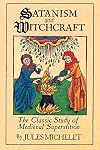
This is not the edition I read, which is the one by Trotter published in 1863, available for free via Google Books. I prefer that one partly because it seems to capture Michelet's passion and poetry.
For an expose of what can only be described as a 1000-year genocide of women, this book is incomparable in my experience.
For an expose of what can only be described as a 1000-year genocide of women, this book is incomparable in my experience.

Michelet's description of Joan sounds suspiciously like St. Jerome's description of the ideal education of girls. But at the same time that he makes the story into an epic, he also picks out some details from histories and documents for interpretation. I liked Michelet's conception of why Joan wore men's clothing - he's thinking about Joan as a person, while he's making her into a mythological character.
Guerard's introduction and conclusion are well-suited to this text, since he makes some show more unapologetic judgments on the text and Michelet himself. I like a historian who feels free to reshuffle historical texts into different chapters :) show less
Guerard's introduction and conclusion are well-suited to this text, since he makes some show more unapologetic judgments on the text and Michelet himself. I like a historian who feels free to reshuffle historical texts into different chapters :) show less
Lists
You May Also Like


Associated Authors
Statistics
- Works
- 238
- Also by
- 5
- Members
- 1,732
- Popularity
- #14,838
- Rating
- 3.7
- Reviews
- 22
- ISBNs
- 348
- Languages
- 14
- Favorited
- 1

