

William Doyle (1) (1942–)
Author of The French Revolution: A Very Short Introduction
For other authors named William Doyle, see the disambiguation page.
About the Author
William Doyle is a writer and documentary producer whose previous book, Inside the Oval Office: The White House Tapes from FDR to Clinton, was a New York Times Notable Book. In 1998 he won the Writers Guild of America Award for Best TV Documentary for the A&E special "The Secret White House Tapes," show more which he cowrote and coproduced. He lives in New York City. (Bowker Author Biography) show less
Works by William Doyle
Jansenism: Catholic Resistance to Authority from the Reformation to the French Revolution (Studies in European History) (1999) 26 copies
France and the Age of Revolution: Regimes Old and New from Louis XIV to Napoleon Bonaparte (International Library of Historical Studies) (2013) 13 copies
O Antigo Regime 1 copy
Associated Works
The French Nobility in the Eighteenth Century: From Feudalism to Enlightenment (1976) — Translator, some editions — 36 copies
Tagged
Common Knowledge
- Birthdate
- 1942-03-04
- Gender
- male
- Education
- University of Oxford (Oriel College|PhD|1968)
- Occupations
- university professor (history)
Emeritus Professor of History, University of Bristol - Organizations
- Bristol University (professor of history)
- Awards and honors
- British Academy (fellow)
- Nationality
- UK
- Birthplace
- Burton Agnes, Yorkshire, England, UK
- Associated Place (for map)
- England, UK
Members
Reviews
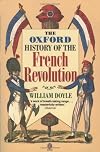
Published during its bicentenary, this book is an excellent history of the French Revolution from a British perspective. In fact the author, the English historian William Doyle, is also one of the most illustrious representative of the revisionist trend.
Packed full with details, in about 400 pages he offers a portrait of France back then before tackling how events unfolded, the various factors that not only kickstarted it but, most importantly, threw it into the direction we all know. In a show more word: how the vague political ideals of the philosophes gave birth to such terrorist violence that would ultimately transform the whole of Europe? From the economic crisis to religious questions and the role played by foreign powers, William Doyle exposes here what he describes as a tragedy without precedent.
Making it end in 1802 with the peace of Lunéville and Amiens (Bonaparte's triumph, then) such an analysis will delight whose avid of understanding such an event. French readers especially (as I am) more often than not still influenced by Marxist historiography (whatever one think about it) will find here a great source for thought. The thing is, we close this book with a terrible question in mind: considering how society were evolving under Louis XVI and, above all, the massive political, societal and intellectual upheavals of the time, was such a Revolution even necessary?
Controversial, yes; but how stimulating! show less
Packed full with details, in about 400 pages he offers a portrait of France back then before tackling how events unfolded, the various factors that not only kickstarted it but, most importantly, threw it into the direction we all know. In a show more word: how the vague political ideals of the philosophes gave birth to such terrorist violence that would ultimately transform the whole of Europe? From the economic crisis to religious questions and the role played by foreign powers, William Doyle exposes here what he describes as a tragedy without precedent.
Making it end in 1802 with the peace of Lunéville and Amiens (Bonaparte's triumph, then) such an analysis will delight whose avid of understanding such an event. French readers especially (as I am) more often than not still influenced by Marxist historiography (whatever one think about it) will find here a great source for thought. The thing is, we close this book with a terrible question in mind: considering how society were evolving under Louis XVI and, above all, the massive political, societal and intellectual upheavals of the time, was such a Revolution even necessary?
Controversial, yes; but how stimulating! show less

Doyle tells us in his introduction that he was surprised to find that this book has become a standard text on the revolution as it was intended to be a popular work to coincide with the bicentenary of 1989.
This may be false modesty on his part but this book certainly did not strike me as courting the popular history market with its scholarly prose and lack of illustrations. Far more striking is the astounding amount of research and insight contained on every page of the book. When you show more consider Doyle is writing about one of the most contentious, important and complex events in human history his achievement is even more astonishing.
This is rightfully regarded as the best overview of the revolution in English and Doyle's conclusion that the revolution can only be seen as a tragedy is as enlightening as it is sobering. show less
This may be false modesty on his part but this book certainly did not strike me as courting the popular history market with its scholarly prose and lack of illustrations. Far more striking is the astounding amount of research and insight contained on every page of the book. When you show more consider Doyle is writing about one of the most contentious, important and complex events in human history his achievement is even more astonishing.
This is rightfully regarded as the best overview of the revolution in English and Doyle's conclusion that the revolution can only be seen as a tragedy is as enlightening as it is sobering. show less
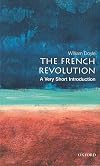
As an English historian, William Doyle goes head on into the topic by reminding how the French Revolution was perceived in Britain - from Burke and Carlyle, to Dickens and Orczy. It's a nice way to go in, as it sandwiches the book really well with its ending, where he rewinds the main academical controversies that has been fuelling its interpretation for the past few decades.
His retelling of such 'sustained period of uncertainty, disorder, and conflict, reverberating far beyond the borders show more of France' is fair. In fact, he can't help but deploying his views only in the concluding chapter, about the legacy of it all. It could have been done without referring to the Russian Revolution though, as much as I acknowledge the potential parallels and the fact, coincidental, that the Berlin wall fell two hundred years sharp after the fall of the Bastille.
All in all then, considering it's a vast and complex topic, here's a clear cut account which worth in its straight simplification of the raging controversies surrounding it. Recommended. show less
His retelling of such 'sustained period of uncertainty, disorder, and conflict, reverberating far beyond the borders show more of France' is fair. In fact, he can't help but deploying his views only in the concluding chapter, about the legacy of it all. It could have been done without referring to the Russian Revolution though, as much as I acknowledge the potential parallels and the fact, coincidental, that the Berlin wall fell two hundred years sharp after the fall of the Bastille.
All in all then, considering it's a vast and complex topic, here's a clear cut account which worth in its straight simplification of the raging controversies surrounding it. Recommended. show less
This small-format paperback is only 108 pages ("very short") but packs a wallop. The French Revolution is a hugely complex topic, not least because it remains to this day highly controversial, there are 100s of tomb-length books including the flood of books on the 200th anniversary in 1989. Where to start? Here. Doyle gives an overview of the basic events but that is not his main purpose. Rather his chapter titles explain: "Why it happened", "How it happened", "What it ended", "What it show more started" and "Where it stands." In other words, he uses historiography to put it into historical context. In the end the actual events are curious and interesting, but they were so confusing and full of contingencies that even contemporaries had trouble keeping track of what was happening around them. The bigger questions of Doyle's chapter titles provide a higher-level understanding that rises above the trees and gives an understanding that would take years of reading specialized books to arrive at. Doyle himself is well known for the Oxford history of the French Revolution, respected for its even-handed treatment, representing all sides and taking a neutral point of view. It can be read in an evening and the reader will come away with a clear understanding of why it's important and where the main axis of debate is today.
--Review by Stephen Balbach, via CoolReading (c) 2008 cc-by-nd show less
--Review by Stephen Balbach, via CoolReading (c) 2008 cc-by-nd show less
Lists
You May Also Like


Associated Authors
Statistics
- Works
- 21
- Also by
- 3
- Members
- 2,004
- Popularity
- #12,848
- Rating
- 3.7
- Reviews
- 17
- ISBNs
- 119
- Languages
- 4
- Favorited
- 2
